DAY ONE
I have been to Lucknow a few times but always on work related and my stay in the city was never more than 24-36 hours, confined to the business discussion and/or market visits for product line. So when my friend and neighbour, Nitika narrated her solo trip to the city, I was charged up for the exploration of the city both historical as well as gastronomical. During our Chitkul trip, I proposed the idea of driving down to Lucknow in February 2024 when the weather is ideal for the driving and exploring the city. A few from the Kinnaur trip viz. Deepika, Amal-da & Mitali dropped out while Manas joined for the “Tour de Awadh”. Adjusting to everyone’s comfort, the trip was planned for 4th to 7th March 2024. We shortlisted 3 hotels – Gomti, Myriad and Portico Sarovar… while the first and third were sold out (on the day we booked) the second one met with all our requirements at a very reasonable price. The next step was to create an itinerary and the responsibility fell on me; it was a tricky job because a lot of things needed to be covered within a space of 2.5 days. Tapas & Pulak were very much for a visit to Ram Lalla Darshan at Ramjanmabhumi Mandir, Ayodhya, 137 km from Lucknow… Gora and I were neutral while Suro & Manu wasn’t sure about it. Anyways, I made the itinerary with options to visit Ayodhya. Gora’s friend Ashish, a resident of Lucknow said we will not be able to cover more than 1/3rd of the Lucknow part of the itinerary and should forget about visiting Ayodhya. We decided to take the final call when the time comes and prepared for the journey… Suro and Manu came over to my place on 3rd evening while Pulak and Gora at Tapas’s.
We targeted to start around 5 am knowing well that it has never happened and won’t happen now as well. We eventually started around 5:40 am from my home in Navjeevan Vihar and joined Tapas and party at the Mahamaya Flyover, Noida. We begun at 6 am to reach Lucknow by 1-1:30 pm with multiple breaks on the way.
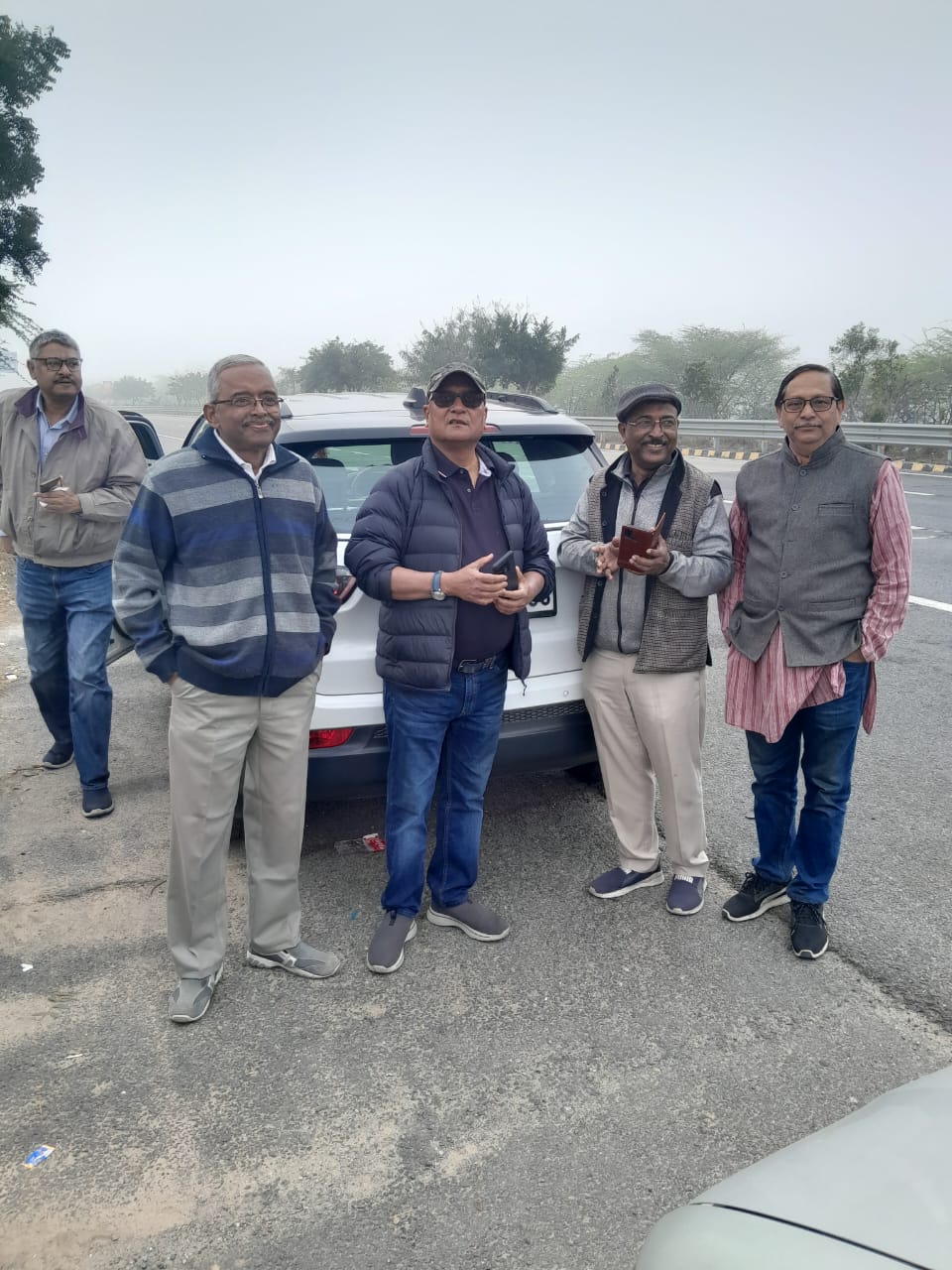
The journey on the Noida-Greater Noida stretch was very smooth as the traffic was sparse at that hour and so was on the Yamuna Expressway as well. We stopped at the rest area next to the Mathura Toll Plaza to have tea and stretch our legs. The weather was chilly and the tea warmed us up. There I met with my buddy, Gora was kind enough to click a photo of us together!! Our next stop was near Agra on the roadside because we missed the “rest are” next to the plaza to have our breakfast of Ham-n-Egg Sandwich, Puri-Sabji etc. The weather was chilly and foggy giving the feel of a hill station. We needed some caffein which came in the form of Coca-Cola!!!
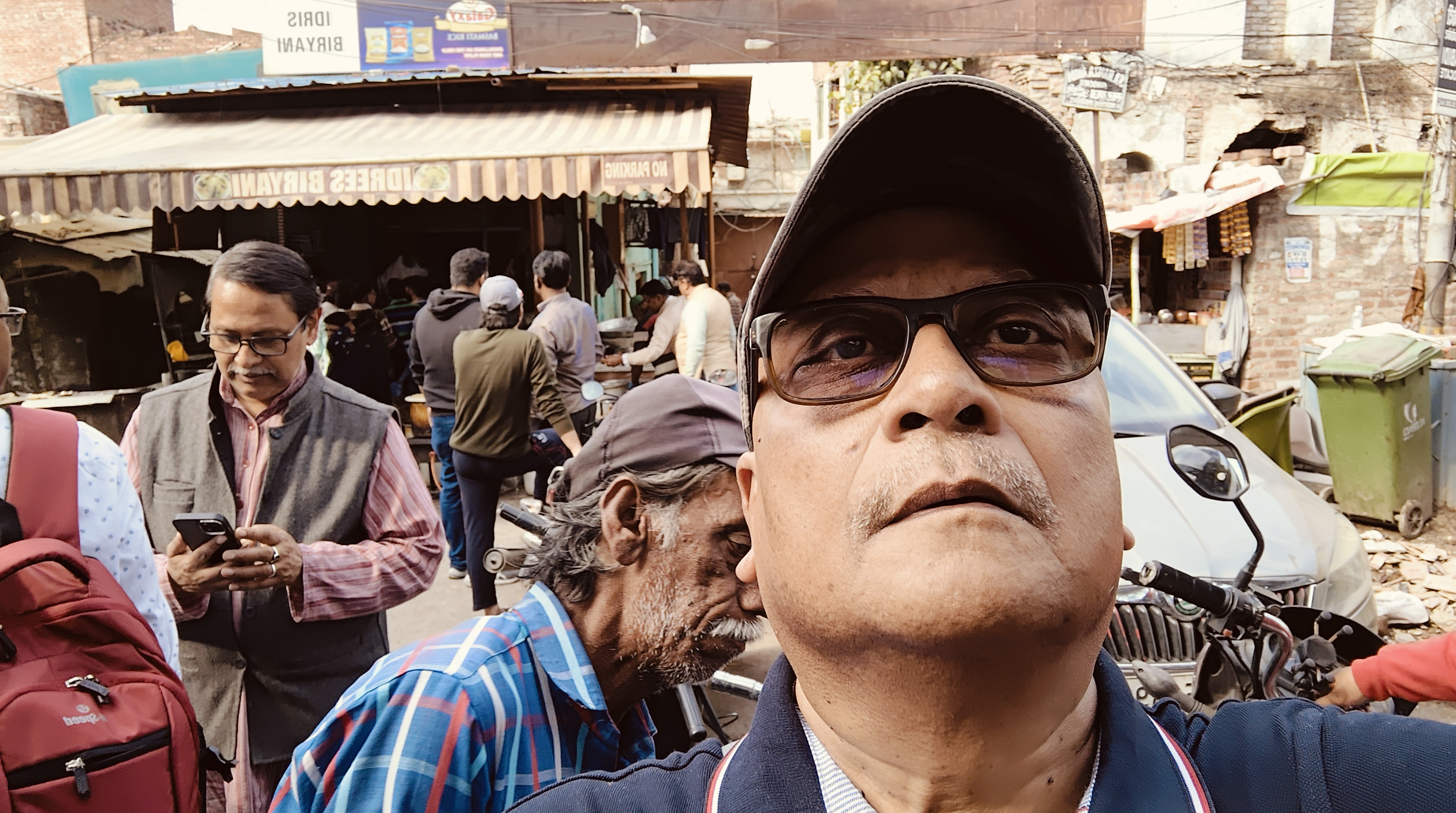
Soon, we were on our final leg of the journey on Agra-Lucknow highway (300+ km) with a speed limit of 100kmph but most cars were doing well over 120kmph zooming past us. We decided to play along and pressed on the accelerator to touch 120+… Tapas’s Ecco don’t have the speed warning beep but my Jeep kept beeping as soon as it went beyond 120 kmph, it was irritating but we ignored the noise. The Agra-Lucknow highway is a dream road for long drive and I enjoyed the drive thoroughly. We reached the outskirts of Lucknow around 12:30 pm and the speed reduced below 80kmph thereon. At one point Tapas informed that they are taking a u-turn to take a shorter route to the hotel but my Google Map directed me to go straight for 6 km, I followed the map and reached the hotel at the same time as Tapas at 1:30 pm. We quickly checked-in and after freshening up left for exploring the city with first stop at Idrees Biriyani at Pata Nala, opp. Police Chowki. The famous shop is nothing but a roadside shack doing brisk business selling Mutton Biriyani and Chicken Korma. We had to wait for half hour before the biriyani was served to us. There were no seating arrangements and we managed to grab spaces on a table that was being used for keeping the rice-containers for cooking as well. The biriyani and korma was very ordinary…the flavor that’s the quintessential in a biriyani was missing and the korma was more of oil than the curry. The meat pieces in both items needed more time on the gas stove to cook and tenderize. It was disappointing considering the high expectations.

We had hired an autorickshaw to come here and the driver, Rais agreed to take us to the Bara Imambara/ Bhulbhulaiya, Rumi Darwaza, Clock Tower, Picture Gallery and Chhota Imambara besides Chowk Market for Lucknowi Chikankari and Tundey Kabab at Aminabad and finally drop us at the hotel at night.
The Bara Imambara is a majestic edifice with history dating back few centuries…
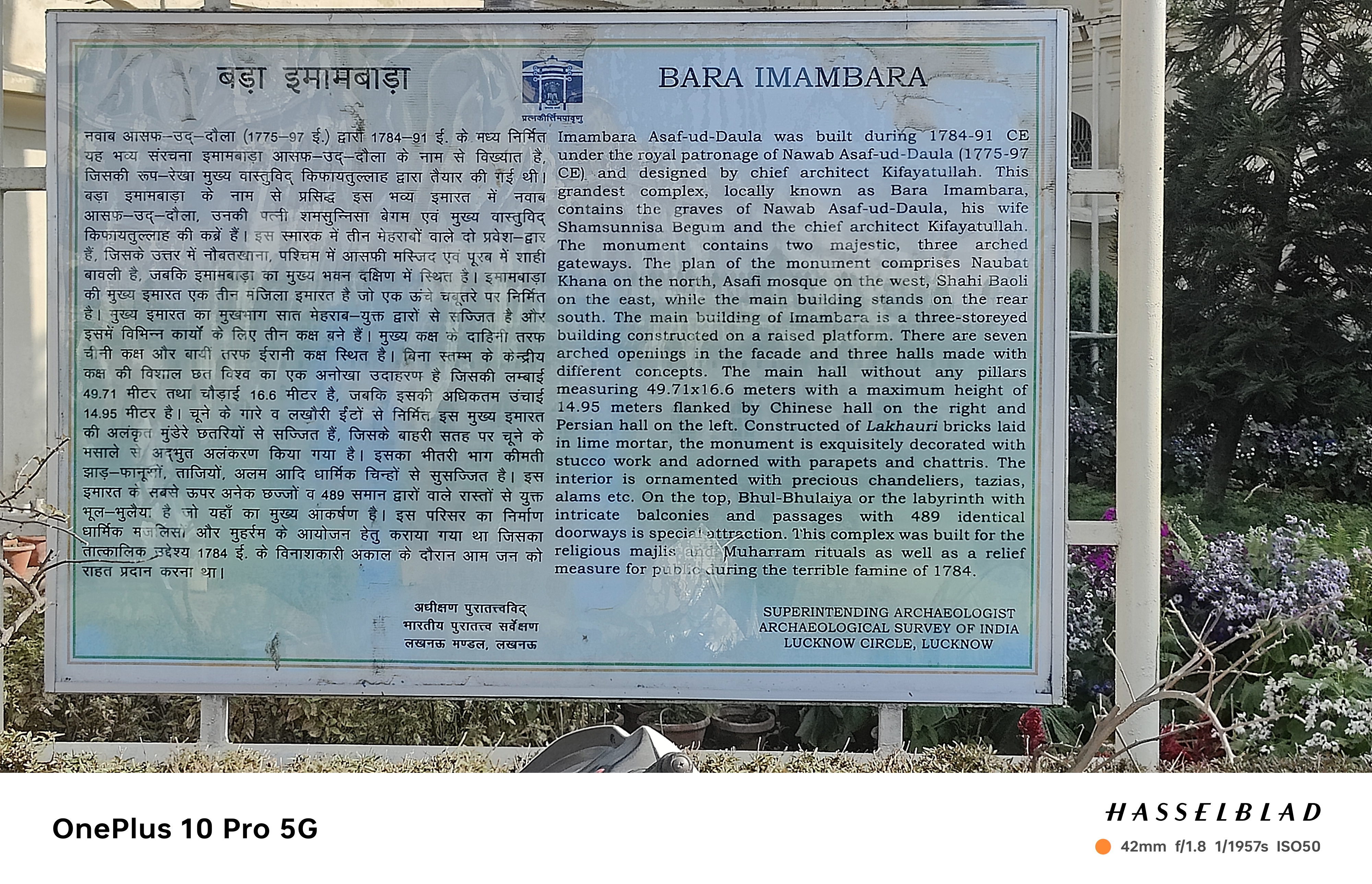
Bara Imambara (बड़ा इमामबाड़ा), also known as Asfi Imambara, is a complex built by Asaf-ud-Daula, Nawab of Awadh, in 1784. The building complex also includes the large Asafi mosque, the Bhulbhulaiya (the labyrinth), and Bowli, a step well with running water. Two imposing gateways lead to the main hall. It is said that there are 1024 ways to reach the terrace, but only two ways to come back, which is through the first gate or the last gate.
Construction of Bara Imambara was started in 1780, a year of devastating famine, and one of Asaf-ud-Daula’s objectives in embarking on this grandiose project was to provide employment for people in the region for almost a decade while the famine lasted. It is said that ordinary people used to work during the day building up the edifice, while noblemen and other elite worked at night to break down anything that was raised that day. It was a project that preceded a Keynesian-like intervention for employment generation. Construction of the Imambara was completed in 1784. The estimated cost of building the Imambara ranges between half a million rupees to a million rupees. Even after completion, the Nawab used to spend between four and five hundred thousand rupees on its decoration annually. (Source: Wikipedia)



We started from the main hall learning the history from our guide Kaiser Bhai who was prone to throw a shayari, muhawarba and puzzles to add spice to the narrative. The central hall sans any beams or column to support the roof is for Azadari or mourning for the souls lost in battle of Karbala. It is perhaps one of the biggest halls without any beam support and the wonderous architecture ensures voice of the Imam is heard at the last row of the congregation.
We moved on to see the Baoli, a stepwell that once used to get its fill from the river Gomti and provided potable water to the residents. But now it was completely dry. Opposite the entry point of the Baoli is a chamber where the guards used to be stationed to monitor the visitors through the reflection on the water below, very similar to the modern-day CCTV camera surveillance.
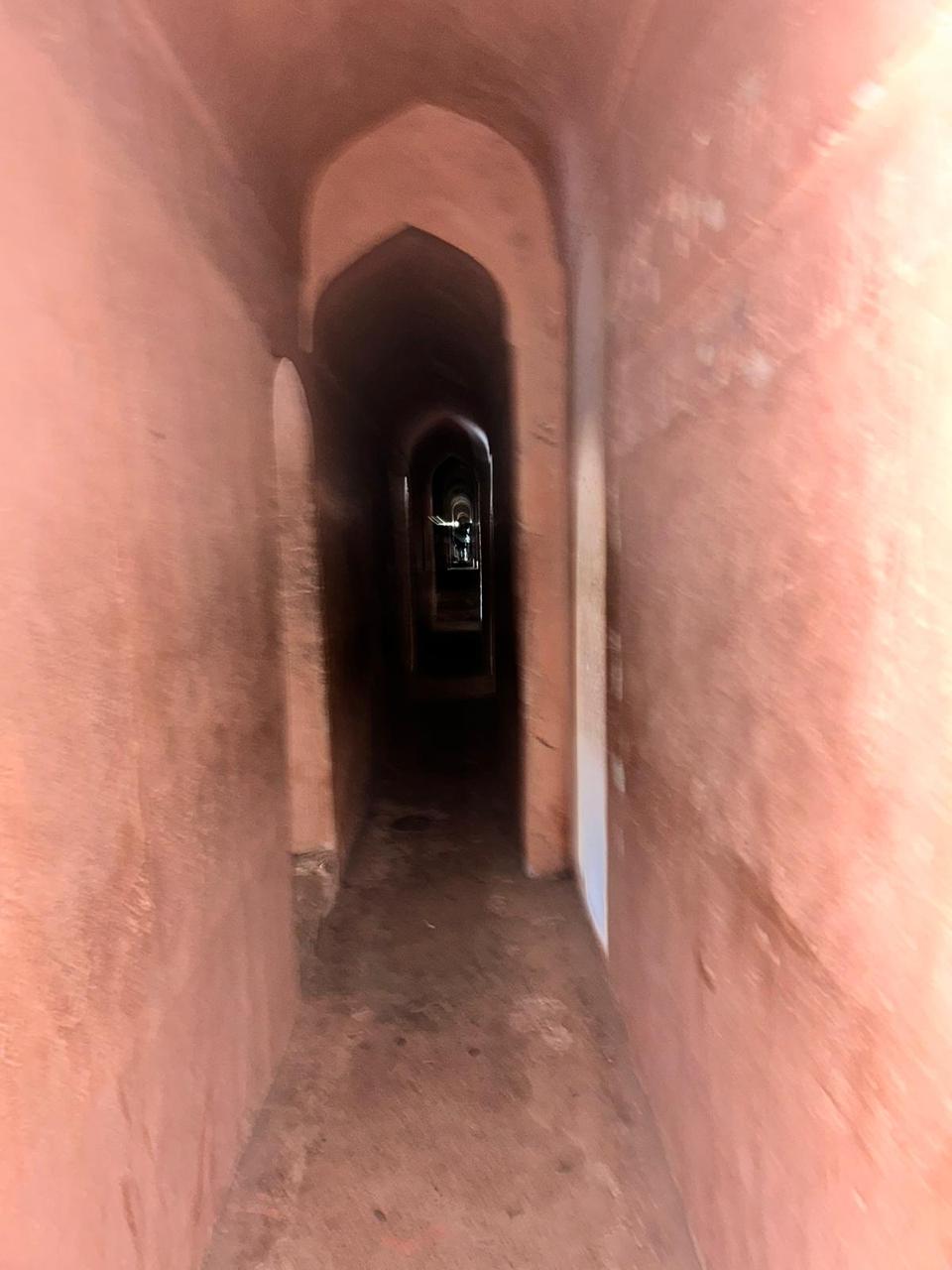
We went to check the most attractive part of the Imambara, the Bhulbhulaiya, the labyrinth constructed above the main hall for protection and balance to the structure. The climb to the base of the Bhulbhulaiya is 44 steps of uneven sizes and I would advise people with cardiac/ pulmonary issues to refrain from visiting it. Also, without a guide I will never venture inside because it is so dark that the maize could play truant with your mind and God forbid if you are lost inside, it will be a nightmare… you could die!! We reached the rooftop from where one could get a 360° of the old city. The guide took our group snap but unfortunately a guy photobombed it from the behind. Next stop was Chhota Imambara via the Rumi Darwaza where we stopped to take customary group photo.

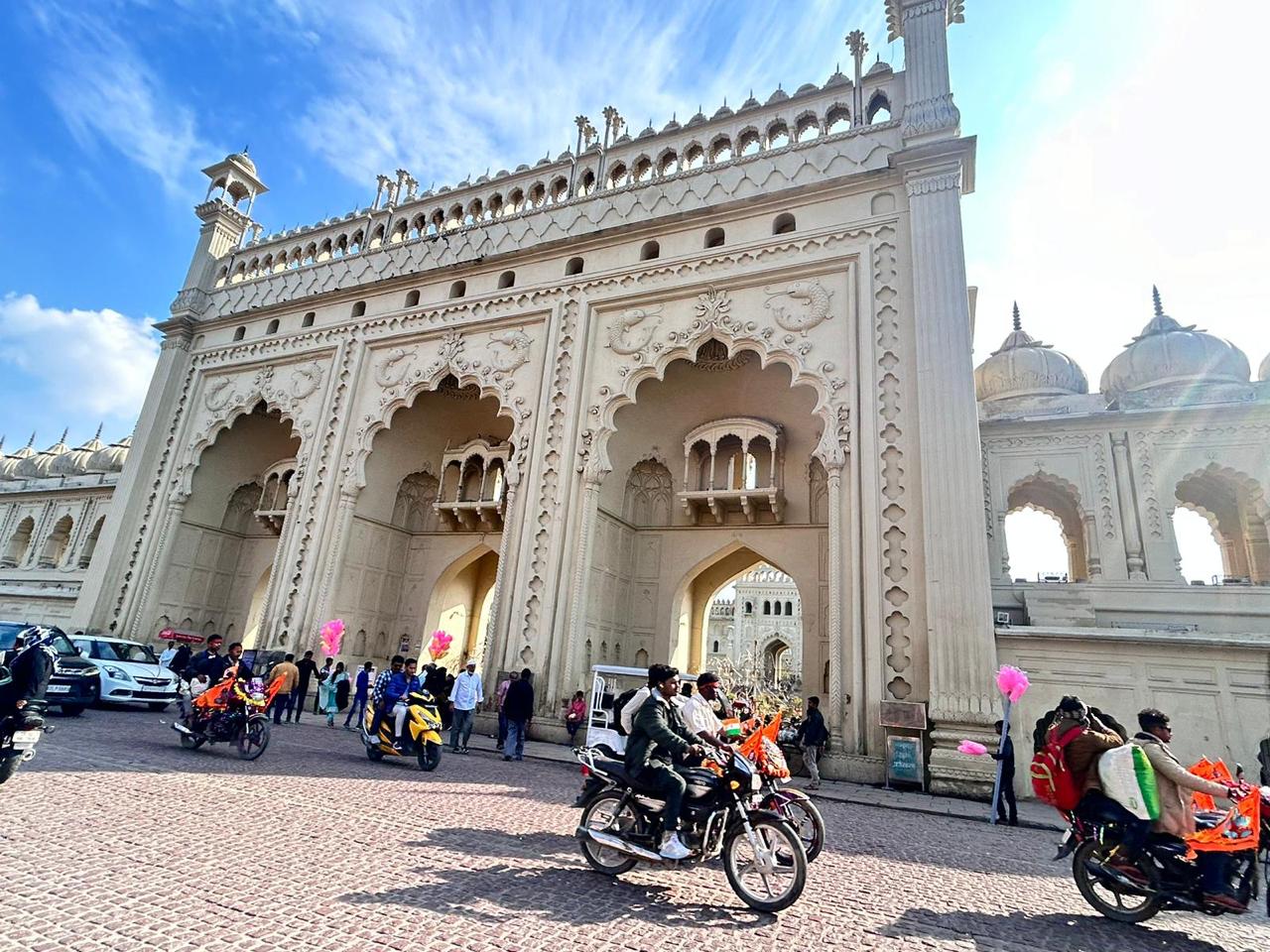
Chota Imambara, also known as Imambara Hussainabad Mubarak is an imposing monument, took 54 years for completion. Built as an imambara or a congregation hall for Shia Muslims, by Muhammad Ali Shah, the Nawab of Awadh in 1838, it was to serve as a mausoleum for himself and his mother, who is buried beside him.
The significance of Panjetan, the holy five, is once again emphasized here with five main doorways. This Imambara consists of two halls and a Shehnasheen (a platform where the Zarih of Imam Husain is kept.) Zarih is the replica of that protective grill or structure which is kept on the grave of Imam Husain at Karbala, Iraq. The large green and white bordered hall of Azakhana is richly decorated with chandeliers and a good number of crystal glass lamp-stands. In fact, it was for this profuse decoration that the Imambara was referred by European visitors and writers as The Palace of Lights. The exterior is very beautifully decorated with Quranic verses in Islamic calligraphy. The Chhota Imambara stands to the west of Bara Imambara and an imposing gateway known as Rumi Darwaza. The building is also known as the Palace of Lights because of its decorations and chandeliers during special festivals, like Muharram. The chandeliers used to decorate the interior of this building were brought from Belgium. Also housed within the building, is the crown of Muhammad Ali Shah and ceremonial tazias. Thousands of labourers worked on the project to gain famine relief.
It has a gilded dome and several turrets and minarets. The tombs of Muhammad Ali Shah and other members of his family are inside the imambara. This includes two replicas of the Taj Mahal, built as the tombs of Muhammad Ali Shah’s daughter and her husband. The walls are decorated with Arabic calligraphy. Water supply for the fountains and the water bodies inside the imambara came directly from the Gomti River. (Wikipedia)
We had to take off our shoes/ socks at the Bara Imambara and had harrowing time walking barefoot on the surface that was uneven, broken, potholed and had an effect of acupuncture on the feet, so I refused to part with my shoes and stayed outside while Suro, Manu and Pulak went inside the imambara. From there we went to the Clock Tower & Picture Gallery. Again, I decided to skip the picture gallery because it involved climbing a staircase of at least 30+ steps. Anyways, Suro & Manu confirmed that we haven’t missed much by staying back.
Next on the agenda was shopping for Lucknowi Chikankari for the ladies back home. SEWA of Lucknow is a women’s cooperative which specialises in chikankari, an unique embroidery that enhances the look n feel of the garment. The price depends on the method (handcrafted or machine made) as well as the quantum of work. The auto driver took us to the SEWA wholesaler where I picked up a Kurti for Deepika while Manu too bought a kurti for his wife and a kurta for himself. While we were buying, others had moved to Muskan Chikan Industries, another shop nearby… we followed them there and ended up buying more, collectively, we bought more than INR 30000 worth of garments, bulk of the purchases made by Pulak and Tapas.
I would have preferred to buy more from SEWA but the attitude of the salesperson was off-putting, kind of arrogant and rude… in contrast, the other shopkeeper was very cooperative in displaying a variety of options and willing give a bulk buying discount.
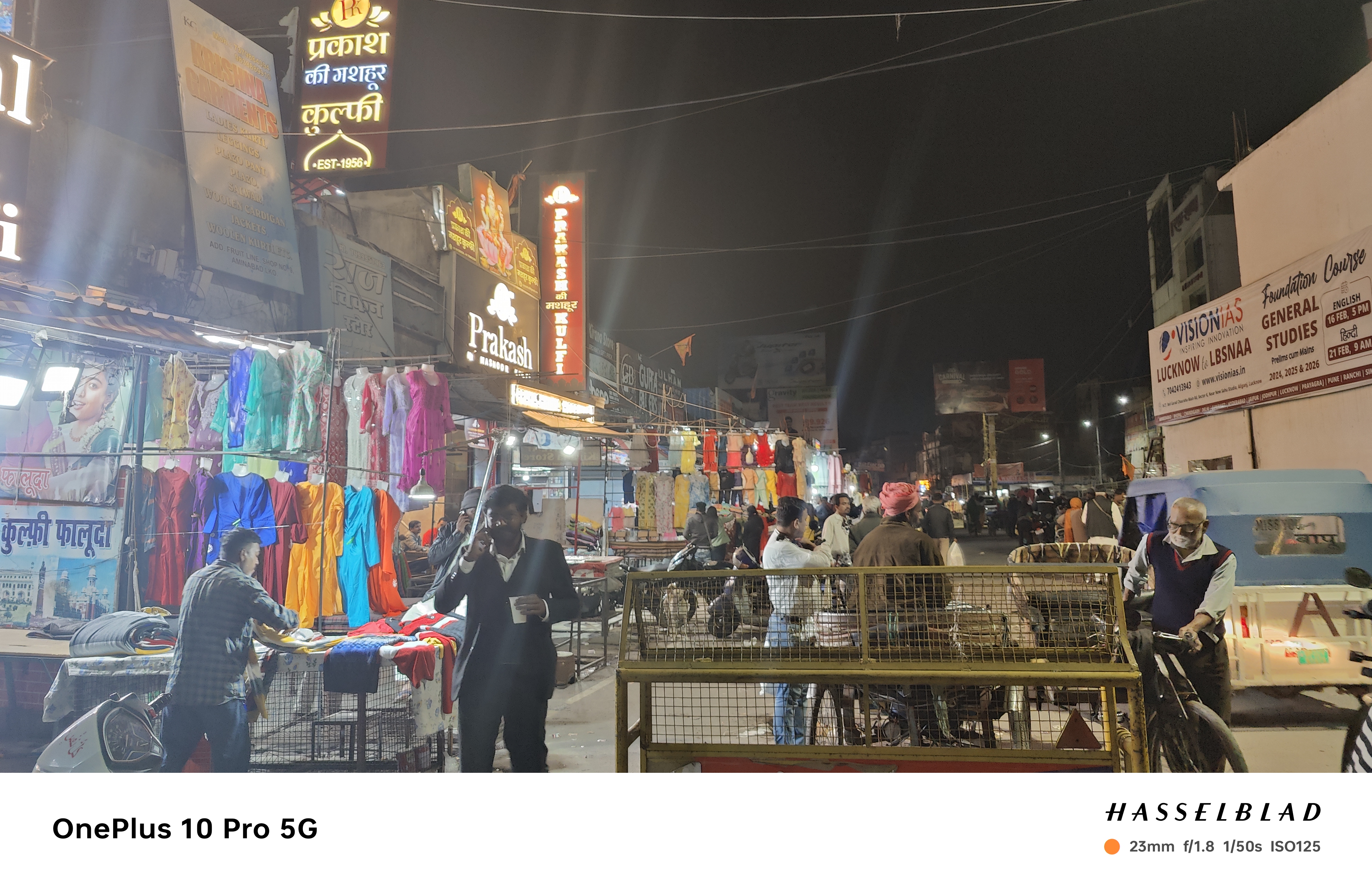
By this time with much walking, climbing stairs, we were hungry, therefore, by agreement reached the Aminabad market for Tundey Kabab.

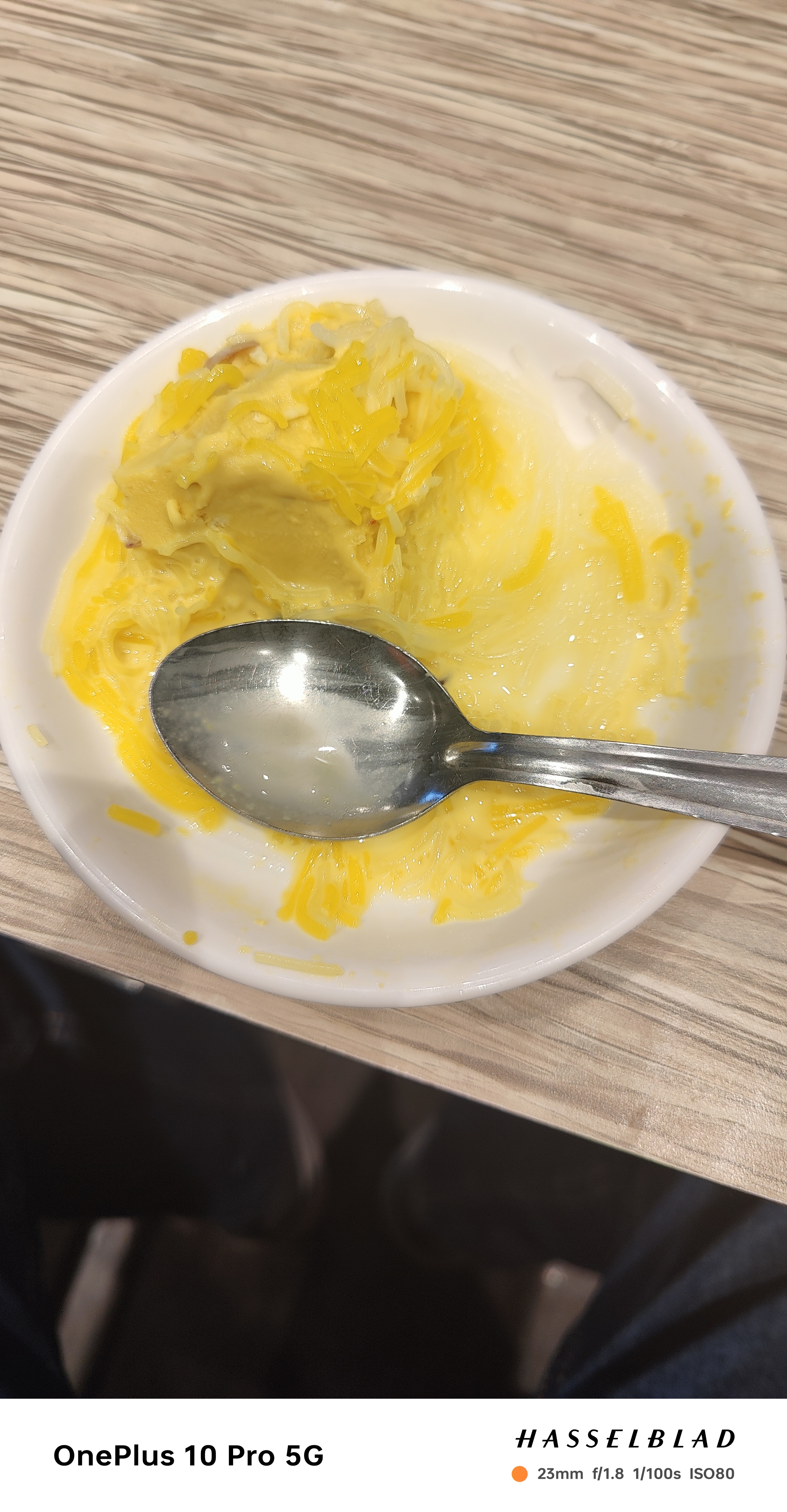
It took some time for us to find a table for 6 pax but the wait was worthwhile; we ordered Mutton Galauti with Ulte Tawe ka Paratha & Mutton Korma… needless to say all the items were yummiluscious and were devoured in no time, especially after so much walking, climbing and haggling. In the close proximity was Prakash Kulfi, what more one could have asked for to end the day. However, the kulfi-faluda turned out to be very ordinary albeit the portion being large.

We got a shocker when we called our auto driver Rais to pick us up from the chowk… apparently, he had utilised the time to go back to the two shops from where we bought garments to collect his commission (about 10% of the total value) and using that money to sozzled up. He was not in a shape to drive and refused to come. It took us almost 30 minutes to find an alternative e-rikshaw.
Coming back to hotel, Suro, Manu, Topshe and I decided to play TwentyNine, a card game. Tapas said, “I have played it many many years ago during school/ college days, please refresh me”. We explained him the game and we formed teams, Manu-Topshe and Suro-Me. Very soon we realised, Topshe is a seasoned player winning singlehandedly most of the games scoring a positive set. Suro & I laboured to inch closer to their level but still couldn’t achieve a set. The game had to be forced close as the clock tik-toked to 1:30 am… we have another long day of excursion ahead.
DAY TWO
We, collectively failed to get up as per schedule and were the last ones to avail the complimentary(?) breakfast at the hotel. Then we walked (1.2 km) to Sharmaji ki Chai for tea and tried their Bun-Maska-Samosa. Next on our list was The Residency (3+ km)… we hired an e-rikshaw @Rs.10/- per person.

The construction of the Residency was started in the late 1700s by Nawab Asaf-ud-Daulah, however, it was completed by Nawab Saadat Ali Khan. In the initial years, it was just for the delegates of the East India Company. However, as the reign of British East India expanded, the city of Lucknow became their administrative centre, and as an effect of that, the Residency also came under the British commissioner of Awadh. The biggest event that this place has seen, is the first war of Independence in the year 1857. One of the main centres of this entire siege was Lucknow and the main target was The Residency between 1st July 1857 to 17th November 1857. Cannons and bullets destroyed the major part of this place and even today, the traces of that revolt can still be seen at The Residency.


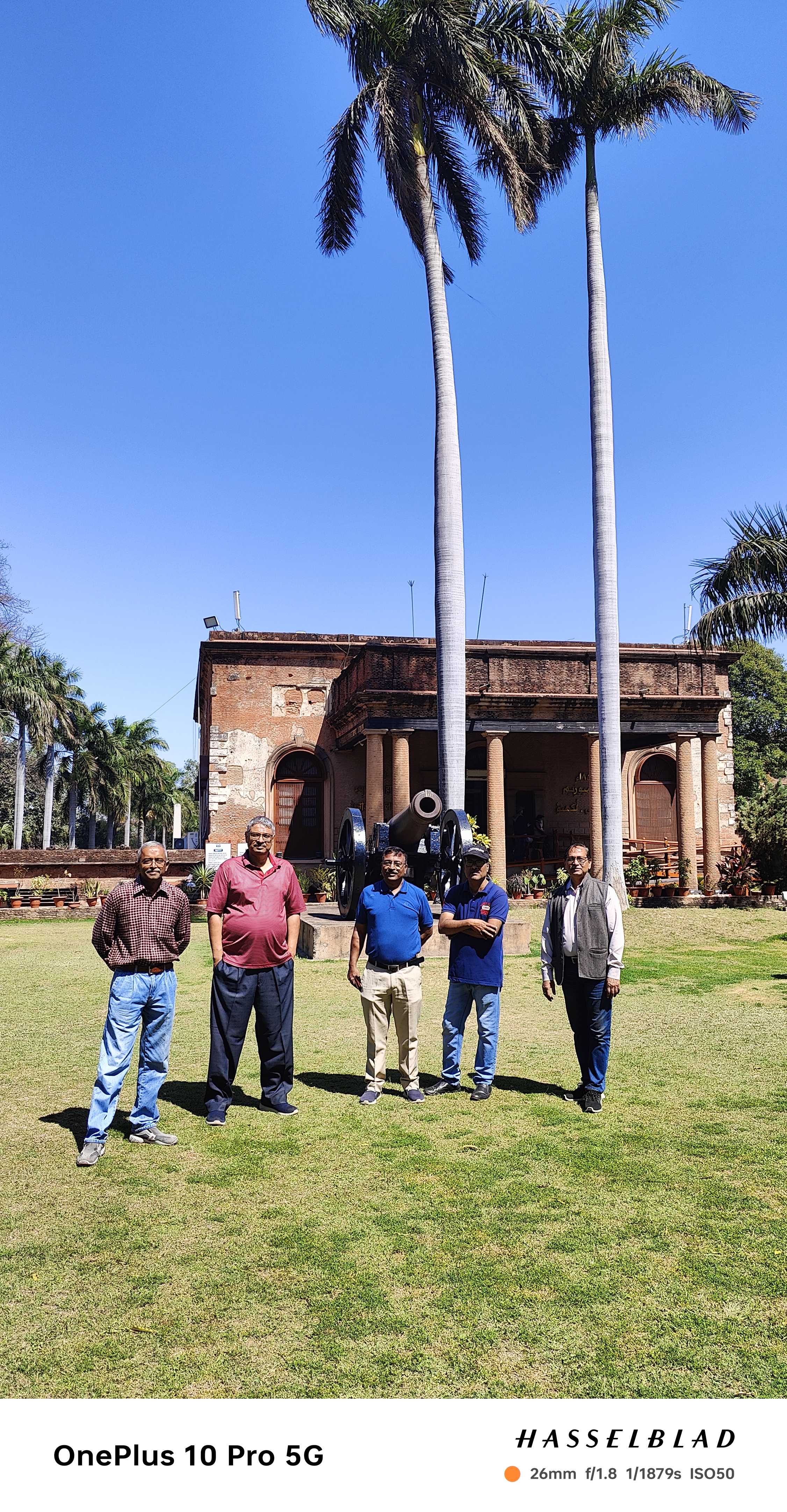
The Residency is a set of buildings that are enclosed in a large compound of 30+ acres. It includes armoury, quarters, stables, worship places, residential quarters, dispensaries and so on. However, one of the key features of this must-visit place in Lucknow is the Banquet Hall that was also built by the Nawab. The hall boasts the intricate carvings of tall arches along with high ceilings and large hallways. At the back, there is open space which was used as the kitchen in that era. Coming on to the entrance of the Residency, there is a beautiful fountain in the centre that perfectly complements the beauty of the place. Nearby the banquet hall, there is located the house of Dr Frayer that also served as the hideout for the British families during the revolt of 1857. The house has a basement which is said to be used as a hiding place for the children and women. However, during the war, the house was often used as the hospital. Above all that, the main building is the must-see thing at the Residency. It was once the imposing three-storey building that used to have a library, games room and offices. (Source: Internet)


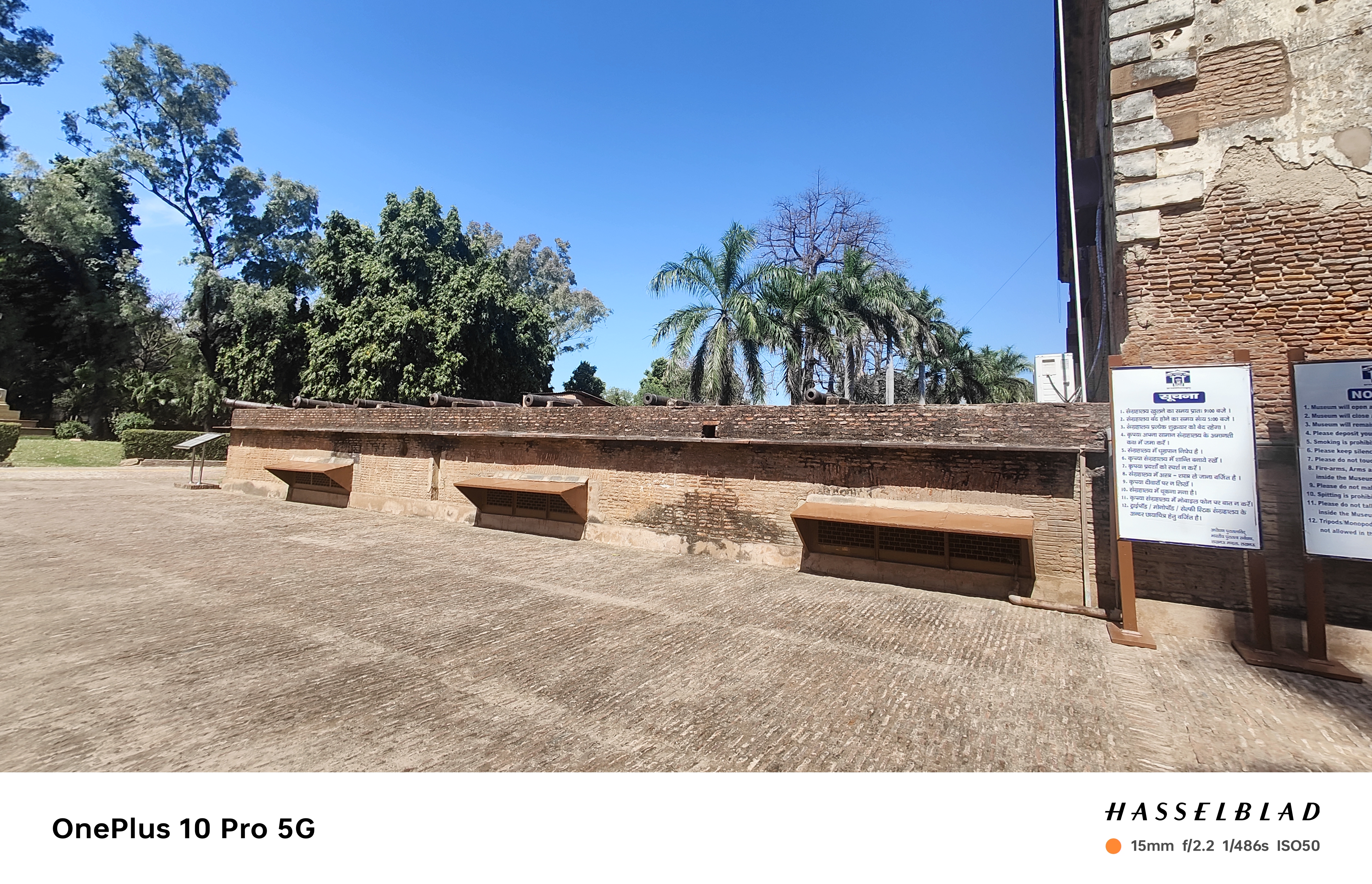

We spent the entire morning exploring the place and wondering what would have happened if the revolutionaries had succeeded!! We picked up some pebbles as memorabilia of the place and proceeded to the tomb of Sadaat Ali.
The tombs of Saadat Ali Khan and Khurshid Zadi are grand in their own right, and visiting them can be a delightful experience. Both these tombs, which are one of the popular tourist attractions in Lucknow, are known for their intricate architecture and the garden surrounding them. Located in close proximity to the Begum Hazrat Mahal Park (built in 1962 to commemorate her contribution to the revolt of 1857), the tomb houses the 5th Nawab of Awadh, Saadat Ali Khan, and his wife, Khurshid Zadi. She was the favourite wife of the Nawab and died during his lifetime. Saadat Ali Khan was the ruler of Awadh from 1794-1814 AD, and many of the heritage buildings dotting the area between Qaisar Bagh and Dilkusha can be credited to him. During this time, the British ruled large parts of Lucknow and were becoming more powerful with each passing day. It is quite easy to overlook this wonderful memorial amidst other heritage buildings in the city like Chota Imambara and Bara Imambara. However, it is only upon visiting the tombs that you find out what you were missing out on.
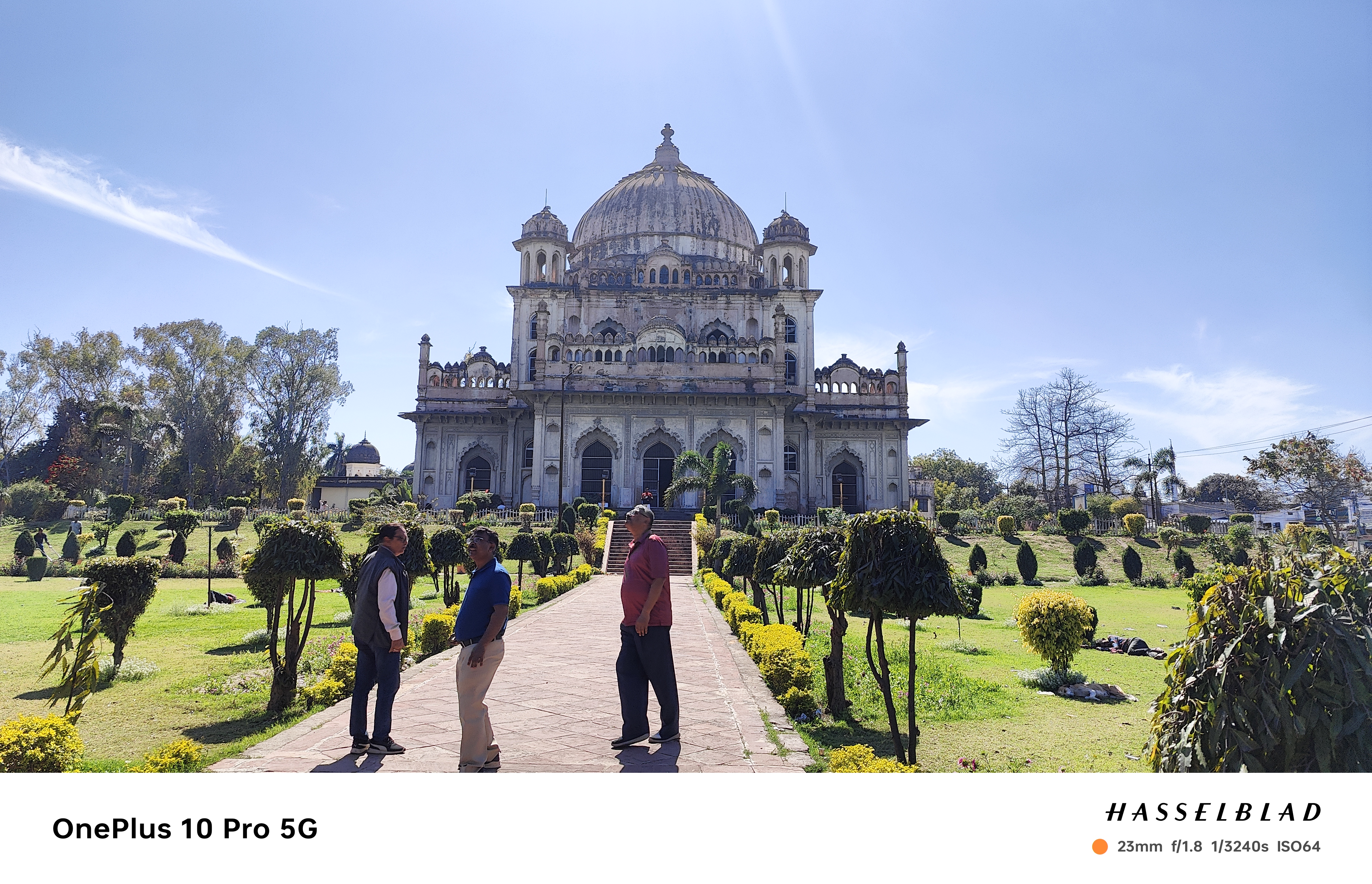


The tomb of Nawab Saadat Ali Khan and Khurshid Zadi are counted among the best places to visit in Lucknow. Their architecture has a lot to do with that. While its facade is decorated with lime plaster, the walls are built using Lakhuri bricks (red colored burnt clay bricks) while sandstone has been used for the floors. Upon entering the tomb, you come across rectangular verandahs with intricately carved arched doorways. Of these, those on the southern and eastern side contain the graves of the daughters and wives of Nawab Saadat Ali Khan. The floor of the tomb has also been given an elegant look, thanks to the black and white marble tiles laid out in a chess like pattern. Among the other features of the tomb, its hemispherical dome deserves a special mention. It attracts the attention of the onlookers with its symmetrical shape and is topped by an inverted lotus and a finial. In the center of the hall, there is an elegant rectangular design which marks the exact place where the tomb of Nawab Saadat Ali Khan rests. Head towards the basement and you come across three graves, one of the Nawab and the other two of his brothers.
The tomb of Khurshid Zadi is located to the east of the Nawab’s tomb. Although it is a four level structure, the graves of the mother and daughter rest at the lowest level. On the corners of the domes are octagonal shaped chhatris, which embellish its beauty. The tombs, which make for great sightseeing in Lucknow, are surrounded by beautiful gardens and are great for enjoying some moments of peace and solitude. (Source: Internet)
We explored the place from outside and enjoyed the greenery and the soft grass lawns for some time before heading to New Lucknow for Gomti Riverfront Park and Ambedkar Samata Sthal, a huge ornamental park.


Out of these two, we decided to visit Gomti Riverfront Park and spend some time soaking in the cool breeze. We stopped briefly at the Ambedkar Park for photo ops and then proceeded to Royal Café, Hazratganj for their famous Basket Chaat. I don’t think any one can finish the full portion of the Basket Chaat which essentially consists of all kinds of savouries viz. aloo tikki, bhalle, paapri, chhole, bhujiya topped with curd and chutnies. We shared 3 plates amongst 6 of us and followed it up with lemon soda to digest. Thereafter, we walked 2.3 km to the hotel to relax a bit. Then in the evening, we went to Mughal’s Dastarkhawan for dinner where we judiciously ordered for Biriyani Rice (without meat pieces), Bhuna Gosht, Shami Kebab and Galauti Kebab. Though the food quality – taste, aroma and quantity was good, the service needs substantial improvements.


Coming back to the hotel, we again played the game of TwentyNine but this time Topshe had lost his beginner’s luck, Suro and I convincingly won the rounds with 2 positive sets.
By this time, we had seen 80% of what we had planned to see in Lucknow, therefore, we decided to visit Ayodhya to Ramjanmabhumi Temple the following day.
DAY THREE
In the morning, Gora informed that he has a very bad stomach infection and shall skip the Ayodhya trip relaxing at the hotel. I told him to take a tablet of Metrgyl 400 and have light breakfast. We were not ready to leave him alone at the hotel and almost decided to abandon the Ayodhya visit. However, after taking the medicine and a light breakfast, Gora felt better and we left for Ayodhya around 10:30 am (2 hours delay from our plan). We were going in one car (Tapas), so I utilised the drive to take a sound nap.
We were told that no vehicles are allowed after a certain point (2 km from the Mandir) and we have to park at the designated parking area then take an e-rikshaw to the vicinity (500 meters) from the Mandir and then walk the rest. Also, warned that the temple being closed between 1 to 2 pm creates mad rush after that and we have to take “pass” for the darshan. Only the “mad rush” part was true; in reality, searching for the parking area, we reached a point from where the mandir was only about 500 meters. The young policeman obliged us by allowing to park on the kerbside and promising to keep an eye on it while we went for the darshan of Shree Ram Lalla.
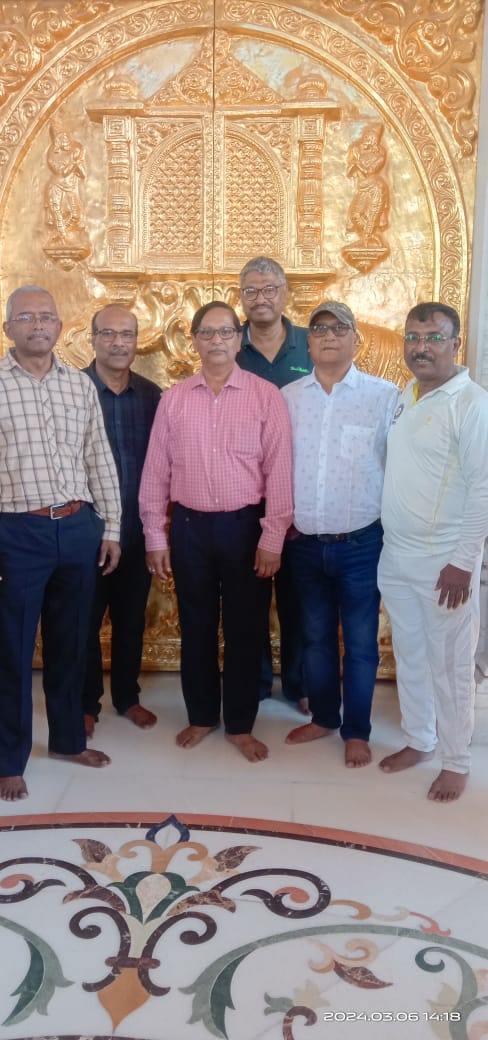
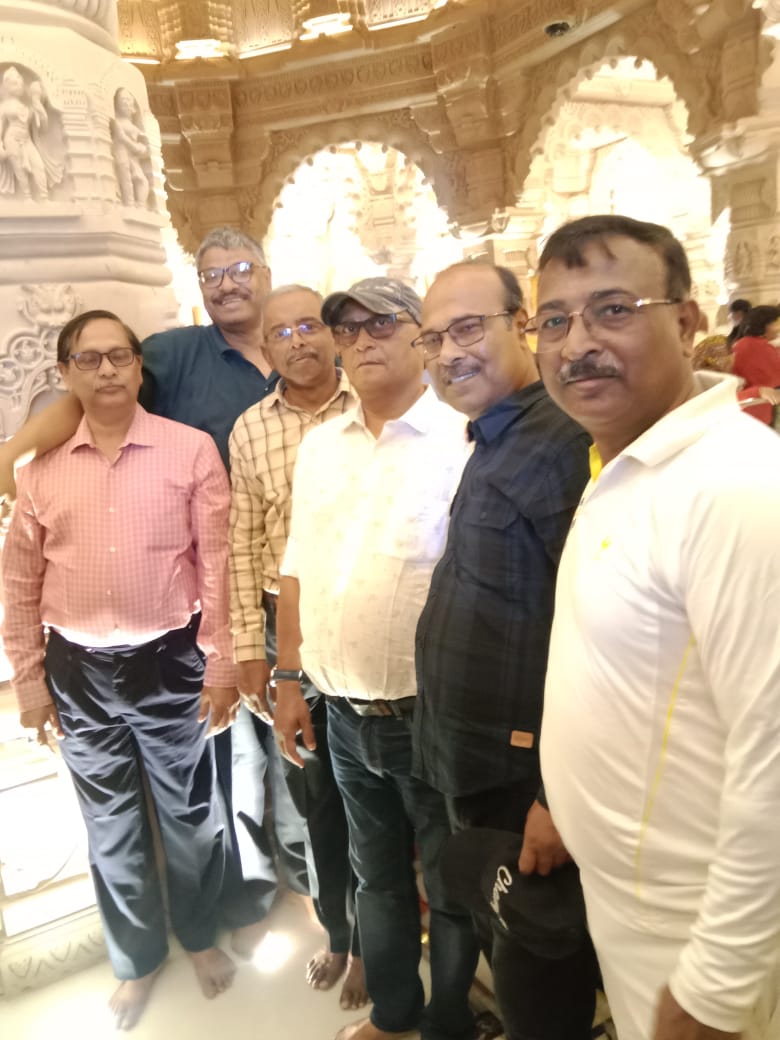
The “pass for the darshan” was only for the initial days, now, one has to deposit their phones, camera and any other electronic items at designated locker rooms. The parking stricture is for the buses only, private vehicles are allowed inside the city with restrictions on certain roads. Having a Fauji, that too a senior ranker, in the group helps in getting through at tough situations. We had Suro aka Group Captain Suranjan Chowdhury, who impressed the police constable to let us park on the road, then at pickets along the road to the mandir, his rank equivalent to Colonel, allowed us to go through the VVIP paths and finally at the mandir complex we could avoid the maddening crowd and use the VVIP entry allowing us a pleasant darshan of Shree Ram Lalla. The finished part of the temple has the promise of grandeur but it will perhaps take another two years to complete the entire temple complex.
Coming out, we picked up some sweets (to be treated as prashad of Shree Ram Lalla); Suro got hold of free food coupons and went to have it with Gora and Manu while we waited near the locker room watching the activities of Shree Ram’s foot soldiers – monkeys playing.
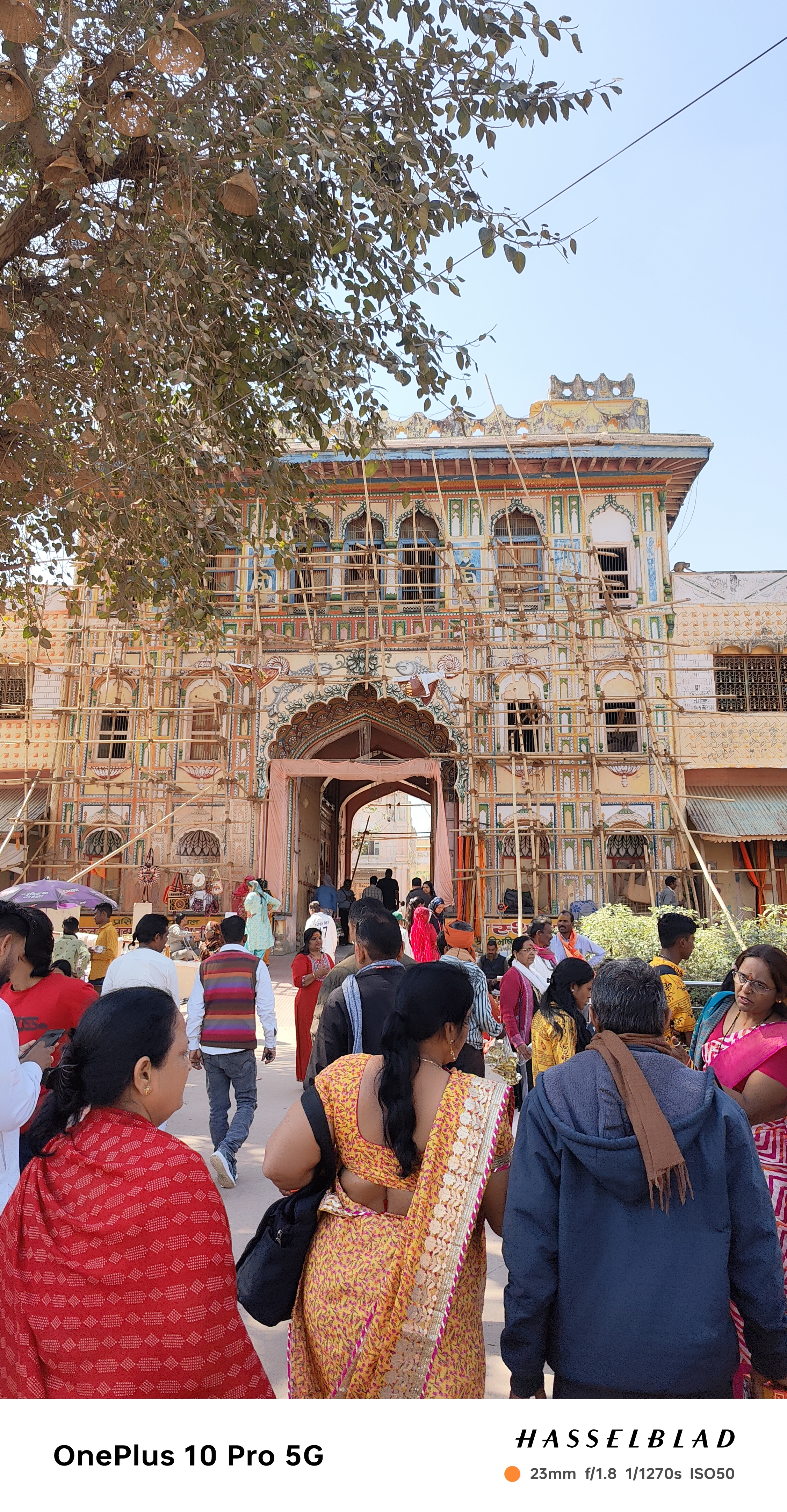

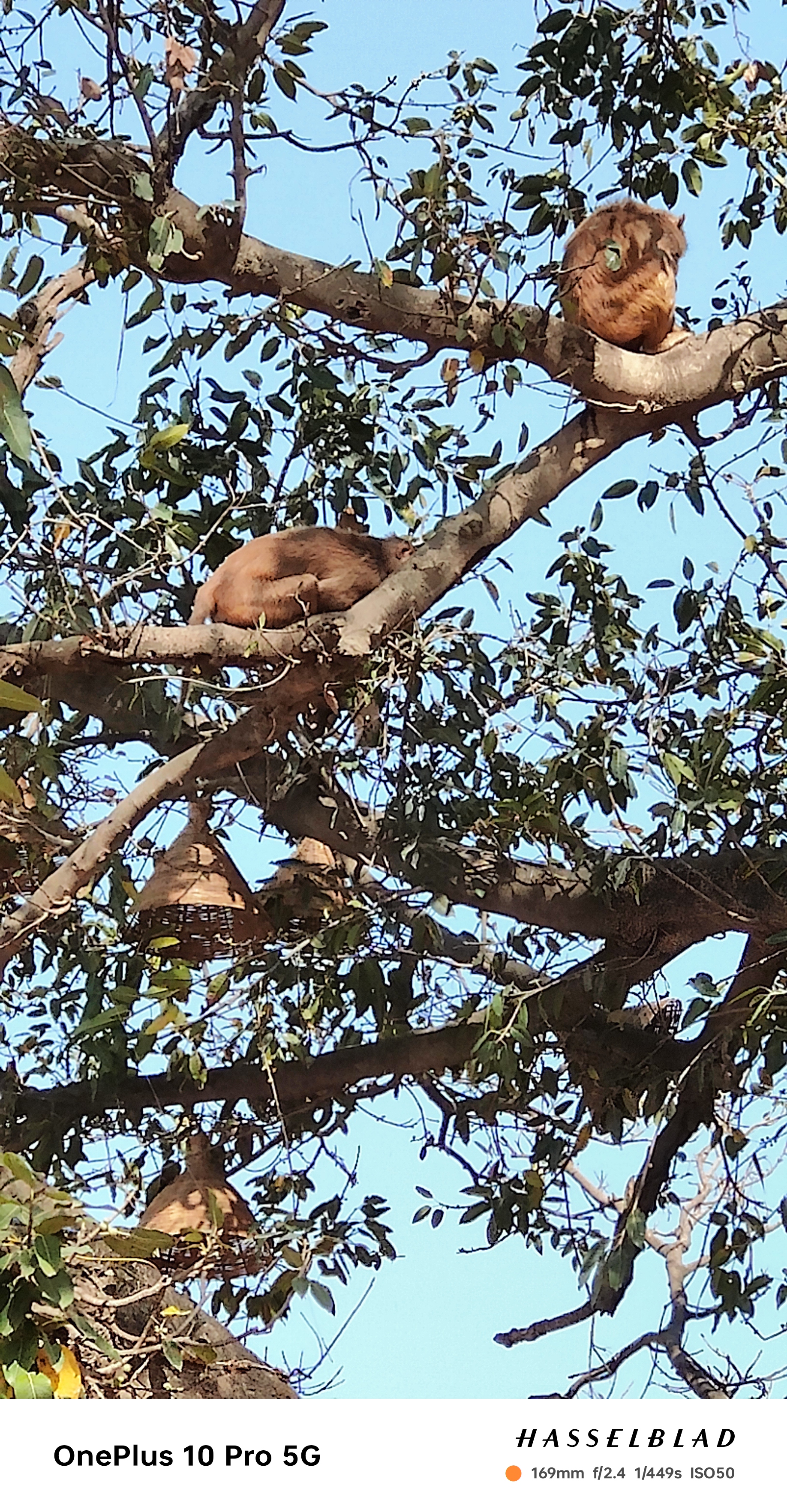
While in Ayodhya, one must visit the Saryu River and take the boat ride. The river is very clean though not very deep. We took a 30 minutes boat ride which was like an icing on the cake.


The return journey to Lucknow was uneventful except that this time I was awake and experienced Topshe’s driving skills… he drives like a possessed man, putting the F1 drivers to shame. We also the Ambedkar Park lighted up in the evening, the newer part of the city can easily compete with any metro cities in terms of infrastructure and beautification.
In the evening, Gora’s friend Ashish had promised to take us to the oldest part of the city for culinary experience, the option suggested by were the original Tundey Kababi and Rahim’s. Since we had already tasted the Tundey Kababs at Aminabad, we decided to try the Nalli Nahari with Kulcha at Rahim’s. He instructed us to reach the Tundey Kababi at Chowk where he will meet us and we will go to Rahim’s.

We loved the Nahari Gosht and the accompanied Kulchas, it was flavourful, not very oily and the mutton pieces were succulent. I shall refrain from talking about the ambience because it was just like a dhaba but the service was quick and efficient, I guess it helps them serve more diners thereby making more money. However, the owners must invest in the infra to make the place appealing to the family clientele.
We walked to the Chowk and discovered vendors selling Malai Makkhan; I instantly recalled Nitika telling me about this prompting me to try it instantly. It was soft creamy very light mildly sweet dish and I liked it. We made an attempt to try the famous Lassi at Shree Lassi but it had closed for the day. Thereafter some of us had the Lucknowi Meetha Paan before bidding farewell to Ashish. He had provided invaluable inputs for our trip.
We again played TwentyNine till 1:00 am and again we beat Topshe-Manu team handsomely.
DAY FOUR
We left for Delhi around 10:45 am after breakfast fueling up the cars and reached Greater Noida around 6:30 pm with multiple breaks on the way, we were not in a hurry to reach home. I dropped Suro and Manas at the Panchsheel Metro Station and reached home at 7:30 pm. My Jeep Compass had given me 14 KMPL which I consider a great mileage for a heavy vehicle like Jeep and that too when I have driven it at 120 to 150 KMPH at few stretches and mostly at 100 KMPH.
WHAT WE MISSED OUT
At the onset we knew that we will not be able to achieve our target as per the itinerary, Ashish had indicated that if we could do 50%, it would be good enough. However, barring the below mentioned ones, we did cover all others and I would like to pat all our backs for a splendid performance.
Historical Places: Chhattar Manzil, Kaiserbagh, Dilkusha Kothi
Gastronomical Places: Naimat Khana, Shree Lassi, Royal Sky, Ram Ashrey, Alamgir
 Aranyascope
Wow uncle it seems you had a blast. God bless you that you have many more such.
LikeLike
Very beautifully written Dear Aro, describing each event so minutely that nothing more left to add. Your choice of words really stupendous.
Yes I fully agree with you that except Idrees Biriyani, everything goes well with us. We really enjoyed the trip to the fullest. And the shocking part that you forget to mention that evenif we all are stag no one opted to have shots of booze.
LikeLike
Yes, it was the first time that a bottle came back without the seal broken.😜😁
LikeLiked by 1 person
What a beautifully detailed account of your trip! Reading it, I felt as though I was journeying alongside you all. Well done on the post!
LikeLike
Thanks bro. If you were in home, would have gone there as well…😁😁
LikeLiked by 1 person
Yes, of course.
LikeLike
Wow what a fantastic trip and you managed both Ayodhya and Lucknow…lucky!! I thoroughly enjoyed reading the blog and it took me down memory lane…lovely pics too dada. Khoob bhalo!! Cheers to many more fun travels and sharing with friends 😊
LikeLike
Thank you 👍
LikeLike
Wonderful. Your travelogue is as good as the other topics you write in your blog. Vivid description of the trip with nice, relavant photographs. Happy to be part of the trip. Both of you are very good at driving and chalking out the tour carefully. Inputs from Ashish and your friend Nitika were really helpful.
Indeed we missed few things…Mujra being the one. Better luck next time😂😂
LikeLike
Thanks bro. 👍
LikeLike