“At least you can enjoy the cool weather of Bengaluru instead of roasting in Delhi.” Deepika insisted and so I tagged along with her to spend a few days with Ayush and Rajashree.
Deepika’s friend Moushumi suggested we go out for 3-4 days to Belur & Halebeedu, a Hoisala heritage site about 100 miles from Bengaluru. However, the idea could not fructify because of the not-so-good road condition and the unpredictable rains in Karnataka. In any case, I was contended to spend the days at home and cook up some savouries for the kids. Then Moushumi came up with another heritage place, Lepakshi Temple, a day trip from Bengaluru on NH44 (Bengaluru-Hyderabad Highway). We decided to go on Tuesday 3rd June but on Sunday morning my nose turned ticklish and by evening it became full blown cold with running nose and mild fever, thankfully, Deepika was carrying medicine for such eventualities. I must confess that on Sunday, even though all indications suggested that I take complete rest but rest of the gang wanted to go out for lunch on the only Sunday afternoon for a family outing. Sunday happened to be Bengali Jamai Shashti, a day when the son-in-law is pampered to the hilt with a royal feast and we decided to visit the famous restaurant of Kolkata Mitra Café, only to be turned away with a waiting time of over an hour. Rajashree searched for alternative restaurants in the vicinity and came up with Bier Garten, a roof top restaurant…the weather was decent enough to enjoy a nice meal and a pint of draught beer. Now, you can imagine what aggravated my sinuses!!
By Tuesday, with strong doses of anti-allergy medicines, I felt better and we decided to take the trip to Lepakshi. I suggested we hire a driver to drive Moushumi’s Suzuki XL-6 automatic, not being sure that I will be fit enough to drive. The ETD was 6:30 am to avoid the city traffic on a working day, accordingly Deepika & I reached Moushumi’s home at ACME, Bellandur only to find her sitting in her car, waiting for the driver to come. We waited for 30 more minutes with Moushumi trying to reach the driver or the agency that provides the services but no one responded. It was getting late, so I sat at the wheel and checked the vehicle’s functions. I felt confident to drive the car and we took off around 7:30 am.
It took us one hour to traverse through the city to reach the highway to Hyderabad. I had experience of driving on this stretch having made multiple visits to Bengaluru while stationed at Hyderabad. In those days, there weren’t many good decent places to stop for a bite. I asked Deepika and Moushumi to look for a breakfast place and they came up with A2B (Adyar Ananda Bhavan), a restaurant serving South Indian cuisine but soon realised that we had crossed it by many miles. Then we came across a signage promoting a restaurant called Koteshwaram, about a kilometre away from our location.


Koteshwaram turned out to a nice restaurant with option of fine dining as well as option for a quick bite on the go from the counter. It was a new place started operation four months ago. The food was Karnataka-Andhra influenced… thick dosa and mildly sweet sambhar but otherwise very tasty. On the table was a “tent-card” showcasing their desserts and one item instantly touched a chord in my heart. It was “Jelly Ice-cream”, reminded me of the times I used tag along with my brothers to the football match and afterwards would walk 5 km to Connaught Place from Ambedkar Stadium, Delhi Gate for the promised hamburger and cream jelly at the Indian Coffee House.
After our leisurely breakfast stretching over an hour, we started for our destination. The Google Map showed our destination, Lepakshi Temple, only 1:15 hour away, I drove sedately at 80 kmph (within speed limit) and reached our destination around 11 am, from the outside, it looked a small edifice, making us wonder if we reached the correct location!!
It is actually Veerbhadra Temple at Lepakshi. Veerabhadra Temple is a Hindu temple located in the Lepakshi, in the state of Andhra Pradesh, India. The temple is dedicated to the Virabhadra, a fierce form of the god Shiva.
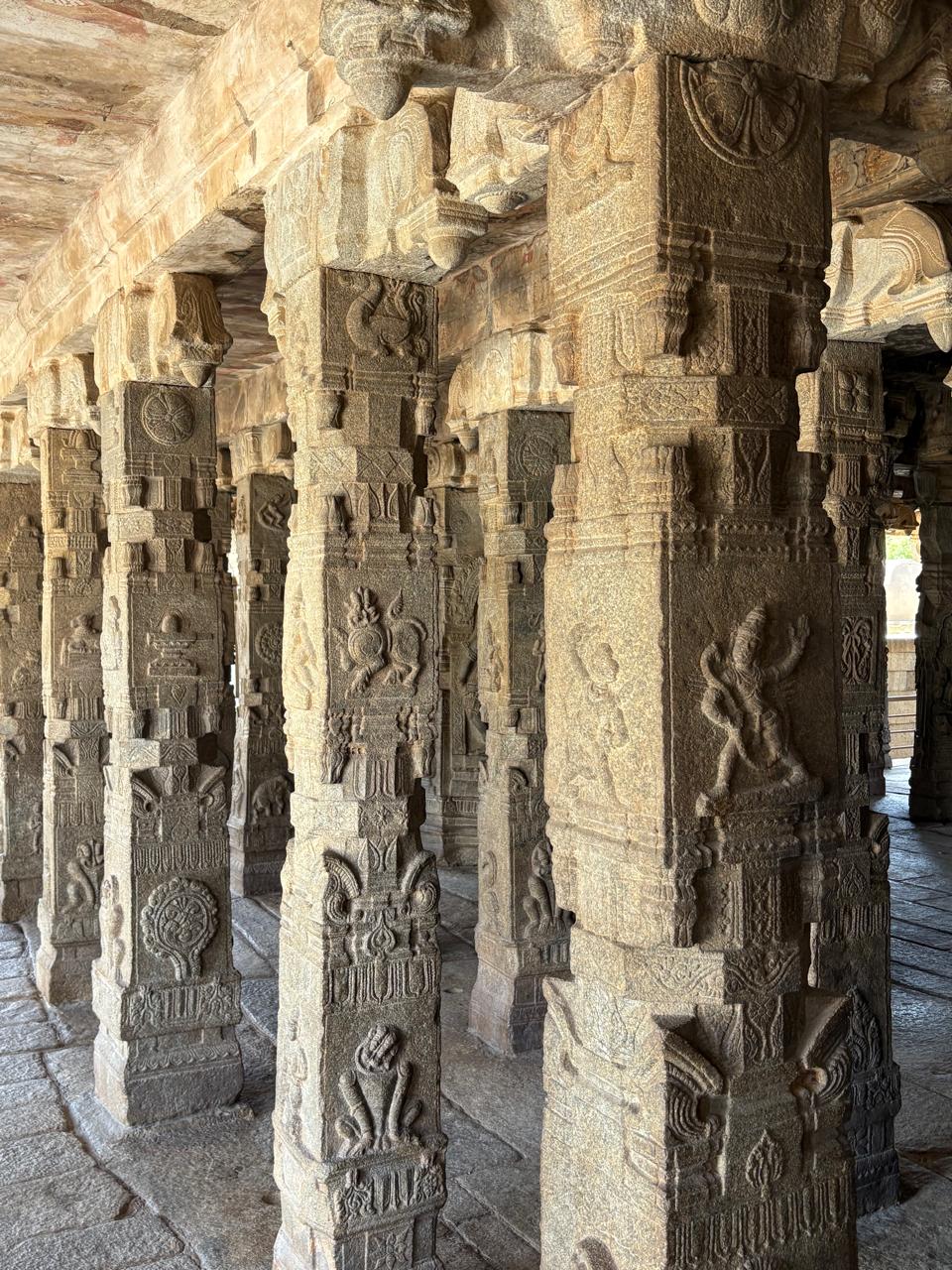
Built in the 16th century, the architectural features of the temple are in the Vijayanagara style with profusion of carvings and paintings at almost every exposed surface of the temple. It is one of the centrally protected monuments of national importance and is considered one of the most spectacular Vijayanagara temples. The fresco paintings are particularly detailed in very bright dresses and colours with scenes of Rama and Krishna from the epic stories of the Ramayana, the Mahabharata and the Puranas and they are well preserved.
There is a very large Nandi (bull), mount of Shiva, about 200 metres (660 ft) away from the temple which is carved from a single block of stone, which is said to be one of the largest of its type in the world. The temple has been built on the southern side of Lepakshi town, on a low altitude hillock of a large exposure of granite rock, which is in the shape of a tortoise, and hence known as Kurma Saila. It is 140 kilometres away from Bengaluru. The approach from the National Highway NH44/ NH44 to Hyderabad that takes a branch road at the Karnataka-Andhra Pradesh border leading to Lepakshi, 12 kilometres away.
The temple was built in 1530 AD by Virupanna Nayaka and Viranna, both brothers who were Governors under the Vijayanagar Empire during the reign of King Achyuta Deva Raya, at Penukonda who were native to Karnataka. They belonged to the warrior merchant class of Veerashaiva Vani. The temple consists of only Kannada inscriptions. According to Skanda Purana, the temple is one of the Divyakshetras, an important pilgrimage site of Lord Shiva.
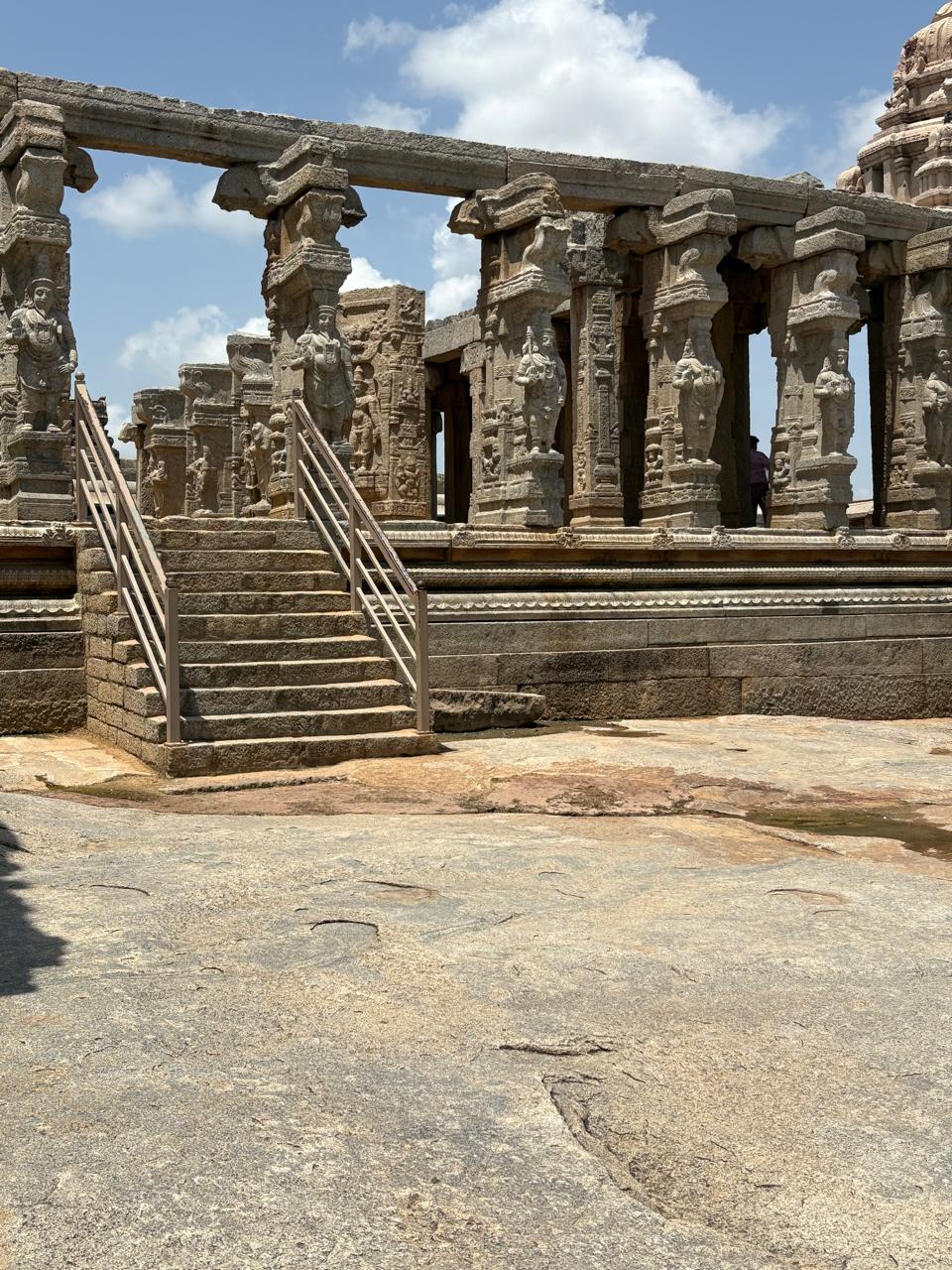
The main temple is laid out in three parts, these are: The assembly hall known as the Mukha mantapa or Natya mantapa or Ranga mantapa; arda mantapa or antarala (ante chamber); and the garbhagriha or the sanctum sanctorum. The temple, as an edifice, is encircled by two enclosures. The outermost walled enclosure has three gates; the northern gate is used regularly. The inner east gate is the entry to the assembly hall, which is a large sized open hall designed with a large space in its central part.
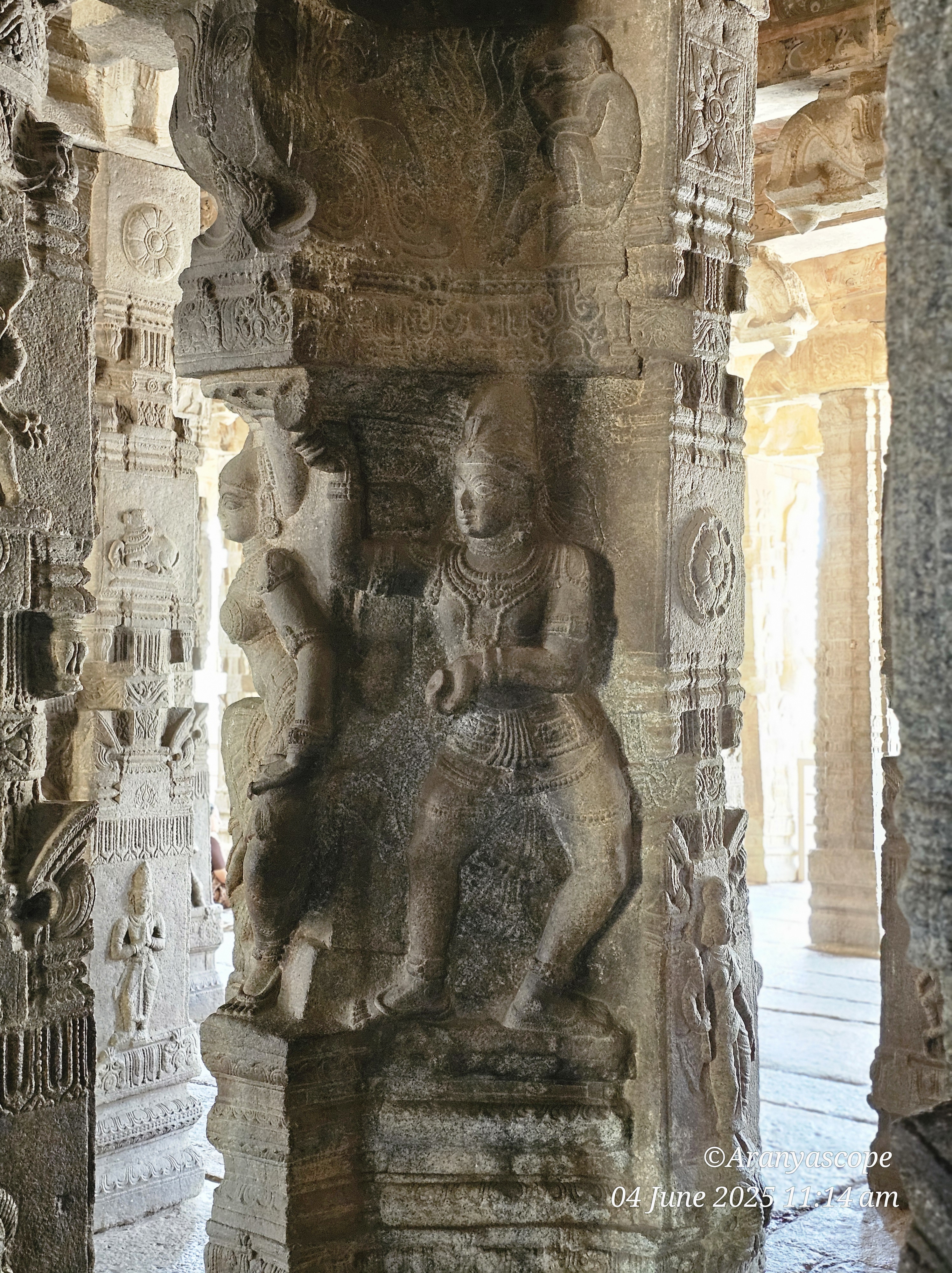
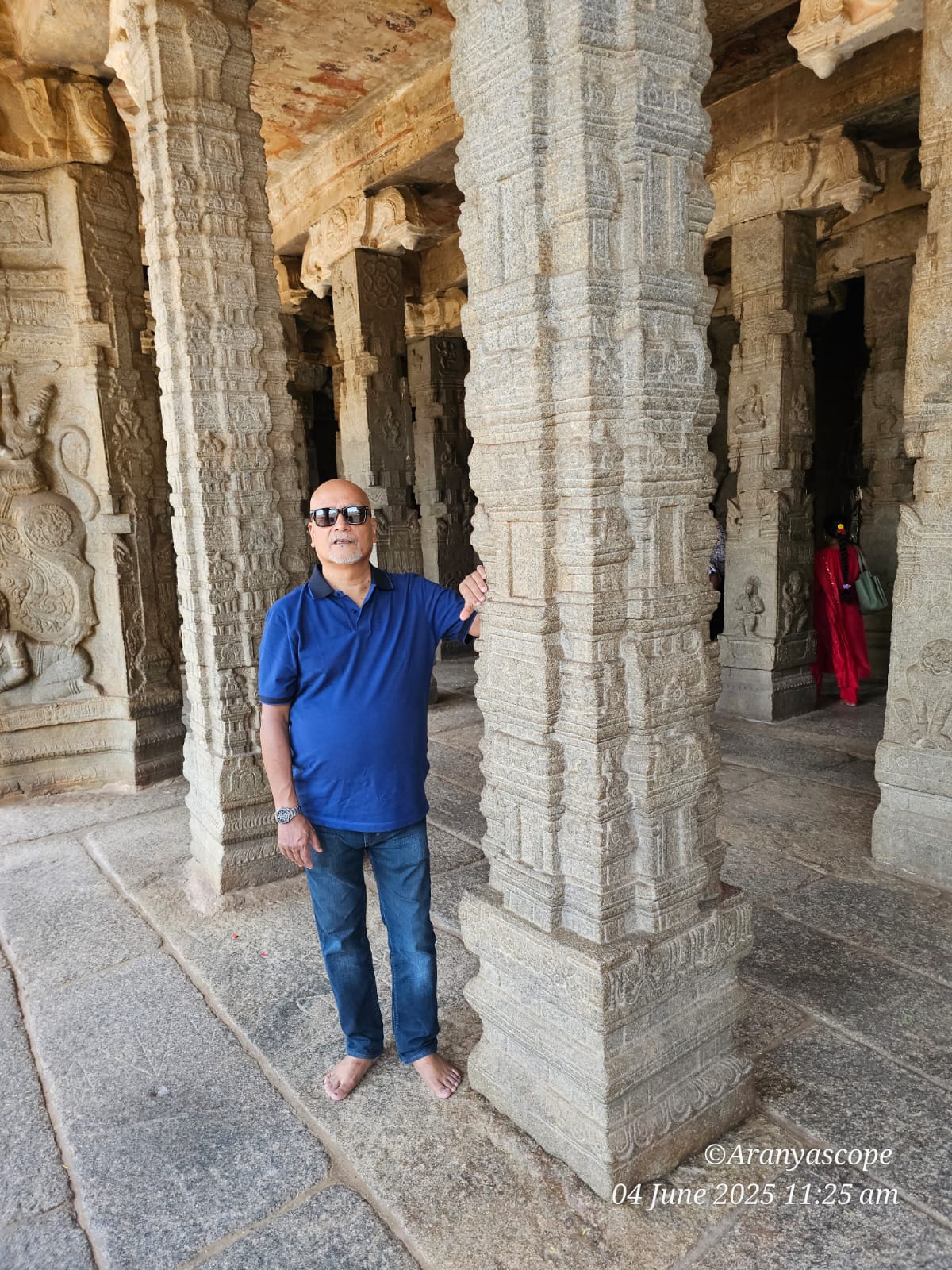
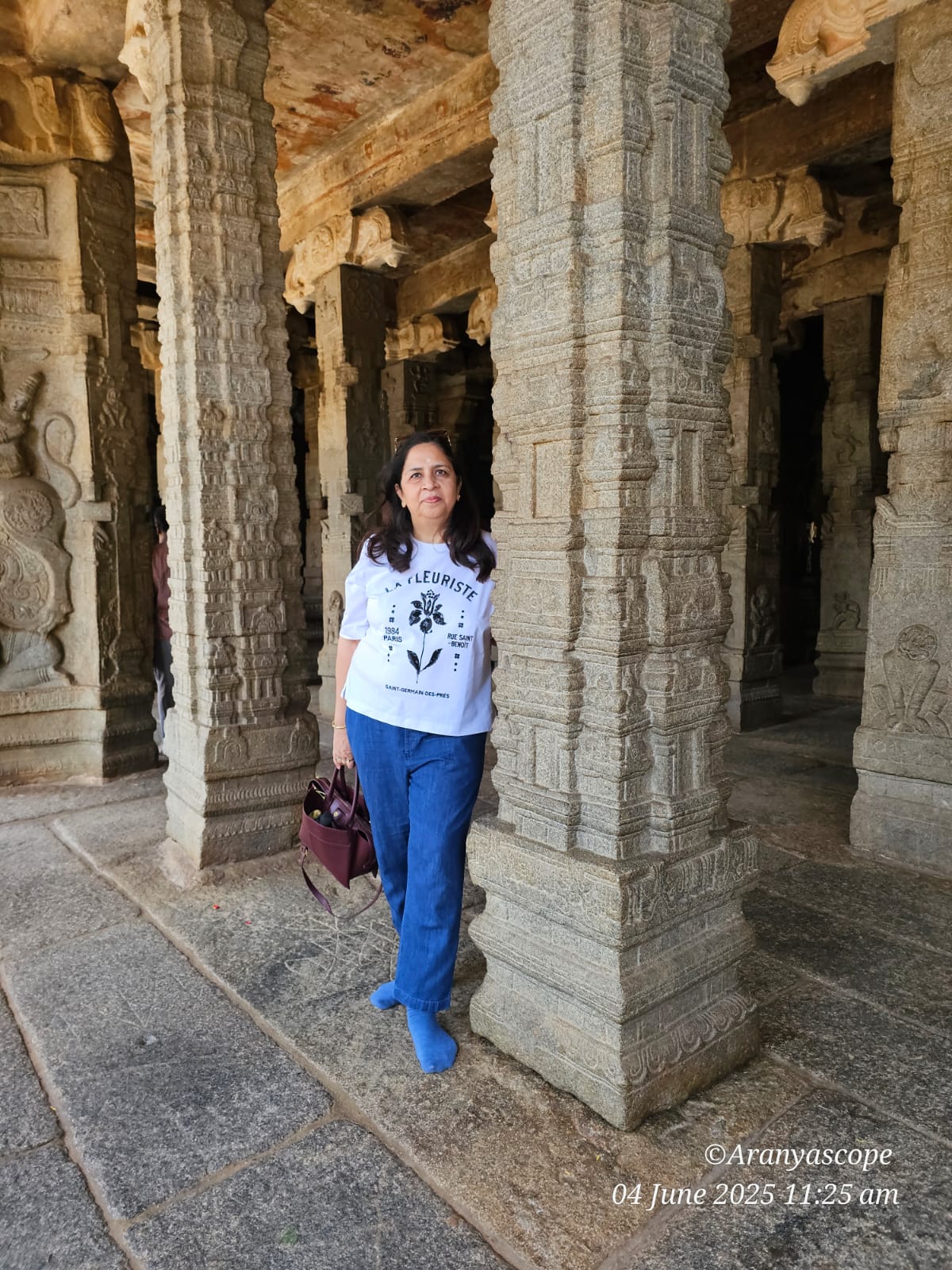
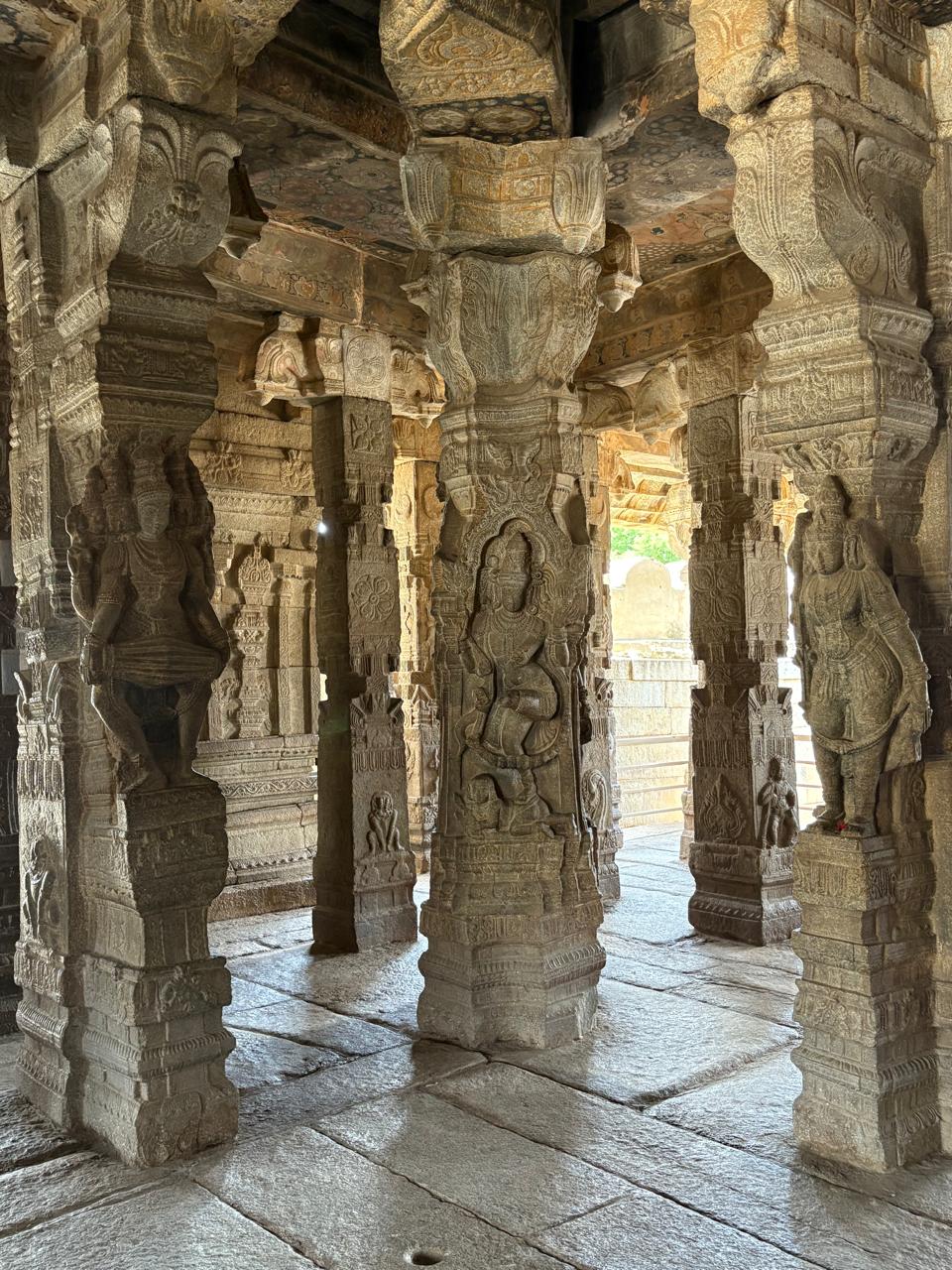
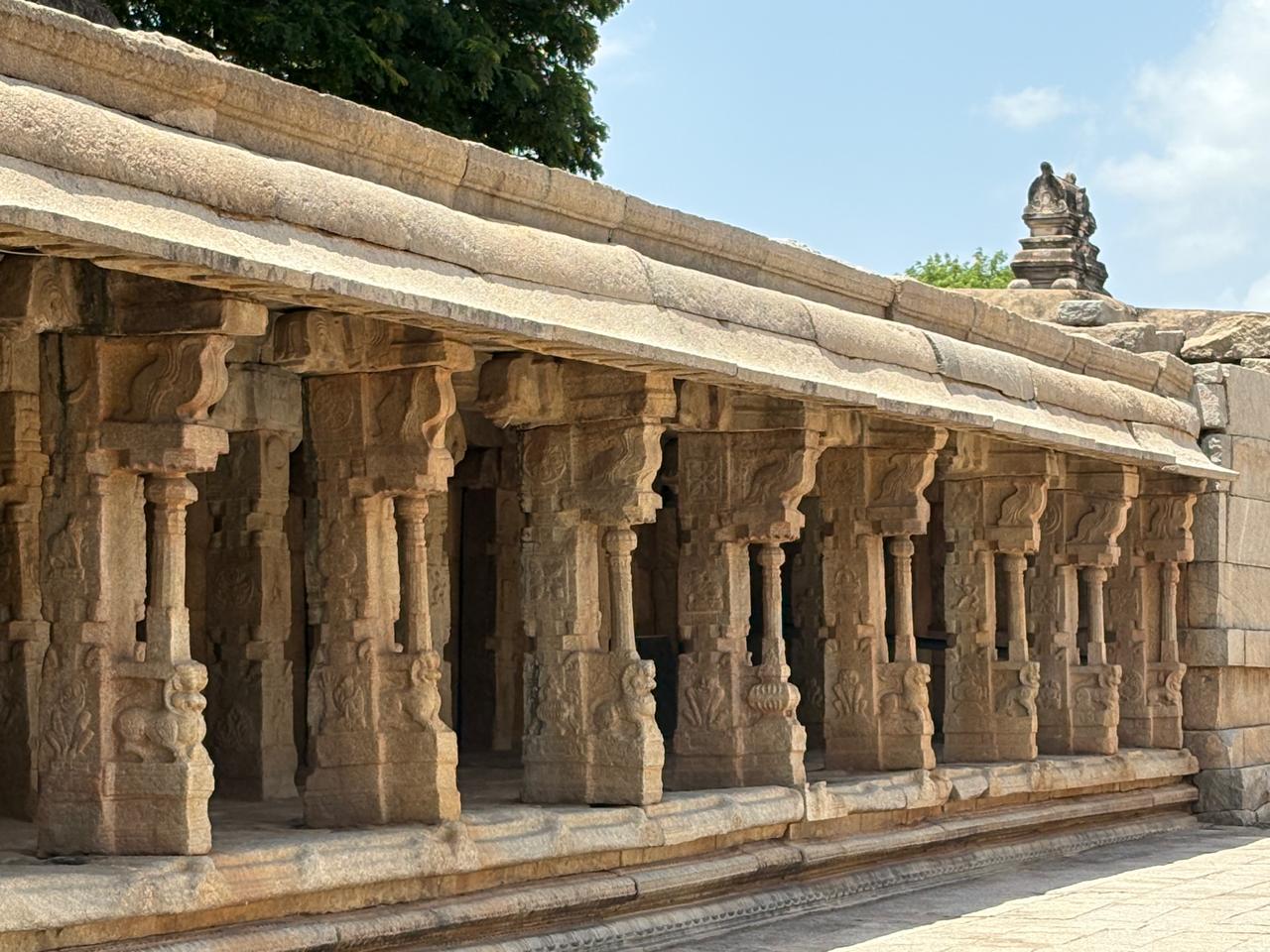
It is at the entrance to the sanctum sanctorum and has a profusion of sculptures and paintings over every inch of space on the columns and ceiling. The images on the pillars and walls are of divine beings, saints, guardians, musicians, dancers and 14 avatars of Shiva. Figurines of the goddesses Ganga and Yamuna flank the entrance to the sanctum. The exterior columns of this hall are built over a decorated plinth; the decorations are in the form of blocks of carved images of horses and soldiers. The columns are slim and have features of colonnettes carved with eaves, overhanging in a curved shape. The open space in the middle part of the hall is defined by large columns or piers which have carvings of triple figures.


In the columns in the northeastern part of the hall, there are images of Natesha flanked by Brahma and a drummer. In an adjoining column there are figurines of nymphs in dancing postures, flanked by a drummer and cymbalist. The column at the southwest part of the hall has an image of Parvathi, Shiva’s consort, flanked by female attendants. There are also carvings of divinities such as Bhringi with three legs and Bhikshatana carved in a dancing posture; this is in the northwestern part of the hall. The ceiling of the hall is fully covered with mural paintings depicting the scenes from the epics, the Mahabharata, the Ramayana, and the Puranas along with the life sketches of the benefactors of the temple.
The paintings in each bay on the ceiling of the main mandapa, the antarala and other shrines, depict the grandeur of Vijayanagara pictorial art. They are painted over an initial plaster layer of lime mortar. The colour scheme consists of vegetable and mineral colours of yellow, ochre, black, blue and green blended with lime water; the background is generally painted in red colour. Apart from figures of gods and goddesses, in the presence of the devotees arranged in rows, the frescoes also depict the incarnations of Vishnu. The paintings are in striking compositions where the particular emphasis is on the period costumes and facial expressions. The fresco in the ceiling of ardha mantapa (ante chamber), which is said to be Asia’s largest, measures 23 by 13 feet (7.0 m × 4.0 m). It has frescoes of the 14 avatars of Lord Shiva as: Yogadakshinamurti, Chandes Anugraha Murthy, Bhikshatana, Harihara, Ardhanarishwara, Kalyanasundara, Tripurantaka, Nataraja, Gouriprasadaka, Lingodbhava, Andhakasurasmahara…


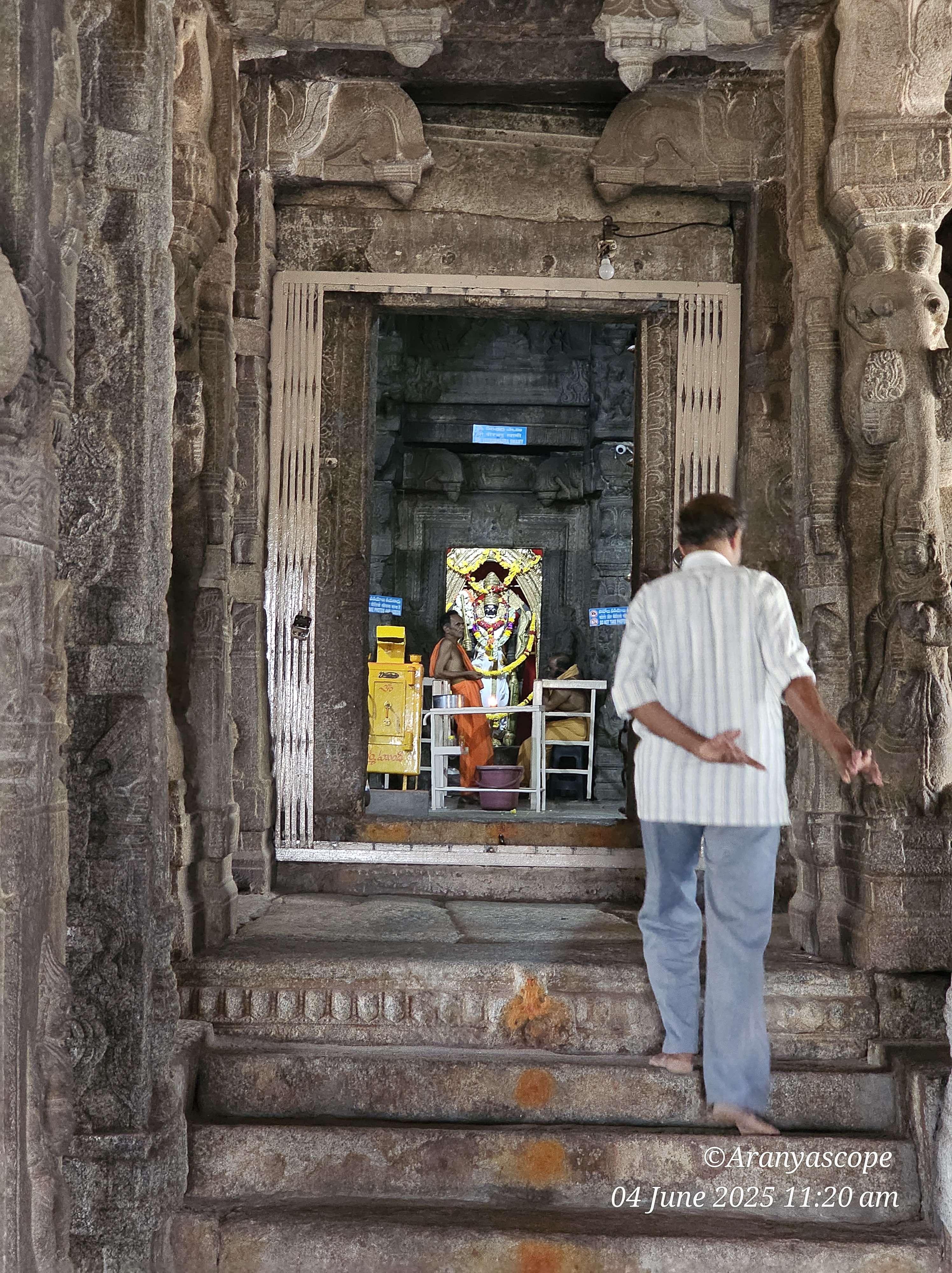
The presiding deity deified in the sanctum sanctorum is a near life-size image of Veerabhadra, fully armed and decorated with skulls. There is a cave chamber in the sanctum where sage Agasthya is said to have lived when he installed the image of the Linga here. The ceiling in the sanctum above the deity has paintings of the builders of the temple, Virupanna and Viranna, regally dressed and crowned with headgear similar to those adorning the Krishnadevaraya’s bronze statue in Tirupati. They are depicted, with their entourage, in a state of reverential prayer, being offered sacred ashes of their family deity.
Within the temple complex, on the eastern wing, there is a separate chamber with Shiva and his consort Parvathi carved on a boulder. In another shrine chamber there is an image of Lord Vishnu. Within the temple precincts, to its eastern side, there is huge boulder of granite stone which has carving of coiled multi-hooded serpent providing an umbrella cover over a Shiva Linga.
The apparently “hanging pillar” is yet another attraction in the temple. There is a gap between the base of the pillar and ground through which cloth and paper can be passed, as the pillar is slightly dislodged and touching the ground only on one side. A huge granite Nandi (bull), 20 feet (6.1 m) in height and 30 feet (9.1 m) in length, bedecked with garlands and bells, carved out of a single block stone, is located about 200 metres (660 ft) from the temple, which faces the statue of the serpent in the precincts of the temple.
We were awestruck by the temple’s architecture, stone carving and the fresco art. Deepika offered puja at the Veerbhadra temple for the peace and prosperity of the family. The priest offered us a small banana (Yellaki or Ilaichi Banana) as prasad. Coming out from the main temple, we made a parikrama of the temple complex, the expansive structure and use of the flat hilltop was simply amazing.
I was wearing my footwear sitting on the stairs to the temple when I noticed a few monkeys in the vicinity, two of them were scanning the area for food and one was peacefully sleeping. A group of devotees were passing through the gate which woke up the monkey and it looked at the source of the disturbance with irritation. In a swift movement, it swooped down on one of the devotees and snatched a banana that the man was holding in his hand, quickly peeling off the skin and devouring it. Deepika, unaware of the incidence walked straight towards Moushumi, sitting under the tree, a few feet away from the monkey, asking her to take a picture when the monkey rushed to her and in a swift movement took out the banana (prasad) that was barely visible from her purse. She panicked and started screaming but the monkey was neither interested in her nor in the purse. I told her to calm down and back off from the monkey. The scene was repeated once more on another hapless devotee.
We left for Bengaluru soon thereafter, hoping to evade the notorious evening traffic. The drive was uneventful except witnessing a crash on the other side of the road, a Toyota Hyrider had hit a tractor trolley with its engine completely gutted and a BMW tried best to avoid them but failed hitting the Toyota from behind. There was a huge man-made congestion of onlookers. It costed us precious 20 minutes before we could cruise again.
Reaching Bengaluru, we decided to stop for lunch at the Manyata Tech Park famous for a food court having the best of the restaurants. The food at the Nasi & Mee was excellent and every morsel was devoured by us. Under the specials, they had a sushi dessert called Mango Sticky Rice served with a coconut milk dip, mildly sweet with the natural sweetness of the mango. Even though, it was unique and flavourful, I felt, it lacked the sweetness one expects in a dessert, they could have added a bit of sweetener in the sticky rice before rolling it. Overall, we were very satisfied with both the quality and quantity of the servings, Thai Green Curry with Jasmine Rice, Veg Hakka Noodles and Prawn Curry for the main course as well as the dumplings for starters.
Moushumi, insisted that we stopover at her home for a cup of tea and rest a while before going home. I checked with Ayush if he can pick us up from there on his way back from office, detouring 20 minutes from his usual route and he confirmed affirmative. I handed over the wheels to Moushumi for the last leg of the journey to her home, as she knows the route while I would have needed constant guidance negotiating the heavy traffic. Later, Ayush picked us up but I realized the detour was a torture for his tired soul after a grinding day in the office.