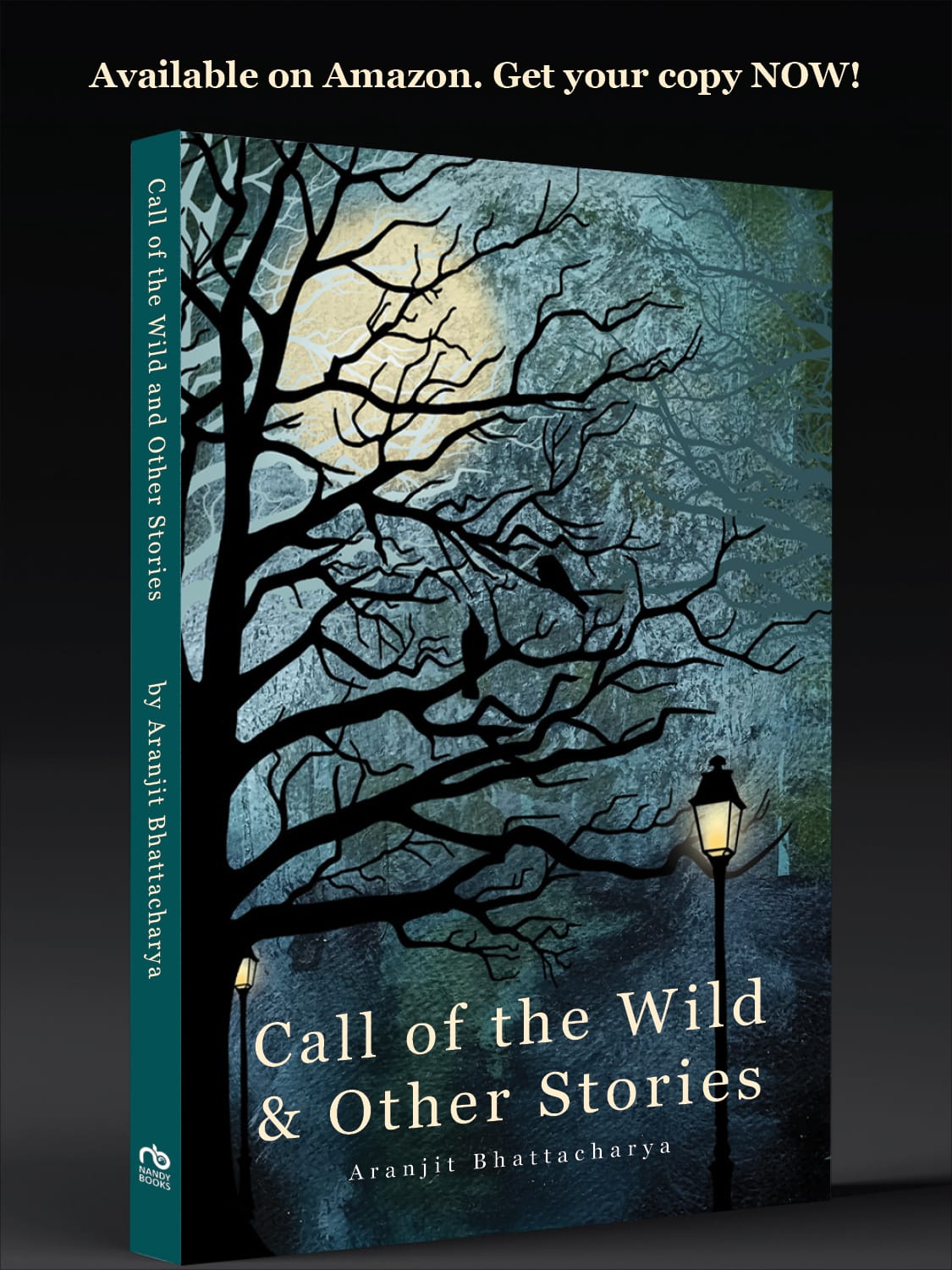
Earlier in the first week of January 2026, my first book, a collection of short stories, CALL OF THE WILD & OTHER STORIES got published. A long-cherished dream was realised. The publisher, Mr. Debashish Nandi asked me, “Have you been to Kolkata Book Fair?” then went on, “It is the biggest book fair, if not in the world, definitely in Asia and of the country, bigger than the World Book Fair of Delhi.” Honestly, I had stopped going to all kinds of “fairs” because of the unprecedented crowd and pollution. I think I last visited the World Book Fair or whatever it was called then, at least two decades ago, with my family and it was quite a challenge to navigate through the crowd who had no interest in the books but have come for an outing.
I am kind of paranoid about the crowd/ gatherings that Kolkata attracts, for example the Durga Puja. But Debashish insisted that I must visit the KBF at least once to experience the grandeur. I was in two minds, because my book is a work of fiction that I wrote over the past one year and an easy read, nothing serious that will engage the readers in conversations over a cup of tea. Frankly, I don’t expect it to create even a ripple in the publishing world. So, what’s the point of spending money for the airfare and hotel? However, my better half, Deepika too insisted that I should go.
I checked with my Kolkata friends about the location of the fairground and he suggested to look for accommodation in Salt Lake area which is very close to the venue and “able feet” can walk the distance as well. I remembered another friend from NCR had stayed somewhere there and again requested my friend, Abhijit to help find a suitable guesthouse in Salt Lake. Thereafter, I booked my air tickets and the guesthouse, Smriti Villa in GD block of Salt Lake, a mere 2 km from the venue.
I reached Kolkata on 25th morning, my dear friend Atish surprised me by coming to the airport to pick me up instead of sending the car as was discussed over video call. Atish aka Soni, hadn’t had chance to have his breakfast, so we went to kiosk at the airport to munch something and a cup of tea before going over to the guesthouse.
The guesthouse, Smriti Villa was on the first floor of a privately built house having 4 bedrooms with attached bathrooms, a lounge area and kitchen. It was more like a serviced apartment. The check-in was smooth and the manager was very polite and helpful. We had a cup of tea and left for the fairground. Soni, dropped me at the gate no.7 of the venue promising to join along with Abhijit in the evening at the guesthouse.
The entry to the book fair was free but there was security check in place. The guard asked me, “Are you carrying cigarettes?” “No, I don’t smoke.” I replied. His next question, more like robot, baffled me. “Are you carrying lighter or matchbox?” “Why should I carry such a thing when I don’t smoke?” I retorted forgetting the advice of my friend to keep my mouth shut when confronting stupidity in Kolkata. I don’t know if the guard understood or not but waived me to enter.
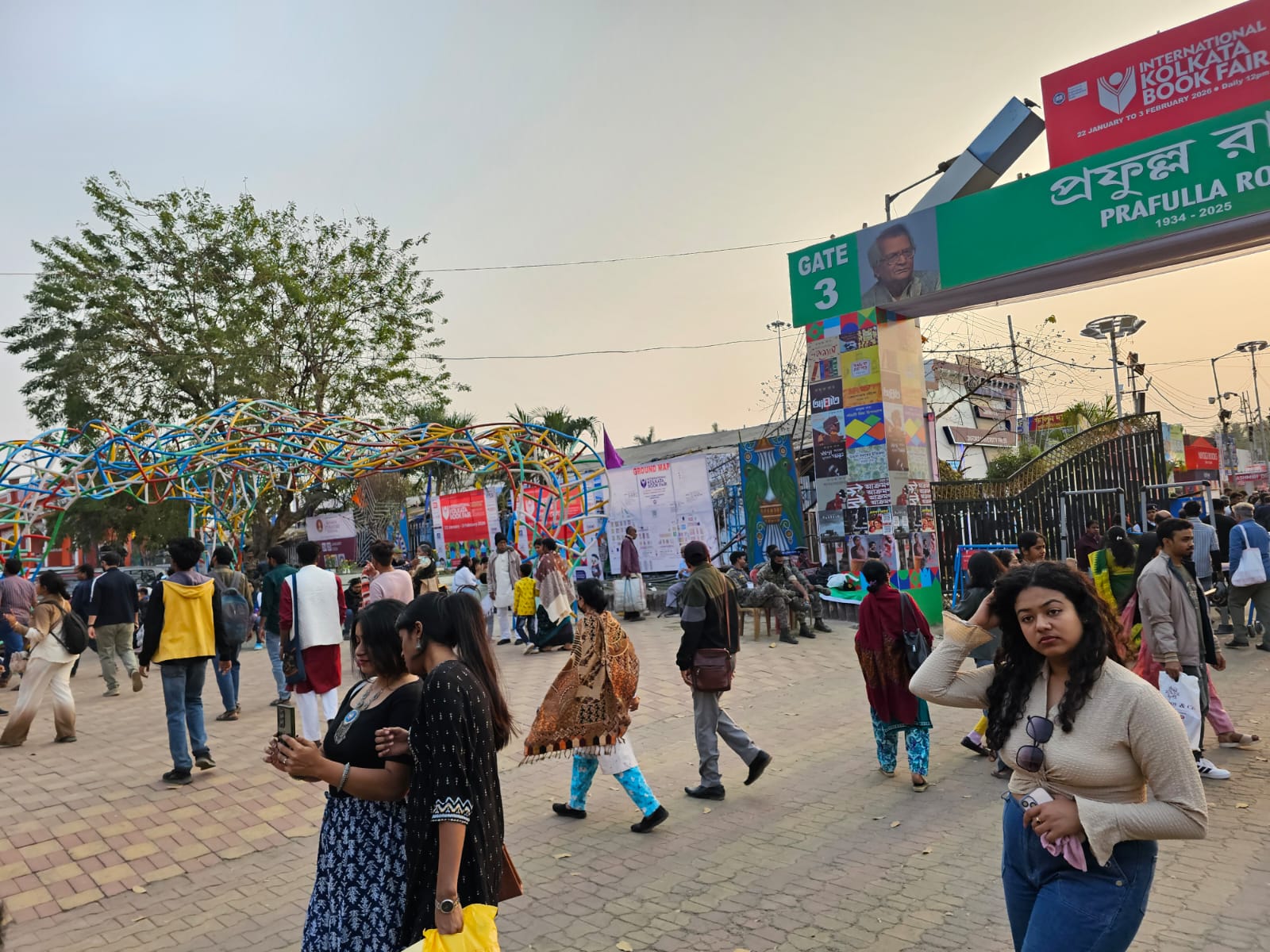
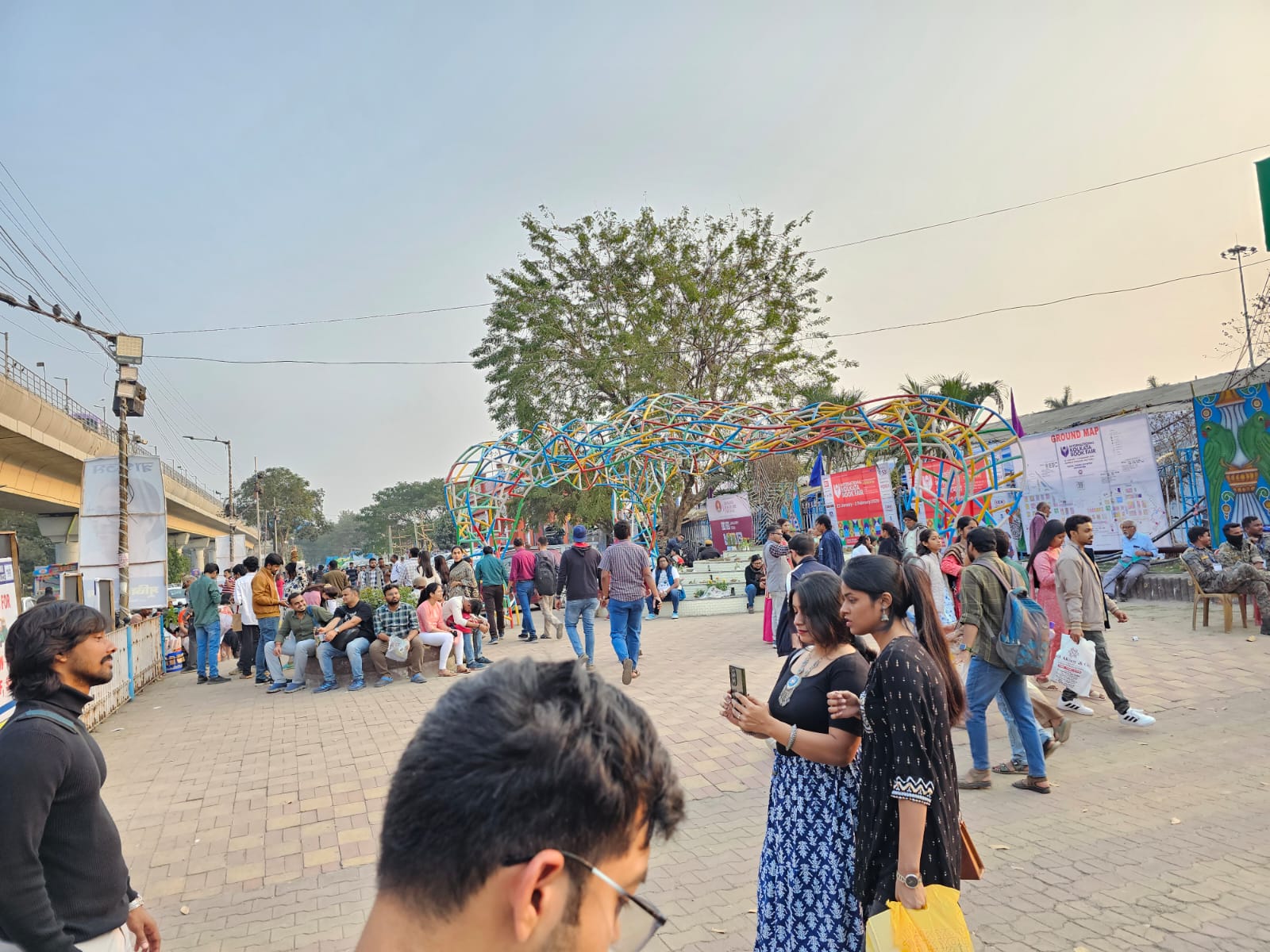
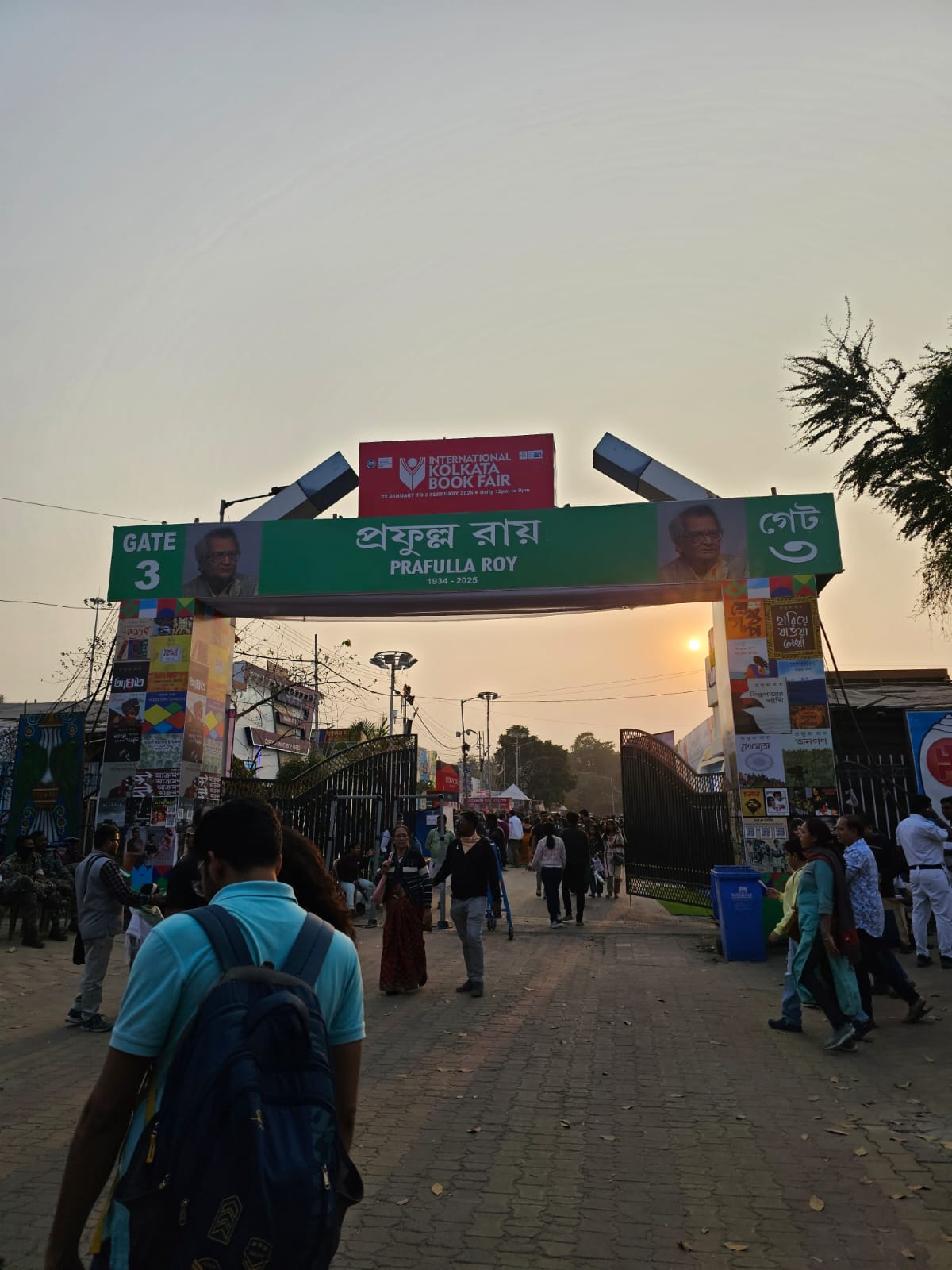
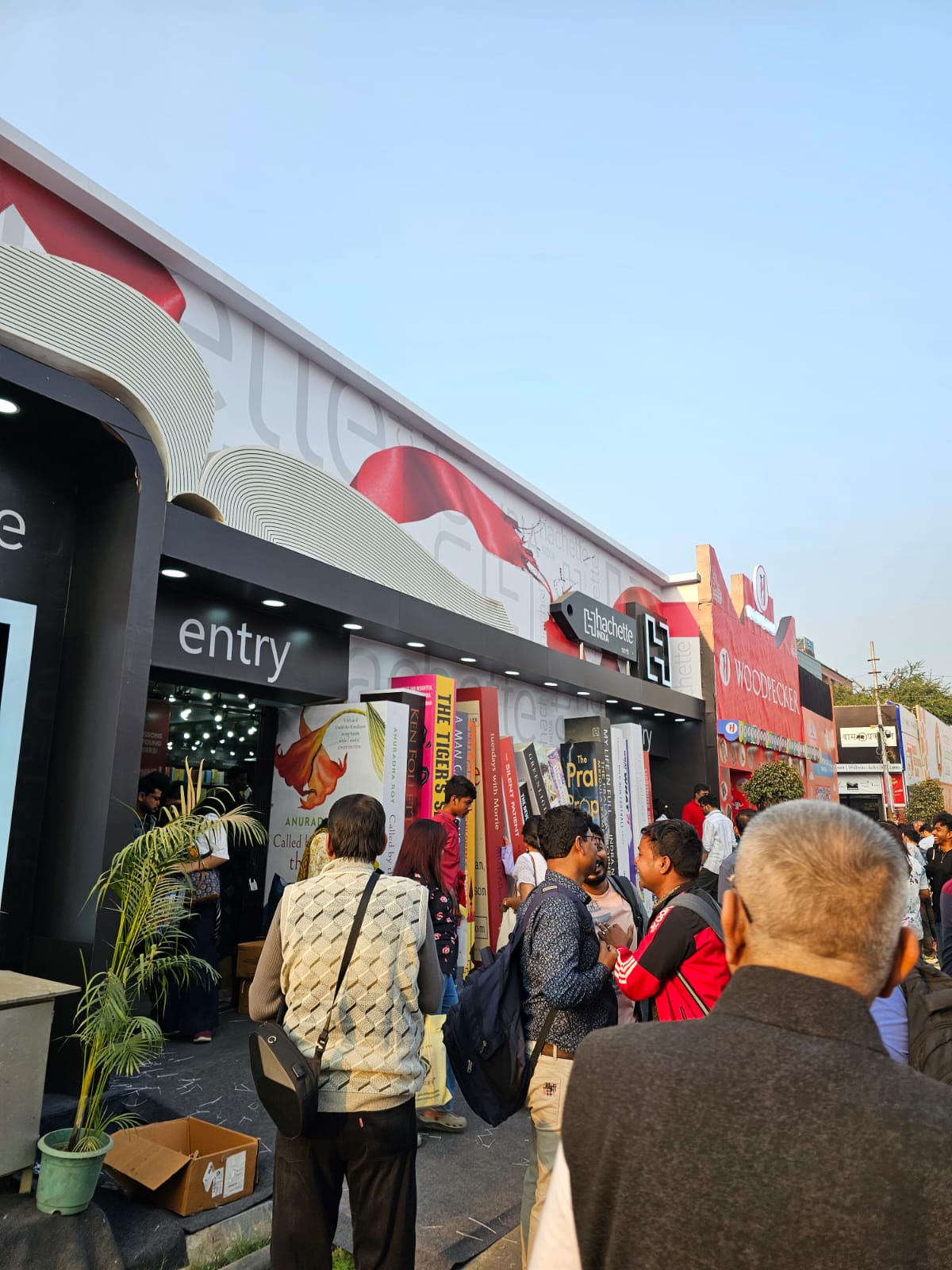
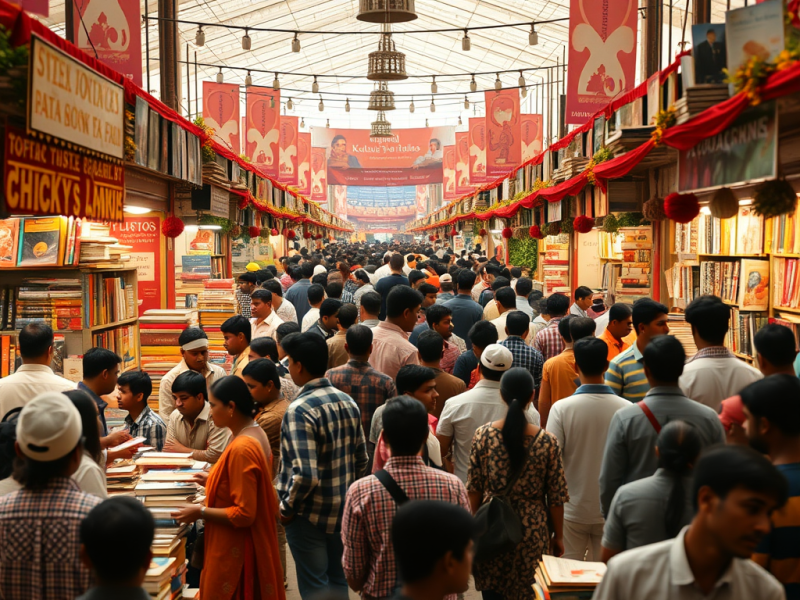
I entered from the gate number 7 and realised the stall of the publisher Nandi Enterprises was at the other end near the gate number 2. I walked through the fair soaking in the sun as well as the atmosphere around me. The day was Sunday, a holiday for most and the Kolkatans, ever eager for festivities decided to throng the place in full strength. It was a family outing for them. I liked it because more people meant more sell of books. However, within next hour or so, my balloon of euphoria was punctured as I realised the majority of the crowd had no interest in the books, they simply drifted from one stall to the another, giving cursory glance to the displayed books. The only exception were the Bengali language publishers, Ananda, Mitra & Ghosh and Dey’s Publishing where there were queues to enter the stall. The only English language publishing house that attracted similar crowd was Hachette India stall.
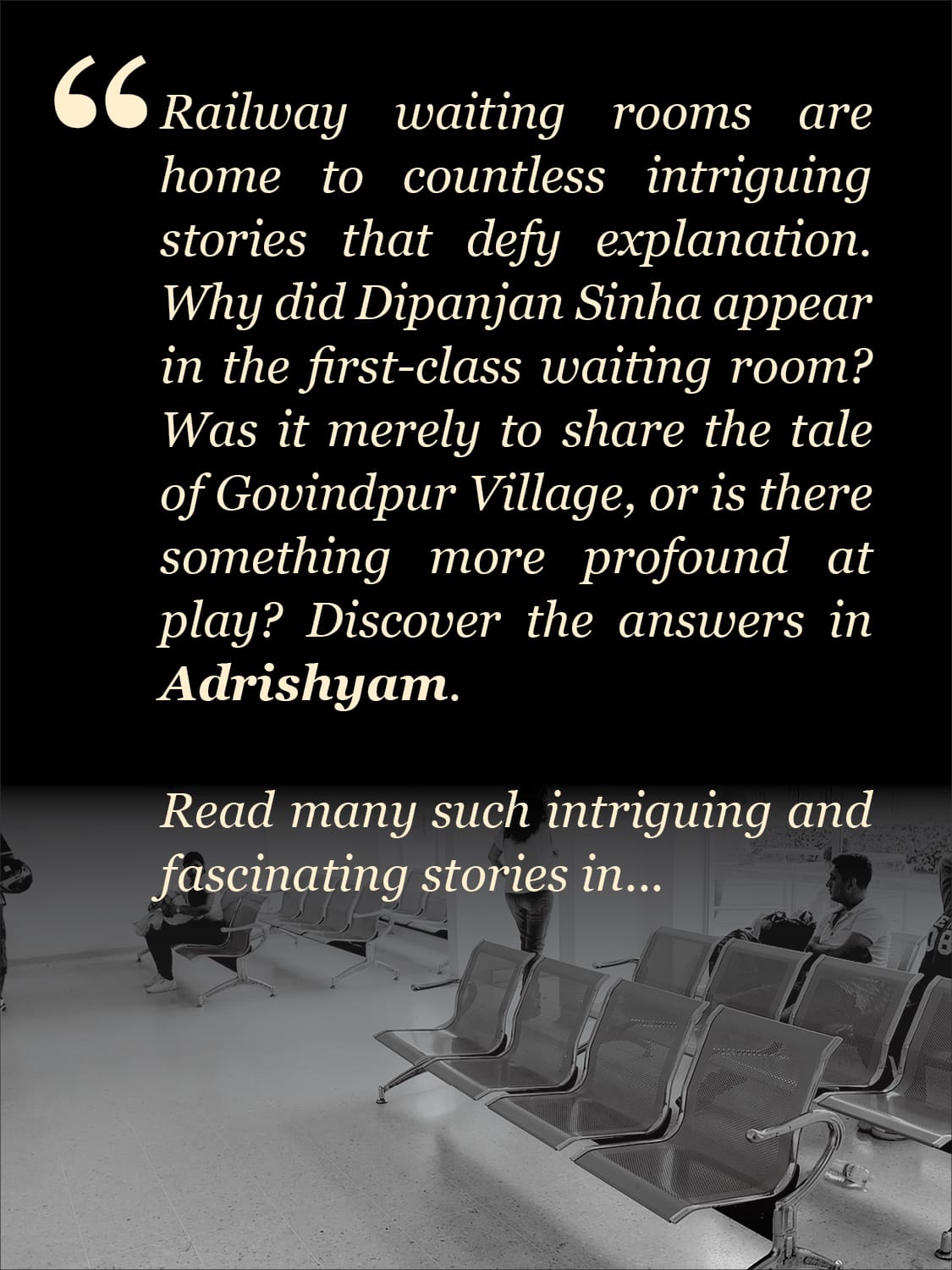
As far as my book is concerned, it is just a collection of fictional short stories. Not a serious read but more like a book you read while waiting at airport/ railway station or on your journeys. My marketing/ sales instinct got the jolt when I saw, there was no effort on the part of the publisher to push his books, not just mine but whole bunch of his own publishing. And this was not an isolated case but across the book fair where the smaller publishing houses are simply there to announce their existence. I understand that it is not easy to campaign for your products if you are not trained in retail sales but one can perhaps hire youngsters for the duration of the fair to do the job for you, in fact, there were few stalls which were doing it. I spent almost 4 hours at the book fair and the thought dawned on me that it would have made no difference to the fate of my book if I had skipped it. Two people picked up my book while I was present inside the stall, going through the pages and left without purchasing any book!!!
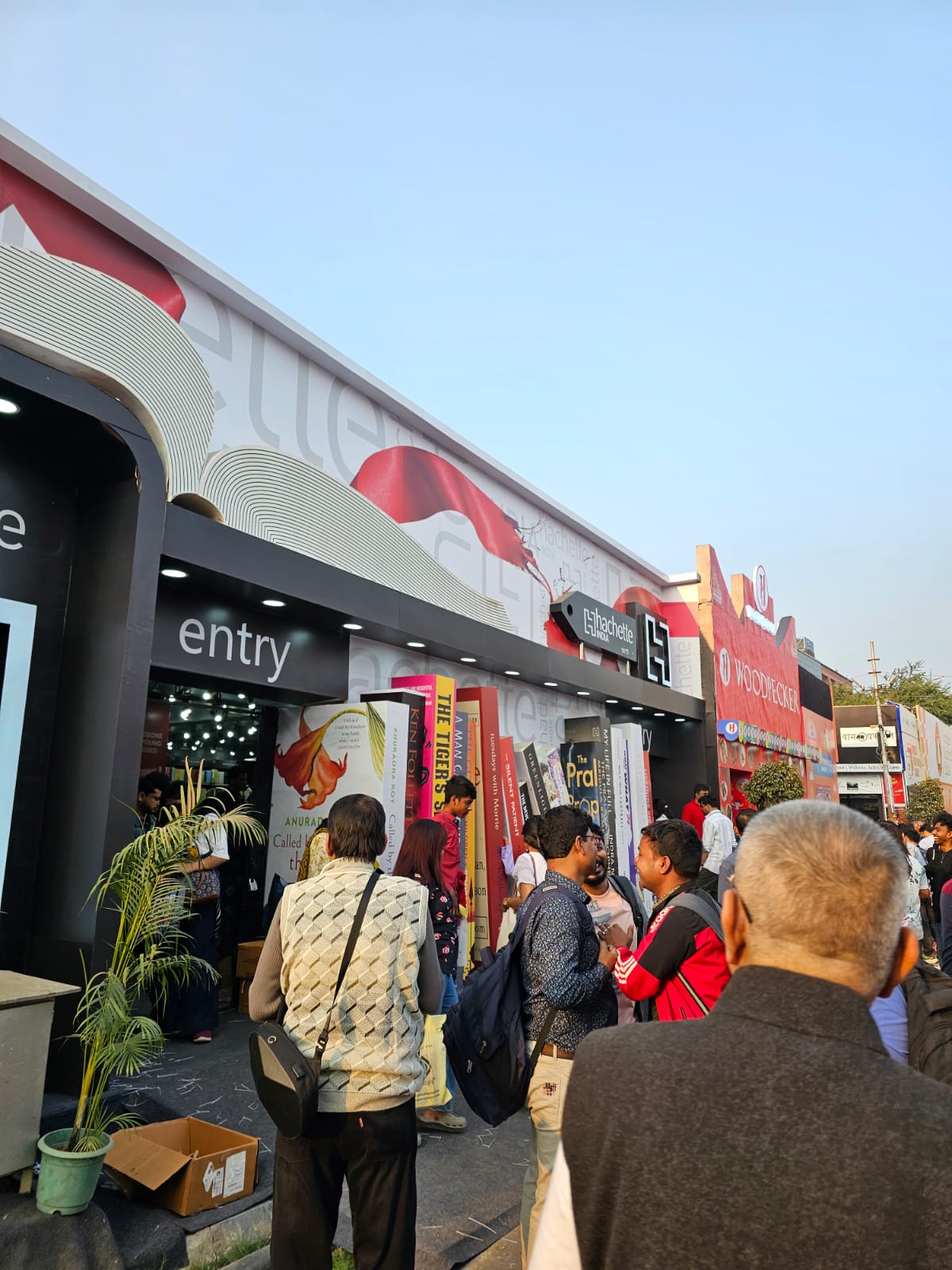
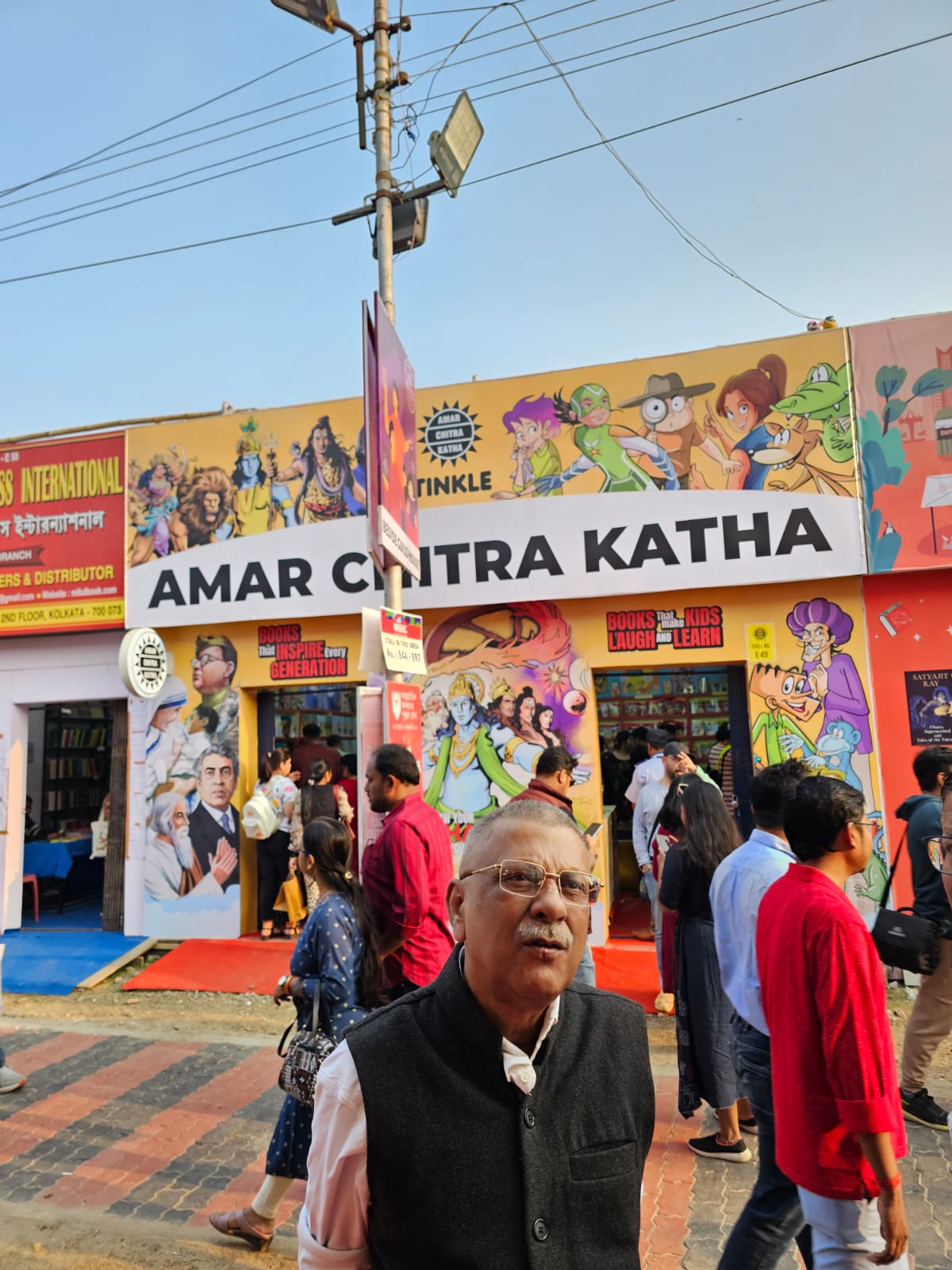
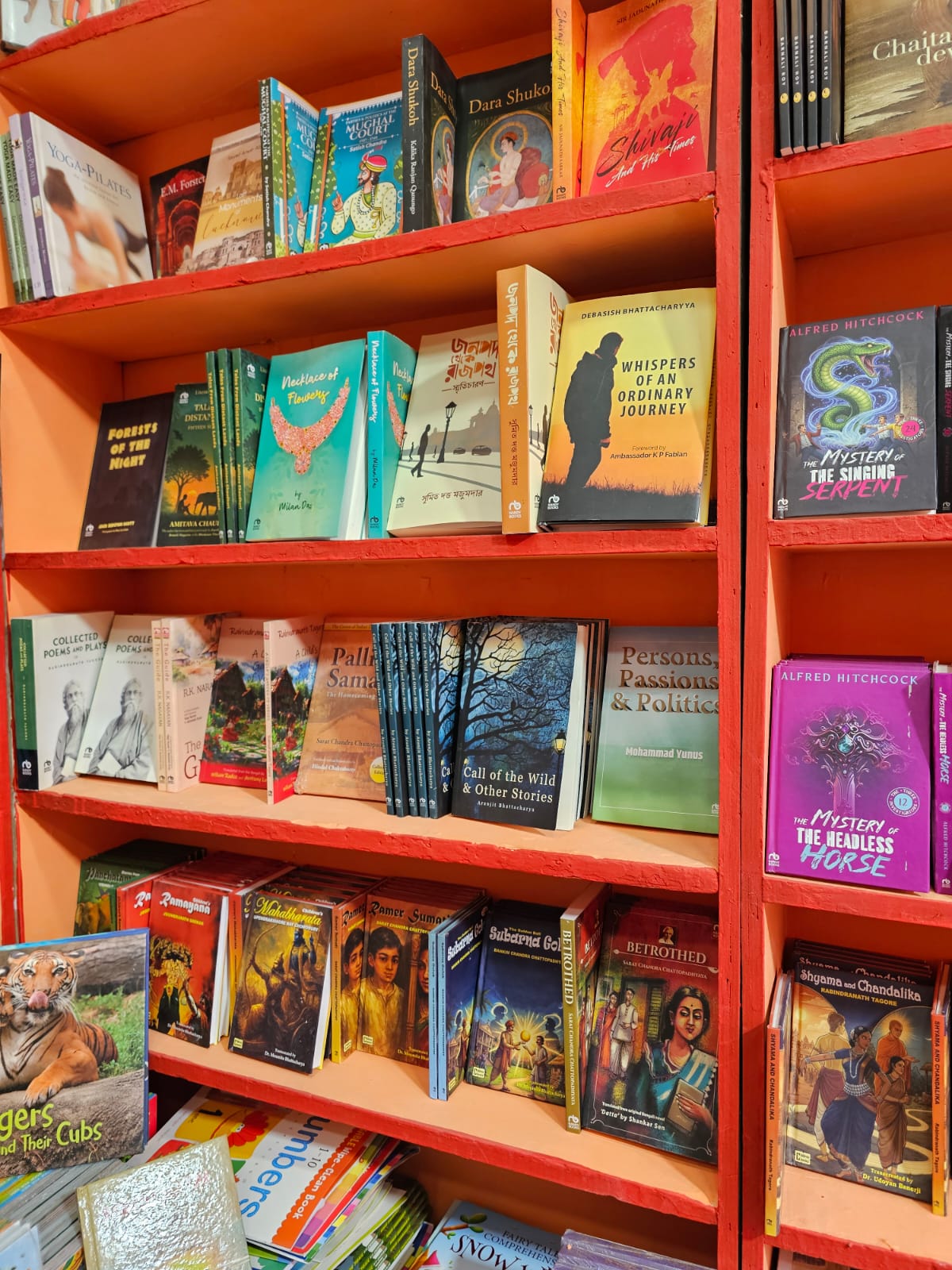
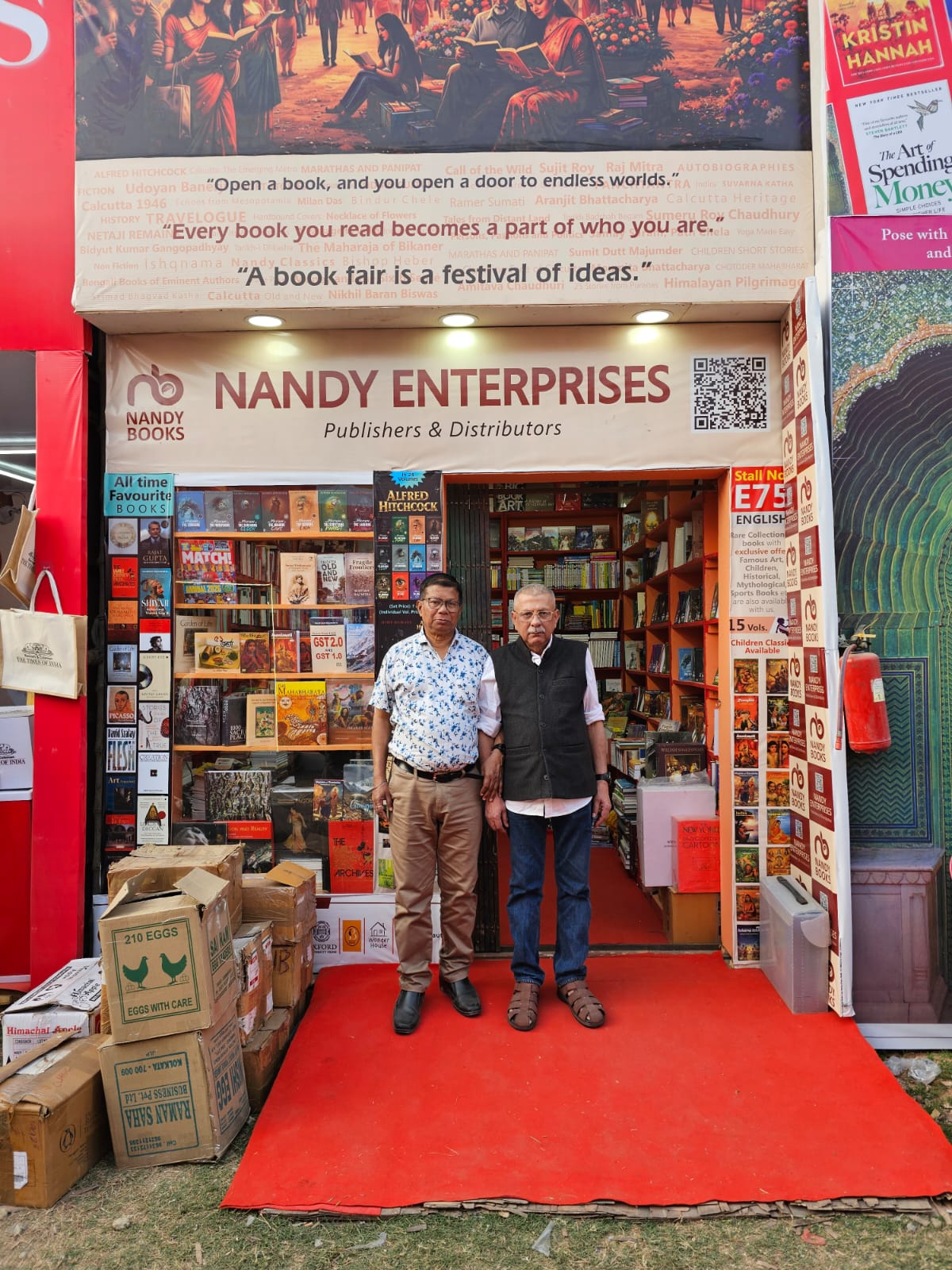
In the evening, I decided to leave for my guesthouse but coming out did not see the familiar “Toto” or e-rickshaw anywhere. What I saw was the surging wave of humanity coming through aimlessly. They all wanted to be there at the Kolkata Book Fair, touted to be the biggest in the country. They were busy taking selfies and immediately posting on the social media. I opened the google map on my phone and started walking the 1.80 km to my guesthouse.
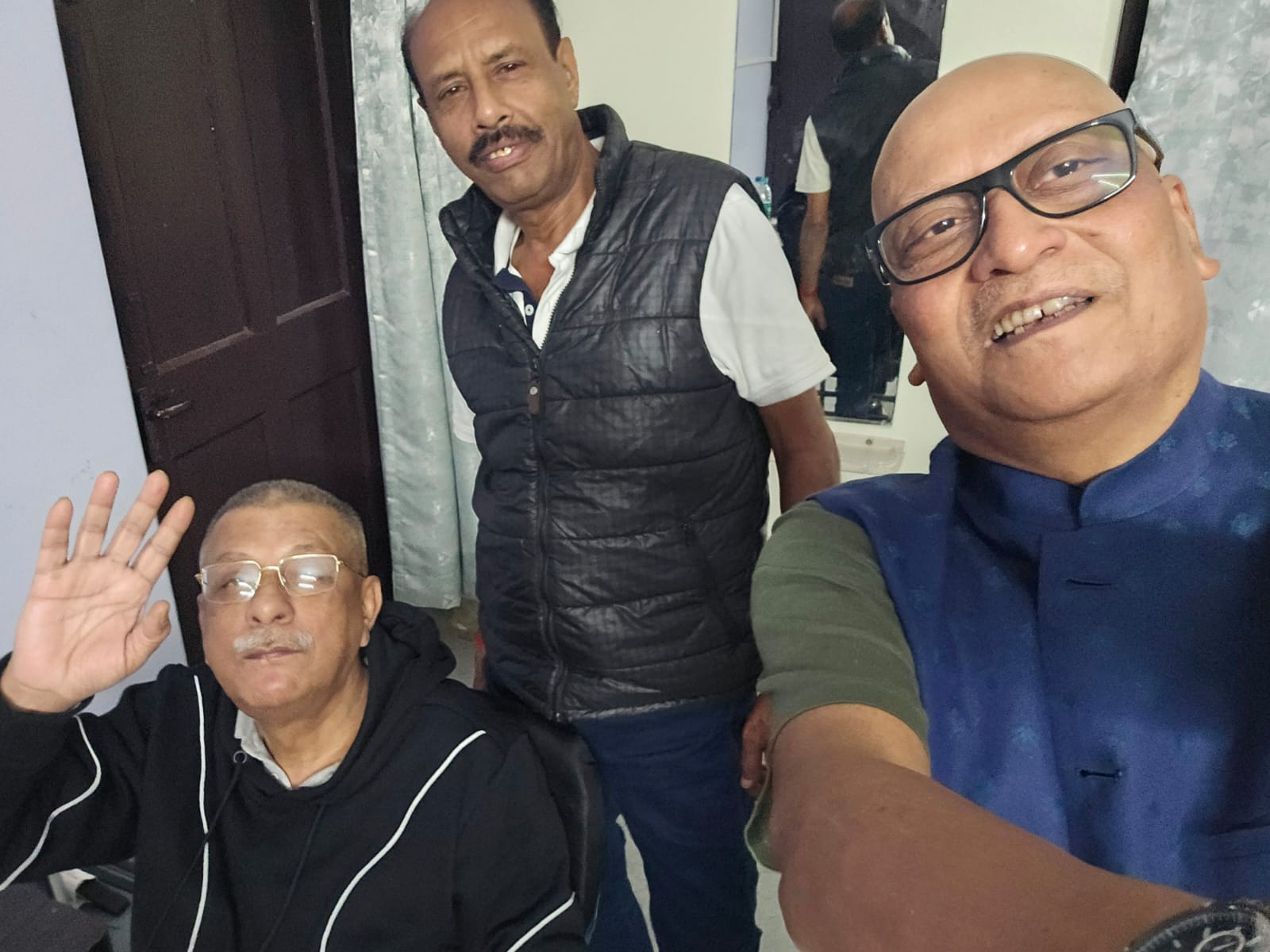
I was exhausted when I reached my room having woken up at 4 am and having been on my toes since then. I put my phone to charge and crashed out. My friends, Atish and Abhijit, as planned came around 7 pm and woke me up. It was a mini get-together of three Abs and turned out very pleasant and relaxing. Atish brought his elixir-of-life along with some Chakhna which we consumed in the space of 2.5 hours and then ordered food from Koshe Kosha, a restaurant I saw while walking back to the guesthouse from the fair ground. The food turned out to be good and tasty. During the evening, my lunch and dinner for next day was sorted out too, with Atish confirming to pick me up around 11 am and Abhijit inviting us over to his home in the evening.
Next morning, I woke up early and was ready for a cup of tea but found the guesthouse inmates including the manager were still sleeping. It was the Republic Day, a national holiday. I quietly slipped out to explore the neighborhood and find a tea vendor. Being in Kolkata, I knew there would be one not far from my location and I found one soon. A group of morning walkers, few years older to me, perhaps were enjoying their brew and vociferously talking amongst themselves, was what made me look at them and the existence of the tea stall. The “Lal Cha” or the black tea was very refreshing in the morning and I set out to explore further. I found a fruit seller at the corner from where I picked up a bunch of “Kathali Kola” or small banana, having very distinctive taste and aromatic, found only in the eastern part of the country.
Atish came around 11:30 am by which time I had my breakfast of Dosa and Medu Vada from Chennai Square having a Zomato rating of 4.4/5.0 and for a change, the ratings were right. We went to the City Centre Mall and had coffee at the Starbucks outlet. Atish reflected at the high price of the coffee there and the relatively much cheaper options available right across the road at the street-food vendor. I sipped my cappuccino and told him, “You can’t compare this coffee with that instant powder coffee, good things in life have a price.” He did not say anything but nodded his head in appreciation as he sipped his coffee. Thereafter, we took a quick look at the mall and left for our lunch.
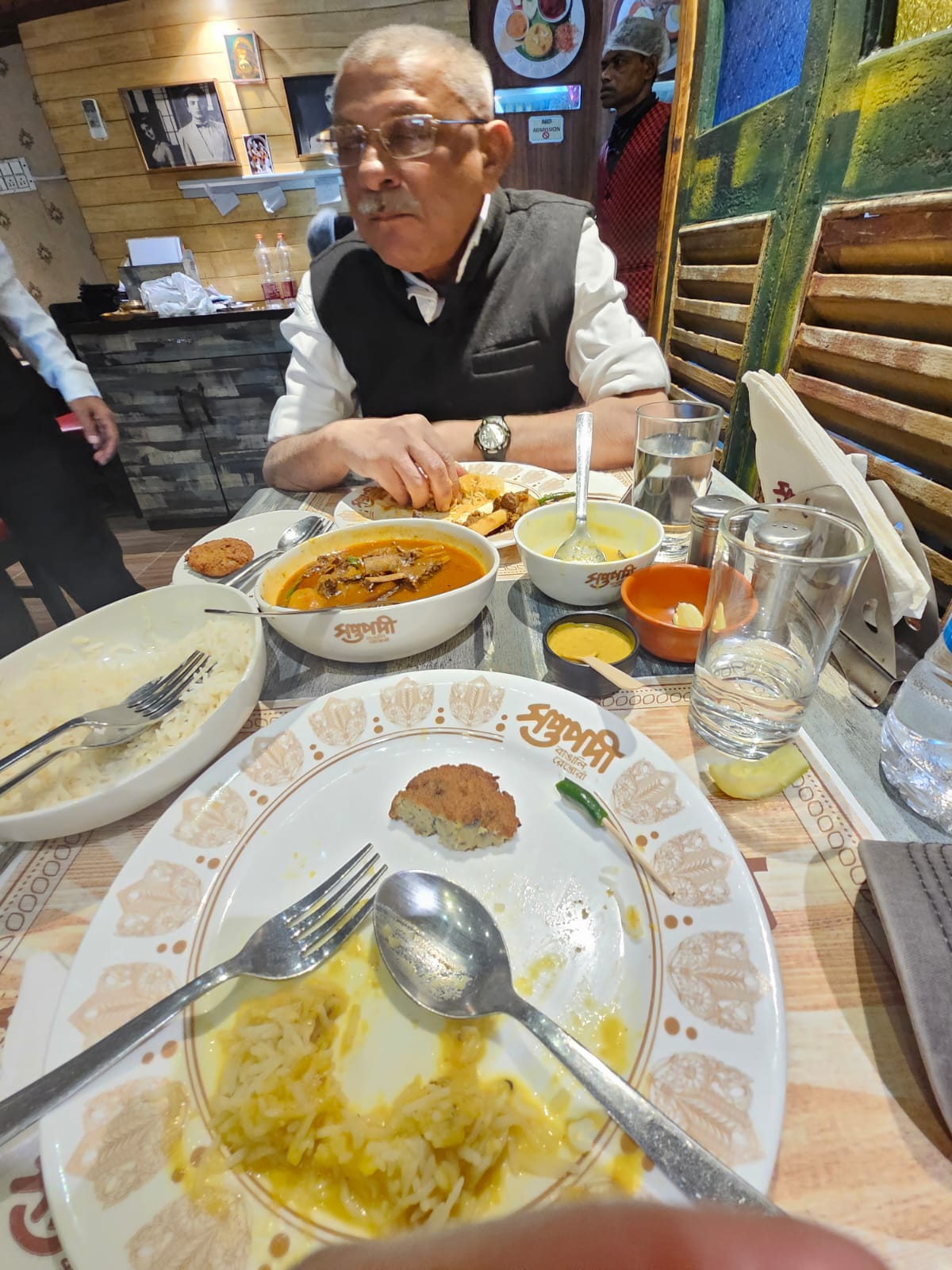
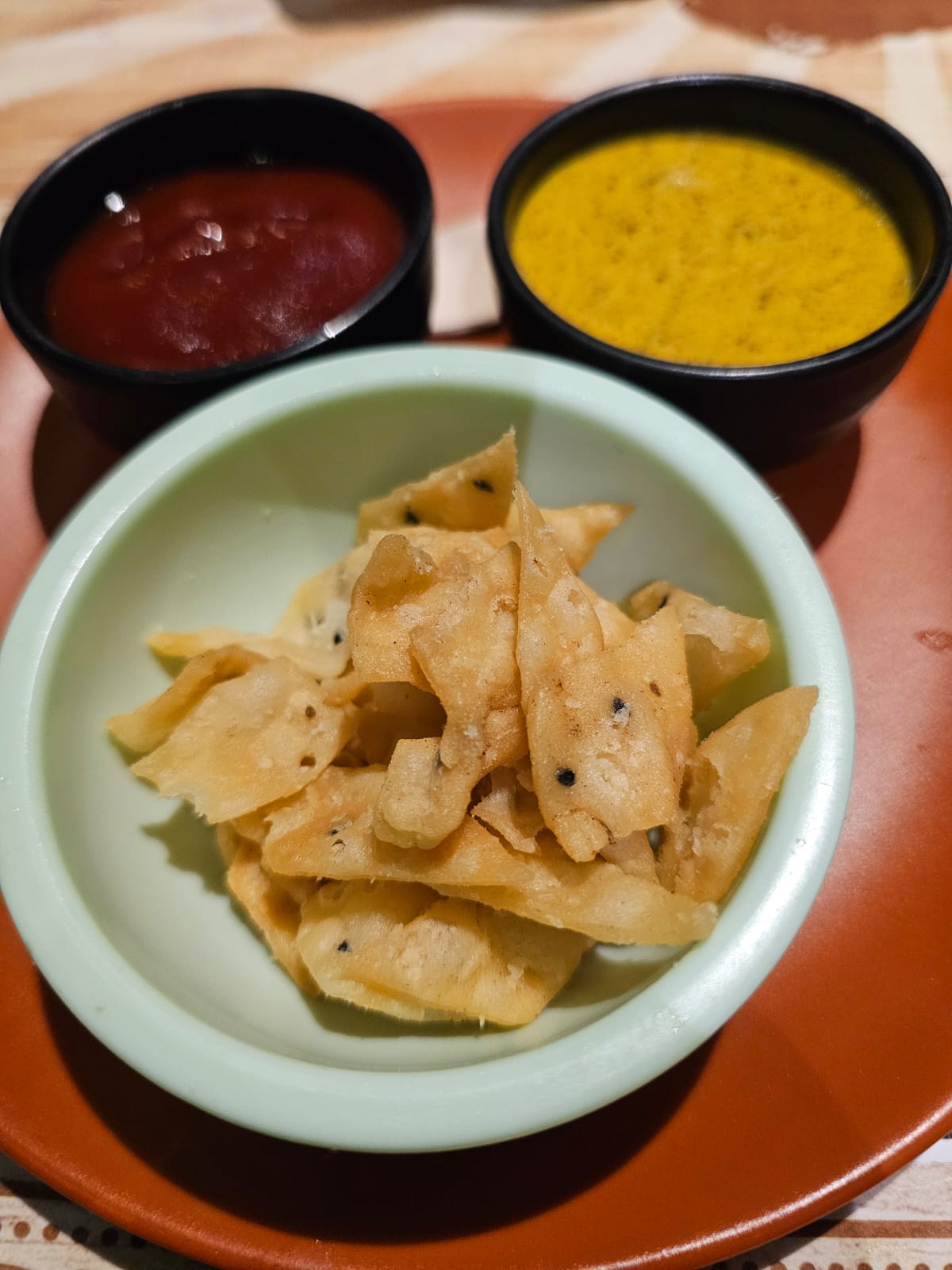
The Saptapadi Bengali Restaurant is a theme-based restaurant in honor of the Superstar Bengali Actors Uttam Kumar & Suchitra Sen’s movie of same name. The movie was superhit when it was released for public viewing. I haven’t seen it. In fact, I haven’t seen much of Bengali cinema beyond the masters, Satyajit Ray, Mrinal Sen and Ritwik Ghatak in my youth days. The restaurant was small having around 24-30 pax capacity but the service and food ensure regular footfalls. We found a table for two and settled down. We ordered Muger Dal, Posto Bora, Mangshor Jhol and Sada Bhaat. And rounded it off with Nolen Gur ice-cream. The main course was excellent, light and yummy, the mutton soft enough to fall out from the bones. However, the ice-cream was average, the same flavor from Amul is far more delicious. The restaurant manager took our photo and presented us with a hard copy.
We visited the book fair once again and it being a national holiday, was full of humans thronging the place with gay abandon. Like the previous day, there was no interest, no compulsion to buy books, just roaming around clicking photos and sliding in and out of the stall giving cursory look at the books. However, the food stalls were bulging with crowds and the ground around was littered with disposable plates and glasses despite the availability of wastebins. I bade goodbye and best of luck to Mr. Nandi and came out to sanity.
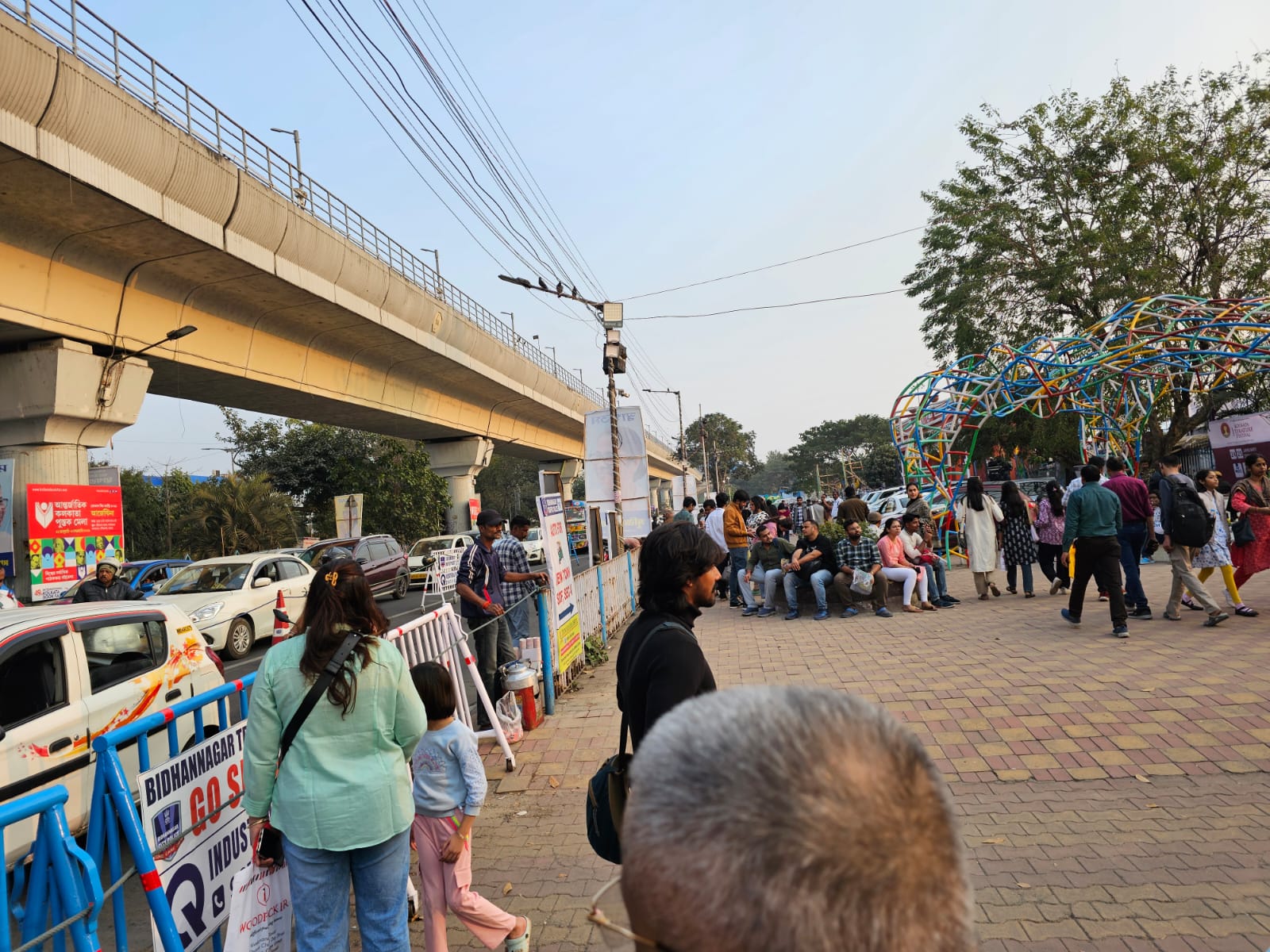
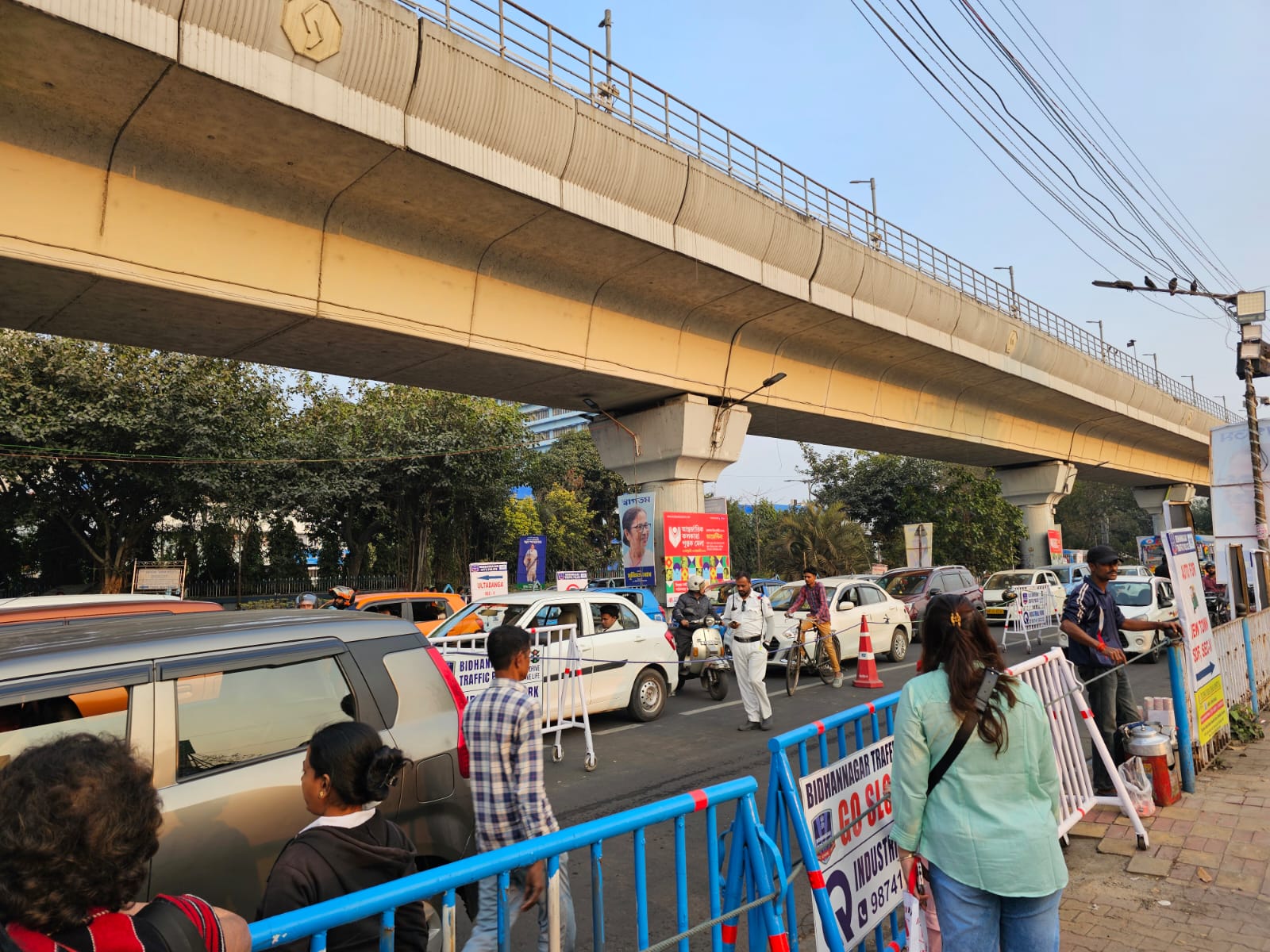
In the evening as we were getting ready to go to Abhijit’s home, Nandini aka Chhoti, the darling daughter of Atish called to inform that she’s in the vicinity, at a food festival with her friend. I wanted to meet her, my god-daughter, so we went to the food festival. It wasn’t crowded like the book fair, apparently because it had a entry fee. Most of the stalls were of sweets from across the state and few savory stalls as well. One of them was selling octopus (grilled, fried or curry). I checked with Atish if he would like to try but he flatly refused. Chhoti excitedly confirmed that she and her friend had already tasted and it was delicious. We moved on and saw a stall selling pickles; I wanted to check-out the stuff and requested a sample of “Chunda Mango Chutney”. Must inform here that Chunda is primarily sliced mango (or even raw papaya) and made across the country but the spices vary from region to region. Having tasted the varieties from up north to the west, I wanted to check the eastern variety. The sales person offered me a spoonful and then kept offering 5/6 other pickles/ chutneys for tasting without my asking. This was the kind of salesmanship I missed at the book fair. I ended up buying 4 different pickles/ chutneys, would have bought more but keeping in mind the limited space in my cabin luggage, I let go few of the delicious offerings.
At Abhijit’s home, they were just him and his wife, Shukla, their elder son with his wife is settled in USA while the younger one being in merchant navy was away on duty. The evening was well spent chitchatting with them. They also have a third member at home, a beautiful Cocker Spaniel. It was kept in another room and became restless, scratching the door and barking. I told Abhijit to let him out but he was hesitant, felt the dog might become aggressive and bite. “Why will he bite, unprovoked?” I asked him. “He had bitten both me and Shukla.” He replied. Still I insisted that he let Simba out to meet us. He brought him out on a leash. Simba started barking at me but his tail was swinging left to right all along… most likely he was seeking my credentials. I told Abhijit to release him from the leash and I will be responsible if anything goes wrong. The moment, the leash was removed, Simba became calm and came to me sniffing me all over the place. His next move surprised both Abhijit and Shukla, Simba put his paws on my knees and demanded petting. His bonding with me was symbol of pure heart.
Later, after dinner, Abhijit and Shukla dropped me at the guesthouse.
While I was at Abhijit’s home, my cousin bro called up to inform that he was back in Kolkata from his Rajasthan trip and he will have breakfast with me the following morning.
I was ready for my bro when he called up to inform that he was running a bit late and I should have my breakfast without waiting for him. Honestly, I had no idea about the distances in Kolkata otherwise I would have told him to send me his location and I would take a cab to his home. He was coming from Belghoria to Salt Lake to take me back there to meet my octogenarian Aunt and then to Kasba near Acropolis Mall for lunch meet with my other cousins. Looking back, I know it was quite a task which he did with a smiling face. And that’s not all, later in the evening, he dropped me at the airport too.
Lunch menu was decided much earlier, biriyani from Arsalan. The venue was my cousin sister’s home but was shifted to my niece’s home. My niece is just about a year younger to me and we were very good friends, regularly corresponded through snail mail in our younger days.
On my arrival on the day one, the number lock of my suitcase somehow got corrupt and I had to break it to open the suitcase. Thereafter, I had to buy a lock to be able to check-in the luggage but kept forgetting every time I went out. I kept my eyes on the markets we passed by but did not a see a single shop that could possibly have a small lock for the suitcase. In such a situation I fell back on the Q-Commerce sites and ordered one from the Swiggy Instamart. It was delivered in eight minutes.
I had a fabulous time with my cousins and their better halves and thoroughly enjoyed the biriyani but the icing was the Chhanar Dalna prepared by my niece, a typical Bong dish where the paneer cubes are completely caramelized crisp but the inside remains soft and white. It reminded me of my mother’s cooking. I found out how she made it and have plans to try out in the near future. Needless to mention, I presented my cousins and niece, a copy of my maiden book. Hope they’ll enjoy the stories.
My flight back home was horrible; the aircraft was old and seats rattled. On top of it the flight was delayed by 30 minutes (officially) and over 45 minutes actually. When I landed I realized it was terminal 2 instead of usual terminal 3 where AI flights normally operate. Thankfully, Guddu Kumar was on his way and I instructed him to come to T-2 instead of T-3.
I finally reached home around midnight. Besides not-so-good experience at the Kolkata Book Fair, I had a very good time with my friends and cousins.

 Aranyascope