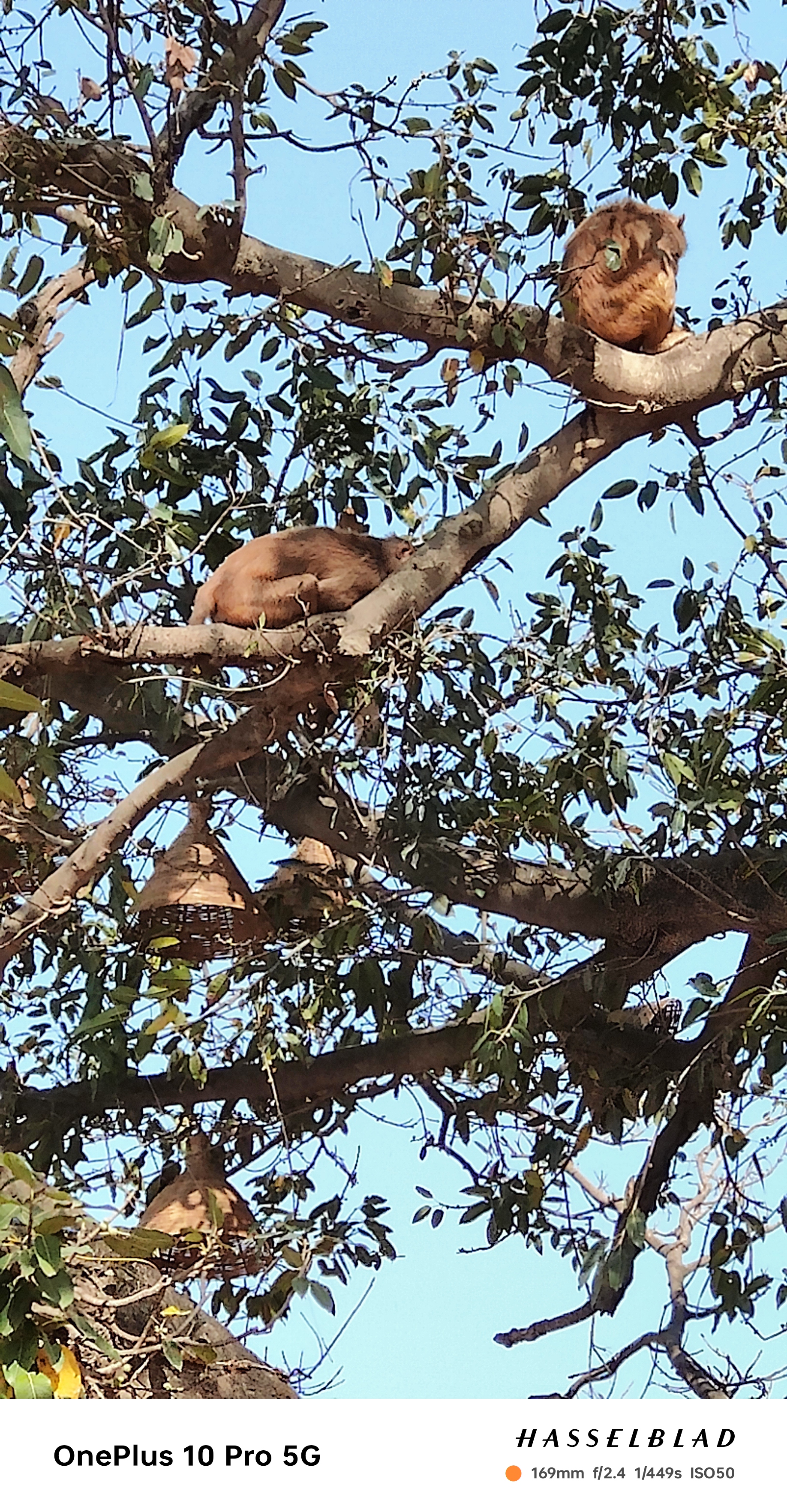
Chandraketugarh

Chandraketugarh, located in the Ganges Delta, are a cluster of villages in the 24 Parganas district of West Bengal, about 35 kilometres north-east of Kolkata. The name Chandraketugarh comes from a local legend of a medieval king of this name. This civilization can perhaps be identified with the Gangaridai of Graeco-Roman accounts. In early historic times, Chandraketugarh was connected to the Ganga by the Bidyadhari River and must have been an important centre of trade and possibly also a political centre.

The Asutosh Museum of Indian Art conducted an excavation between 1957 and 1968, which revealed relics of several historical periods, although the chronological classification of the relics remains incomplete. Many of the Chandraketugarh items and terracottas are now in collections of museums in India and abroad; many of them are a part of private collections.

Chandraketugarh is thought to be a part of the ancient kingdom Gangaridai that was first described by Ptolemy in his famous work Geographica (150 CE). A recent archaeological study being conducted by a team from IIT Kharagpur, believes that King Sandrocottus (mentioned by Greek explorer Megasthenes) was Chandraketu, whose fort Megasthenes visited in the third century BCE, after Alexander’s invasion of India, and gives a detailed account of what he saw in Indica. He mentions King Sandrocottus as one of the most powerful kings of Gangaridai, the Gangetic delta that spread over the five mouths of the river and was a continuum of a landmass comprising Anga, Banga and Kalinga. The history of Chandraketugarh dates back to almost the 3rd century BCE, during the pre-Mauryan era. Artifacts suggest that the site was continuously inhabited and flourished through the Shunga-Kushana period, onwards through the Gupta period and finally into the Pala-Sena period. Archaeological studies suggest that Chandraketugarh was an important town and a port city. It had a high encircling wall complete with a rampart and moat. The residents were involved in various crafts and mercantile activities. Although the religious inclinations of the people are unclear, hints of the beginning of some future cults can be seen in the artefacts. Some of the potteries carry inscriptions in Kharoshthi and Brahmi scripts.

I came across Chandraketugarh courtesy of my friend Indrajit’s blog and it immediately aroused my curiosity. I checked with him if he had already visited this place to which he said, “No, but would like to visit especially as it is in the backyard of Kolkata where I have been to numerous times.” Well, that was enough for me to plan a tour. I checked with few likeminded souls and all agreed. I had a long chat with Topshe aka Tapas who is perhaps more reliable than google!! He checked the ticket price and availability of both flight as well as train while talking to me, the latter was not available on the dates that suited us while the airfare was too high prompting us to become adventurer and commit to a road trip!!! Contrary to my expectations, my co-travellers were thrilled when I told them that after my discussions with Topshe, it has been decided to take the road.

The four of us, Topshe, Gora, Pulki and I decided to travel lean taking absolute basic minimum luggage that can easily be fitted into the boot of Jeep Compass. The route we took is Delhi-Varanasi-Ranchi-Kolkata. A total of 10days +/-2 days tour. Ranchi was added to pick-up Indro to complete the gang.

DAY ONE

I picked up the three of them, Topshe, Gora and Pulki from the Mahamaya Flyover around 5:45 am, when the horizon showed glimpse of the rising Sun. Gora and Pulki stayed overnight at Topshe’s place and they were dropped by Soubhik, Topshe’s son. We started our long journey as Google indicated 9 hours 50 minutes to the destination. We estimated about 10-12 hours with breaks. Gora had used his contacts to book us two rooms at the Annapurna Hotel, Godowlia with parking facility. We decided to drive in shifts between myself, Topshe and Pulki while Gora said he is out of touch with 4-wheeler driving but would give it try if the roads are clear of traffic.

We stopped at the “truck/ bus lay-by” for breakfast just before hitting the Agra Outer Ring Road and devoured the Aloo Paratha made by Deepika early in the morning along with Puri-Aloo made by Sudipta (Topshe’s better half) and downed it with Coke Zero. From there on, Pulki took the wheels and I retreated to the back seat to take nap and get refreshed for lunch. It was decided to refill the tank as soon as it reaches the 25% mark to avoid last drop panic. I woke up as Pulki pulled-up at the Indian Oil station just before Lucknow. We had decided that I will take care of the petrol bills, while Gora will manage the hotel and food bills… at the end of the day, the accounting will be done for that day.

Topshe took the wheel once we had filled up the tank and now would drive till the destination unless he’s fatigued…Gora moved to the passenger seat and Pulki joined me at the back. We were quite tempted to enter Lucknow and have Rahim’s Nihari-Kulcha & Biriyani for lunch but resisted as that would have delayed us massively. Instead, we took the Lucknow Outer Ring Road (By-pass) and stopped at Gangotri Dhaba on the Saidpur-Khajirhat Road, the Purvanchal Expressway starting point. The food was vegetarian affair… Yellow Dal tarka, Aloo-Matar Sabji with Tandoori Roti splashed with butter to make it soft. They had Malai Lassi but we avoided the indulgence as lassi is a great sleep inducer and we needed to stay awake for the final leg of this journey.

Topshe really enjoyed driving the Jeep and speeded up on the thinly populated Purvanchal Expressway and we were soon we exited the expressway to take the NH330 towards Sultanpur. The Sultanpur Bypass took us to NH731 towards Varanasi bypassing Badlapur and Jaunpur and we reached the vicinity of Varanasi. Topshe stopped on the side near a dhaba and we had tea-samosa while stretching our legs. Topshe told me to take the wheels thereon, his logic was simple…soon we will be negotiating city traffic and narrow crowded roads and he wasn’t comfortable driving a not-so-familiar vehicle through those areas. It suited me because I was getting a bit restless sitting at the back. We left for Varanasi after finishing our tea and Gora having his urge for a smoke satiated. We did not encounter much traffic on the way except when we left the Lucknow-Varanasi highway and entered the Teliabagh Road and Lahurabir Road leading us to our destination. We reached Hotel Annapurna around 5:45 pm courtesy the no-holds-bar driving of Topshe, majority of the distance… Pulki and I have been driving very conservatively keeping within the speed limit.

We checked into the Hotel Annapurna whose owner is a Probasi Bengali living in Varanasi for over 3 generations; Shri Pralaynath Banerjee lived in another house in the vicinity with his family… this was his ancestral house which he had converted into a boutique hotel. The hotel had a large courtyard which is being used as a car parking, a large hall as you enter, a small part duly partitioned functions as reception area while the larger section has become dining area with relaxing furniture. In the ground floor they had 4 rooms with attached bathroom and on the first floor there were 6 rooms with attached bath and a dormitory with 8 single beds. We were allotted 2 rooms on the first floor from which one could get a glimpse of the Ganges during daytime… the rooms were quite large with high ceilings and comfortable beds, clean bathrooms with geysers and modern amenities. Topshe and Gora took one room while Pulki and I took the other.

We quickly freshened up and left to explore the nearby places on foot, taking the car out was ruled out because of the crowded roads/ lanes and parking woes. The receptionist, Ms. Shailaja suggested we go to Pagal Sardar Milk Shop, popular snacks shop nearby towards the Dasaswamedh Ghat. We took the advice and headed there soaking in the evening flavours of Kashi, perhaps the oldest continuously lived-in city of the world.

There was a sizeable crowd waiting to be served when we reached but the service was quite prompt and nobody has to wait for more than 5-7 minutes. We ordered 2 portions each of Dahi-Bhalla and Aloo-Tikki-Chaat along with 4 glasses of Malai-Lassi. While devouring the items we realised why the place is full of customers… the portions are quite generous and the taste is out-of-this-world… non of the dishes were spicy but full of authentic flavours and the lassi was delightful. Our tummies were full and bursting…we needed to digest fast because Pralaynath Babu had promised us authentic Bengali non-veg Thali for dinner!! We headed towards the ghat to take look at the Maa Ganga. I must say that Varanasi has had a 360 degree makeover in the last 10 years, it has become quite clean with dedicated walkways leading to the ghats and even the ghat area is quite clean where one can sit for hours together and enjoy the soft music of the waves of the Ganga colliding at the banks while enjoying cool breeze wafting over the river. We walked along the river taking-in the mystic charm of the different ghats where people were busy with ritualistic fervours.

We returned to the hotel around 10 pm ready to dig into the offerings of Pralaynath Babu and his Chef. We were the only ones at the dining hall as other residents had already taken their dinner and gone. The authentic Bengali Thali had at least 10-15 items and many of them are first time for me; notable among them are bhetki-paturi, dab-chingri, shorshe-ilish, dakbunglow-chicken and kosha-mangsho. I passed my portion of shorshe-ilish to Pulki as I can’t have ilish due to its strong smell and numerable bones. The banquette was truly memorable and, in the process, we over ate but the Chef Ajay had a surprise concoction for us made of Gondhoraj Lebu and some secrete spices…he promised that everything will be digested within an hour and we would be hungry again!!!

DAY TWO

We were ready for the darshan of Mahadev by 6 am, Pralaynath Babu had assigned a person to take us through a “VIP Enclosure” for serene moment with the Mahakal-Neelkanth-Vishwanth, you call him in any name but at the end it is ONE, the Maha Vishnu, Madhav who exist in many manifestations. We had a peaceful darshan and offered unadulterated milk and sweets besides flower on the lingam receiving His blessings through the Purohit. On the way back we visited the Gyanvapi Mandir as well as Annapurna Mandir. It is believed that Shiv and Parvati came to Kashi to live a domesticated life as Mahadev/ Vishwanath and Annapurna providing domestic bliss to the humans on earth.

Religious activities were done by 8 am and we headed to the famed Kashi Chaat Bhandar. We ordered for their hot selling Tamatar Chaat, Aloo-Tikki Chaat and Hara-Matar Chaat with Masal Chai. It was one of the most satisfying breakfasts I had in many days.

Coming back to the hotel, we packed up and settled our dues with Pralaynath Babu with a promise to visit again. Since we already had our breakfast, he packed us some sandwiches and boiled eggs and fruits for the road. We headed for Ranchi to meet and pick-up Indro on way to Chandraketugarh.

The route was pretty much straight using the NH19 (AH1), approx. 400km taking 8 hours non-stop. Topshe drove the first three hours then we stopped for the restroom at a petrol station, filled up the tank as well and the Pulki took the wheel for next two hours and stopped by a Line Hotel (Dhaba) where we had tea and finished the sandwiches and eggs. Then I drove the rest of the distance, on a newly laid beautiful road prompting me to exceed the speed limit. We reached the outskirts of Ranchi around 4:30 pm and guessed that in another hour we will reach Indro’s home. Gora called him up and informed accordingly. He had booked us at the Royal Retreat Hotel, very close to his home at Global Lavanya Residential Complex. We stopped at the Brother’s Bakery to pick-up some pastries and cookies for the kids, Judha and Tania, who’s engagement ceremony I had attended but could not join the wedding festivities due to covid infection just before I was to take the flight for Ranchi.

We reached Indro’s home on the dot of 5:30 pm, he had instructed the security at the gate, so, we had unencumbered entry inside the complex and parked at the visitor’s parking. Indro along with Jagrata and Tania gave us a tumultuous welcome as if we are coming after winning a war!!

After we had washed up our grimes, we were offered tea and specially made Dhushka with Aloo-Chana Sabji… I had requested Indro to arrange this as one meal… I had fallen in love with Dhuska since the time I first tasted it during my first visit. After chitchatting for some time, we took out our nightwear and toiletries bag to check-in at the hotel… 2-minute walk down the lane. We purposely left the car at his complex and he asked the chowkidar to arrange for it to be washed and cleaned.

Dr. Judhajit, a very able doctor, came home around 9 pm and enquired about our health and wellbeing. Both, Gora and I had consulted him over phone and his diagnosis had always been accurate. I simply adore him for his amiable nature. Indro opened a bottle of Single Malt from his collection and poured for everyone, I declined as I was still on my self-imposed alcohol ban. Instead, I joined the toast with Lemon Ice-Tea. The dinner was simple Bengali fare yet fulfilling… Shukto, Chholar Dal, Aloo Bhaja, Beguni, Pabda Jhaal and Chicken Curry with Rice followed by Raw Papaya Chaatni and Papad. There were Mishti Doi and Nolen Gurer Sandesh which I couldn’t resist despite being a diabetic… the expensive medicines will have to work harder, I told myself. We spent some more at Indro’s home before retiring for the day. We agreed to start our journey towards Kolkata around 8/8:30 am… we needed a good sleep to get ourselves rejuvenated.

DAY THREE

We left for our last leg of the journey after having sumptuous breakfast of stuffed paratha with creamy dahi and soft rosogolla sharp at 8:30 am. Additionally, I had a fluffy masala omelette prepared by Tania… Indro knew about my weakness of eggs so he asked her to make it for all but except Indro and I, others declined. Indro, sat with me at the front, others nicely fitted in the rear seat.

There are three routes to Kolkata from Ranchi, the shortest one is via Jamshedpur – Dalma wildlife sanctuary, a very scenic route mostly through green patches. We were tempted to stop by at Dalma wildlife sanctuary but decided against it and simply soaking in the nature with zero pollution. We stopped at the Garden Inn Restaurant, Kharagpur, situated on the highway for lunch thereby avoiding getting into the city. We opted for vegetarian dishes and kept it light. Since we were ahead of time, having made it 4.5 hours instead of 5.5 hours, we relaxed in the adjoining garden where we had lemon tea and cookies before departing to complete our journey.

Topshe took the wheels and I moved to his seat. The drive was mostly uneventful except that this route being the oldest amongst the three, the roads are not wide, mostly 4 lane and at some places becomes 2-lane without the divider. In such stretch, the speed, sometimes becomes rolling and then near any town or village, a sizeable road space is occupied by the hawkers and rickshaws creating unnecessary road jams. Anyways, Topshe, expertly navigated such irritants and soon we were cruising towards Howrah crossing the Kolaghat, famous for its thermal power station. Once, we reached Howrah, our driving got restricted to the speed of the traffic ahead. Moreover, here the highway has bursting population on either side, both residential and commercial with rampant encroachment of the road space. It was still early evening, so the crowd was not very high but we lost the earlier advantage of beating the google timeline, it now was showing 6 pm to our final destination… Nizam Palace on Acharya JC Bose Road, only consolation being a Saturday evening, the traffic inside central Kolkata might be lighter than usual with most offices either on holiday or getting over when we reach.

Nizam Palace is a CPWD Guesthouse for the government officials, both serving as well as retired, the tariff is very reasonable…rather cheap compared to the private accommodations with decent clean room, nothing fancy though. Topshe, Gora and Pulki, all retired Central Govt officials, used their channels to book 3 double-bed rooms on the first floor of B-Block. The best part of the place is that it is very centrally located with numerous options for eating out as well as sightseeing. The online reviews of the place suggested to visit the dining hall instead of room service as it is very lax and at times the food/ tea is cold by the time it reaches your room. So, after freshening up, we went to the dining hall to have tea and snacks… surprisingly, they had options of Darjeeling tea which Indro & I opted for and ordered a large pot while others asked for Masala Chai along with assorted pakoras including Devilled Egg, we were hungry but wanted keep space for the dinner at Peter Cat, Park Street where we have booked a table for five at 9:30 pm.   

All of us wanted a quick n short nap, especially after the snacks which were excellent, crisp on the outside and melt in your mouth and the Darjeeling tea was very well brewed. Setting the alarm for 8 pm, I hit the pillow and dozed off immediately. Mine and Pulki’s alarm buzzed simultaneously stirring us up forcefully. We got ready, so were the others and we booked Uber cab to take to the Park Street which is notorious for parking woes. The cab dropped us right in front of the restaurant. Indro and Gora wanted to have a smoke, so we strolled along the road which was getting crowded by minute with hungry diners, it was a prudent call to book our table in advance.

If you are in Peter Cat, you must try their famous Chello Kebab served on a bed of buttered rice with tandoori kebabs and topped with fried egg. We had the prawn cocktail as starter followed by chello kebab, also ordered virgin mojito to go with the food. Though, the restaurant is quite old, they have maintained the quality and taste but their service needs much improvement. The restaurant was full to capacity with customers waiting outside; in such a scenario, the restaurants, typically in the north and south of the country, speeds up their service so that the customers can finish their food quickly and allow others to enjoy the fare as well. But, here in Kolkata, there was no hurry and food arrived at its own pace. By the time we finished, it was almost 11 pm and getting a cab was a task in itself. I tried to book through Uber but it was showing minimum 15-20 minutes waiting due to heavy rush. I checked the distance to our hotel; it was just over 2 km and walk through the Camac Street would take similar time (22 minutes) as waiting for the cab. I convinced others to walk as would help us digest the Chello Kebab as well besides experiencing the night life of Kolkata.

With the guidance of google maps, we reached Nizam Palace in half an hour, completely exhausted and decided to call it a day. Tomorrow we shall venture out to see Chandraketugarh.

DAY FOUR

We were ready to go to Chandraketugarh by 8:30 am after having a South Indian breakfast of dosa-idli-vada at the dining hall itself. Its about 50 km from our place, driving time two hours passing by the New Town, Salt Lake City towards Barasat on the Kolkata-Bashirhat Road. Indro’s ancestral home is in Bashirhat where some of his relatives still lives but he said he has no intentions of visiting them in this trip… in fact none of us have told any of our relatives or friends about this trip, we wanted to keep it within this small group only. It took us two hours to reach Berchanpa after checking with the locals we reached the archaeological site.

What is most intriguing about Chandraketugarh is that very little has been excavated and what lies beneath the ground is best left to guesswork.

The region of Bengal where it meets the bay is an active delta which due to silt and sedimentation, geographically changes its character. The delta is one hand slowly increasing in length while global warming now has done the reverse with increasing sea level. The location of Chandraketugarh has a deep historical presence and was once set to be the capital of Bengal Gangetic plains that had active trade links with Europe especially with the Greeks. The Greeks referred to this region as “Gangaridai” and have been mentioned in several Graeco-Roman texts.

Bidyadhari River, now extinct, was then much bigger and greater in size and was easily accessible to trading ships coming in from the Bay of Bengal.

The mounds were first located around 1905 – 1906 by a local doctor named Taraknath Ghosh and this information was passed on to the Archaeological Survey of India (ASI). A.H. Longhurst from ASI – Eastern Circle visited this site for inspection which led to the discovery of ancient pots and bricks.

It is also to be noted that eminent archaeologist Rakhaldas Bandyopadhyay had also visited this site around 1909. However, nothing much happened till as recently as 1955 that a small level of excavation work was carried on by the Ashutosh Museum of Indian Art.

The excavation resulted in the discovery of pottery, beads from the various era which can be classified as:

Period-1         which might be pre-Mauryan and can be characterized by Red Ware typical of this era

Period-2         which might be the Maurya-Sunga era was marked by Northern Black Polished Ware

Period-3         is post-Sunga with redware, stone beads, cast copper coins, etc.

Period-4         which is the Kushan era with terracotta figurines

Period-5         Gupta era with burnt bricks and other relics

The further detailed excavation was planned but never executed till date, the excavated mounds were covered up and waiting to be dug again.

As the name suggests “Chandraketugarh” can be roughly translated as the region ruled by a person named Chandraketu. Very less is known about him and some references put him as one of the greatest rulers of the Gangetic delta region. It is strongly believed that Sandrocottus mentioned by the famous Greek explorer Megasthenes is in reference to King Chandraketu, the most powerful king of Gangaridai, the people of the Gangetic plains of Bengal as referred to by the Greeks. It is believed that Alexander met Chandraketu putting his tenure to be in the 5-4 century BCE.

Khana-Mihirer Dhipi – This is well marked and the excavations are still visible. The excavated sections have been cleaned up and various structures can be easily made out. The excavation carried out in 1957on a mound revealed temple-like structures which are of multiple dynasties, likely because of rebuilding over existing temple sites over and over again. The majority of the excavated pottery belonged to the Sunga-Kushana style.

During the excavation of this section various pottery, terracotta plaques, etc. were also excavated. The nature of pottery clearly shows the attributes from various periods of rules in this part of the world.

Various objects that were excavated from this site included terracotta figures, cooking pots, coins, beads, long neck jars, etc. Some interesting find around this excavation site were terracotta plaques of human, animal, and bird markings.

After entering our names in the register, we took the well-marked walking path to explore site. You are not allowed to climb on top of the excavated structures and need to walk only on the designated pathway. Visually what you get to see are huge foundation sections of various sections within the excavated area which only comprises terracotta bricks. No visual figures are present, the ones excavated from this site have been shifted to the nearby Chandraketugarh Museum.

Chandraketugarh Museum, is a new museum under the state government which was built to store the excavated artifacts from site. Previously these were stored at the house of two local enthusiasts while some were kept at the local school museum. Photography is not allowed inside the museum. It is highly recommended to visit the museum because it’s only here one gets to see the vast artifacts that were excavated from this region of Bengal. However, more detailed and beautiful figurines excavated in the early 20th century have gone out of the country, mostly illegally through smuggling.

We spent over three hours exploring all sites including the museum grasping a part of Indian history that has never found it’s way into the school text books.

EPILOGUE

We spent another three days in Kolkata on a Foodie Delight Tour, besides meeting our local friends and having camaraderie but that’s another story to told at some other time.

Indro decided to stay back for Jagrata along with Judha and Tania to join him for medical check-up and also spend some time with their relatives. The four of us left for home after a very satisfying and fulfilling road trip.

The Pink City Express Visit

Jaipur skyline from hotel room

Ayush and Rajashree were going to attend a wedding of their friend at Jaipur, Deepika and I decided to tag along to have their company through the journey, a road trip I have been looking forward for many months. They came over the weekend for our journey slated for the Monday 8th July.

We left for Jaipur around 6/6:15 am, filled up the tank on the way but couldn’t check the tyre pressure which is a norm I follow for all long drives. In good time we crossed Gurugram and reached Delhi-Mumbai Expressway. It’s a boon for the commuters from Delhi+NCR to Jaipur as the original NH8 (NH148) takes over 6 hours to reach Jaipur due to narrow and heavy vehicular traffic. Around 9 am we stopped for breakfast at a “Rest & Recreation” somewhere after crossing over to Rajasthan between Alwar and Dausa. The food was below average, we had better stuff at another such stopover, which happened to be the next one as we drove towards Dausa. The driving on expressway can become monotonous making the driver drowsy, especially after meals and I started feeling sleepy but managed to stay awake and reached the old highway which is the connector from Dausa to Jaipur. I stopped and asked Ayush to take the wheels. He drove nicely as I slept soundly.

My sis-in-law, Bina Sapra lives in Jaipur and was the reason Deepika & I decided to visit the city. We reached her spacious home around 11 am and was welcomed with tea and sweets. Her husband had stayed back to meet us all. She had made lunch for all of us… Ayush and Rajashree were to join the wedding celebrations of their friend, so they had an early lunch and left for the Mariott hotel with their cousin Rishabh. Deepika and I took it easy and chatted with Bina over a leisurely lunch before leaving for our hotel Hyatt Place, Malviya Nagar, Jaipur, a 5-7 minutes’ drive from their home. Bina had suggested Hotel Lalit but the online reviews of the hotel did not inspire us. Normally, the room sizes in Hyatt are small (Delhi, Hyderabad) but here we got a decent size of room with usual star hotel amenities… made us happy with our choice.

In the evening, after a good nap, fully rejuvenated, Deepika went out with her sister Bina for shopping while I went to meet my friend and school buddy, Colonel Abhijit Das. His home is at a place called Nirman Nagar, Jaipur. In all my previous trips to the city, it had been centered around the older part like Johri Bazar, Bani Park areas. I have never been to this part of the city, so I trusted Google Map to take me to my destination (my friend had sent me his location). It took me about 30-35 minutes in peak evening traffic but I reached. It was exhilarating experience meeting my friend after 44 years… none of us have changed much except putting on a bit of meat and having aged gracefully. He had set up a nice cozy home where he lives with his better half Sapna, a teacher by profession and aged father. His only daughter is married and settled in Luxembourg with her husband. We chatted for over an hour, talking about school days, professional life and the present over a cup of tea and savories.

Deepika called up to inform that a dinner has been planned at the Shikhaar Bagh situated inside the Hotel Narain Niwas. It was a 30 minutes’ drive from Nirman Nagar so I took leave of my friend, Colonel Sahib promising each other to meet again.

While going to Narain Niwas, Google Map suggested an alternate route while showing congestion ahead. I took it and reached the Ajmer Road from where I was to take a right turn but Jaipur Police had put up temporary barriers preventing right turns. I took left and following the map came back to the same spot!!! Luckily, the congestion had cleared by now and I drove on the original route to reach my destination within permissible delayed time. Sandeep & others had ordered soup and nachos as starter. I ordered a sweetcorn chicken soup, the sisters wanted to share a pizza and the husbands decided to share a chilly garlic chicken noodle without egg (Sandeep is allergic to eggs). I found the pizza to be little dry but my soup was edible. Despite clear instruction, the noodles came with egg toppings and was asked to be replaced. The food was average but portions were quite generous.

Following morning, we went to Pushkar to see the famous Brahma Temple next to the Pushkar Lake.

Brahma Temple, Pushkar (also known as Jagatpita Brahma Mandir) is a Hindu temple situated at Pushkar in the Indian state of Rajasthan, close to the sacred Pushkar Lake to which its legend has an indelible link. The temple is one of very few existing temples dedicated to the Hindu creator-god Brahma in India and remains the most prominent among them. The temple structure dates to the 14th century CE, with later partial rebuilding. The temple is made of marble and stone slabs. It has a distinct red pinnacle (shikhara) and a hamsa bird motif. The temple sanctum sanctorum holds the image of four-headed Brahma and his consort Gayatri (goddess of Vedas). The temple is governed by the Sanyasi (ascetic) sect priesthood.  On Kartik Poornima, a festival dedicated to Brahma is held when large numbers of pilgrims visit the temple, after bathing in the sacred Pushkar lake.

The temple is said to have been built by the sage Vishwamitra  after Brahma’s yagna (ritual). It is also believed that Brahma himself chose the location for his temple. The 8th century Hindu philosopher Adi Shankara renovated this temple, while the current medieval structure dates to Maharaja Jawat Raj of Ratlam, who made additions and repairs, though the original temple design is retained.  Pushkar is often described in the scriptures as the only Brahma temple in the world, as a result of the curse of Savitri (Saraswati), and as the “King of the sacred places of the Hindus”. Although the Pushkar temple is no longer the only temple to Brahma, it is still one of very few existing temples dedicated to Brahma in India and is the most prominent among them.  The Pushkar Lake and the Brahma temple were identified as one of the 10 most religious sites in the world and one of the five sacred pilgrimage places for Hindus in India.

The temple is open for worship between 6:30 am and 8:30 pm during winter and 6:00 am and 9:00 pm during summer, with an interval in the afternoon between 1:30 pm and 3:00 pm when the temple is closed.  Three artis are held in the temple: Sandhya arti in the evening about 40 minutes after sunset, Ratri Shayan arti (night-sleep arti) about 5 hours past sunset and Mangala arti in the morning, about 2 hours before sunrise.  The priests at the Brahma temple adhere to a strict pattern of religious practice. House-holders (married men) are not allowed to enter the sanctum sanctorum to worship the deity; only ascetics (sanyasis) can do this. Hence, all offerings by pilgrims are given, from the outer hall of the temple. The priests of the temple in Pushkar, generally belong to the Parashar gotra (lineage).

Once a year, on Kartik Poornima, the full moon night of the Hindu lunar month of Kartik (October – November), a religious festival is held in Brahma’s honour. Thousands of pilgrims come to bathe in the holy Pushkar Lake adjacent to the temple. Various rites are also held at the temple during the fair. The day also marks the famous Pushkar Camel Fair, held nearby.  Special rites are performed on all poornimas (full moon days) and amavasyas (new moon days).

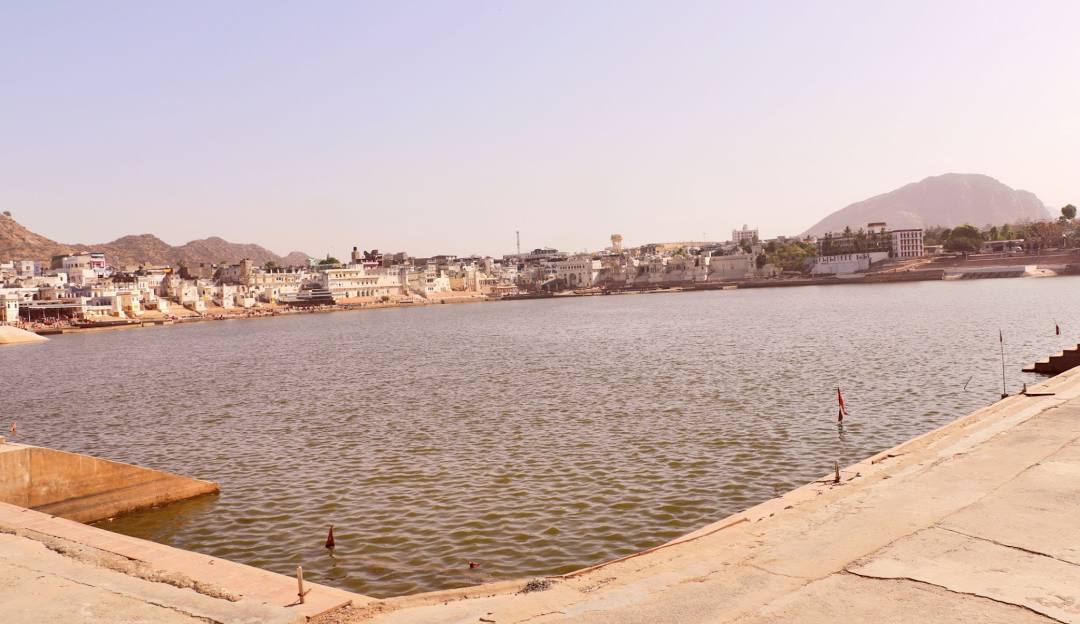
When we reached at the mandir, it was closed for afternoon siesta, so we went see the lake. Bina and Deepika went down to the banks of the lake which was quite dirty but people revered the spot. Before that we needed to use a rest room, so stopped by a restaurant whose signage displayed “AC Restaurant” and we felt that the place would be clean. It was not but usable. We also had to endure the onslaught of the self-styled guides cum priests proclaiming to be brahmins and offered to do puja on our behalf. We firmly shunned them.

While coming back from the lake, I noticed a guy sculpting figurines from black stone… quite modern depiction of the Ganesha and others. We checked the price and he quoted a price that was too high to even consider, so we countered with our offer which he initially rejected but later agreed. I picked up three Ganesha sculptures for Bina, Ayush and ourself.

We had a very peaceful and exclusive darshan of Brahmaji and left for Jaipur stopping once to eat the puri-sabji that Bina had packed for lunch. In Jaipur, we made a stop at MGF Mall where Deepika bought few Jaipuri tops and then at World Trade Park to buy a gift for Rishabh. Unlike Delhi, the malls in Jaipur are much less crowded and Bina confirmed that locals usually don’t visit malls much except to watch a movie or dining. Later, at her home, we had a simple but very tasty dinner, bade our goodbyes and was dropped at our hotel by Rishabh and Bina.

In the morning, we had sumptuous breakfast at the hotel and waited for Rajashree & Ayush to confirm pick-up time. The wedding reception had continued till late night and they went to bed in the wee hours of morning. As confirmed by Ayush, we picked them up from the Mariott around 11:30 am and headed for home, stopping on the highway for Rajashree and Ayush to eat something as they had missed the breakfast at the hotel. We reached home around 7 pm having stopped to buy a sunglass for Rajashree (a Birthday Gift) from a newly discovered shop in DLF Phase-I market (courtesy Sangeeta Basu)… Overall, it was a nice break for all of us from otherwise regimented life.

Palampur Diary

We are in the middle of the Circa 2024 and it certainly shall be remembered for the extreme weather conditions. In January we saw extended period of cold days (temperatures going below 5 degrees centigrade and now we are experiencing extended heat wave conditions (temperatures hovering around 45 degrees centigrade) since the month of May across northern part of the country. The time was ripe to go away to cooler chimes but most of the popular hill stations were crowded with people from the plains of Punjab, Chandigarh and Delhi besides Gujarat and West Bengal. We discussed with our decade long traveling partners and dear friends, the Basus and after much deliberations decided on Palampur in Himachal Pradesh, 485 km from Delhi for a quiet holiday, choosing an appropriate hotel called The Seclude, Palampur starting June 3 to 7, 2024.

DAY ONE

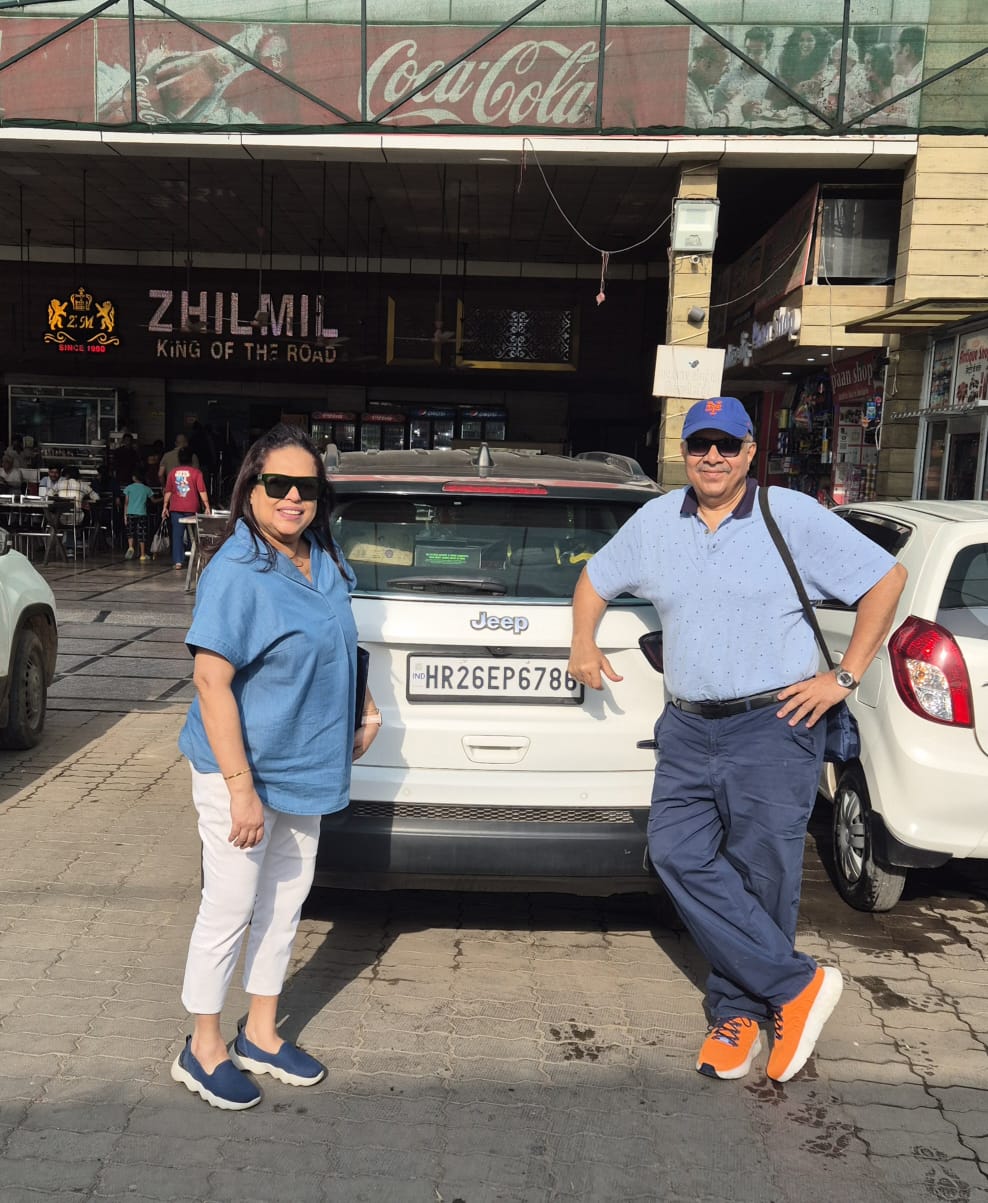
The alarm rang at 4 am but both Deepika and I were already awake. We got ready in 45 minutes flat then brewed our favourite tea’s and while sipping on it, called up to check status of Basu’s, who confirmed they have just started from Gurugram with ETA of 5:15 am. As we loaded our luggage in the Jeep, Santanu & Sangeeta arrived in a Blue Smart. We left at 5:35 am for our first destination Zhil Mil Dhaba at Karnal… google map indicated ETA at 8:32 am.

Once we left Delhi, traffic reduced and I could cruise at a sedate speed of 80-90 kmph, occasionally crossing the 100kmph barrier. The NH 44 is now a smooth driving paradise with elevated sections avoiding the city traffic and we soon reached our first destination – Zhil Mil Dhaba at 8:20 am beating GM by 12 minutes!!

We ordered for a mix of parathas with butter, curd and pickles and followed it up with tea, coffee and Limca as individual choices. The curd was excellent and I regretted not ordering lassi instead of black coffee but on hindsight, it was the correct decision as I had to drive another 300+ km.

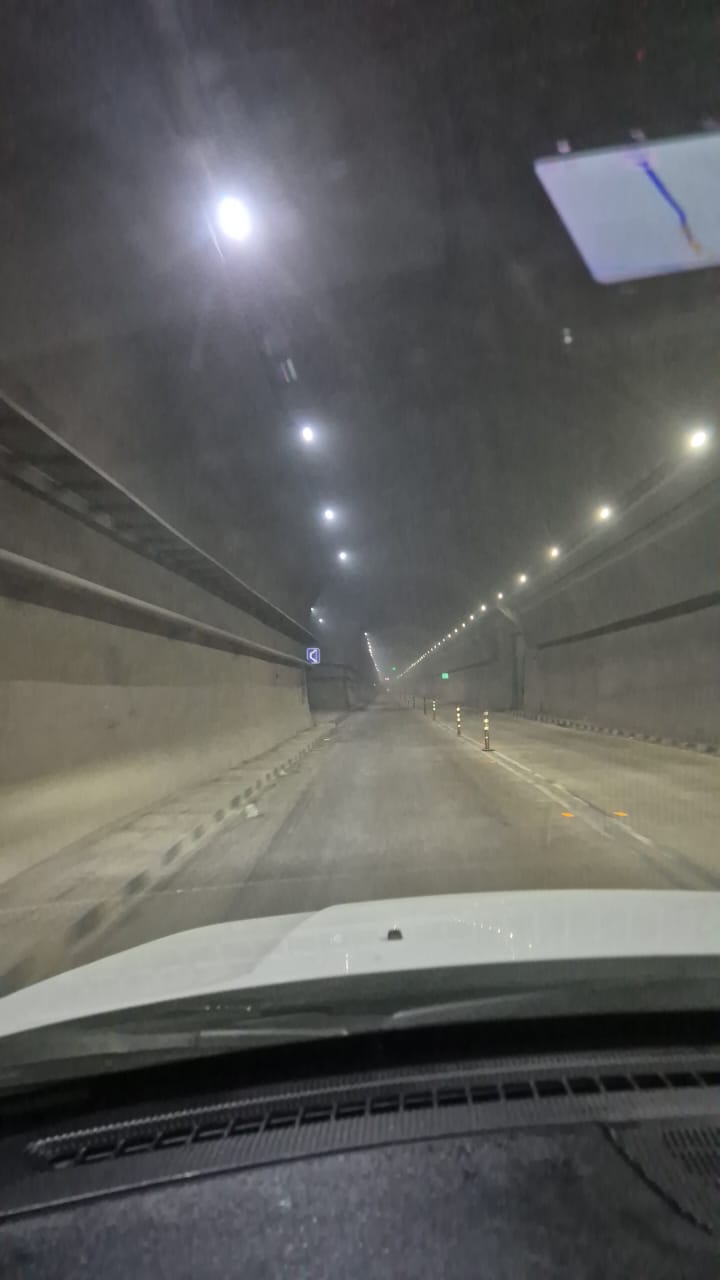
The drive on NH44 was smooth and uneventful and we soon reached near about Zirakpur from where Google Map guided us to the left on a State Highway. The road soon became narrow passing through villages which reminded me of my numerous trips to my son’s university beyond Greater Noida zig zagging through the village roads. After about 25-30 km, we reached the national highway avoiding the chaos of construction on the NH44 at Zirakpur. The road NH 205A was through Ropar where we had gone few years ago but so much had changed since that we couldn’t recognise where exactly we had been to… we carried on at a steady speed never going above the speed limit, soon we crossed over to Himachal Pradesh and the road became serpentine climbing at a comfortable inclination. We entered Kainchi Mod Tunnel (1.8 km) which seemed never ending and wondered what would be feeling of driving inside Atal Tunnel (9+ km)!!

We crossed two more tunnels but they were much shorter in length and was soon on a beautiful scenic serpentine road that tempts you to press on the gas paddle but my dear friend Topshe had warned me of the numerous speedcams installed on the stretch and advised to be below 50kmph at all times. We were so engrossed in the scenic beauty and dodging the speedcams (slowing down just in time) that we missed our exit towards Hamirpur and had to endure a detour of 30 km. The road here onwards was through the towns (cities) often getting stuck at traffic jams. We needed a break to freshen up and stopped at resto-bar hoping to get sandwich and coffee. It was more of a bar than restaurant, offering only snacks like peanut masala and pakoras, thankfully they served coffee which I badly needed to stay awake at my siesta time (3-5 pm). This part of HP is mainly valleys so the climbs are never too steep and as the traffic was light, we could cover the distance in quick time. Getting closer to our destination, dark clouds could be seen in the distance over the mountains. The temperature dropped to 30 degrees and I switched off the air-condition and slide down the windows to let fresh air come through. I quietly accelerated realising that if the downpour starts, it will become a difficult drive in this hilly terrain.

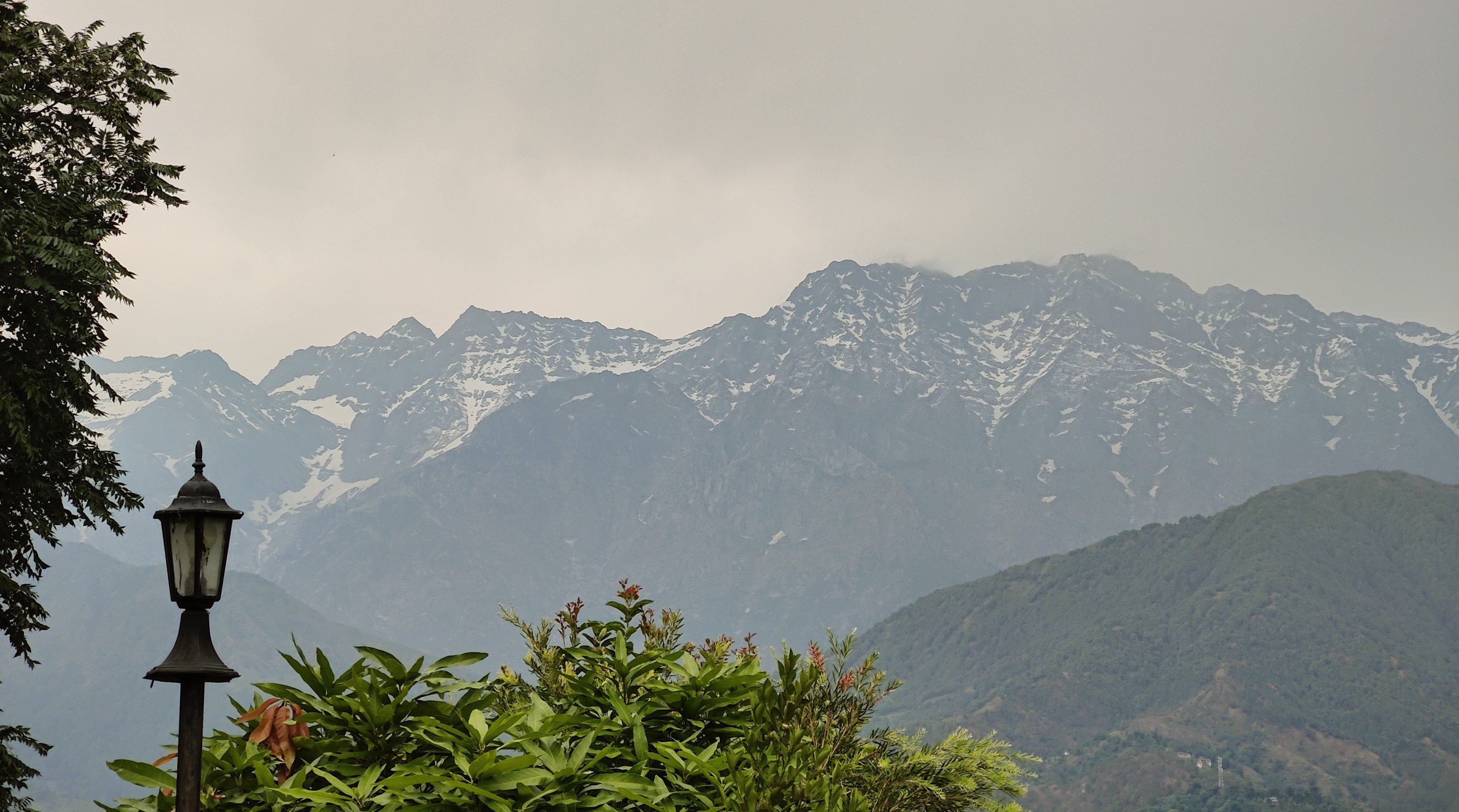
We reached Seclude, Palampur, nestled in a quiet village with ample greens all around and the Dhauladhar range seemed to be close enough to touch. They have very aptly named the place. The (assistant) Manager, Mr. Bajinder Singh came out to receive us and took the luggage out of the car. I parked the car at the designated area and stretched my legs before going inside the hotel. There was another family occupying a family room besides us with two kids below the age of 10yrs and I dreaded the cacophony and ruckus they will unleash, but fortunately, they too wanted solitude and shifted to the newer property of Seclude down the road (25 meters) and we had the entire first floor to us. The food (dinner) was average to good but their breakfast was excellent and we thoroughly enjoyed. The rooms were of decent size and clean with breathtaking view of the Dhauladhar range.

The nicely brewed tea rejuvenated us and we went for walk along the road but had to cut short as it started getting dark and the clouds that have been hovering over the mountains descended to the valley threatening to break into a downpour which they did as soon as we were in the safety of the hotel. We settled down to play cards, needless to say it was the game of TwentyNine. The dinner was served in the room around 9:30 pm after which called it a day, a gruelling day for me having driven almost 500 km, half of which had been through serpentine hilly terrain.

DAY TWO

In the morning, after breakfast, we decided to explore Palampur and hired a cab to avoid the parking hassles and also to give me a break from driving. Our first visit was to Saurabh Van Vihar, a park created in memory of Kargil Martyred Captain Saurabh Kalia…

Saurabh Van Vihar is a very popular tourist place located at Palampur town of District Kangra in Himachal Pradesh, built in memory of Kargil hero, the late Captain Saurabh Kalia. The Vihar is built and managed by the Forest Department of HP. Saurabh Van Vihar is a nature park lying in the lap of snow-clad Dhauladhar Mountains, surrounded by lush green forest. Today, the park serves as the memory of many fearless soldiers, who sacrificed their lives for the security and pride of the country. The park offers many medicinal plants, a long trail of forest, an aquarium, small water body for boating, an open-air amphitheatre as well as a Tiger Hill Bridge besides the snow fed Neugel Khad river flowing through it. A great place for families, children and tourists to hangout and enjoy the natural beauty.

It takes about 2-3 hours to cover the park… we spent about 30 minutes exploring the aquarium, the river front, Kargil Bridge and the boating lake… it was too hot to go for boat ride, although few enthusiastic ones could be seen paddling.

Next, we visited the famous Baijnath Temple dedicated to Lord Shiva.

Baijnath Temple is one of the most popular temples in Himachal Pradesh, and here, Lord Shiva is worshipped as the ‘God of Healing’. Baijnath or Vaidyanath is an avatar of the great Lord Shiva, and in this avatar, the great lord rids his devotees of all miseries and pain. As a result, this temple holds ultimate significance to all Lord Shiva devotees and is considered to be extremely sacred.

Baijnath temple was built in 1204 A.D by two native merchants, Ahuka and Manyuka, who were doting devotees of Lord Shiva. Situated at a distance of only 16 kms from Palampur, this time-honoured temple is a place where one can attain sterling peace and untainted tranquillity in the gentle caress of God. It is one of the unique temples in India where both, Lord Shiva and Demon King Ravan are worshipped.

According to the ancient scriptures of Hindu tradition, Lord Shiva established 12 jyotirlingas and one of these 12 jyotirlingas rests inside the famous Baijnath Temple. The ancient but magnificent temple is set in the backdrop of the Dhauladhar Himalayan Range, an ancient rustic temple standing gloriously in front of majestic white mountains! The view of the peaks in the Himalayan Range covered in ghost grey mist as they pierce the sky gives a feeling of both, marvel and satisfaction.

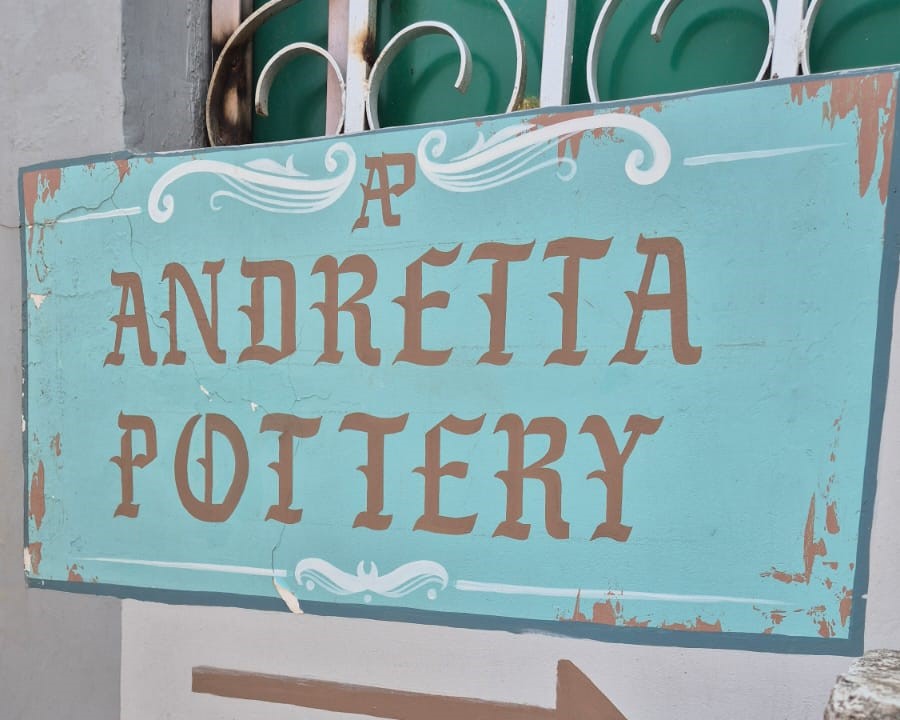
Deepika, Sangeeta and Santanu went inside to pay obedience to Lord Neelkanth aka Baijnath while I got busy in my favourite pastime of observing people besides standing guard to their footwear. They came out quite quickly and we headed for our next destination Bir Biling, a place for paragliding enthusiasts, Santanu & I stepped out to take few snaps. In the hot weather conditions, there were quite a few who were merrily paragliding high up in the sky. It’s a sport for the youngsters definitely. We moved on for Andretta Pottery. Honest confession… the place is unnecessarily hyped up; we did not find anything that can be termed as irresistible or even beautiful… the items on sale were exorbitantly priced as well. One can easily find much attractive pieces in Delhi’s numerous Banjara Shops (on Press Enclave Road, Delhi Haat etc) at much reasonable prices.

Before, the Andretta Pottery hub, we paid a visit to the Sardar Sobha Singh Art Gallery & Museum. Sardar Sobha Singh was born on 29 November 1901 in a Sikh family in Sri Hargobindpur, Gurdaspur district of Punjab. His father, Deva Singh, was in the Indian cavalry. Sobha Singh joined British Indian Army as a draughtsman in 1919 and served at Iraq till 1923 when he resigned from the Army and opened his own studio at Amritsar in 1923. He moved to Lahore, Delhi, and Bombay before finally settling down in Andretta in 1947 as he was forced to leave Lahore due to the partition of India. Andretta (near Palampur), was a remote and then little-known hamlet in the Kangra Valley on the foothills of the Himalayas but Sobha Singh brought this tiny village on international art map by his various classic works. Sobha Singh is fondly remembered as Darji and his daughter Bibi Gurcharan Kaur, assisted by her son Dr. Hirday Paul Singh, has converted Andretta into an ever-popular tourist destination not only for art enthusiasts but for all who admire his work. His most famous artworks are that of the Sikh Gurus and other eminent public figure viz. Mahatma Gandhi, Saheed Bhagat Singh, Lal Bahadur Shastri, Prithviraj Kapoor and Amrita Preetam. The art gallery and the museum are very well preserved and provide insight into the lifestyle and work of Sardar Sobha Singh.

After Andretta, we visited Wah Tea Estate which had a eatery as well where we had a leisurely lunch and spent some time in the tea plantation. We also picked up some exotic tea for home. We returned to the hotel and after some relaxation settled down to playing TwentyNine.

It also happened to be the declaration of results for Indian Parliamentary Elections. I am labelled as the most political amongst my friends with right-wing inclination but it was Santanu, Sangeeta and Deepika who were most interested in the results. This time around, the ruling dispensation (last 2 terms) had coined the tagline Ab ki bar 400 par. Any rational person can understand that this slogan was to pep-up the cadre to do well in the absence of any perceptible issue. In the post independent India, no party has ever managed to win 3 consecutive terms except our first PM, Jawahar Lal Nehru but the situation at that time was very different and unique. I knew that the current govt will return to power but with a lower or similar mandate than the previous 2 terms, so I played cool and killed the joys of the others by not reacting to their provocations.

At dinner time, the manager of the resort, Mr. Chain Singh served us a preparation of Himachali Sabji made by his wife. It was very tasty and delectable which we tasted for the first time. We asked him about the ingredients which is locally available only and can’t be replicated at home. He promised to treat us with a special daal-saag of Himachali origin and kept his promise on the last evening. I thought the saag might be palak or spinach but it was some local foliage that’s native to this part of the state.

DAY THREE

Technically, the second day, we decided to visit Dharamshala and McLeod Ganj even though we have warned by multiple sources that it will be mighty crowded. We left for Dharamshala after breakfast and on the way stopped by at the Chamunda Mandir on the Palampur-Dharamshala Road.  In the Kangra district of Himachal Pradesh, around 10 kilometres (6.2 mi) west of Palampur, is the renowned Chamunda Devi Temple which depicts scenes from the Devi Mahamaya, the Ramayana and the Mahabharata. The goddess’s image is flanked by the images of Hanuman and Bhairava. There’s another temple of Shiva just below it inside a cave. It was relatively uncrowded when we visited and we had a nice, peaceful darshan of the deities.

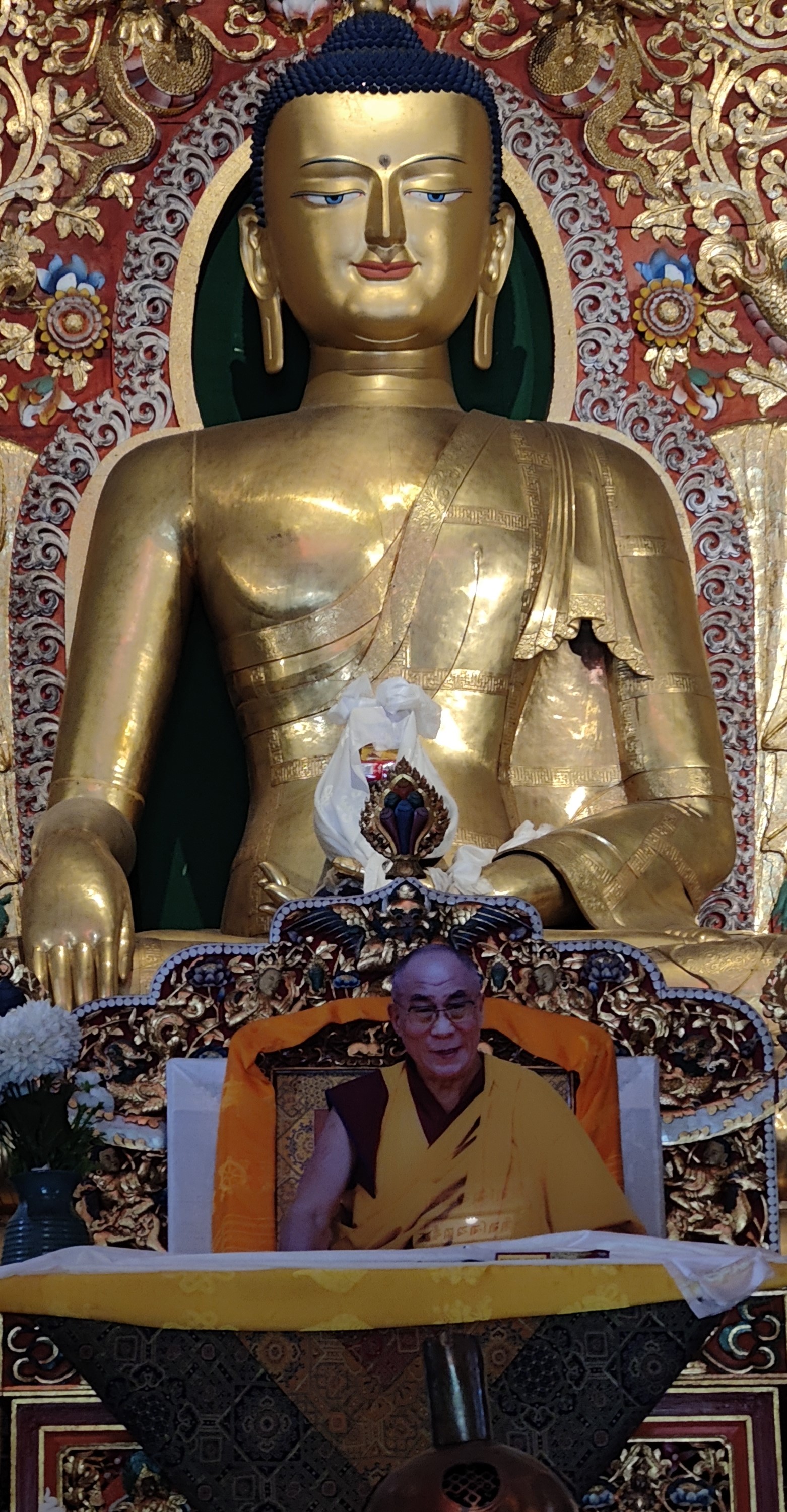
As we started for the Dharamshala, the driver announced that there’s a Dalai Lama (Tibetan) temple in the close proximity. Our first reaction was “Oh no, not a temple again”!! But he persuaded us to check it out and frankly, Norbulingka Institute, a centre for Tibetan culture, did not disappoint us rather it is a must visit if you are in the vicinity. Norbulingka Institute is built in traditional Tibetan architectural style and follows a ground plan based on the proportions of the deity of compassion and patron Bodhisattva of Tibet, Thousand-armed Avalokiteshvara. Norbulingka is about keeping alive centuries old Tibetan tradition in content, form and process by providing apprenticeship in traditional Tibetan art forms and making Tibetan experience accessible for contemporary lifestyle. The atmosphere of the compound was tranquil and peaceful. The life-like statue of Dalai Lama is fantastic. However, their tac shop was exorbitantly priced, one could get similar items in the shops of McLeod Ganj at the half price. The cafeteria on the premises needs complete overhaul not just the menu but the manpower as well. Once a sizeable number of customers visit, the staff gets overwhelmed and confused, service becomes pathetic.

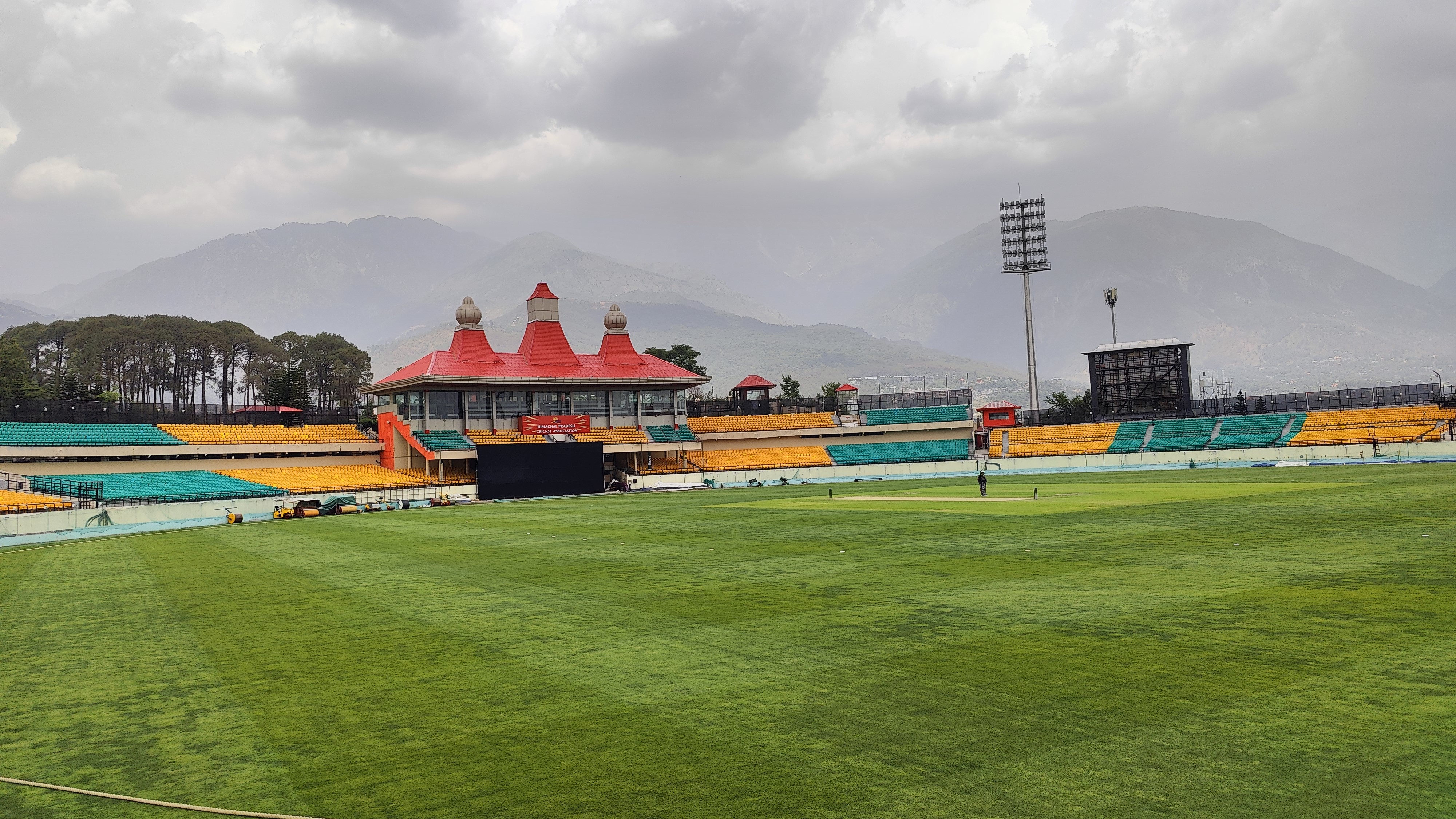
We all have seen the Dharamshala Cricket Stadium (highest stadium) on the television screen during the IPL matches, Deepika insisted that we visit the place even though we were not sure if we would be allowed inside the stadium. As it turned out, the HPCA had opened one gate to allow the visitors to take look inside the stadium at a modestly priced ticket of Rs.20/- per person. It is perhaps the most beautiful scenic stadium in the world with the Dhauladhar range of Himalayas at the backdrop. The stadium is small but has so far provided some of the most entertaining cricket matches, both international and IPL.

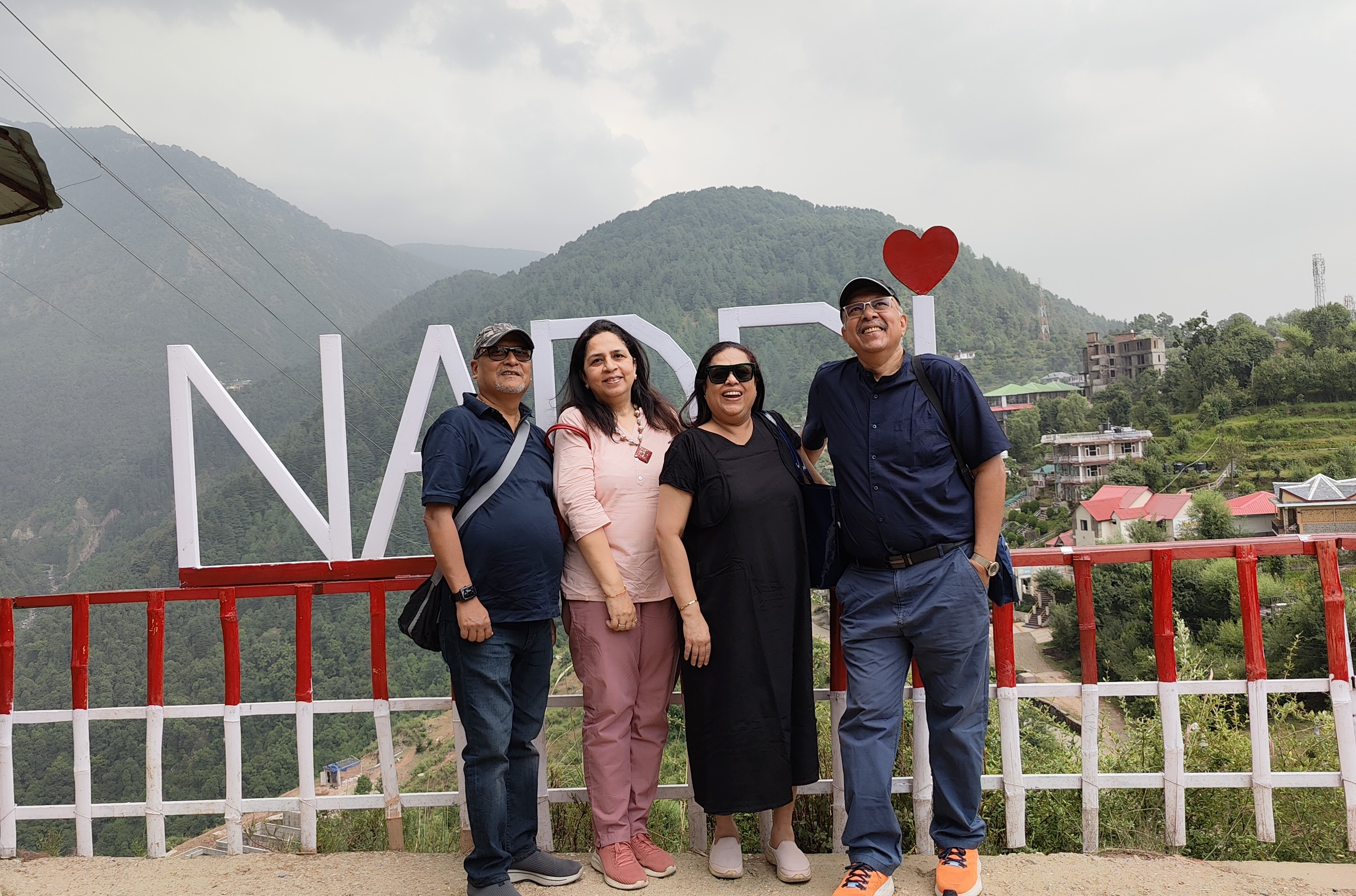
On our way to McLeod Ganj, we made a brief visit to Naddi which is basically a high viewing point from where one can get a panoramic view of the valley. It took us about 30-40 minutes to reach McLeod Ganj from Dharamshala with the detour of Naddi as the traffic was not too heavy… the driver dropped us the market square. Ten years back when we came to Dharamshala, many a times we had come here to pick-up food and our favourite spot used to be Tibet Kitchen for its authentic oriental cuisine. Without much thought we went in there, the place has been renovated and we got to know that ownership had changed thrice over the ten-year period. The ambience was nice and clean. We ordered very standard Chinese dishes… soups, starters and main course. The soups arrived, Thupka for Santanu, Manchow for Deepika and Talumein for Sangeeta and me. Honestly, we couldn’t make out any difference in the soups, all looked similar and tasted same too, but it was too late to cancel the rest of the orders. The main course was pathetic, the hakka noodle was all gooey, the pork pieces leathery and the chicken was bland; the sauted veggies had magically become very sour (vinegary) Manchurian. We called for the Chef and after much persuasion, a young chap came forward who was definitely not a chef by any measure, at best a helper/ errand boy, he mumbled his apologies but not just our lunch but our appetite was ruined too. We left the restaurant to do shopping; I would have liked to pickup a Tibetan brass statue but Deepika had warned me that there’s no space for such a thing back home. However, I was allowed to buy a Tibetan Tongue Drum, a musical instrument for meditation, while she and Sangeeta bought some stone jewellery for gifting.

It started raining as we came out from the shop and quickly intensified, we called the driver but he informed that there’s a long traffic jam and it may take up to 30 minutes to reach us from the parking area. While waiting for our cab, we had “Softy Icecream”, a must have if you are in any hill station. Forty minutes later, half drenched we got into the cab and headed for Seclude… the rain kept pace with us till Dharamshala but we knew it will soon reach Palampur too, maybe with less intensity.

Back in the hotel, we freshened up to play TwentyNine, the team Santanu-Deepika and Sangeeta-myself were tied to One-All… Santanu started playing aggressively winning every hand that he called. Sangeeta, my partner too showed her prowess and started bidding aggressively, we were chasing them closely, when Santanu played Single Hand to win a set. However, his triumph was short-lived as two games on, I got a handful of Hearts and two high cards of Diamond, prompting me to play and win Single Handedly, equaling the game with a set. We realized it was past 9 pm when we got a call for dinner… we had asked for boiled potato, rice with lots of butter which we converted into a Bong soul food (Ghee-Bhaat, Aloo-Seddo). It was one the most delicious and relishing dinner especially after our horrible lunch experience at McLeod Ganj.

DAY FOUR

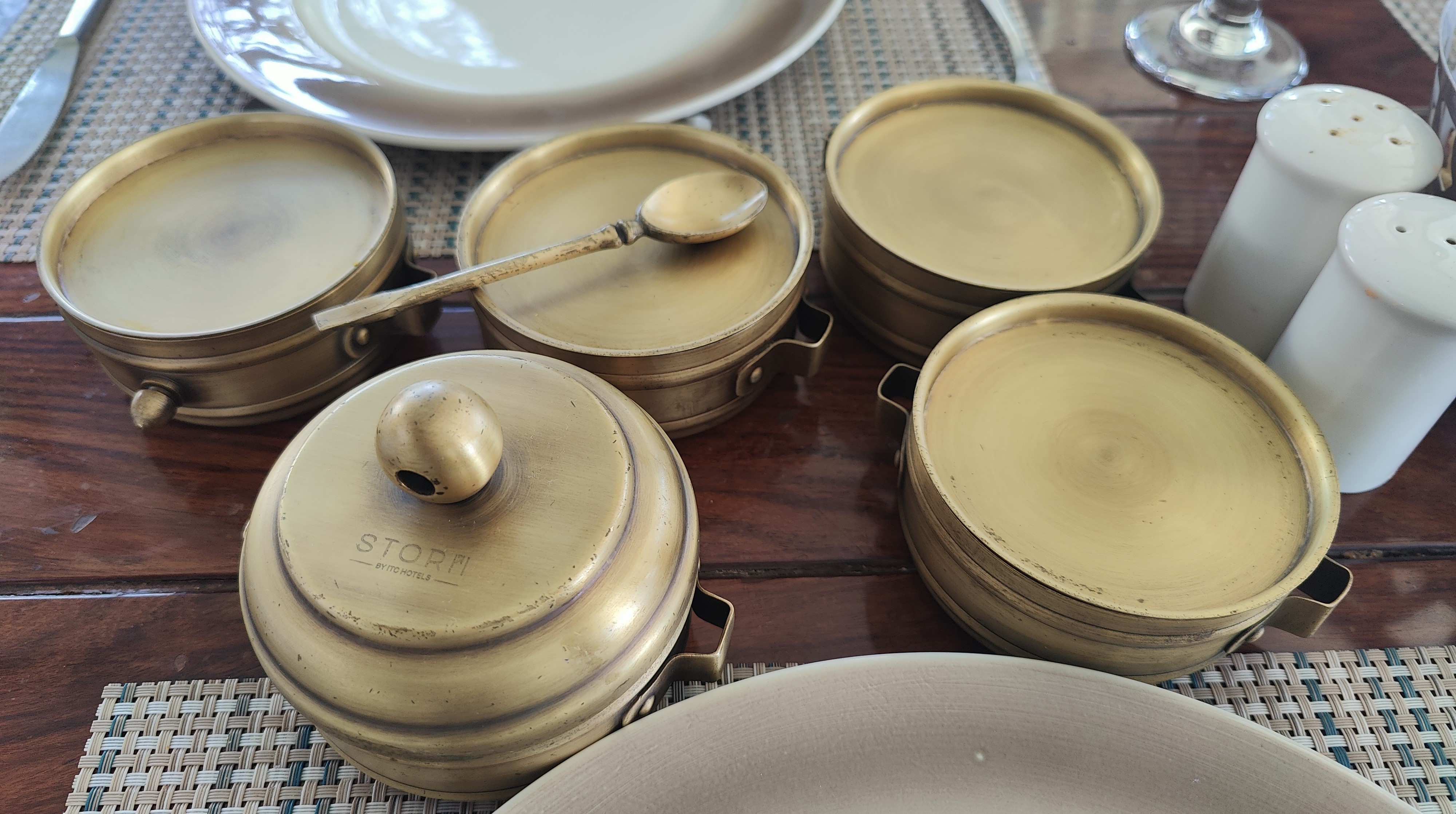
The day was earmarked for relaxation, we got up early and went for a stroll through the village road followed by breakfast. Sangeeta suggested that we visit the (upmarket) resort, Storii by ITC Group. She called up to find if they allow walk-in guests at their restaurant which they affirmed and booked us for around 1:30 pm. The Storii by ITC is located off the Palampur-Dharamshala Road and one has to go through the Palampur Cantonment. The well laid and maintained clean road took us to the beautiful property with lush green lawns and large swimming pool, well appointed large rooms with a tariff to match the opulence. New blocks were under construction which they are promoting as time-share units; we were given a brochure of the units on sale which looked nice and attractive but the asking price was too high for us to even contemplate.

I have been off alcohol since the beginning of this year and it has affected our dining… Santanu had to let go of a chilled beer in the absence of a partner and settled for a virgin Mojito, for the main course we decided to go local and ordered two portions of Himachali Dhaam. The Dhaam in Himachal differs from region to region, it is essentially a mid-day meal (lunch) consisting of boiled rice, sweet rice, daal, sabji, roti/puri cooked in Himachali tradition and offers an opportunity to get acquainted with the delectable local taste. Originally, Dhaam used to be only cooked by Botis, a particular caste of Brahmins who are hereditary chefs but nowadays, there’s no such restrictions. Our platter had boiled rice, sweet rice, puri, chhole-aloo, paneer curry/ mutton and daal. The Dhaam feast as it is primarily a vegetarian fare but here at the Storii by ITC, they had made an exception for the non-vegetarians like us with the inclusion of Mutton curry. This was one of the best cuisine we had in Himachal even though we had visited the state numerous times.

After lunch, we relaxed within the resort and even played few rounds of TwentyNine after acquiring a pack of cards from the front desk of the hotel. Thereafter, we indulged in a leisurely coffee with cookies before returning to our hotel.

DAY FIVE

While coming to Palampur from Delhi, it had taken us almost 12 hours, but with moderate traffic. The return journey wouldn’t be like that especially once we are closer to Delhi in the evening… we were bound to encounter heavy traffic and consequent jams. Therefore, we decided to break our journey and stay overnight at Chandigarh (Panchkula/ Mohali/ Jirakpur) and booked two rooms at Bella Vista by ITC Welcom Group.    

After our visit to the Storii by ITC, our expectations were high about Bella Vista, however, we were met with complete disappointments. The hotel is old, run down business hotel within the complex of a commercial mall which itself is in bad shape of disrepair and abandonment, probably affected by the Covid lockdown. The only grace was the quality food but marred by below par service… when we reached there in the afternoon, we were parched and hungry, so we ordered for chilled beer and Nachos with salsa to start with followed by tandoori chicken and naan for 3 of us and a veggie roll for Deepika. The beer was served with peanuts and followed with the main course, however, we kept waiting for the Nachos with salsa and eventually cancelled it. We have great regard for the ITC Welcom Group hotels and resorts and felt that this particular unit is probably forgotten and not in the radar of the management.

We had planned to go to Chandigarh in the evening but the unbearably hot weather made us stay back in the air-conditioned cool confines of the hotel room and play TwentyNine till dinner time.

DAY SIX

In the morning, we had a sumptuous buffet breakfast in the hotel and left for Delhi around 9:30 am, initially thinking that we would stop at the famous Puran Singh da Dhaba (Original) at Ambala Cantt and pack our lunch but Google Map took us through a different route altogether bypassing Ambala. We connected to NH44 just after Ambala and stopped only once for a break at the Haveli Resort. We reached the outskirts of Delhi around 12:30 pm and encountered heavy traffic… it took us another 1.5 hours to finally reach home, where Shinjini (daughter of Sangeeta-Santanu) along with Chewbacca the Princess, was waiting to pick-up her (their) parents.

It was not an ideal holiday that we would have preferred, primarily because of the unusual and extended heatwave conditions throughout the northern parts of the country including the hill stations but it had been a thoroughly enjoyable road trip after a long time.      

Tour de Awadh

DAY ONE

I have been to Lucknow a few times but always on work related and my stay in the city was never more than 24-36 hours, confined to the business discussion and/or market visits for product line. So when my friend and neighbour, Nitika narrated her solo trip to the city, I was charged up for the exploration of the city both historical as well as gastronomical. During our Chitkul trip, I proposed the idea of driving down to Lucknow in February 2024 when the weather is ideal for the driving and exploring the city. A few from the Kinnaur trip viz. Deepika, Amal-da & Mitali dropped out while Manas joined for the “Tour de Awadh”. Adjusting to everyone’s comfort, the trip was planned for 4th to 7th March 2024. We shortlisted 3 hotels – Gomti, Myriad and Portico Sarovar… while the first and third were sold out (on the day we booked) the second one met with all our requirements at a very reasonable price. The next step was to create an itinerary and the responsibility fell on me; it was a tricky job because a lot of things needed to be covered within a space of 2.5 days. Tapas & Pulak were very much for a visit to Ram Lalla Darshan at Ramjanmabhumi Mandir, Ayodhya, 137 km from Lucknow… Gora and I were neutral while Suro & Manu wasn’t sure about it. Anyways, I made the itinerary with options to visit Ayodhya. Gora’s friend Ashish, a resident of Lucknow said we will not be able to cover more than 1/3rd of the Lucknow part of the itinerary and should forget about visiting Ayodhya. We decided to take the final call when the time comes and prepared for the journey… Suro and Manu came over to my place on 3rd evening while Pulak and Gora at Tapas’s.

We targeted to start around 5 am knowing well that it has never happened and won’t happen now as well. We eventually started around 5:40 am from my home in Navjeevan Vihar and joined Tapas and party at the Mahamaya Flyover, Noida. We begun at 6 am to reach Lucknow by 1-1:30 pm with multiple breaks on the way.

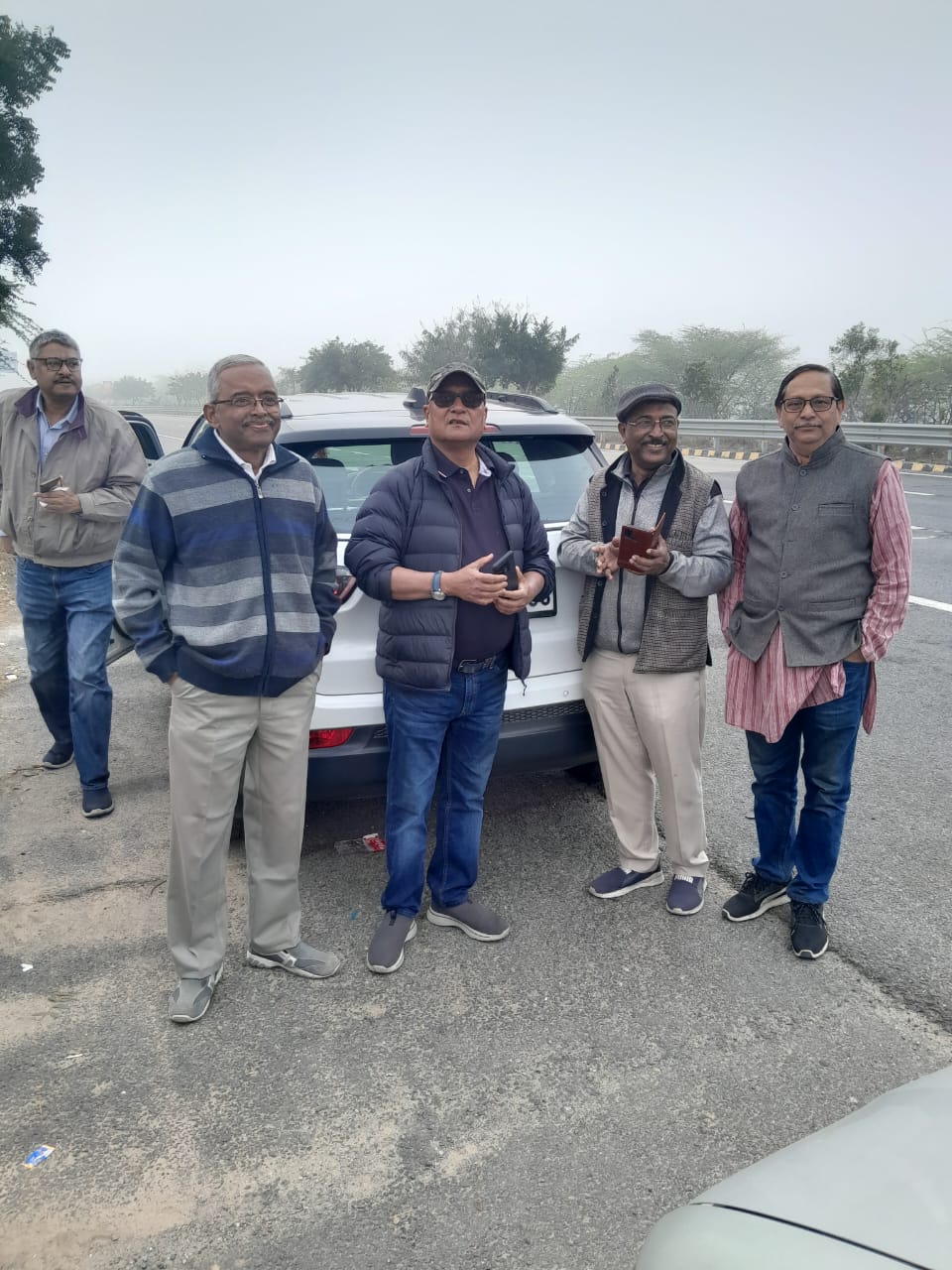
The journey on the Noida-Greater Noida stretch was very smooth as the traffic was sparse at that hour and so was on the Yamuna Expressway as well. We stopped at the rest area next to the Mathura Toll Plaza to have tea and stretch our legs. The weather was chilly and the tea warmed us up. There I met with my buddy, Gora was kind enough to click a photo of us together!! Our next stop was near Agra on the roadside because we missed the “rest are” next to the plaza to have our breakfast of Ham-n-Egg Sandwich, Puri-Sabji etc. The weather was chilly and foggy giving the feel of a hill station. We needed some caffein which came in the form of Coca-Cola!!!

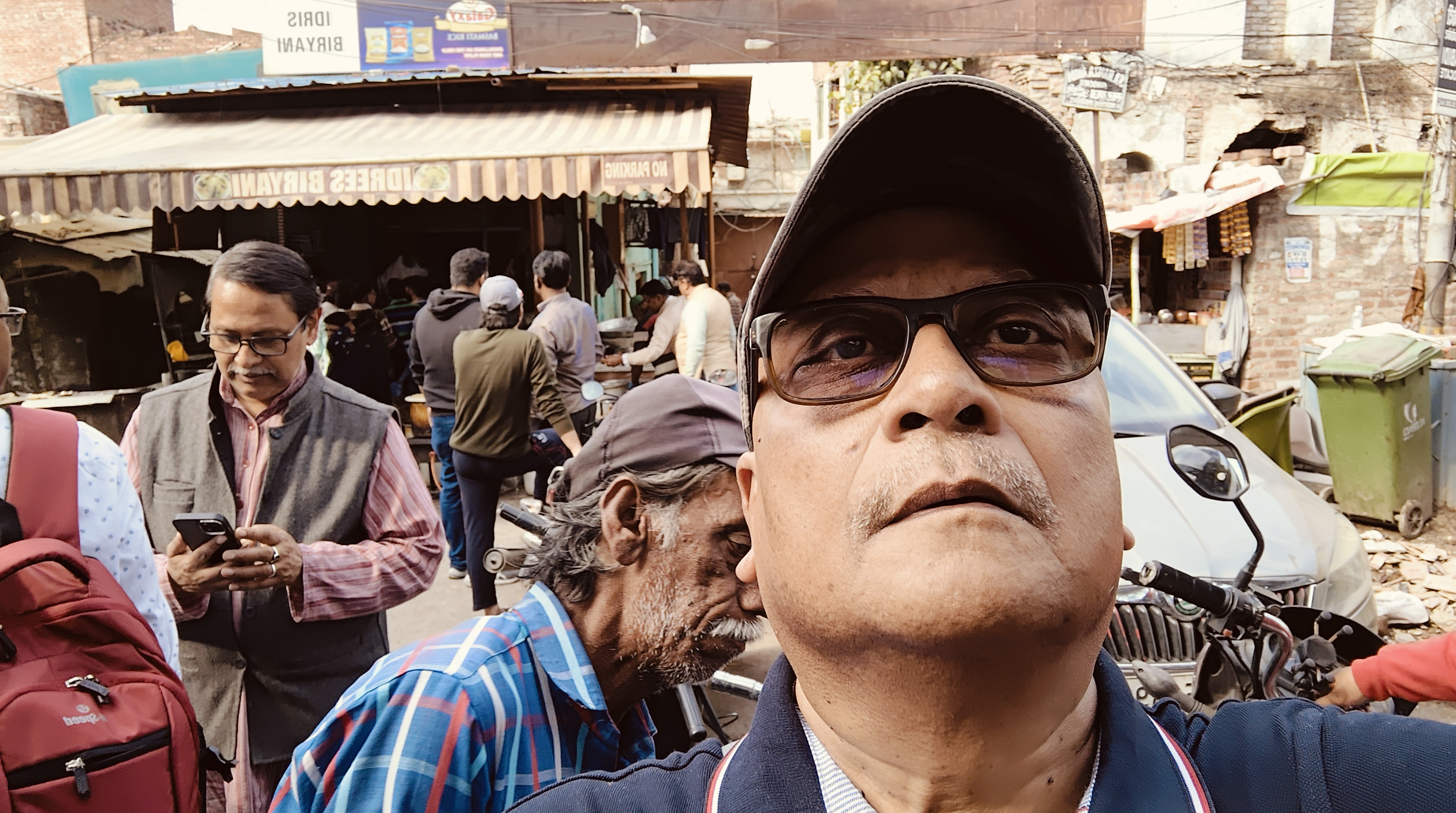
Soon, we were on our final leg of the journey on Agra-Lucknow highway (300+ km) with a speed limit of 100kmph but most cars were doing well over 120kmph zooming past us. We decided to play along and pressed on the accelerator to touch 120+… Tapas’s Ecco don’t have the speed warning beep but my Jeep kept beeping as soon as it went beyond 120 kmph, it was irritating but we ignored the noise. The Agra-Lucknow highway is a dream road for long drive and I enjoyed the drive thoroughly. We reached the outskirts of Lucknow around 12:30 pm and the speed reduced below 80kmph thereon. At one point Tapas informed that they are taking a u-turn to take a shorter route to the hotel but my Google Map directed me to go straight for 6 km, I followed the map and reached the hotel at the same time as Tapas at 1:30 pm. We quickly checked-in and after freshening up left for exploring the city with first stop at Idrees Biriyani at Pata Nala, opp. Police Chowki. The famous shop is nothing but a roadside shack doing brisk business selling Mutton Biriyani and Chicken Korma. We had to wait for half hour before the biriyani was served to us. There were no seating arrangements and we managed to grab spaces on a table that was being used for keeping the rice-containers for cooking as well. The biriyani and korma was very ordinary…the flavor that’s the quintessential in a biriyani was missing and the korma was more of oil than the curry. The meat pieces in both items needed more time on the gas stove to cook and tenderize. It was disappointing considering the high expectations.

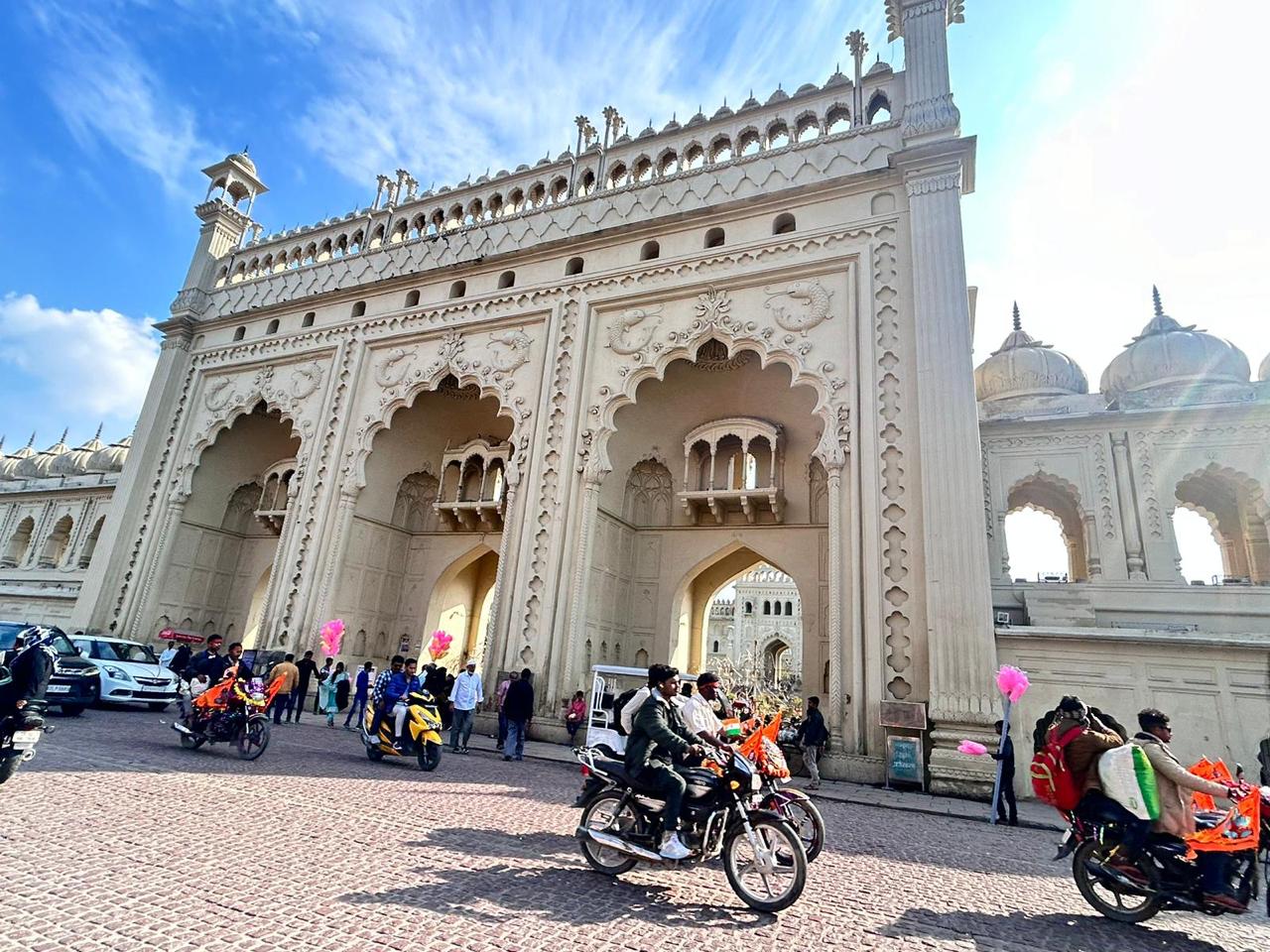
We had hired an autorickshaw to come here and the driver, Rais agreed to take us to the Bara Imambara/ Bhulbhulaiya, Rumi Darwaza, Clock Tower, Picture Gallery and Chhota Imambara besides Chowk Market for Lucknowi Chikankari and Tundey Kabab at Aminabad and finally drop us at the hotel at night.

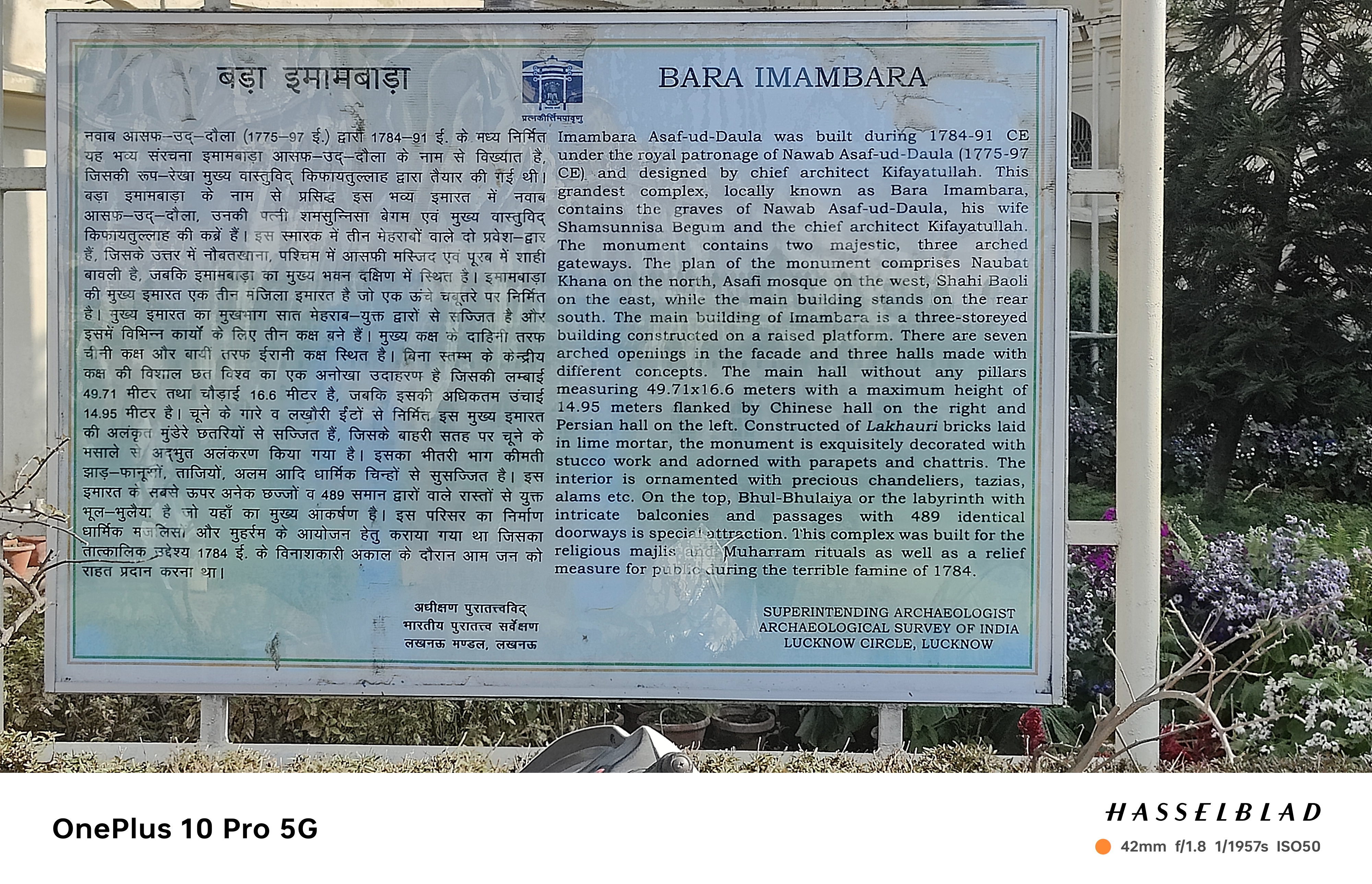
The Bara Imambara is a majestic edifice with history dating back few centuries…

We started from the main hall learning the history from our guide Kaiser Bhai who was prone to throw a shayari, muhawarba and puzzles to add spice to the narrative. The central hall sans any beams or column to support the roof is for Azadari or mourning for the souls lost in battle of Karbala. It is perhaps one of the biggest halls without any beam support and the wonderous architecture ensures voice of the Imam is heard at the last row of the congregation.

We moved on to see the Baoli, a stepwell that once used to get its fill from the river Gomti and provided potable water to the residents. But now it was completely dry. Opposite the entry point of the Baoli is a chamber where the guards used to be stationed to monitor the visitors through the reflection on the water below, very similar to the modern-day CCTV camera surveillance.  

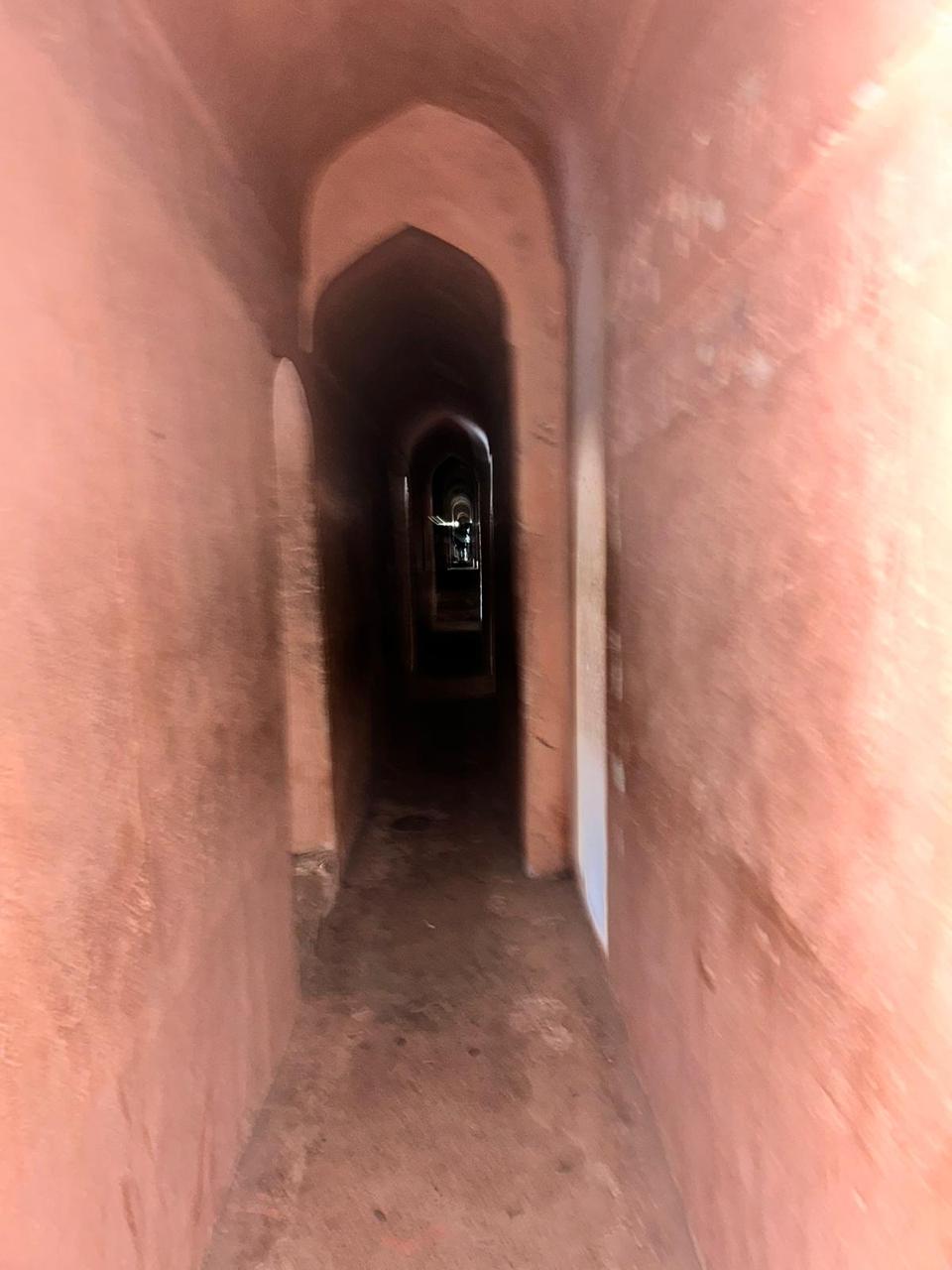
We went to check the most attractive part of the Imambara, the Bhulbhulaiya, the labyrinth constructed above the main hall for protection and balance to the structure. The climb to the base of the Bhulbhulaiya is 44 steps of uneven sizes and I would advise people with cardiac/ pulmonary issues to refrain from visiting it. Also, without a guide I will never venture inside because it is so dark that the maize could play truant with your mind and God forbid if you are lost inside, it will be a nightmare… you could die!! We reached the rooftop from where one could get a 360° of the old city. The guide took our group snap but unfortunately a guy photobombed it from the behind. Next stop was Chhota Imambara via the Rumi Darwaza where we stopped to take customary group photo.

We had to take off our shoes/ socks at the Bara Imambara and had harrowing time walking barefoot on the surface that was uneven, broken, potholed and had an effect of acupuncture on the feet, so I refused to part with my shoes and stayed outside while Suro, Manu and Pulak went inside the imambara. From there we went to the Clock Tower & Picture Gallery. Again, I decided to skip the picture gallery because it involved climbing a staircase of at least 30+ steps. Anyways, Suro & Manu confirmed that we haven’t missed much by staying back.

Next on the agenda was shopping for Lucknowi Chikankari for the ladies back home. SEWA of Lucknow is a women’s cooperative which specialises in chikankari, an unique embroidery that enhances the look n feel of the garment. The price depends on the method (handcrafted or machine made) as well as the quantum of work. The auto driver took us to the SEWA wholesaler where I picked up a Kurti for Deepika while Manu too bought a kurti for his wife and a kurta for himself. While we were buying, others had moved to Muskan Chikan Industries, another shop nearby… we followed them there and ended up buying more, collectively, we bought more than INR 30000 worth of garments, bulk of the purchases made by Pulak and Tapas.

I would have preferred to buy more from SEWA but the attitude of the salesperson was off-putting, kind of arrogant and rude… in contrast, the other shopkeeper was very cooperative in displaying a variety of options and willing give a bulk buying discount.

By this time with much walking, climbing stairs, we were hungry, therefore, by agreement reached the Aminabad market for Tundey Kabab.

Mutton Galauti with Paratha

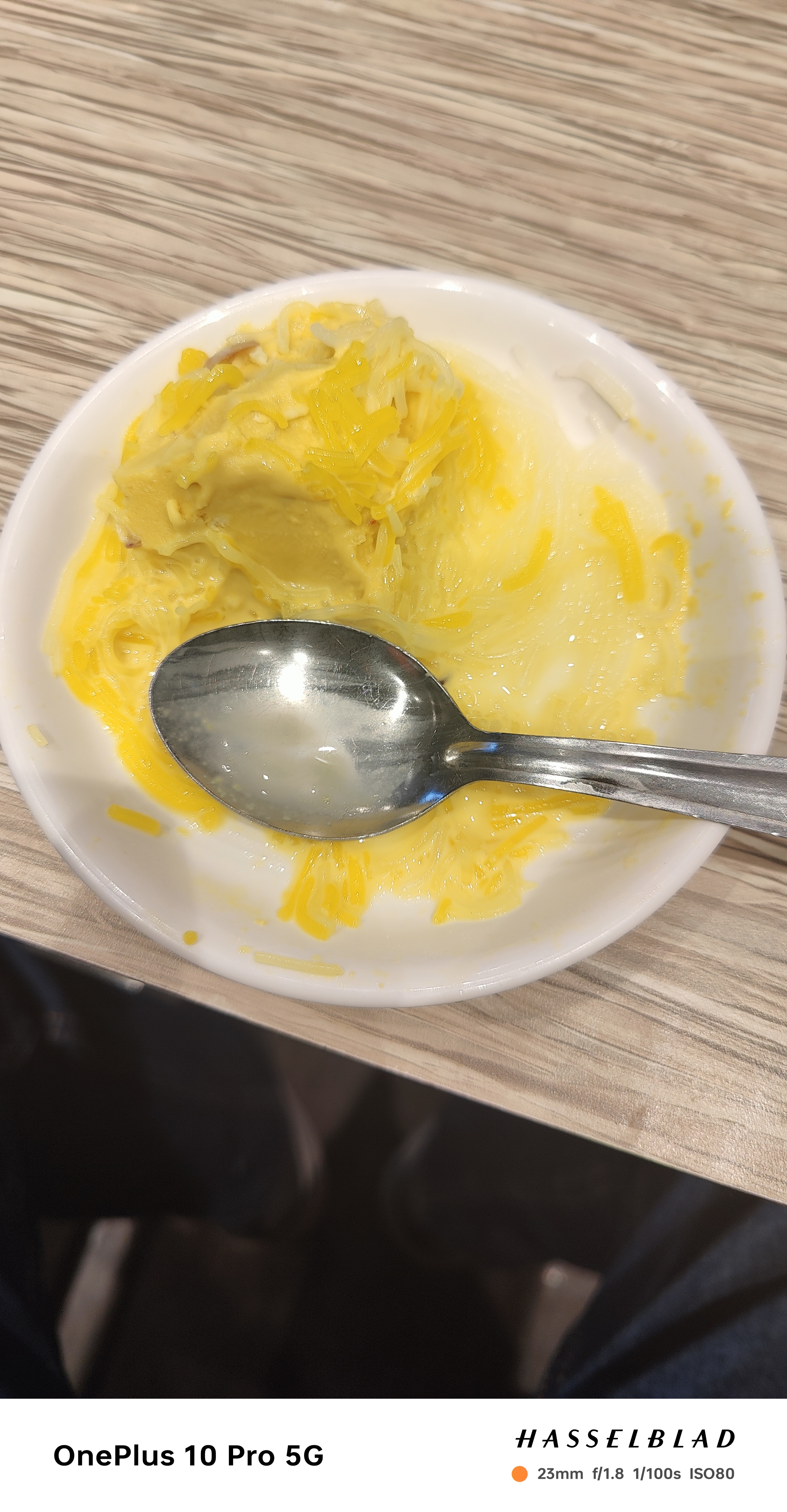
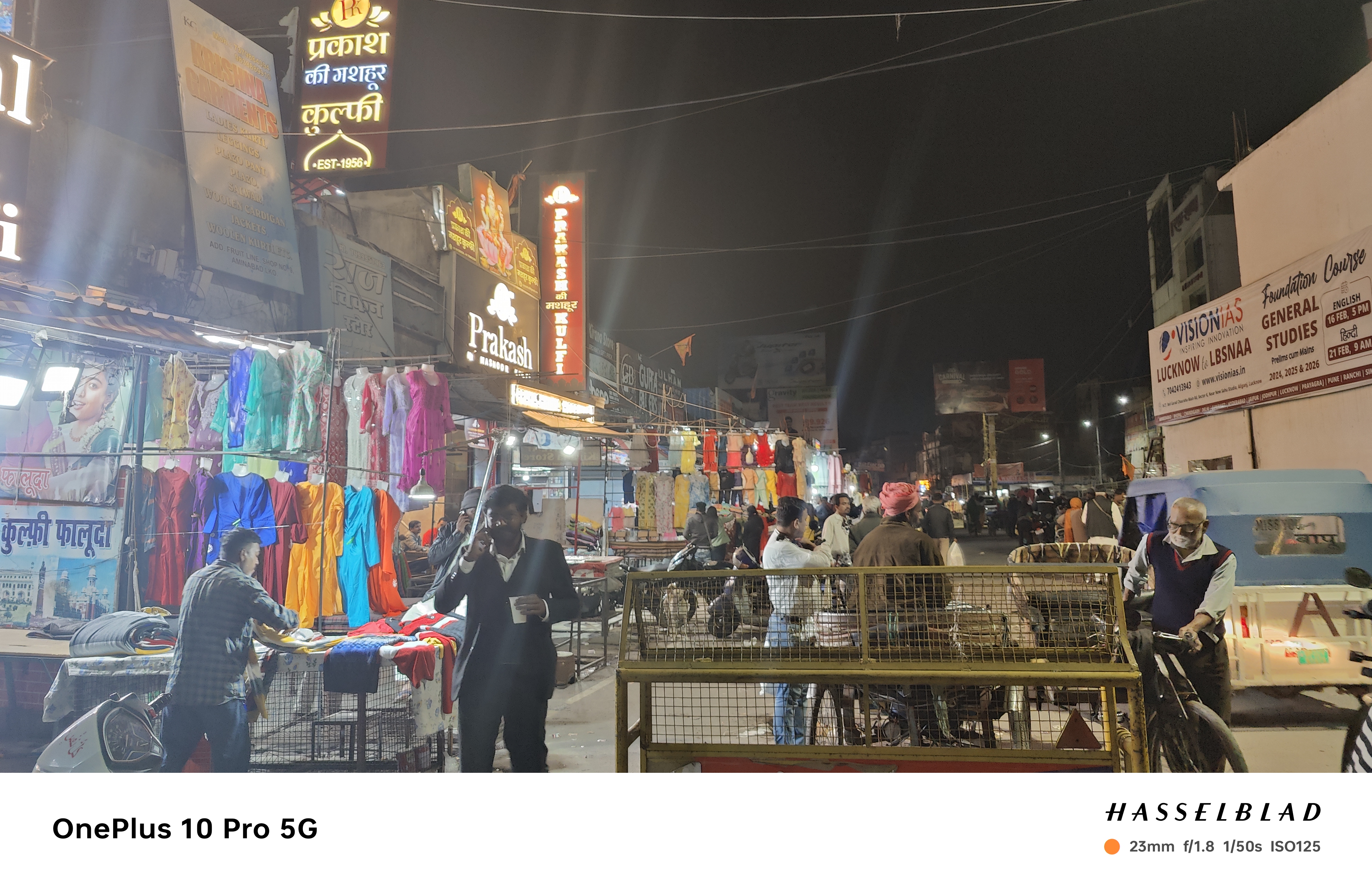
It took some time for us to find a table for 6 pax but the wait was worthwhile; we ordered Mutton Galauti with Ulte Tawe ka Paratha & Mutton Korma… needless to say all the items were yummiluscious and were devoured in no time, especially after so much walking, climbing and haggling. In the close proximity was Prakash Kulfi, what more one could have asked for to end the day. However, the kulfi-faluda turned out to be very ordinary albeit the portion being large.

We got a shocker when we called our auto driver Rais to pick us up from the chowk… apparently, he had utilised the time to go back to the two shops from where we bought garments to collect his commission (about 10% of the total value) and using that money to sozzled up. He was not in a shape to drive and refused to come. It took us almost 30 minutes to find an alternative e-rikshaw.

Coming back to hotel, Suro, Manu, Topshe and I decided to play TwentyNine, a card game. Tapas said, “I have played it many many years ago during school/ college days, please refresh me”. We explained him the game and we formed teams, Manu-Topshe and Suro-Me. Very soon we realised, Topshe is a seasoned player winning singlehandedly most of the games scoring a positive set. Suro & I laboured to inch closer to their level but still couldn’t achieve a set. The game had to be forced close as the clock tik-toked to 1:30 am… we have another long day of excursion ahead.

DAY TWO

We, collectively failed to get up as per schedule and were the last ones to avail the complimentary(?) breakfast at the hotel. Then we walked (1.2 km) to Sharmaji ki Chai for tea and tried their Bun-Maska-Samosa. Next on our list was The Residency (3+ km)… we hired an e-rikshaw @Rs.10/- per person.

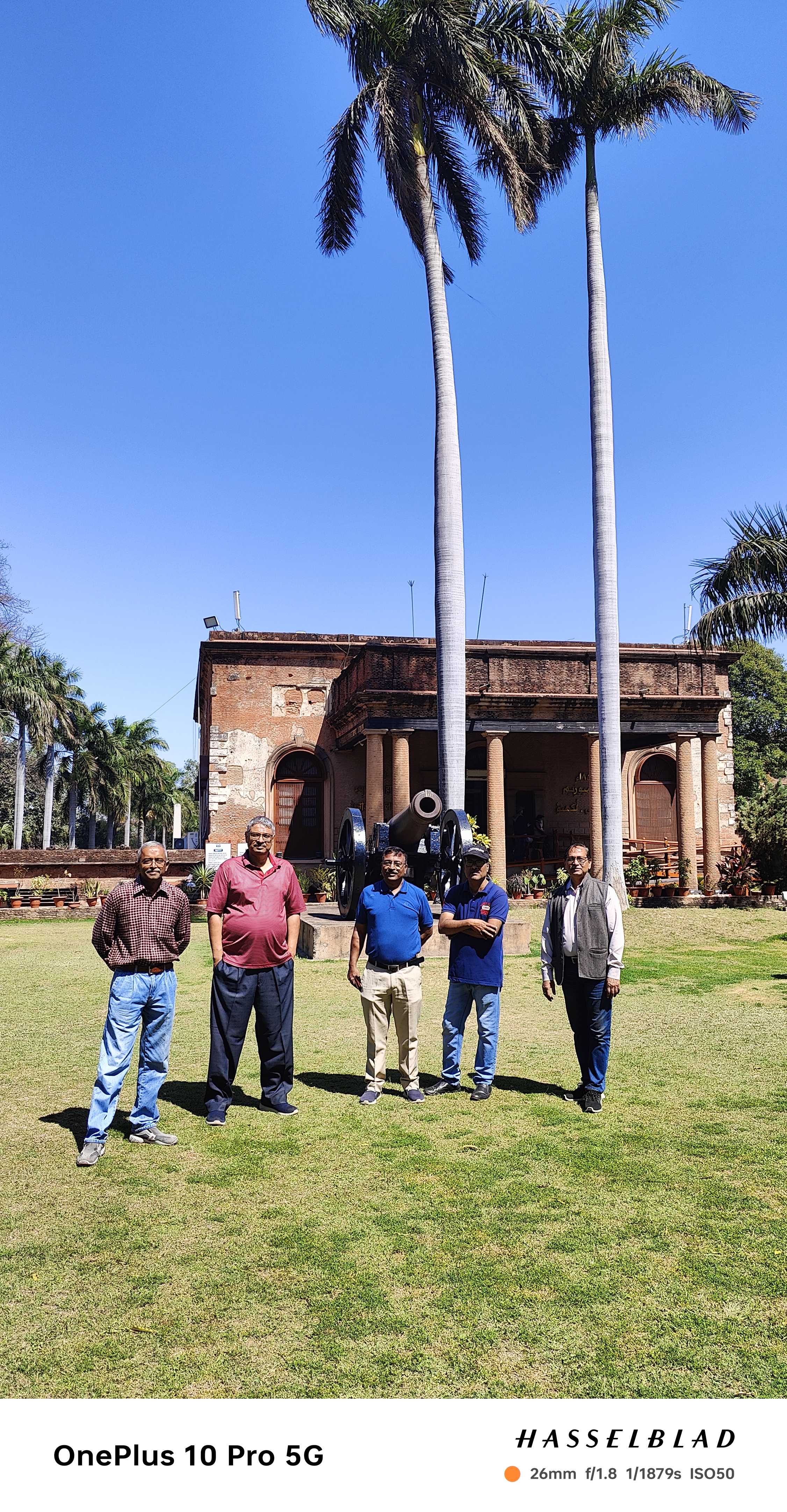
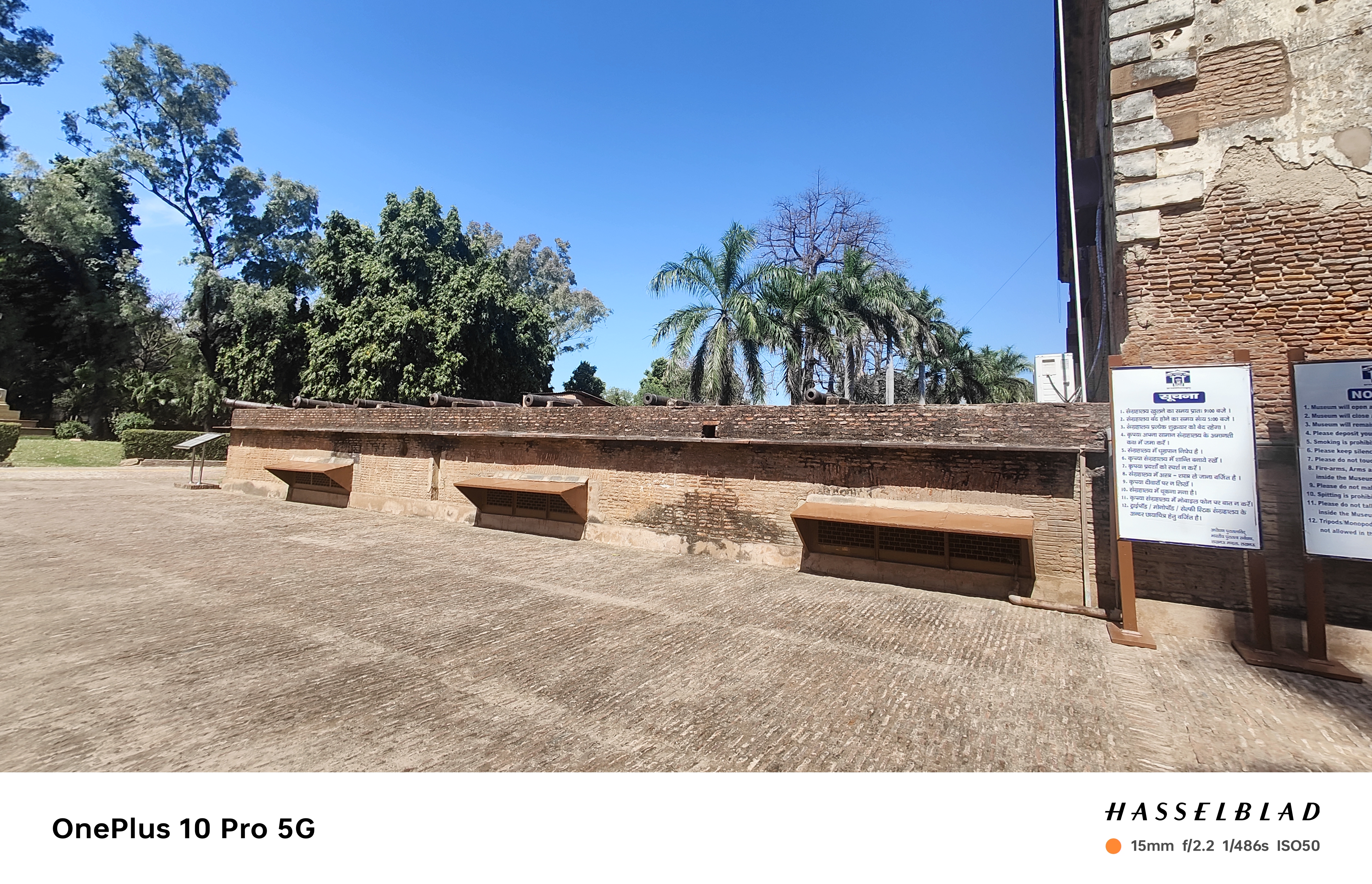
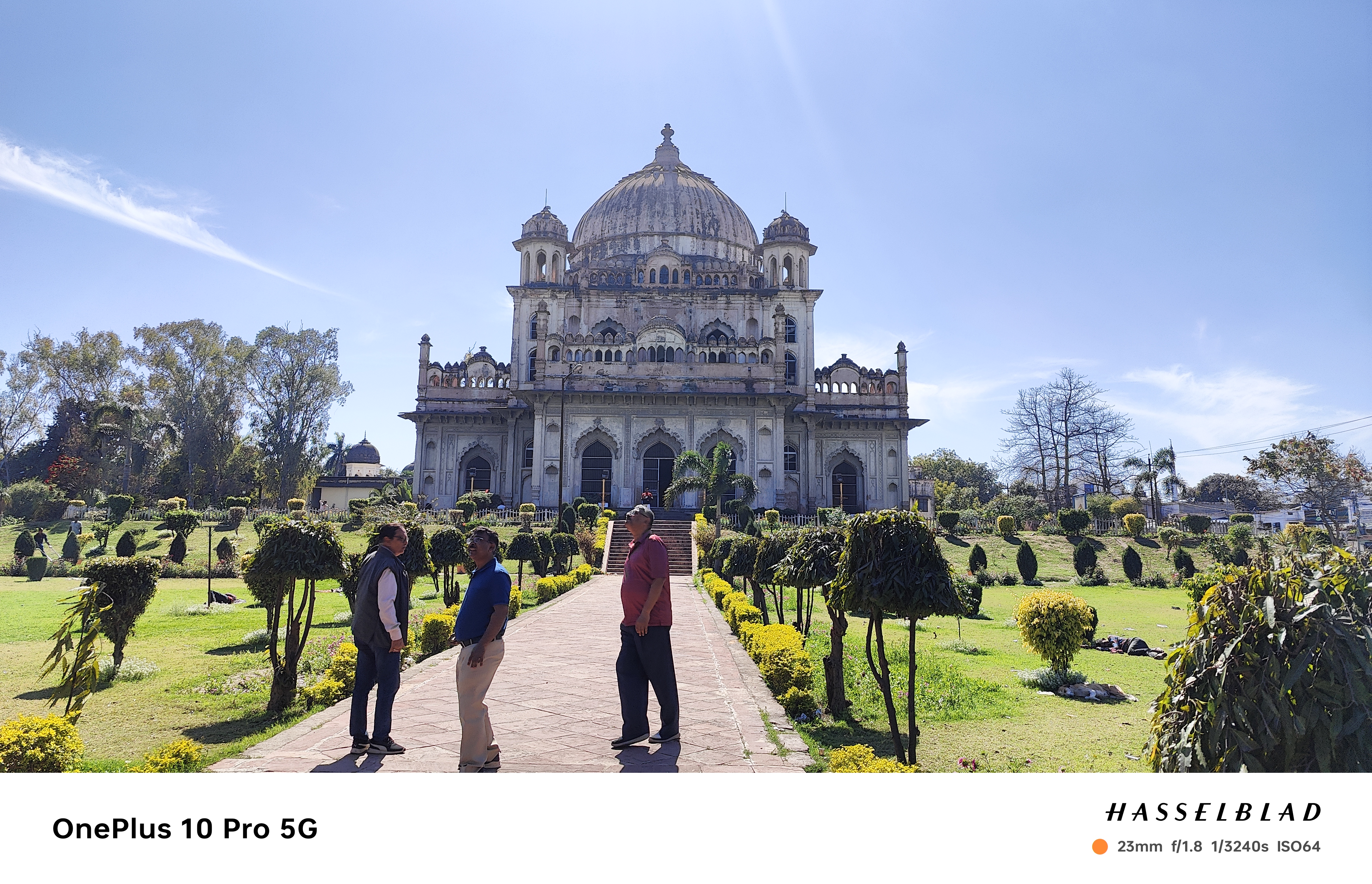
We spent the entire morning exploring the place and wondering what would have happened if the revolutionaries had succeeded!! We picked up some pebbles as memorabilia of the place and proceeded to the tomb of Sadaat Ali.

We explored the place from outside and enjoyed the greenery and the soft grass lawns for some time before heading to New Lucknow for Gomti Riverfront Park and Ambedkar Samata Sthal, a huge ornamental park.

Ambedkar Samata Sthal

Out of these two, we decided to visit Gomti Riverfront Park and spend some time soaking in the cool breeze. We stopped briefly at the Ambedkar Park for photo ops and then proceeded to Royal Café, Hazratganj for their famous Basket Chaat. I don’t think any one can finish the full portion of the Basket Chaat which essentially consists of all kinds of savouries viz. aloo tikki, bhalle, paapri, chhole, bhujiya topped with curd and chutnies. We shared 3 plates amongst 6 of us and followed it up with lemon soda to digest. Thereafter, we walked 2.3 km to the hotel to relax a bit. Then in the evening, we went to Mughal’s Dastarkhawan for dinner where we judiciously ordered for Biriyani Rice (without meat pieces), Bhuna Gosht, Shami Kebab and Galauti Kebab. Though the food quality – taste, aroma and quantity was good, the service needs substantial improvements.

Coming back to the hotel, we again played the game of TwentyNine but this time Topshe had lost his beginner’s luck, Suro and I convincingly won the rounds with 2 positive sets.

By this time, we had seen 80% of what we had planned to see in Lucknow, therefore, we decided to visit Ayodhya to Ramjanmabhumi Temple the following day.

DAY THREE 

In the morning, Gora informed that he has a very bad stomach infection and shall skip the Ayodhya trip relaxing at the hotel. I told him to take a tablet of Metrgyl 400 and have light breakfast. We were not ready to leave him alone at the hotel and almost decided to abandon the Ayodhya visit. However, after taking the medicine and a light breakfast, Gora felt better and we left for Ayodhya around 10:30 am (2 hours delay from our plan). We were going in one car (Tapas), so I utilised the drive to take a sound nap.

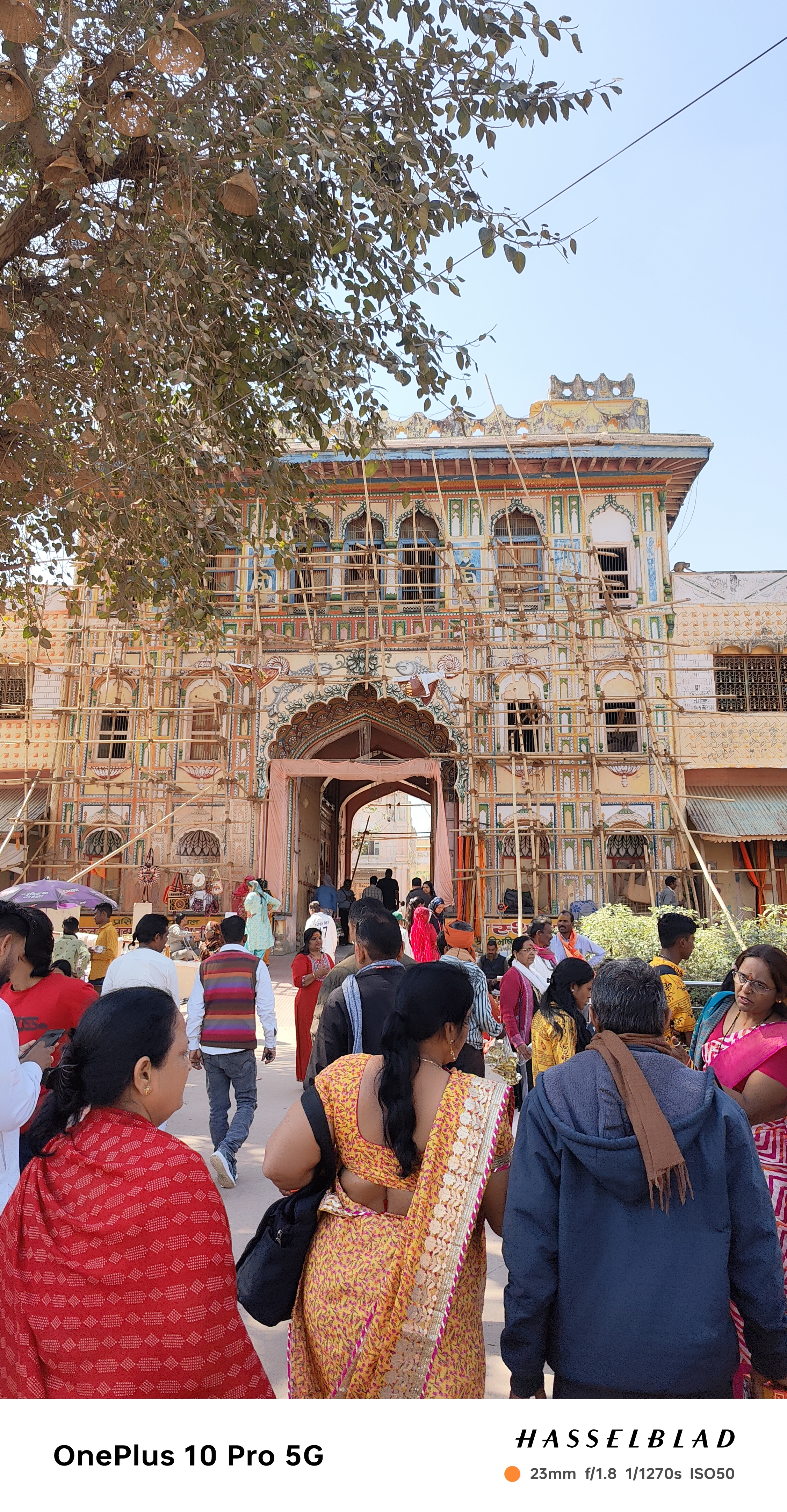
We were told that no vehicles are allowed after a certain point (2 km from the Mandir) and we have to park at the designated parking area then take an e-rikshaw to the vicinity (500 meters) from the Mandir and then walk the rest. Also, warned that the temple being closed between 1 to 2 pm creates mad rush after that and we have to take “pass” for the darshan. Only the “mad rush” part was true; in reality, searching for the parking area, we reached a point from where the mandir was only about 500 meters. The young policeman obliged us by allowing to park on the kerbside and promising to keep an eye on it while we went for the darshan of Shree Ram Lalla.

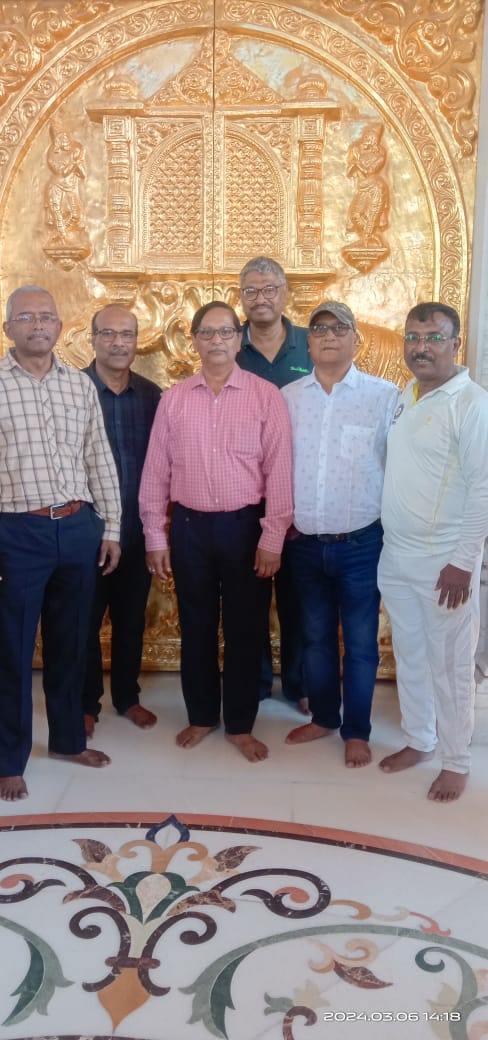
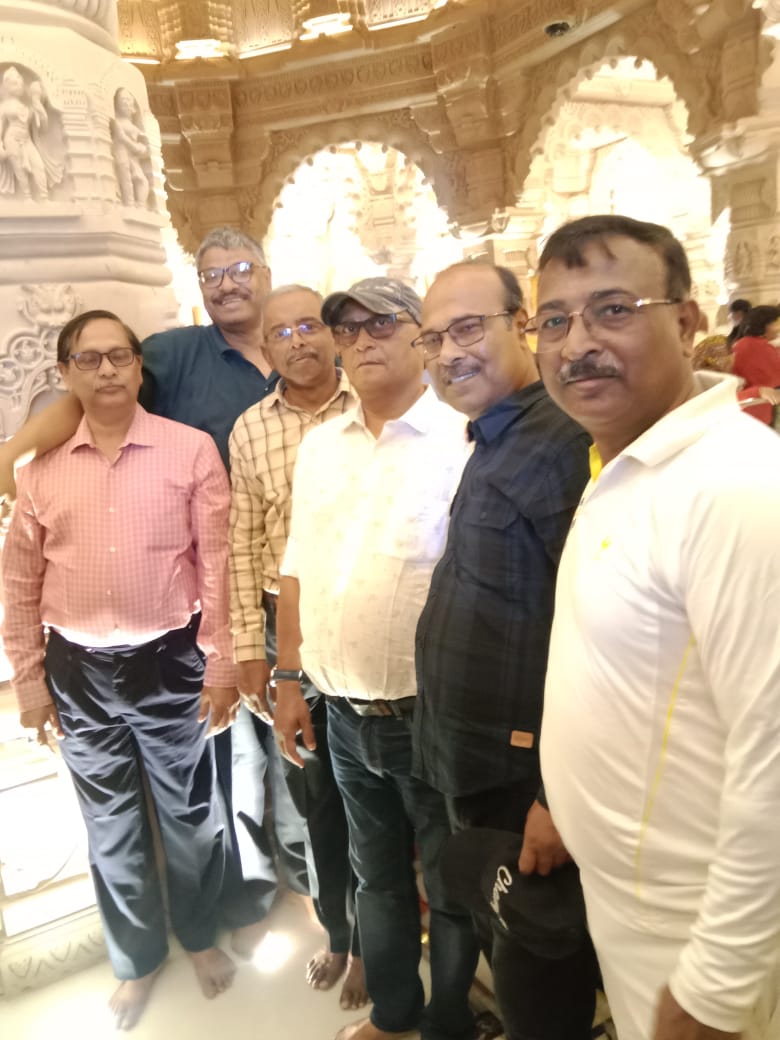
The “pass for the darshan” was only for the initial days, now, one has to deposit their phones, camera and any other electronic items at designated locker rooms. The parking stricture is for the buses only, private vehicles are allowed inside the city with restrictions on certain roads. Having a Fauji, that too a senior ranker, in the group helps in getting through at tough situations. We had Suro aka Group Captain Suranjan Chowdhury, who impressed the police constable to let us park on the road, then at pickets along the road to the mandir, his rank equivalent to Colonel, allowed us to go through the VVIP paths and finally at the mandir complex we could avoid the maddening crowd and use the VVIP entry allowing us a pleasant darshan of Shree Ram Lalla. The finished part of the temple has the promise of grandeur but it will perhaps take another two years to complete the entire temple complex.

Coming out, we picked up some sweets (to be treated as prashad of Shree Ram Lalla); Suro got hold of free food coupons and went to have it with Gora and Manu while we waited near the locker room watching the activities of Shree Ram’s foot soldiers – monkeys playing.

While in Ayodhya, one must visit the Saryu River and take the boat ride. The river is very clean though not very deep. We took a 30 minutes boat ride which was like an icing on the cake.

The return journey to Lucknow was uneventful except that this time I was awake and experienced Topshe’s driving skills… he drives like a possessed man, putting the F1 drivers to shame. We also the Ambedkar Park lighted up in the evening, the newer part of the city can easily compete with any metro cities in terms of infrastructure and beautification.

In the evening, Gora’s friend Ashish had promised to take us to the oldest part of the city for culinary experience, the option suggested by were the original Tundey Kababi and Rahim’s. Since we had already tasted the Tundey Kababs at Aminabad, we decided to try the Nalli Nahari with Kulcha at Rahim’s. He instructed us to reach the Tundey Kababi at Chowk where he will meet us and we will go to Rahim’s.

Rahim’s Nahari Gosht & Kulcha

We loved the Nahari Gosht and the accompanied Kulchas, it was flavourful, not very oily and the mutton pieces were succulent. I shall refrain from talking about the ambience because it was just like a dhaba but the service was quick and efficient, I guess it helps them serve more diners thereby making more money. However, the owners must invest in the infra to make the place appealing to the family clientele.

We walked to the Chowk and discovered vendors selling Malai Makkhan; I instantly recalled Nitika telling me about this prompting me to try it instantly. It was soft creamy very light mildly sweet dish and I liked it. We made an attempt to try the famous Lassi at Shree Lassi but it had closed for the day. Thereafter some of us had the Lucknowi Meetha Paan before bidding farewell to Ashish. He had provided invaluable inputs for our trip.
We again played TwentyNine till 1:00 am and again we beat Topshe-Manu team handsomely.
DAY FOUR

We left for Delhi around 10:45 am after breakfast fueling up the cars and reached Greater Noida around 6:30 pm with multiple breaks on the way, we were not in a hurry to reach home. I dropped Suro and Manas at the Panchsheel Metro Station and reached home at 7:30 pm. My Jeep Compass had given me 14 KMPL which I consider a great mileage for a heavy vehicle like Jeep and that too when I have driven it at 120 to 150 KMPH at few stretches and mostly at 100 KMPH.

WHAT WE MISSED OUT

At the onset we knew that we will not be able to achieve our target as per the itinerary, Ashish had indicated that if we could do 50%, it would be good enough. However, barring the below mentioned ones, we did cover all others and I would like to pat all our backs for a splendid performance.

Historical Places: Chhattar Manzil, Kaiserbagh, Dilkusha Kothi

Gastronomical Places: Naimat Khana, Shree Lassi, Royal Sky, Ram Ashrey, Alamgir