Lepakshi Temple

“At least you can enjoy the cool weather of Bengaluru instead of roasting in Delhi.” Deepika insisted and so I tagged along with her to spend a few days with Ayush and Rajashree.

Deepika’s friend Moushumi suggested we go out for 3-4 days to Belur & Halebeedu, a Hoisala heritage site about 100 miles from Bengaluru. However, the idea could not fructify because of the not-so-good road condition and the unpredictable rains in Karnataka. In any case, I was contended to spend the days at home and cook up some savouries for the kids. Then Moushumi came up with another heritage place, Lepakshi Temple, a day trip from Bengaluru on NH44 (Bengaluru-Hyderabad Highway). We decided to go on Tuesday 3rd June but on Sunday morning my nose turned ticklish and by evening it became full blown cold with running nose and mild fever, thankfully, Deepika was carrying medicine for such eventualities. I must confess that on Sunday, even though all indications suggested that I take complete rest but rest of the gang wanted to go out for lunch on the only Sunday afternoon for a family outing. Sunday happened to be Bengali Jamai Shashti, a day when the son-in-law is pampered to the hilt with a royal feast and we decided to visit the famous restaurant of Kolkata Mitra Café, only to be turned away with a waiting time of over an hour.  Rajashree searched for alternative restaurants in the vicinity and came up with Bier Garten, a roof top restaurant…the weather was decent enough to enjoy a nice meal and a pint of draught beer. Now, you can imagine what aggravated my sinuses!!

By Tuesday, with strong doses of anti-allergy medicines, I felt better and we decided to take the trip to Lepakshi. I suggested we hire a driver to drive Moushumi’s Suzuki XL-6 automatic, not being sure that I will be fit enough to drive. The ETD was 6:30 am to avoid the city traffic on a working day, accordingly Deepika & I reached Moushumi’s home at ACME, Bellandur only to find her sitting in her car, waiting for the driver to come. We waited for 30 more minutes with Moushumi trying to reach the driver or the agency that provides the services but no one responded. It was getting late, so I sat at the wheel and checked the vehicle’s functions. I felt confident to drive the car and we took off around 7:30 am.

It took us one hour to traverse through the city to reach the highway to Hyderabad. I had experience of driving on this stretch having made multiple visits to Bengaluru while stationed at Hyderabad. In those days, there weren’t many good decent places to stop for a bite. I asked Deepika and Moushumi to look for a breakfast place and they came up with A2B (Adyar Ananda Bhavan), a restaurant serving South Indian cuisine but soon realised that we had crossed it by many miles. Then we came across a signage promoting a restaurant called Koteshwaram, about a kilometre away from our location.

Koteshwaram turned out to a nice restaurant with option of fine dining as well as option for a quick bite on the go from the counter. It was a new place started operation four months ago. The food was Karnataka-Andhra influenced… thick dosa and mildly sweet sambhar but otherwise very tasty. On the table was a “tent-card” showcasing their desserts and one item instantly touched a chord in my heart. It was “Jelly Ice-cream”, reminded me of the times I used tag along with my brothers to the football match and afterwards would walk 5 km to Connaught Place from Ambedkar Stadium, Delhi Gate for the promised hamburger and cream jelly at the Indian Coffee House.

After our leisurely breakfast stretching over an hour, we started for our destination. The Google Map showed our destination, Lepakshi Temple, only 1:15 hour away, I drove sedately at 80 kmph (within speed limit) and reached our destination around 11 am, from the outside, it looked a small edifice, making us wonder if we reached the correct location!!

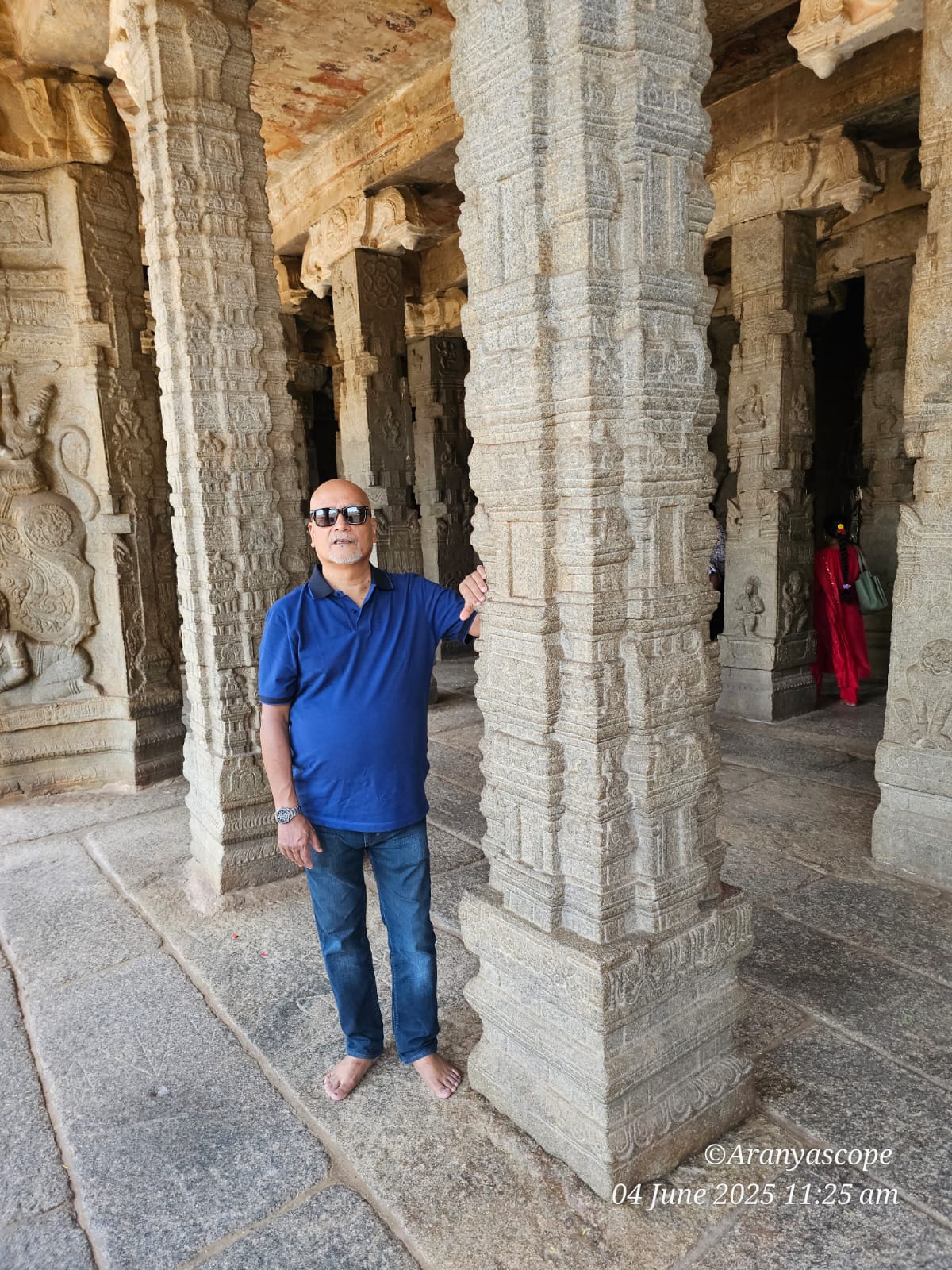
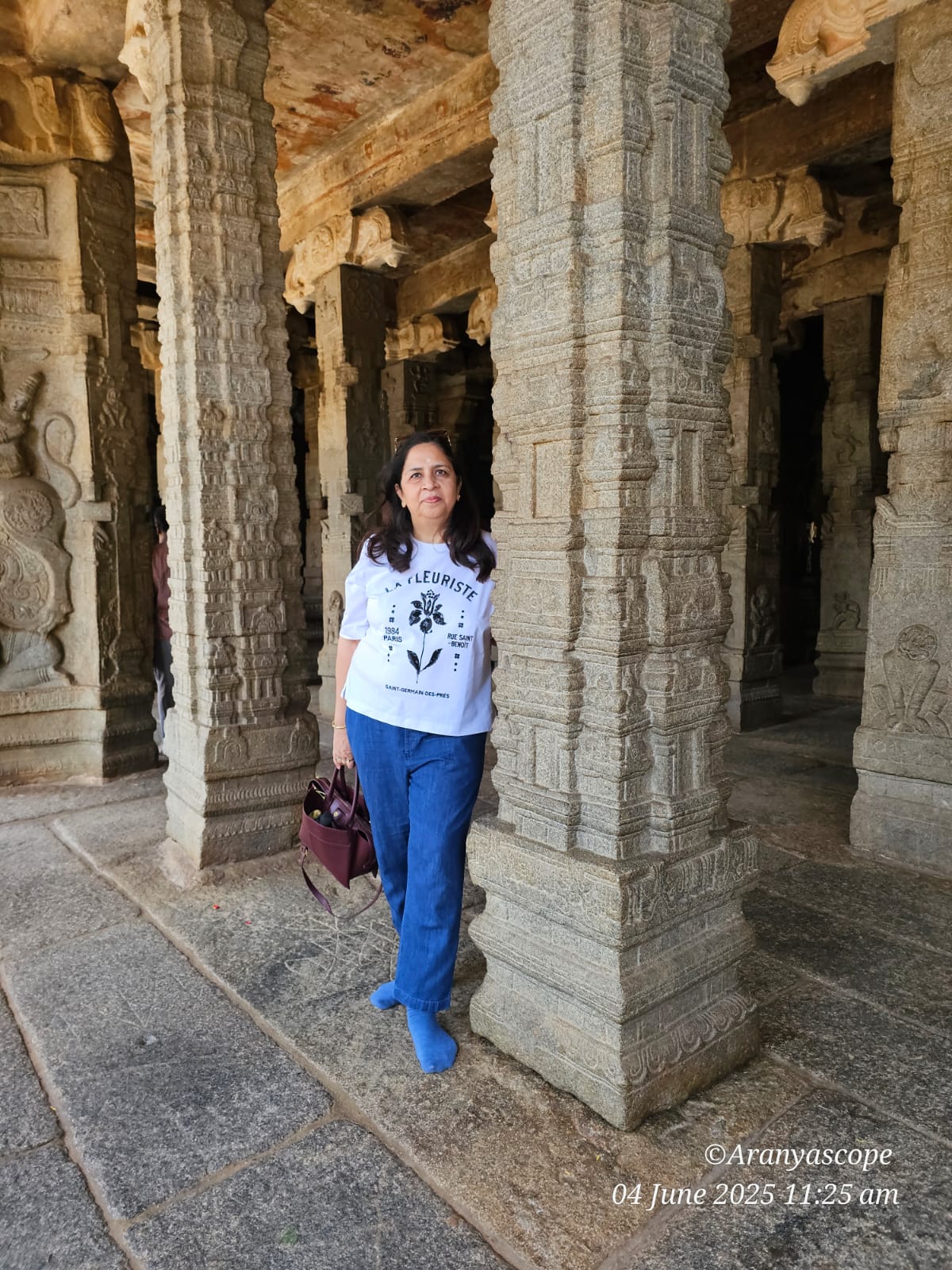
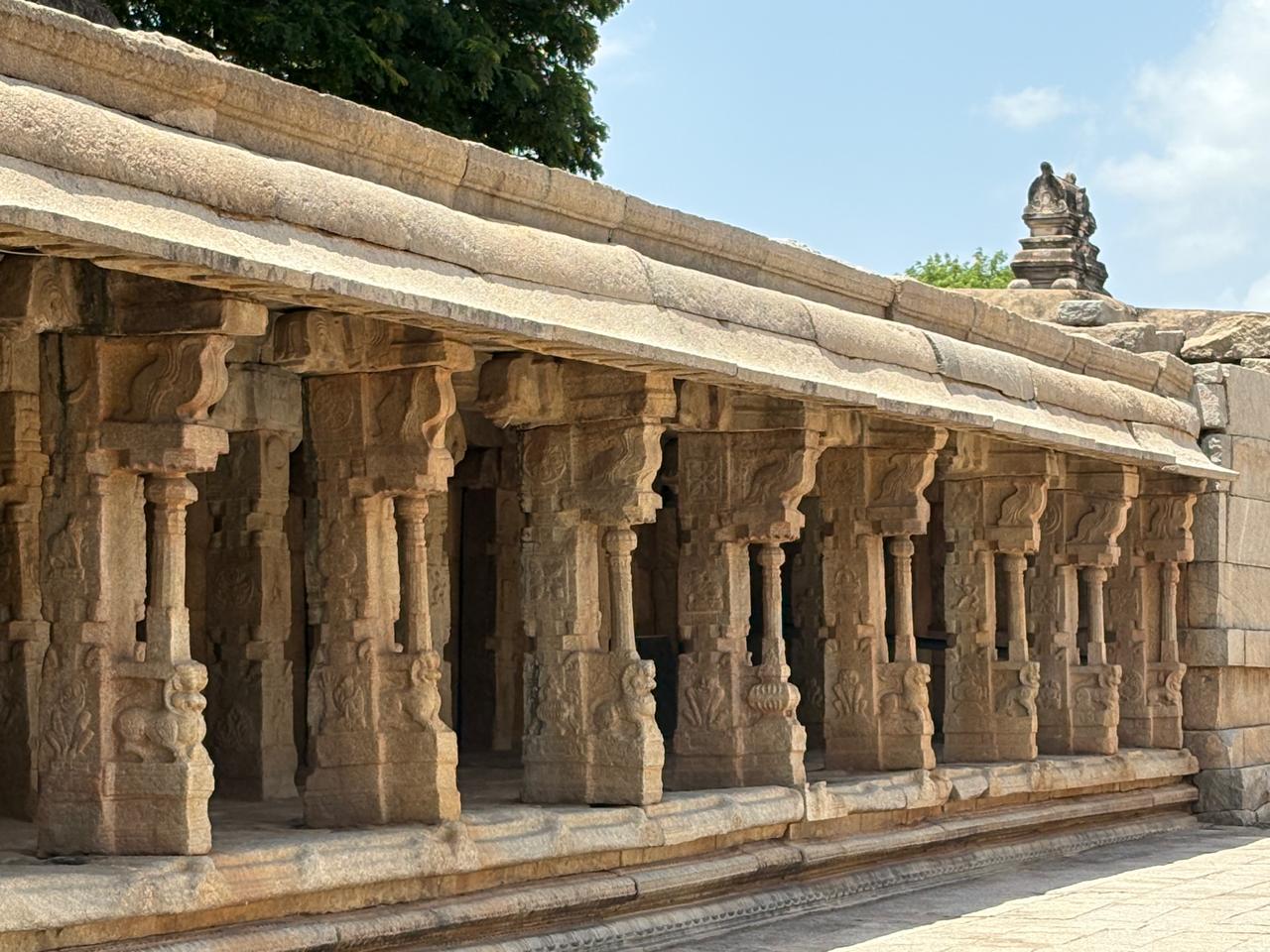
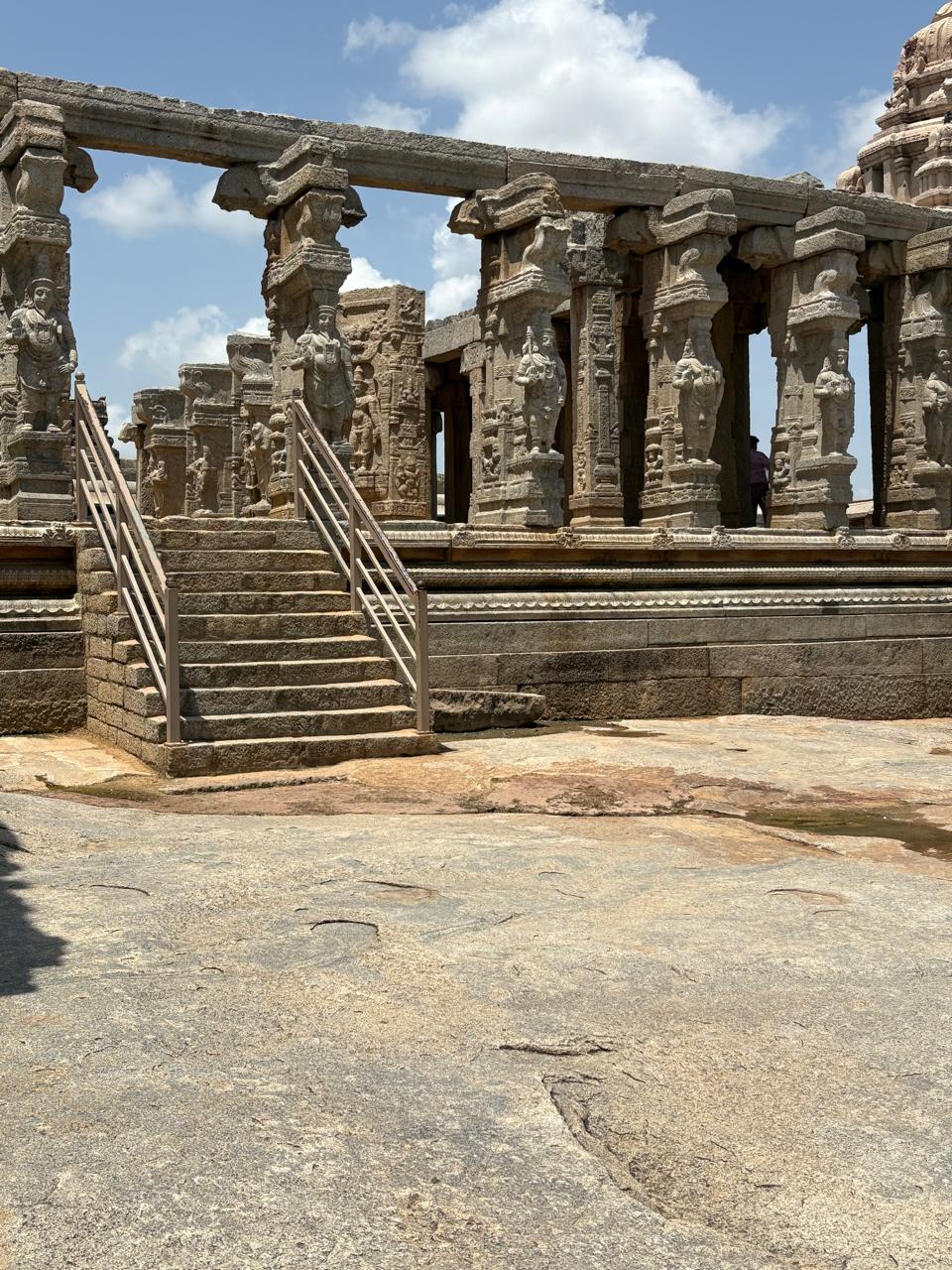
It is actually Veerbhadra Temple at Lepakshi. Veerabhadra Temple is a Hindu temple located in the Lepakshi, in the state of Andhra Pradesh, India. The temple is dedicated to the Virabhadra, a fierce form of the god Shiva.
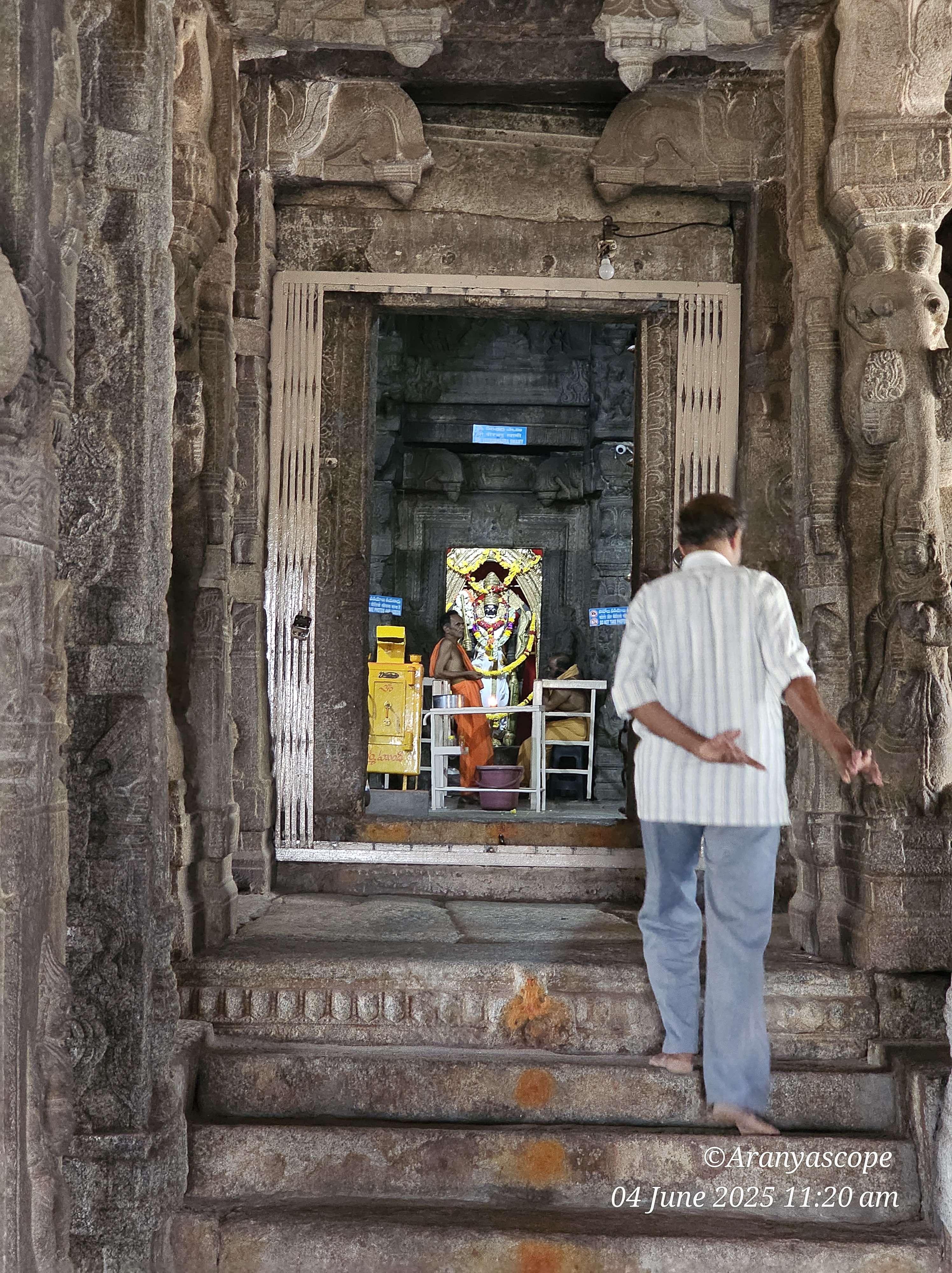
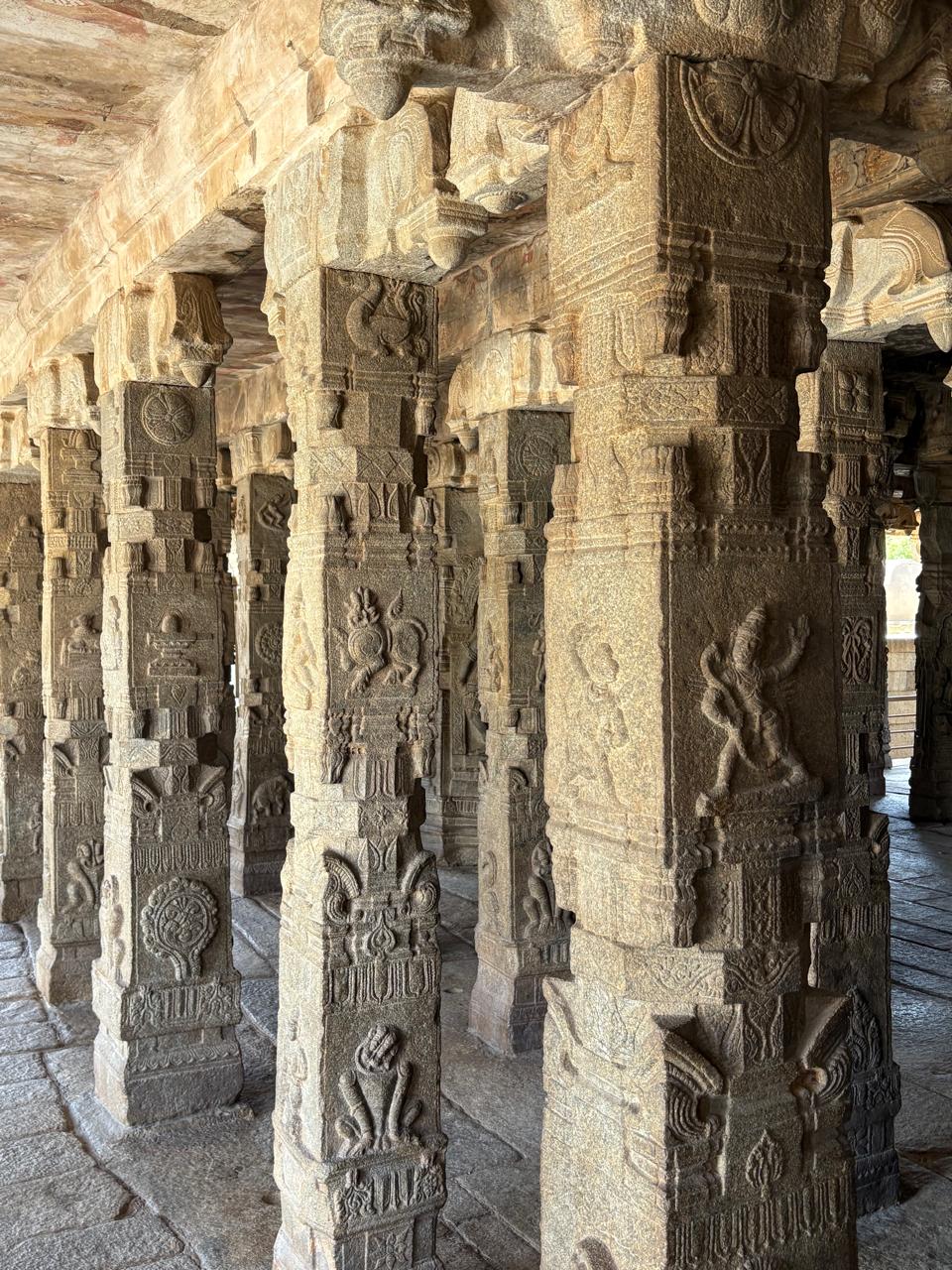
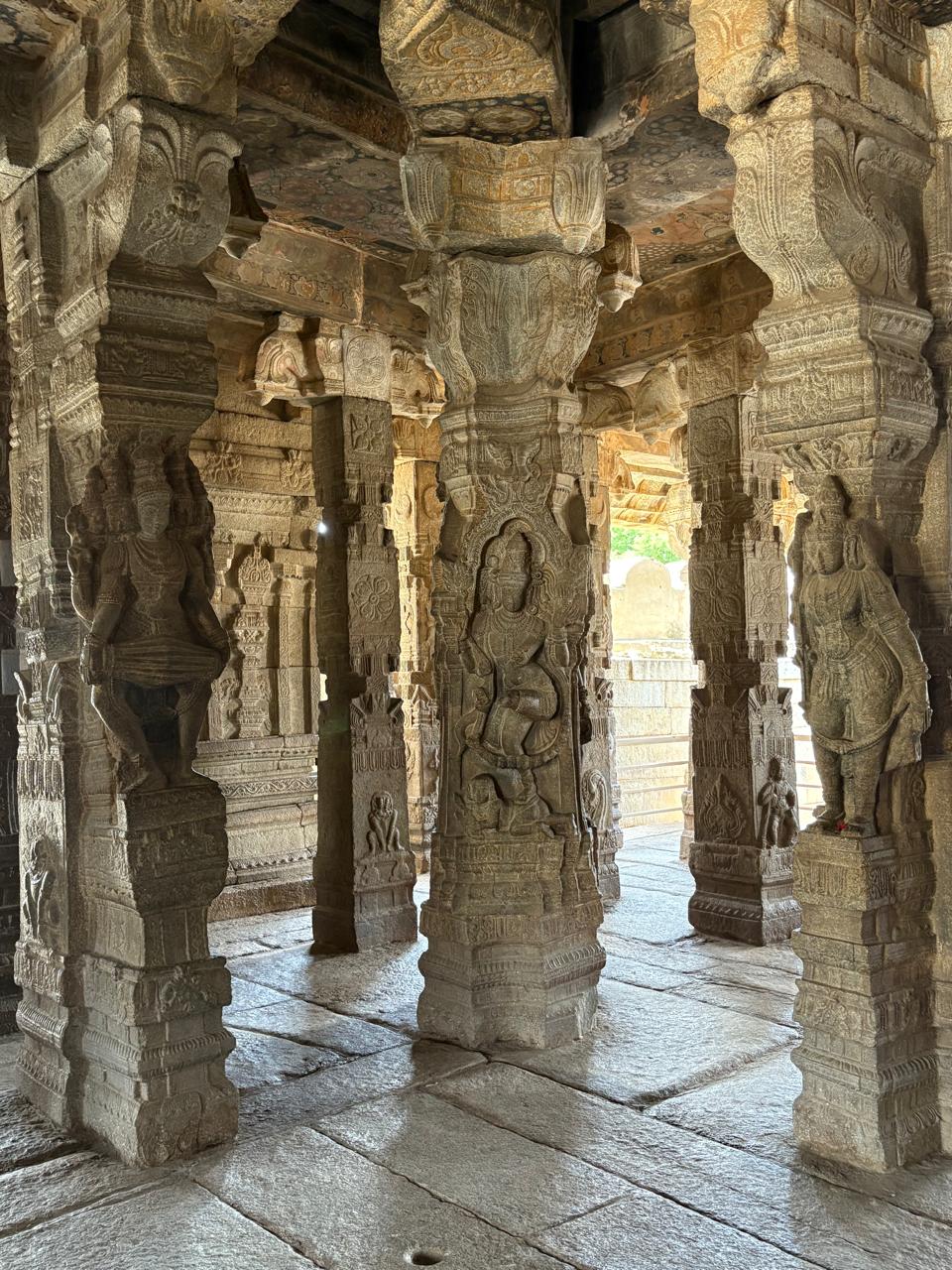
Built in the 16th century, the architectural features of the temple are in the Vijayanagara style with profusion of carvings and paintings at almost every exposed surface of the temple. It is one of the centrally protected monuments of national importance and is considered one of the most spectacular Vijayanagara temples. The fresco paintings are particularly detailed in very bright dresses and colours with scenes of Rama and Krishna from the epic stories of the Ramayana, the Mahabharata and the Puranas and they are well preserved.

There is a very large Nandi (bull), mount of Shiva, about 200 metres (660 ft) away from the temple which is carved from a single block of stone, which is said to be one of the largest of its type in the world. The temple has been built on the southern side of Lepakshi town, on a low altitude hillock of a large exposure of granite rock, which is in the shape of a tortoise, and hence known as Kurma Saila. It is 140 kilometres away from Bengaluru. The approach from the National Highway NH44/ NH44 to Hyderabad that takes a branch road at the Karnataka-Andhra Pradesh border leading to Lepakshi, 12 kilometres away.

The temple was built in 1530 AD by Virupanna Nayaka and Viranna, both brothers who were Governors under the Vijayanagar Empire during the reign of King Achyuta Deva Raya, at Penukonda who were native to Karnataka. They belonged to the warrior merchant class of Veerashaiva Vani. The temple consists of only Kannada inscriptions. According to Skanda Purana, the temple is one of the Divyakshetras, an important pilgrimage site of Lord Shiva.

The main temple is laid out in three parts, these are: The assembly hall known as the Mukha mantapa or Natya mantapa or Ranga mantapa; arda mantapa or antarala (ante chamber); and the garbhagriha or the sanctum sanctorum. The temple, as an edifice, is encircled by two enclosures. The outermost walled enclosure has three gates; the northern gate is used regularly. The inner east gate is the entry to the assembly hall, which is a large sized open hall designed with a large space in its central part.

It is at the entrance to the sanctum sanctorum and has a profusion of sculptures and paintings over every inch of space on the columns and ceiling. The images on the pillars and walls are of divine beings, saints, guardians, musicians, dancers and 14 avatars of Shiva. Figurines of the goddesses Ganga and Yamuna flank the entrance to the sanctum. The exterior columns of this hall are built over a decorated plinth; the decorations are in the form of blocks of carved images of horses and soldiers. The columns are slim and have features of colonnettes carved with eaves, overhanging in a curved shape. The open space in the middle part of the hall is defined by large columns or piers which have carvings of triple figures.

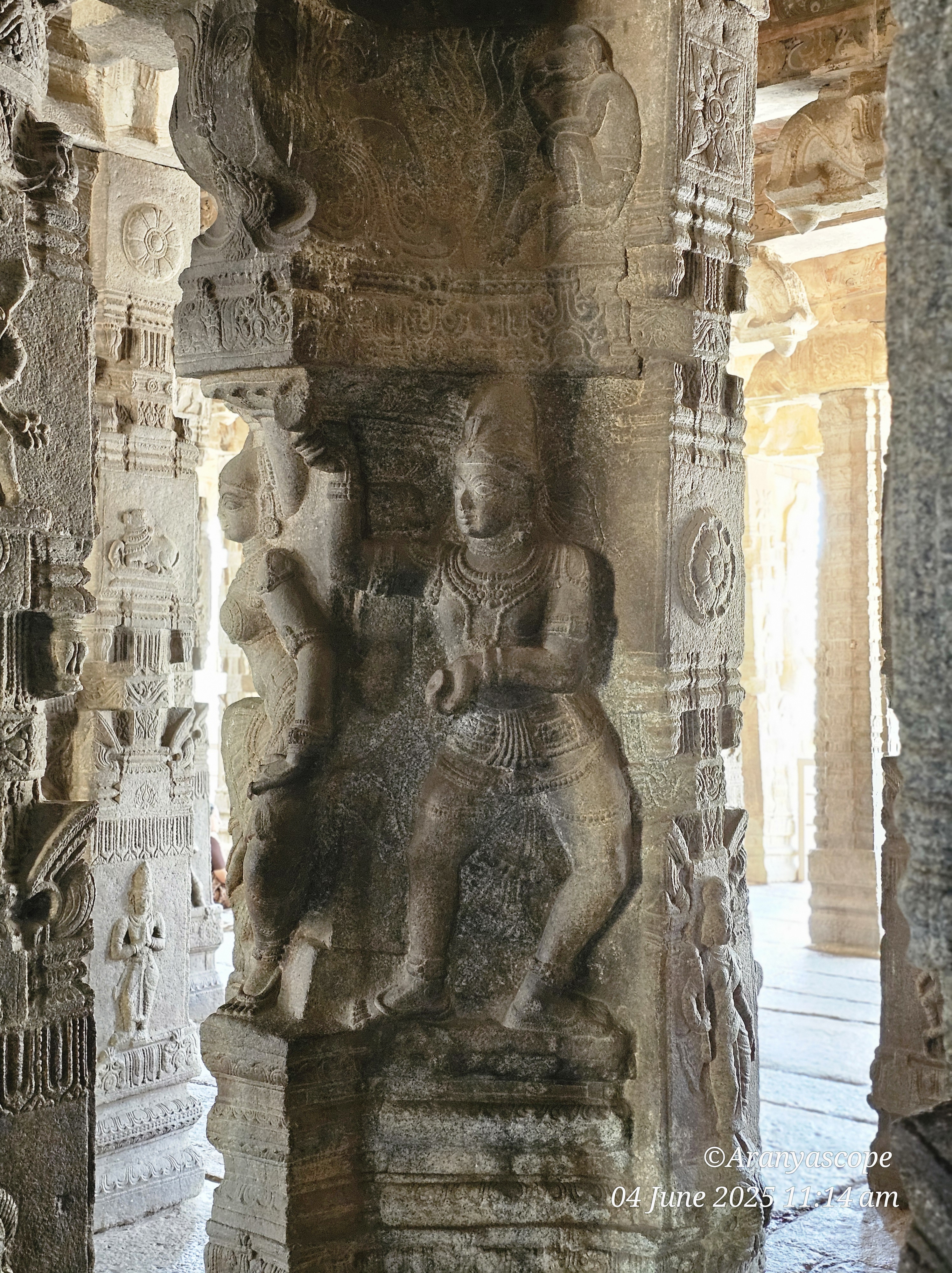
In the columns in the northeastern part of the hall, there are images of Natesha flanked by Brahma and a drummer. In an adjoining column there are figurines of nymphs in dancing postures, flanked by a drummer and cymbalist. The column at the southwest part of the hall has an image of Parvathi, Shiva’s consort, flanked by female attendants. There are also carvings of divinities such as Bhringi with three legs and Bhikshatana carved in a dancing posture; this is in the northwestern part of the hall. The ceiling of the hall is fully covered with mural paintings depicting the scenes from the epics, the Mahabharata, the Ramayana, and the Puranas along with the life sketches of the benefactors of the temple.

The paintings in each bay on the ceiling of the main mandapa, the antarala and other shrines, depict the grandeur of Vijayanagara pictorial art. They are painted over an initial plaster layer of lime mortar. The colour scheme consists of vegetable and mineral colours of yellow, ochre, black, blue and green blended with lime water; the background is generally painted in red colour. Apart from figures of gods and goddesses, in the presence of the devotees arranged in rows, the frescoes also depict the incarnations of Vishnu. The paintings are in striking compositions where the particular emphasis is on the period costumes and facial expressions. The fresco in the ceiling of ardha mantapa (ante chamber), which is said to be Asia’s largest, measures 23 by 13 feet (7.0 m × 4.0 m). It has frescoes of the 14 avatars of Lord Shiva as: Yogadakshinamurti, Chandes Anugraha Murthy, Bhikshatana, Harihara, Ardhanarishwara, Kalyanasundara, Tripurantaka, Nataraja, Gouriprasadaka, Lingodbhava, Andhakasurasmahara…

The presiding deity deified in the sanctum sanctorum is a near life-size image of Veerabhadra, fully armed and decorated with skulls. There is a cave chamber in the sanctum where sage Agasthya is said to have lived when he installed the image of the Linga here. The ceiling in the sanctum above the deity has paintings of the builders of the temple, Virupanna and Viranna, regally dressed and crowned with headgear similar to those adorning the Krishnadevaraya’s bronze statue in Tirupati. They are depicted, with their entourage, in a state of reverential prayer, being offered sacred ashes of their family deity.

Within the temple complex, on the eastern wing, there is a separate chamber with Shiva and his consort Parvathi carved on a boulder. In another shrine chamber there is an image of Lord Vishnu. Within the temple precincts, to its eastern side, there is huge boulder of granite stone which has carving of coiled multi-hooded serpent providing an umbrella cover over a Shiva Linga.

The apparently “hanging pillar” is yet another attraction in the temple. There is a gap between the base of the pillar and ground through which cloth and paper can be passed, as the pillar is slightly dislodged and touching the ground only on one side. A huge granite Nandi (bull), 20 feet (6.1 m) in height and 30 feet (9.1 m) in length, bedecked with garlands and bells, carved out of a single block stone, is located about 200 metres (660 ft) from the temple, which faces the statue of the serpent in the precincts of the temple.

We were awestruck by the temple’s architecture, stone carving and the fresco art. Deepika offered puja at the Veerbhadra temple for the peace and prosperity of the family. The priest offered us a small banana (Yellaki or Ilaichi Banana) as prasad. Coming out from the main temple, we made a parikrama of the temple complex, the expansive structure and use of the flat hilltop was simply amazing.

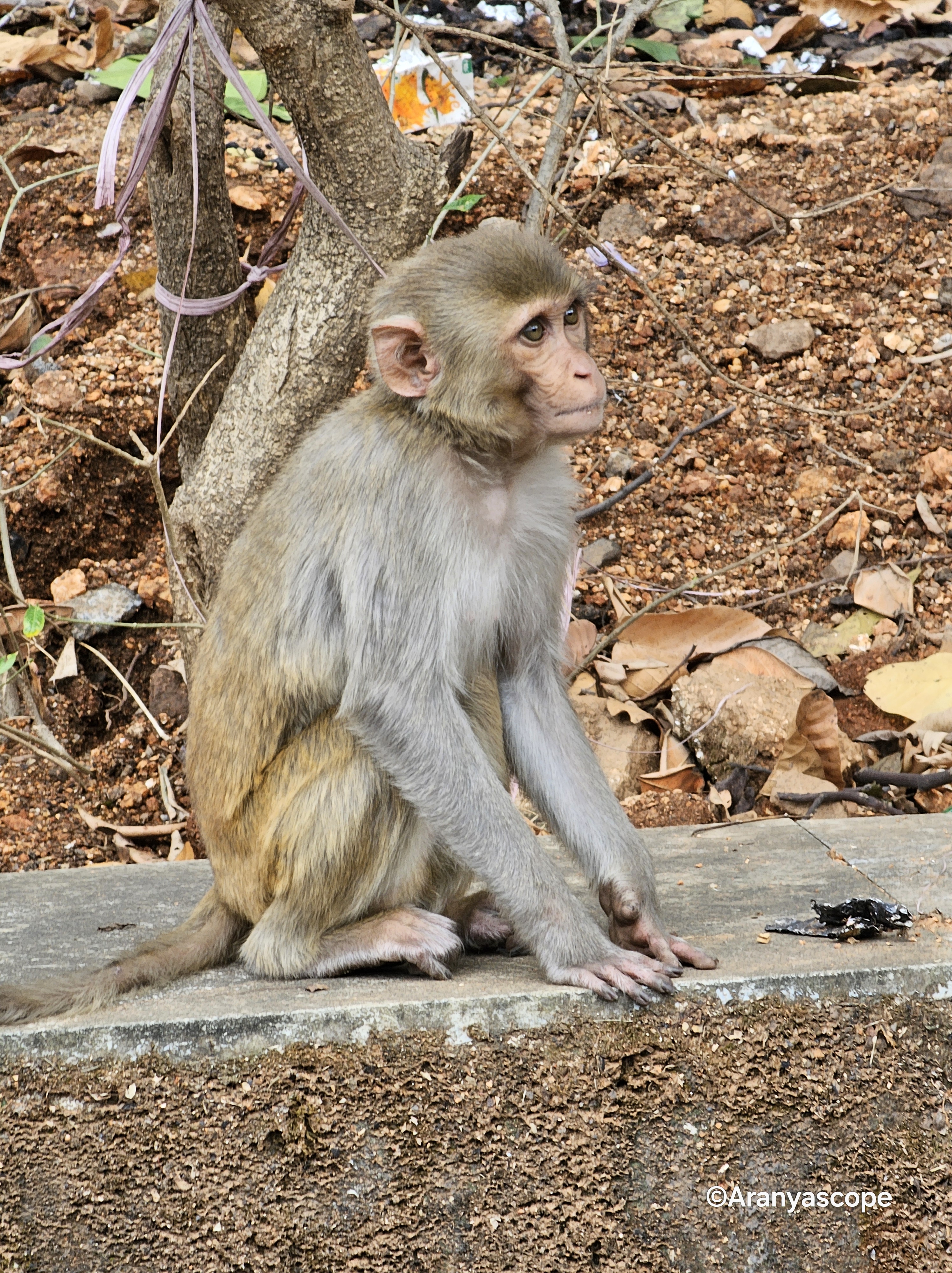
I was wearing my footwear sitting on the stairs to the temple when I noticed a few monkeys in the vicinity, two of them were scanning the area for food and one was peacefully sleeping. A group of devotees were passing through the gate which woke up the monkey and it looked at the source of the disturbance with irritation. In a swift movement, it swooped down on one of the devotees and snatched a banana that the man was holding in his hand, quickly peeling off the skin and devouring it. Deepika, unaware of the incidence walked straight towards Moushumi, sitting under the tree, a few feet away from the monkey, asking her to take a picture when the monkey rushed to her and in a swift movement took out the banana (prasad) that was barely visible from her purse. She panicked and started screaming but the monkey was neither interested in her nor in the purse. I told her to calm down and back off from the monkey. The scene was repeated once more on another hapless devotee.

We left for Bengaluru soon thereafter, hoping to evade the notorious evening traffic. The drive was uneventful except witnessing a crash on the other side of the road, a Toyota Hyrider had hit a tractor trolley with its engine completely gutted and a BMW tried best to avoid them but failed hitting the Toyota from behind. There was a huge man-made congestion of onlookers. It costed us precious 20 minutes before we could cruise again.

Reaching Bengaluru, we decided to stop for lunch at the Manyata Tech Park famous for a food court having the best of the restaurants. The food at the Nasi & Mee was excellent and every morsel was devoured by us. Under the specials, they had a sushi dessert called Mango Sticky Rice served with a coconut milk dip, mildly sweet with the natural sweetness of the mango. Even though, it was unique and flavourful, I felt, it lacked the sweetness one expects in a dessert, they could have added a bit of sweetener in the sticky rice before rolling it. Overall, we were very satisfied with both the quality and quantity of the servings, Thai Green Curry with Jasmine Rice, Veg Hakka Noodles and Prawn Curry for the main course as well as the dumplings for starters.

Moushumi, insisted that we stopover at her home for a cup of tea and rest a while before going home. I checked with Ayush if he can pick us up from there on his way back from office, detouring 20 minutes from his usual route and he confirmed affirmative. I handed over the wheels to Moushumi for the last leg of the journey to her home, as she knows the route while I would have needed constant guidance negotiating the heavy traffic. Later, Ayush picked us up but I realized the detour was a torture for his tired soul after a grinding day in the office.

Dil-Dosti-Yaarana

After a sumptuous dinner and warm welcome by Indrajit and Jagrata, we left for the Service Apartment, EcoSuites by Stayvilla, arranged by Indrajit, about 3 km from his place. EcoSuites, Service Apartment has three 2-bedroom+lounge units per floor, newly constructed, albeit a bit inside…entry through a narrow lane but has car parking for 5-6 vehicles. The rooms are spacious with kettle for making tea/coffee, running hot n cold water and big screen television. I would say, it’s a 3+ star accommodation, rare to find at the price negotiated by my friend. We were informed that room service is available too, round the clock. Initially, we were booked for 2 rooms with extra bed for the 5th person but we got the third room as well. I had the room all to myself as other eligible members refused to share with me fearing my snoring which sounds like the roar of a lion!!!

In the morning, we checked with Indro if he can arrange for a 7-seater vehicle for all of us to travel together; after a while he called up to inform that practically all the bigger commercial passenger vehicles have gone to Prayagraj for Mahakumbh, which is true because we have seen them not only in Prayagraj but on the highways as well. Instead of hiring another smaller vehicle and take two of them, we decided to adjust in our Jeep Compass, Sudipta would sit in the front passenger seat while four of us would manage within the rear seat… Dil mein jagah honi chahiye baki sab adjust ho jata hai…

I wanted to have Dhuska with Aloo-Chhola Sabji, but it wasn’t readily available, so we settled for stuffed paratha and egg with hot tea for breakfast.

DAY ONE (Thursday 20.02.25)

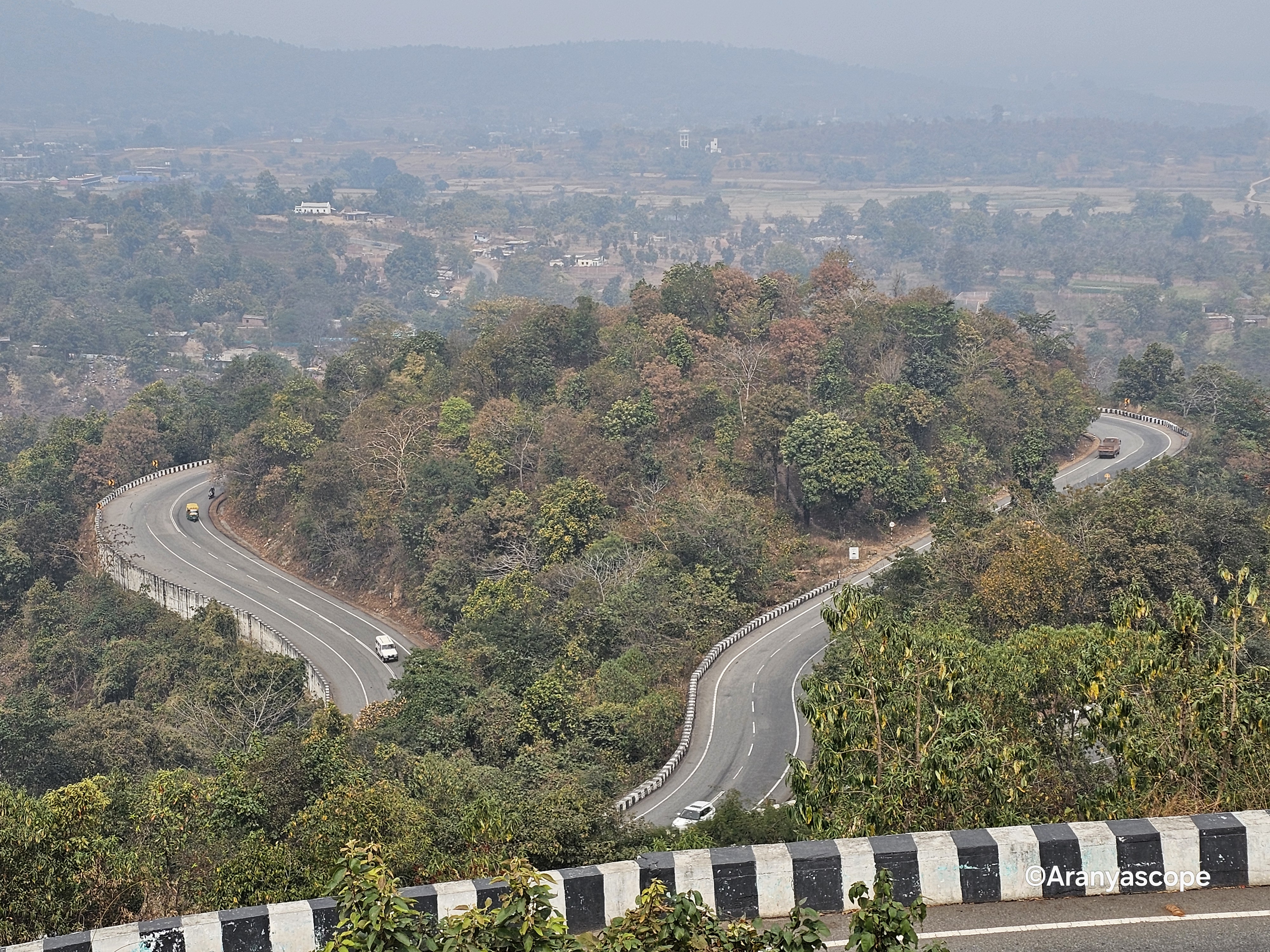
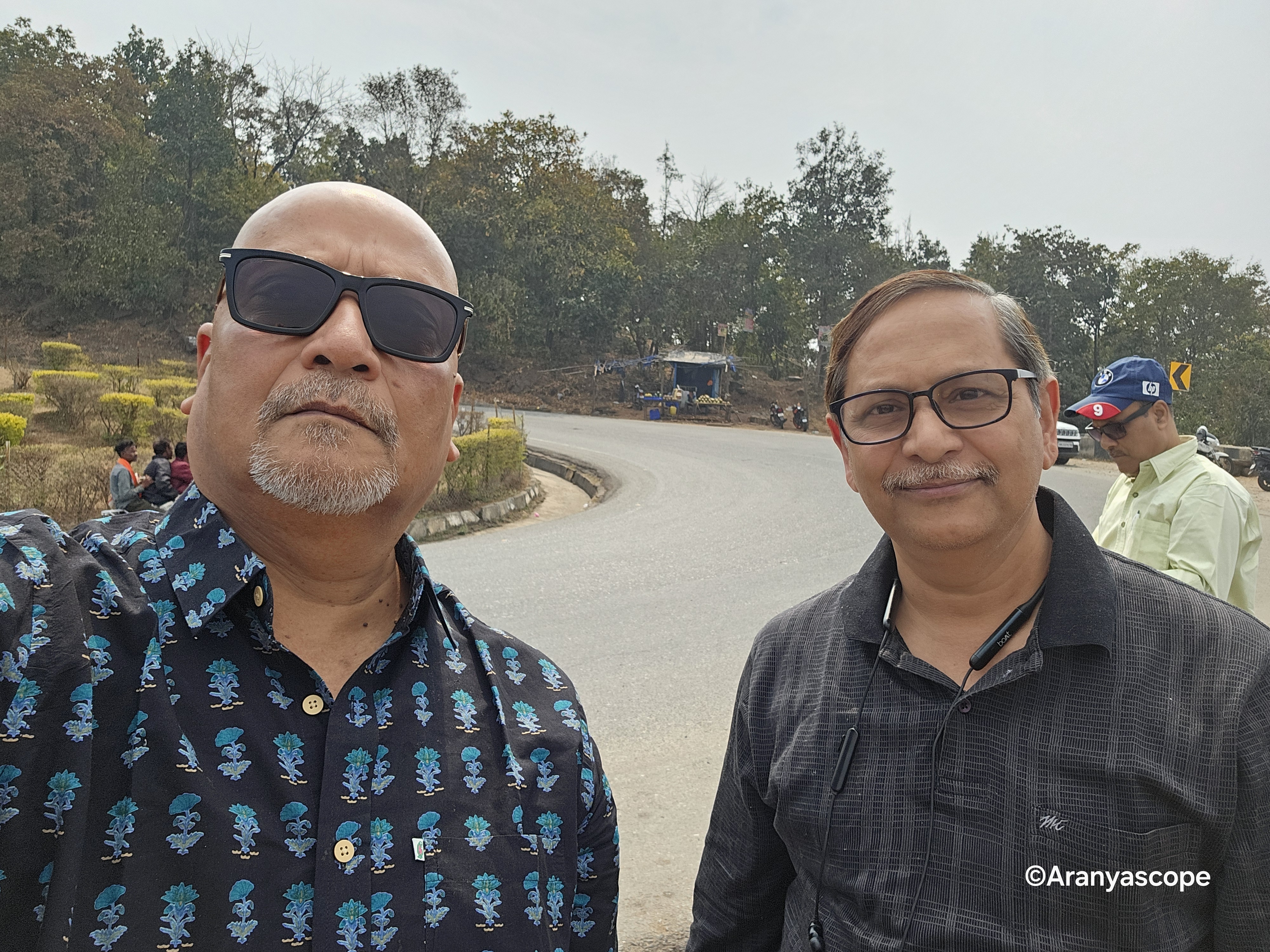
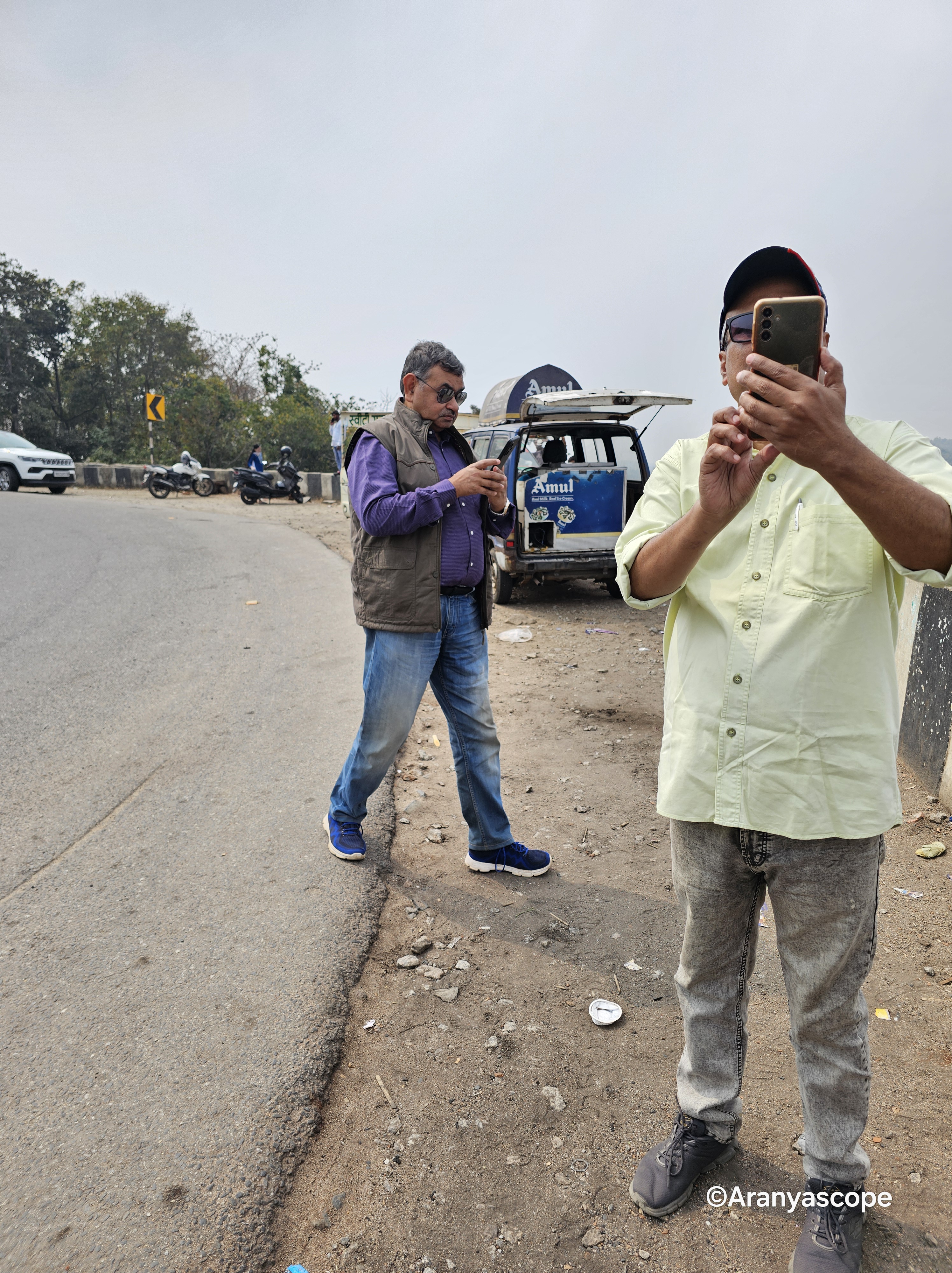
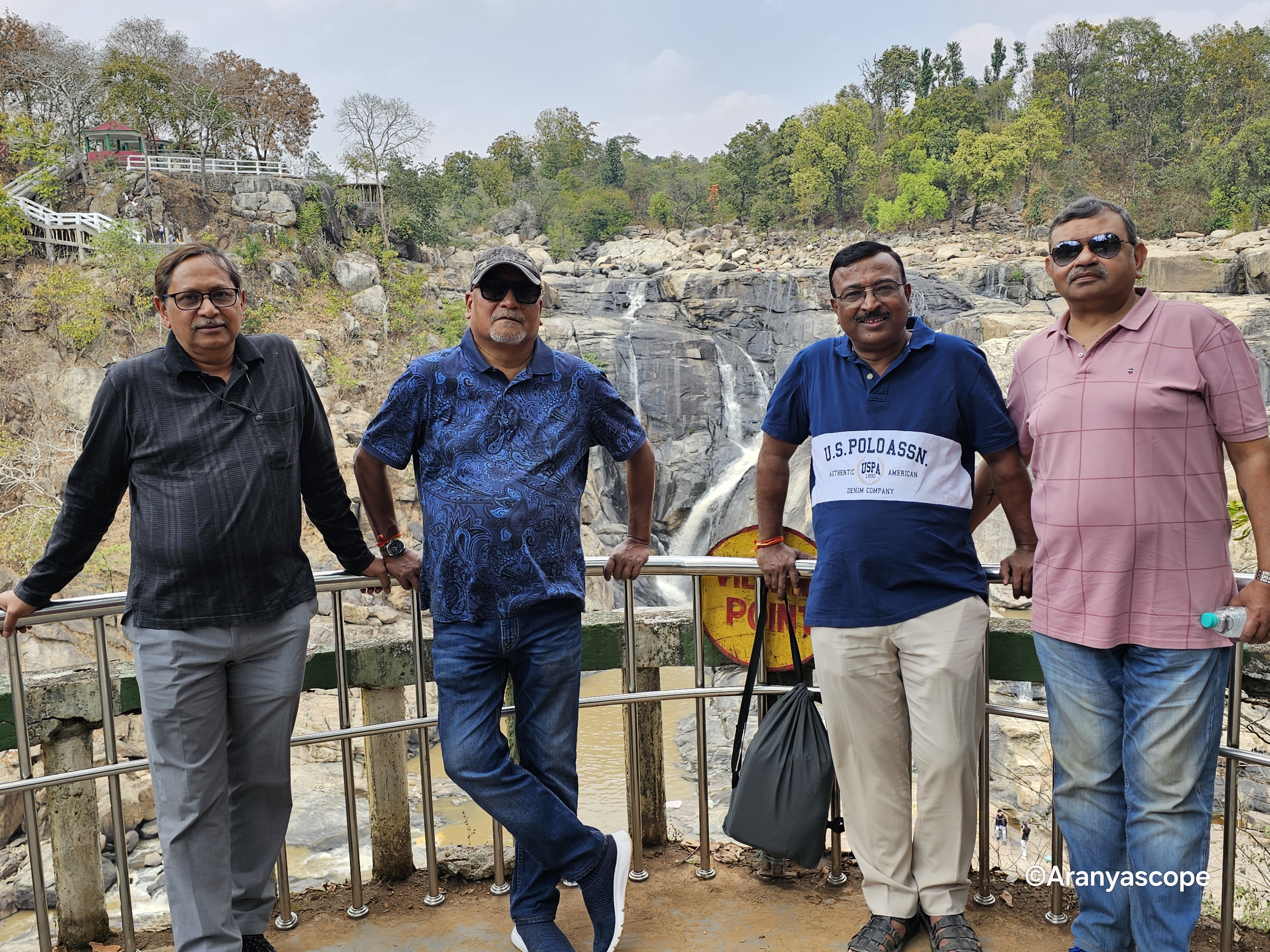
Our first destination was Patratu Valley (I have visited this earlier with Indro), the serpentine road with breathtaking view at every turn makes the journey feel amazing. We stopped at the Patratu View Point to take some pictures of the valley below with the mountain range as backdrop but unfortunately, the day turned out to be cloudy hiding the mountains from view. Anyways, we clicked few selfies and pictures of us with the valley in the background.

There were few vendors selling street foods, we had the phoochka or golgappa from one such guy, the taste was average, lacked the punch associated with the item. I also had a plate of Aloo-tikki with Channa… the Channa tasted tangy and nice but the tikki was nowhere near the famed Delhi version. We had then rounded off with Amul ice-creams before going down to the valley to experience the Patratu Lake created by the dam.

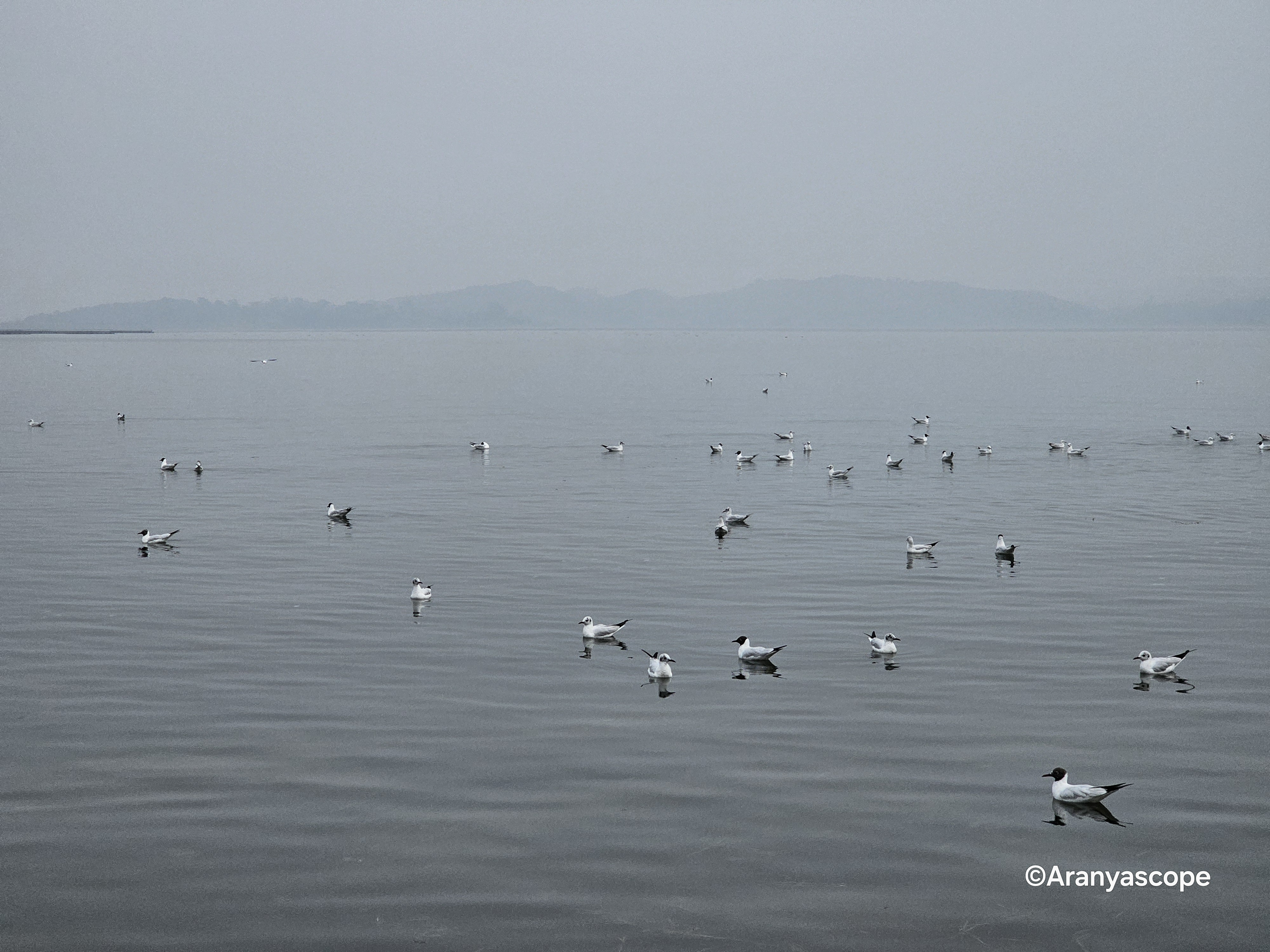
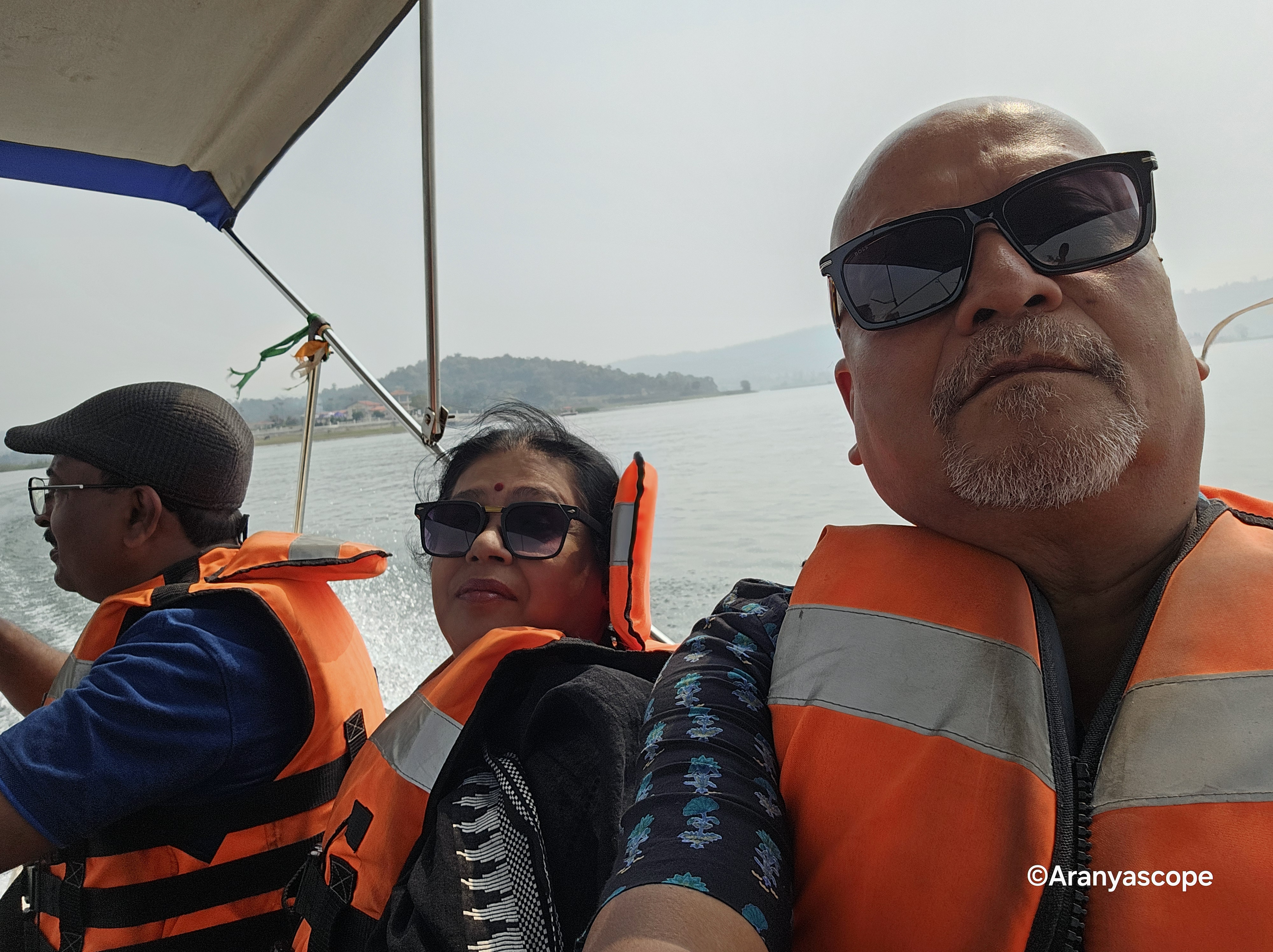
There were a flock of gulls near the shore enjoying swim, occasionally fluttering their wings to hop over the water, apparently, they were fed by the tourists visiting the lake. A few of the tourists were taking boat rides as well, the speedboats creating a jet-spray in their wake reminded me of my boat ride in the expansive sea in Thailand. We bought the tickets for the boat ride and were picked up by the waiting boat which took us to the island on the lake at the far side, took a complete round and a smaller circle and we were back to the shore. It was a less than 10 minutes ride but thoroughly enjoyable, giving us a childlike thrill.

Our next destination was Palani Falls situated 11 km or 22 minutes’ drive away from our location. During monsoon and immediately afterwards, the sight is wonderful but as this winter had very scant rains, the water had completely dried and one only see the dark patches on the rocks marking the path of the water fall. We were disappointed. We spent few minutes at the gate deciding on our next destination, Indro suggested, Tuti Jharna Temple near Ramgarh off NH20, a 1.5 hour drive. Topshe took the wheel and I shifted to the rear seat to take nap.

I woke up when Topshe was navigating through a very narrow village lane of Sandi, reminding me of the numerous trips I had made through such village roads while dropping or picking up my son from his university, SNU situated on the GT Road, Chithara village.   

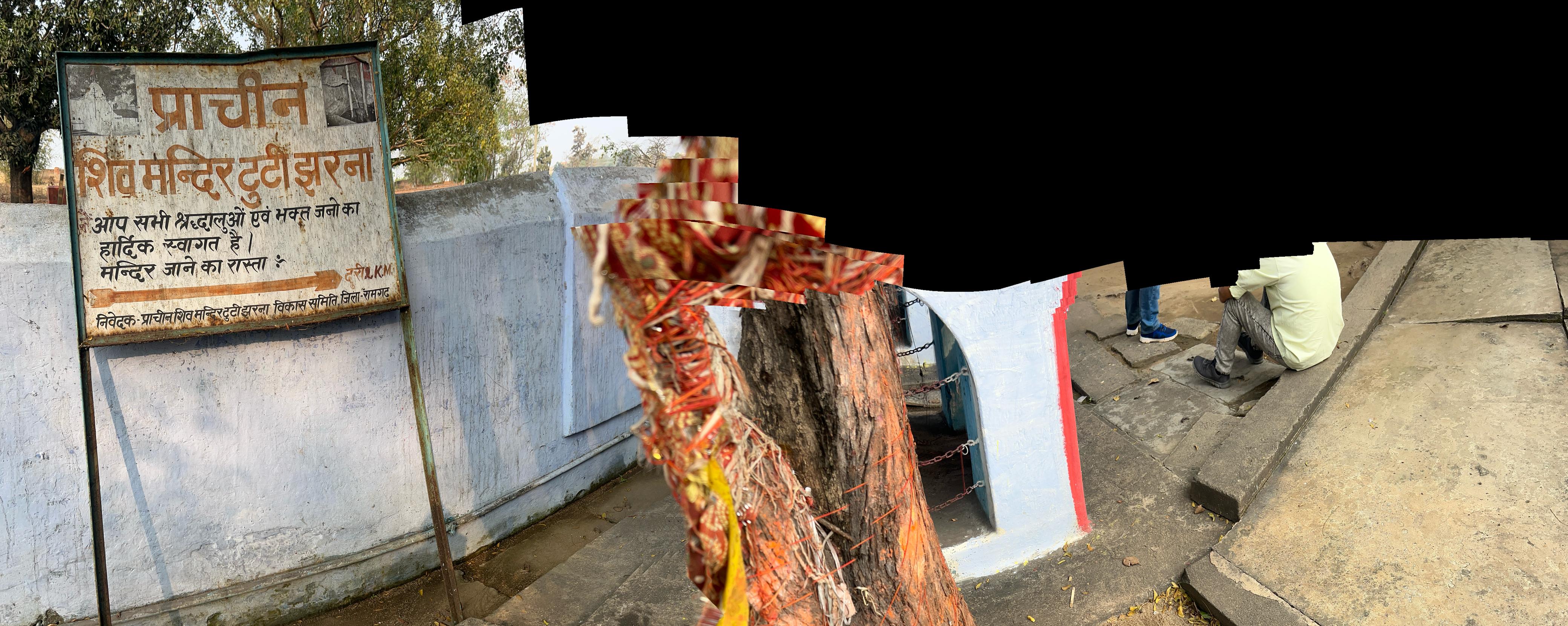
We parked nearer to the temple complex in the middle of makeshift vendor stalls, empty but likely to come alive in the evening and walked to the temple complex. The atmosphere was serene and calm in the afternoon with a sound of water flowing in a stream coming from the distance becoming more prominent as we got closer to the temple. What struck us is the ancient structure of the temple blending seamlessly with the surrounding landscape. With anticipation we stepped inside, eager to uncover the stories and legends that had stood the test of time (please read at https://indroyc.com).

Tuti Jharna Temple… Continuous water flowing on the Shiv Linga.

The Tuti Jharna temple is renowned for a fascinating natural phenomenon—water flows continuously over the Shiva Linga, yet no visible source can be found. The mystery has baffled visitors for generations, with no scientific explanation to fully account for it. Some say it’s an underground spring, while others believe it to be a divine marvel. Regardless of the reason, the sight was mesmerizing—the steady flow of water over the ancient Shiva Linga, the rhythmic sound creating an almost meditative atmosphere. Standing there, we couldn’t help but be drawn into the temple’s serene and mystical aura. Whether science had an answer or not, didn’t matter—we were content simply to soak in the divine energy that seemed to permeate the place.

The handpump just outside the temple, water gushing out without any human intervention.

Our next destination was Chhinnamasta Kali Temple situated in Rajrappa, 38 km or 50 minutes’ drive from our location.

Nestled amidst the verdant hills of Jharkhand, the Chhinnamasta Temple in Rajrappa is a popular pilgrimage site for devotees of Shaktism. The temple is dedicated to Goddess Chhinnamasta, also known as Prachanda Chandika, who is revered as the embodiment of power, courage, and wisdom.

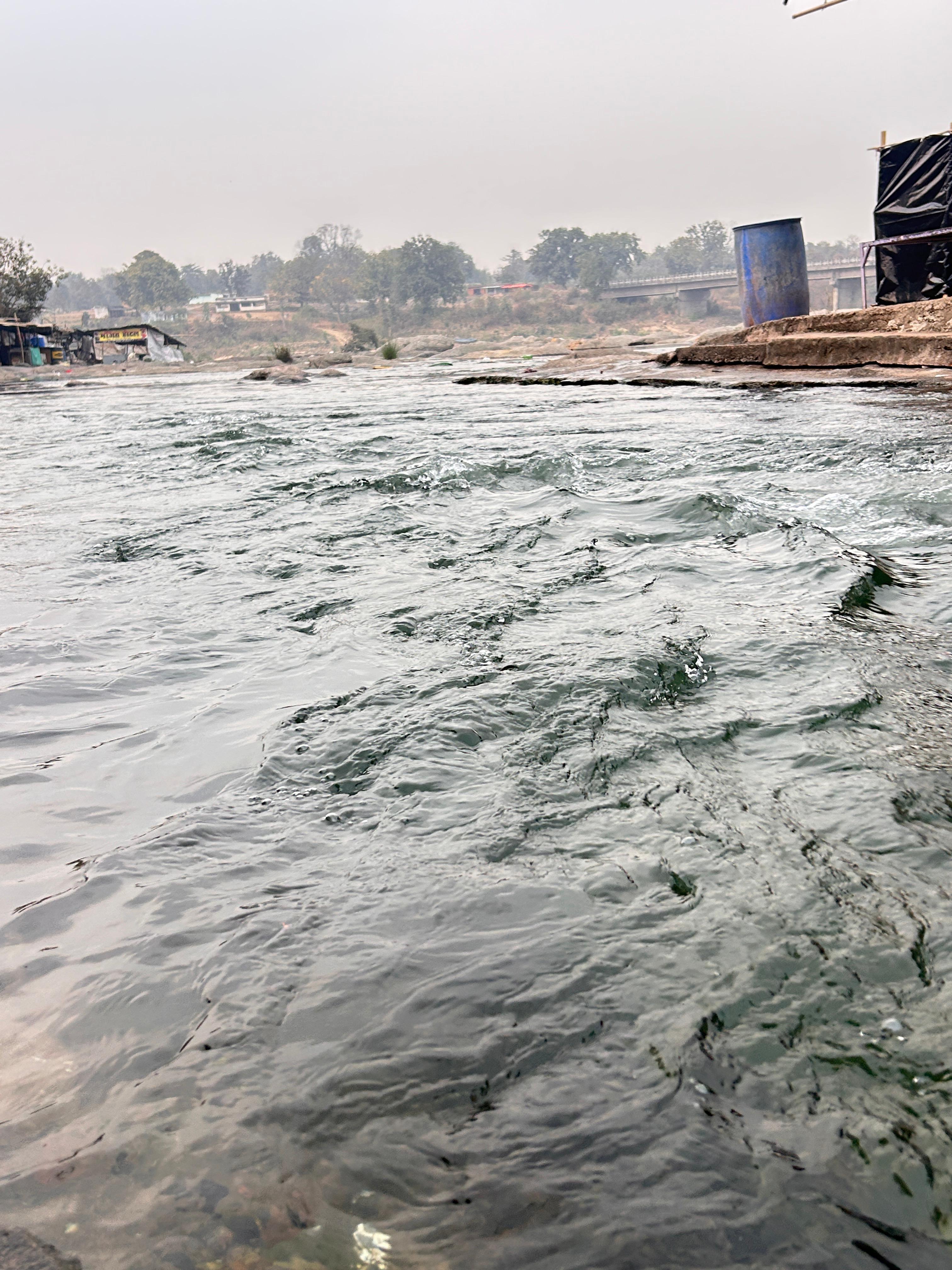
The journey to Rajrappa is not just a physical one but also a spiritual voyage through time and nature. The Damodar River, with its broad and flat valley, tells a geological story that spans millions of years. The Bhairavi or Bhera River, cascading from the Ranchi plateau, joins the Damodar, creating a picturesque waterfall and a sacred confluence. This spot, steeped in legend and myth, is where Goddess Chhinnamasta is said to have appeared before Lord Shiva and Parvati. This location has a special significance. It is at the union of Bhairavi nadi (female) coming from the top, meeting Damodar nada (male) signifying vipareeta rati (opposite copulation) pose as described in Devi Chhinnamasta’s dhyana (vipareeta rataturam). Here Bhairavi is active Shakti and Damodar is the male passive member of rati action. Damodar is very calm and Bhairavi is an active member.

Chhinnamasta (ছিন্নমস্তা) temple, dedicated to Goddess Chinnamasta (छिन्नमस्ता), is a marvel of Tantric architecture. Adorned with intricate carvings and sculptures depicting scenes from Hindu mythology, the temple stands as a testament to ancient craftsmanship. The main shrine houses the idol of Goddess Chhinnamasta, bedecked with flowers, jewels, and offerings from devotees. The temple complex also includes smaller shrines dedicated to various deities and a holy pond for ritual cleansing. (Source: Indrosphere, https://Indroyc.com)

My friends, when they came to Ranchi for Judhajit’s (only son of Indrajit & Jagrata) wedding, they missed out visiting the temple due to tremendous rush on the occasion of Akshaya Tritiya. However, this time we could actually go inside the Garbha-griha and offer our puja to Maa Chhinnamasta. When the Purohit asked the name of the Jajman, I automatically mentioned “Deepika”, perhaps because she’s the most important person in my life or perhaps I have reached a state of mind where the desires have ceased to exist… I am at peace with my current existence. I know, my friend, Madhav or Keshav is always with me (even when I am writing this) and keep guiding, removing obstacles from my path, like ensuring we could enter the city of Prayagraj, unhindered when many others faced daunting task of walking many miles to the Triveni Sangam. The Supreme One, often tests my resilience too, teaching me valuable lessons of life.

Just to clear doubts from the minds of those reading this, I generally avoid all ritualistic worshipping. I am agnostic by nature and thoughts. I believe, Madhav or the Supreme One is omnipresent in my life by manifesting in the form of friends and family who are wise and full of empathy, always guiding towards the path of Dharma. I am lucky.

After a very satisfying darshan of the Vigraha, we left for our hotel, dropping Indro at his home to freshen up, promising to return after an hour or so to devour another true Bong dinner. We had insisted that we take them out for dinner but Indro sighting the health of Jagrata had turned it down. Moreover, he said that since we are his guests, it is his right to feed us at least one meal a day. We couldn’t argue further and accepted his invite.

Jagrata, dished out another spread of true blue Bong culinary affair consisting of Shukto, Lal Shak-Posto, Sojne Phuler Batichocchori, Lau Chingri, Ilish Machher Jhol (Egg Curry for me), Sada Bhat & Nolen Gurer Rosogolla. Even as I write, my mouth is watering up…

We spent couple hours with them chatting and having a gala time, telling stories of our exploits during our school days and all the merriments we had at the weddings of our sons, Judhajit and Ayush.

DAY TWO (21.02.25)

On our last day in Ranchi, Indro suggested we go to Dassam Falls and then to the 16-Arm Durga Temple popularly known as Prachin Kalin Solah Bhuji Maa Dewri Mandir, through Taimara Ghati.It was a 68km or 1.5-hour journey from Indro’s home through Ranchi Ring Road and then NH33 or TATA Marg. This particular stretch of the road is alleged to be one of the top ten haunted roads of the world. And did we experience anything weird or paranormal?

From the Ranchi Ring Road, we took the exit to NH33 and Indro informed that up ahead, the stretch is known to be haunted though he had never experienced anything spooky. He informed that many travellers have on record said that their watch stopped or their vehicle got stalled in the middle of the road, some even confirmed sighting apparition of a veiled woman clad in white saree. We all became interested and extra alert to spot anything unusual that could be termed spooky. Just to tease my friends, I told them that our watches have suddenly leaped forward from 11:45 to 12 noon. They all checked their watches and were shocked.

Though, Indro had been on this stretch, particularly for Dassam Falls and Dewri Temple and knew the way to both places, the face of the road had changed since his last visit, so we had Google Maps directing us. All was going well when suddenly, the Google Map on the car screen went for a wild dance, it kept re-routing on a single straight road. We thought, it was because of network issue but all the phones showed full strength of the signal. We kept going straight for a while and then the Google Map became alive and directed us to take a u-turn after 3 more km; we had effectively overshot our right turn to Dassam Falls Road by almost 10-12 km. Why it happened, I don’t know, whether it has anything to do with paranormal activity or simply a momentary loss of GPS signal, I leave it to the readers to decide.

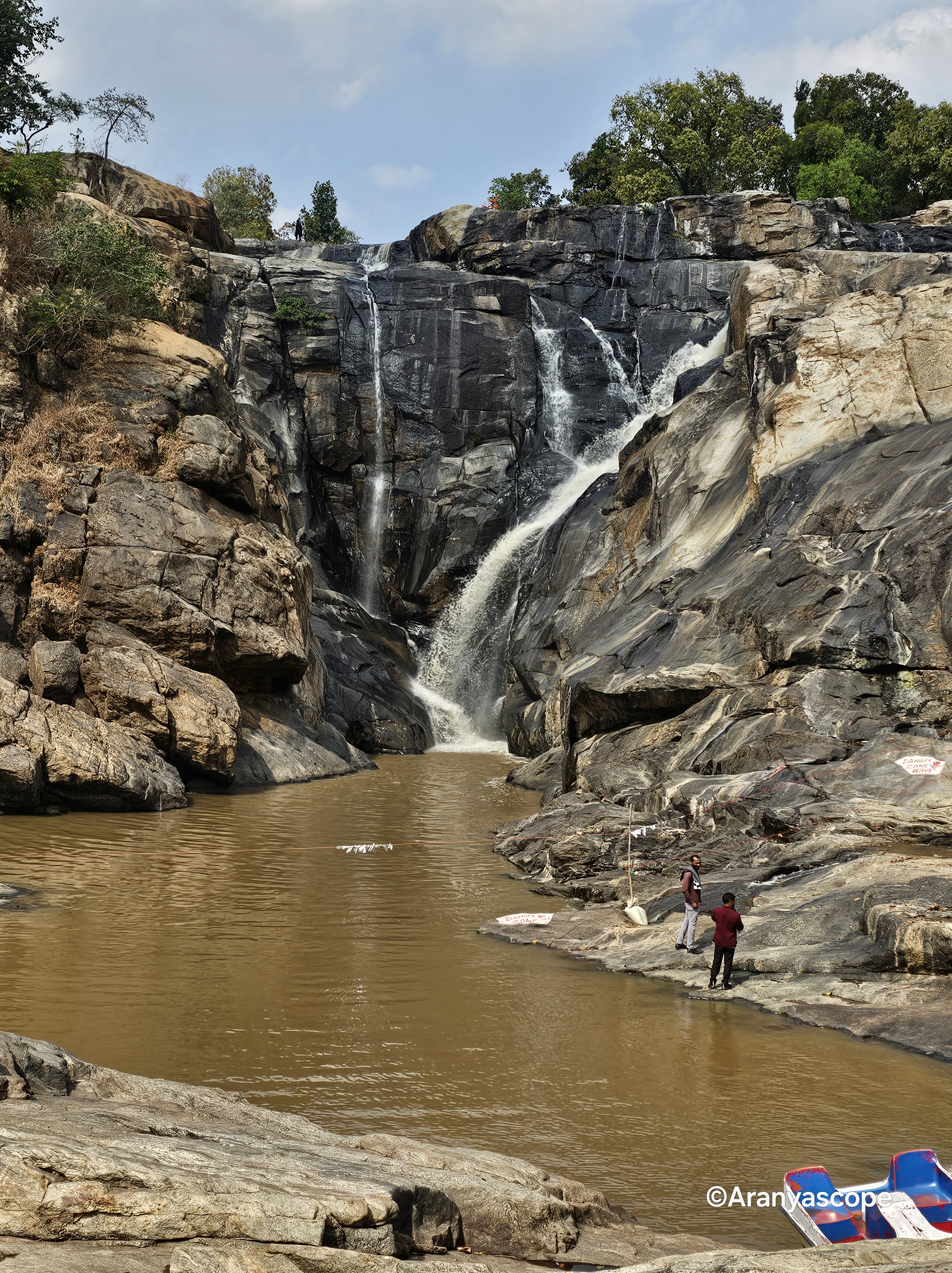
The Dassam Falls gets it’s name from the fact that during and after the monsoon, the water falls in 10 different streams from the rock. Dassam Waterfalls, at this time of the year was not the thunderous spectacle as it is during the monsoon, but still held a quiet, undeniable majesty. The water tumbled gracefully down the rugged rocks, splitting into multiple shimmering ribbons that caught the sunlight, creating a mesmerizing display. The verdant backdrop of dense forests framed the falls perfectly, adding to their serene beauty. We spent some time at different viewing platforms taking pictures, going down to the base for the majestic view of the cascading water falling down the rock-face. While coming up, I counted the steps, they are 206 steps from the base to the top surface. A good exercise for the 60-plus youngsters and it called for refreshment as well. We had the orange papaya, a local cultivation and wonderfully ripe n sweet tasting. We also bought Wild Berries (Indian Jujube), 500gm for just Rs.10/-. Coming back home, I made a tangy chutney of it using date-jaggery. We also had freshly made veggie fritters (pakodas) paired with hot masala tea. A family of monkey was following us from base in the hope of getting food but we had none to offer, disappointed they went after a young couple who were having something more interesting for the monkey family. While we were enjoying the fritters a chicken with 5-6 chicks wandered near us pecking at the food they could only see.

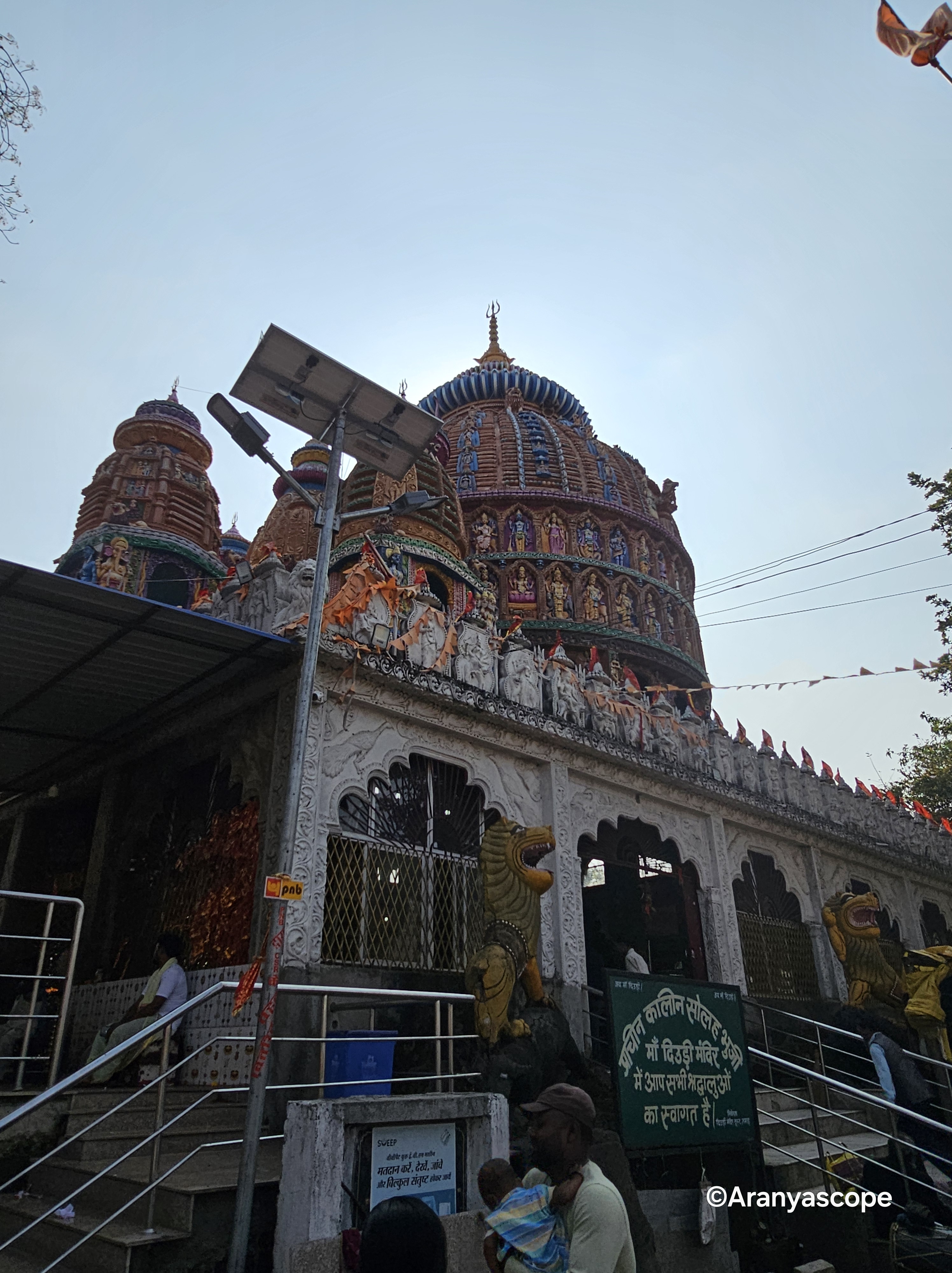
Our next destination was the famous Dewri Temple of 16-bhuja Maa Durga. On the way, stopped for a moment at the open roof temple of Maa Kali & Hanuman. The idols were out in the open as if to oversee the travellers on the road below and assure them a safe journey.

In the tranquil outskirts of Tamar, a quaint village nestled along the Jamshedpur-Ranchi Highway, lies a haven of divinity, the Deori Mandir. This sacred abode is home to Maa Deori, the revered sixteen-armed manifestation of Goddess Durga. As I revisit this timeless sanctuary after a prolonged hiatus, memories surge forth, weaving a tapestry of spirituality and folklore. Durga is a warrior goddess, and she is depicted to express her martial skills. Her iconography typically resonates with these attributes, where she rides a lion or a tiger, and has between eight and eighteen hands, each holding a weapon to destroy and create. The main attraction is that the idol is having sixteen hands, normally goddess Durga is seen with eight or ten hands. At the heart of Deori Mandir lies its pièce de résistance – the idol of Goddess Durga, bedecked with sixteen resplendent arms. This unique portrayal, deviating from the conventional depictions, exudes an aura of martial prowess and divine grace. Legends intertwined with the temple’s existence narrate sagas from epochs past, tracing its origins to the era of the Mahabharata.

Among the myriad narratives enshrined within its ancient walls, one resonates with the valour of Emperor Ashoka (Reigned ca. 268 – ca. 232 BCE) and his entreaty for divine intervention during the Kalinga War (ca. 260 BCE). The saga of a visionary king, stirred by celestial dreams, unveils the temple’s hidden sanctum amidst dense foliage, echoing the whims of destiny and devotion. According to folklore, a king of Tamar, believed to be in the 18th century,  once saw a dream. The goddess told him that there was a temple in Deori, where she must be worshipped. Villagers, as directed by the king, cleared a forested patch to find a small temple with a stone statue of Durga. Ever since the deity is worshipped here.

Legend has it that whoever has tried to alter the structure of the temple has had to face the wrath of the gods and suffer consequences. Therefore, new construction is being done from outside keeping the original temple intact. (Source: Indrosphere, https://indroyc.com)

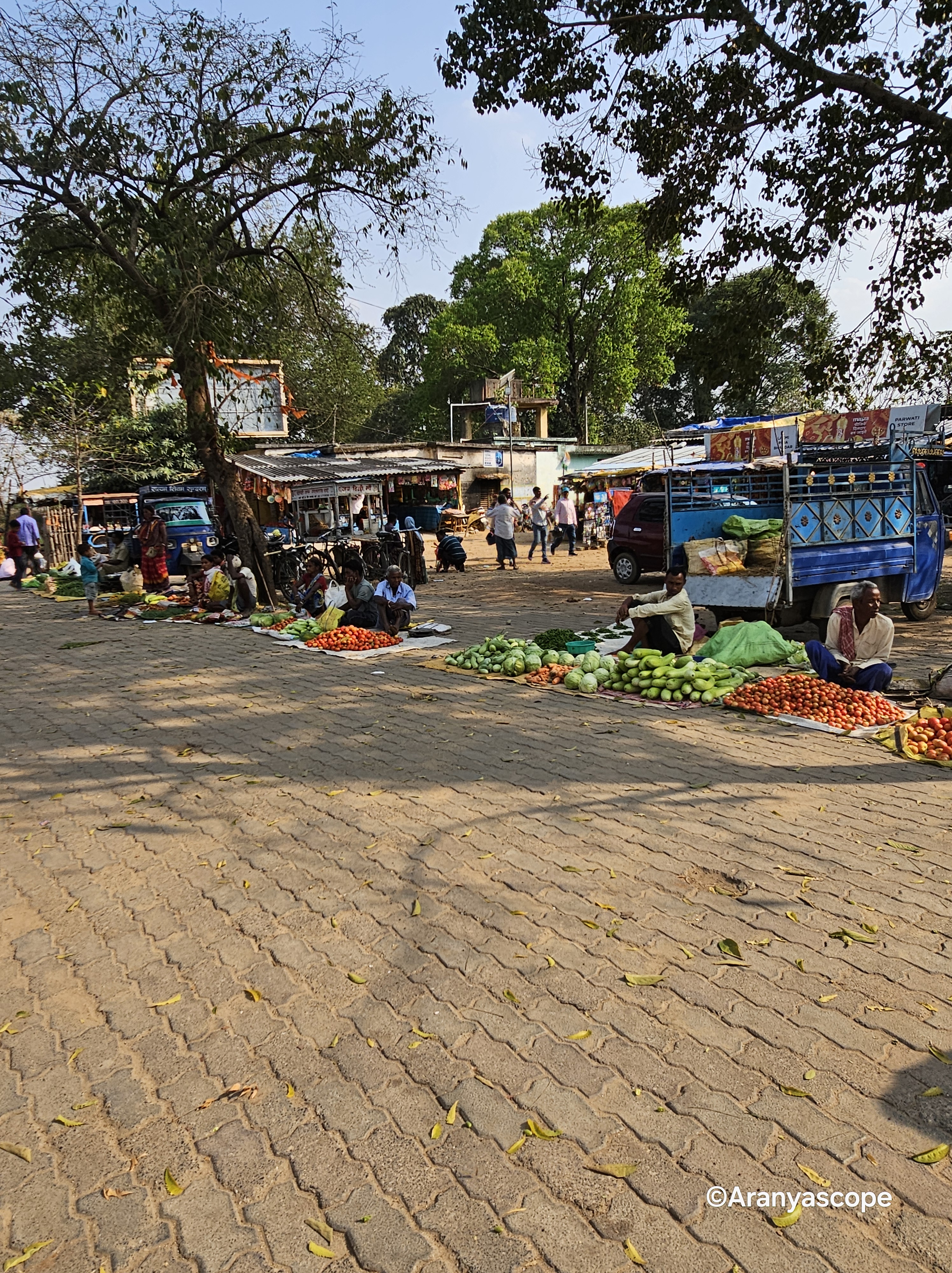
There was market place just outside the temple courtyard where the aboriginal or Adivasis from the nearby villages gathered to sell their produce. The veggies were absolutely fresh from the farm and many kinds of greens which I had never seen before. They were selling different kinds of lentils too, unpolished, unadulterated besides superfoods like quinoa and millets. I bought the Arhaar Dal and raw Turmeric from a lady. Sudipta was still drooling over the Lau-Chingri and Sojne phuler Chocchori, she bought both to take back home and surprise the children with culinary delights.

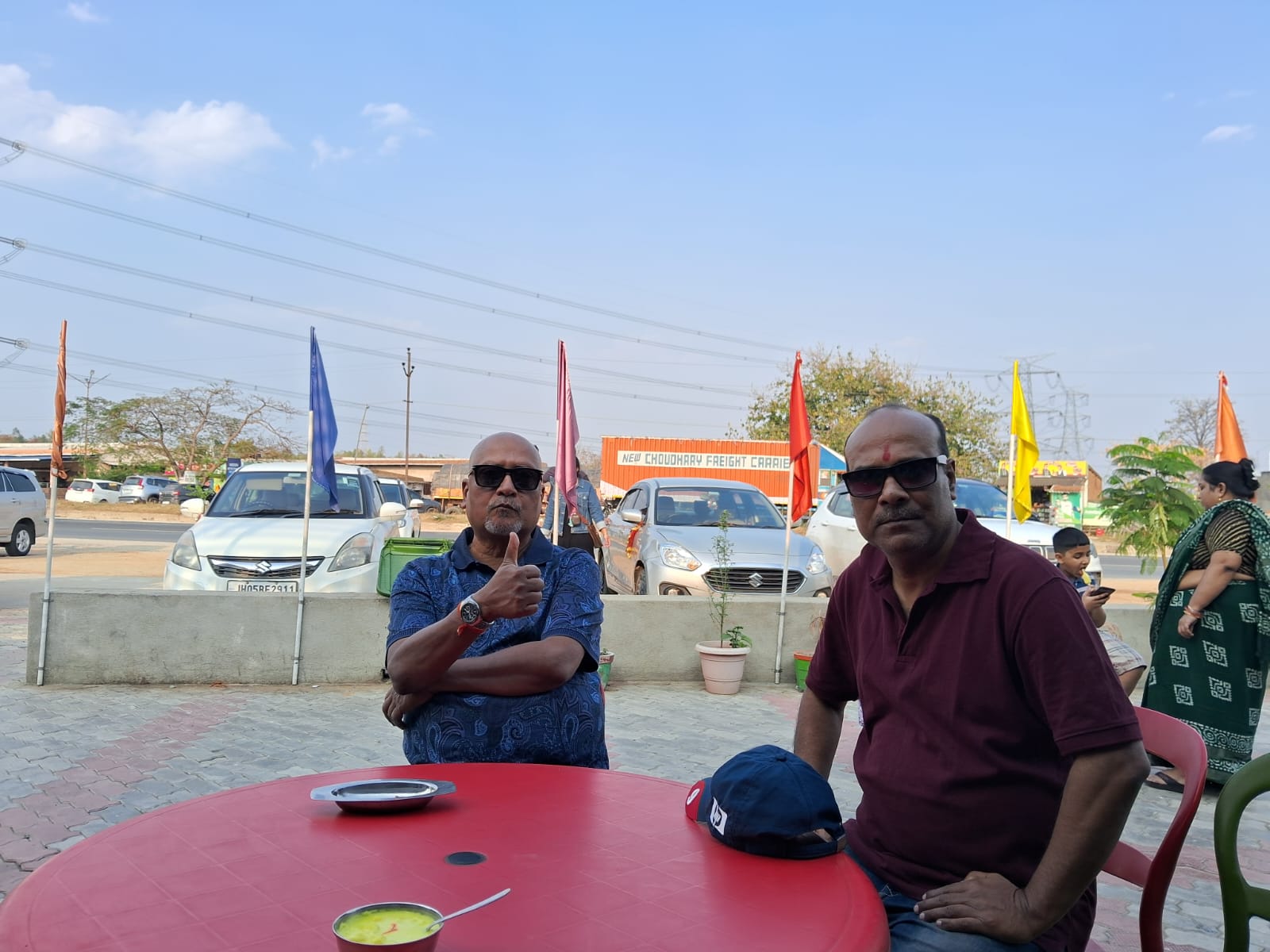
On our way back, we stopped at roadside restaurant, Panchvati Restaurant, near the Surya Temple, Bundu,primarily to use the restroom and have tea. As I was parking the Jeep, I saw a signage that said “Desi Bakre ka Mans Milta Hai Yahan” meaning Country Goat Meat available here. This intrigued me because, I have heard of “desi murga” as opposed to “broiler chicken” but didn’t know that such differentiation exists in the mutton category as well. Indro checked at the counter and we ordered for two plates of that with Tanduri Roti besides onion pakodas and tea. Whether it was a native or foreign goat, the mutton preparation was delicious with succulent, melt-in-the-mouth pieces of soft mutton. We thoroughly enjoyed the food and the break.

One of Pulak’s cousin lives in Ranchi whom he wanted to meet even if briefly, so on our way to the hotel, we dropped him in Doranda, a populous locality of Ranchi, very close to the MECON Housing Society famous for the residence of M S Dhoni, ex-captain of Indian Cricket Team on who’s life a biographical movie was made few years ago. Indro showed us the flat where he lived besides the school he attended and the football ground where he intended to become a footballer before destiny made him one of the iconic cricketers of this century.

We reached back to our hotel after dropping Indro to his home. After freshening up, I packed my stuff keeping the nightwear and a fresh set of clothes for our long journey to Varanasi enroute to home. Thereafter, putting my phone to charge, I took a quick nap before Gora came in to say it was time to visit Indro’s home for another dinner, this time prepared by his son, Judha and daughter-in-law, Tania. In effect, he had ensured we always have a home-cooked meal, at least once a day during our stay in Ranchi, besides ensuring we don’t spend any money on dinner.

The culinary spread, once again, a glorious spread of traditional Bengali delicacies, laced with the love and affection of the chef and simplicity of home-cooked delish. The fragrant Basanti Pulao, with its saffron-hued grains and subtle sweetness, paired with Guri Aloor Torkari, a tangy, mildly spicy and flavourful dry small potato curry (Jagrata’s creation). This was followed by the aromatic brilliance of Murg Kalimirch with creamy gravy with a hint of black pepper that tingled in your mouth, a delightful dish by Chef Judhajit. The hearty meal was rounded off by my favourite Lal Mishti Doi, it’s creamy and mesmerising taste of Nolen Gur kept lingering in our mouth long after our meal was done with.

More than the dinner, it was a celebration of friendship, shared histories, and the irreplaceable joy of gathering around a table filled with good food and great company. No restaurant, no matter how fancy, could ever match the warmth of a homecooked meal. I am sure, we all will remember our Ranchi Reunion as the epitome of Dil, Dosti & Yaarana till our last breath. We can never put to words our feelings of gratitude for Indro, Jagrata, Judhajit and Tania for the love and affection they showered on us throughout our stay in Ranchi.

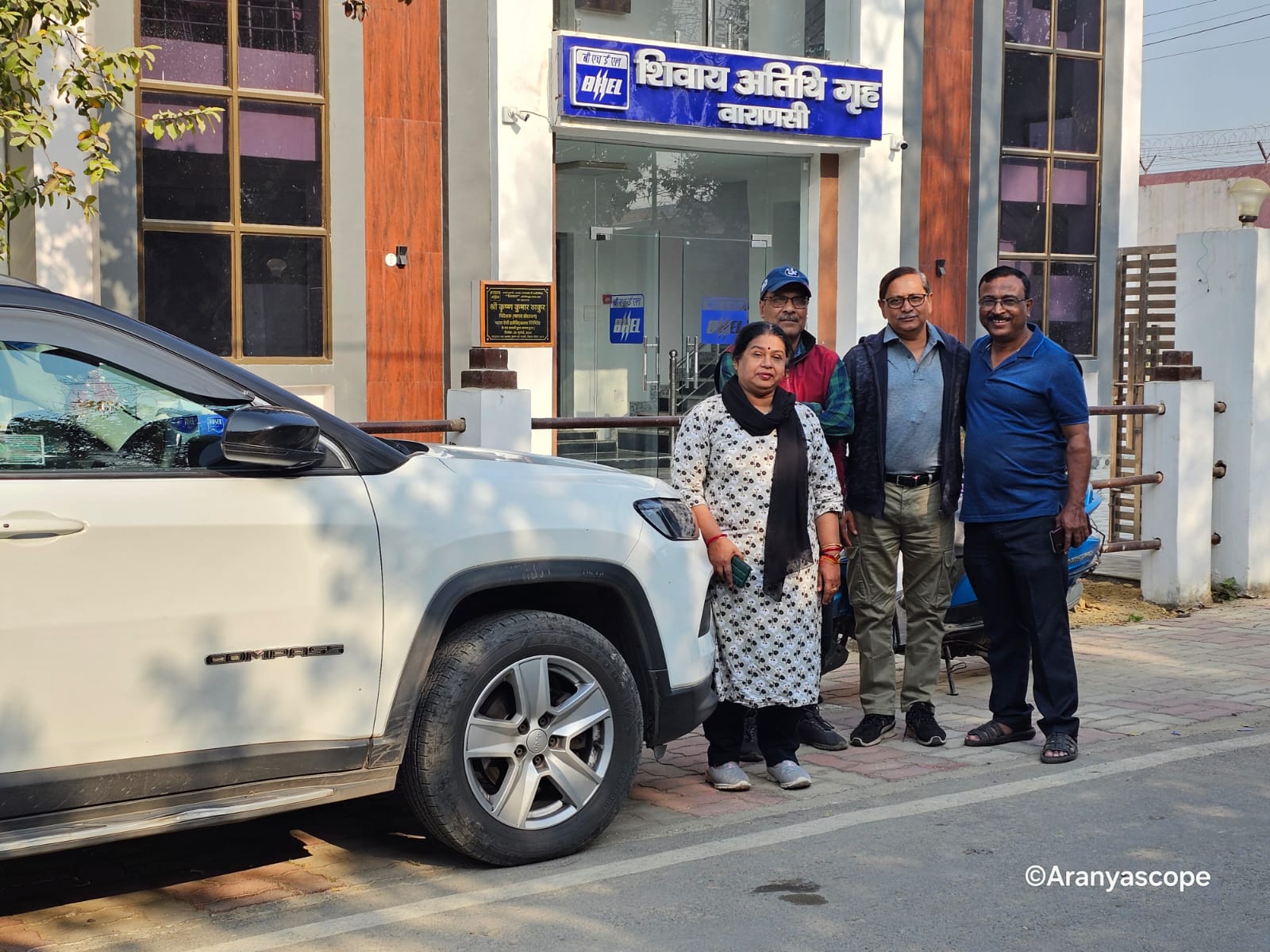
We bade them adieu and prepared our long journey back home, halting overnight at BHEL Guesthouse in Varanasi. The journey back home was uneventful except the usual culprit being the NH19 right from Sasaram to Varanasi till we took the exit to the city only to face unruly, erratic traffic, typically UP. The final leg of journey was smooth ride via Purvanchal Expressway, Lucknow-Agra Expressway and finally Yamuna Expressway to Greater Noida and then home after dropping my friends at New Ashok Nagar.  

Mahakumbh & Beyond

The four of us, Tapas, Pulak, Gora and I were at the famous restaurant Al Jawahar in Jama Masjid, having lunch when our conversation turned towards the on-going Mahakumbh. Pulak revealed that he had already visited with his sons and it is very doable by road. That prompted us to plan our own trip to Prayagraj. I suggested that since we are going all that distance, we might as well go a little further to Ranchi (Jharkhand) to visit our dear friend Indrajit. Keeping everyone’s schedule and comfort in mind, we decided the dates, 18th to 23rd February and accordingly booked the hotel/ homestay at Prayagraj, Ranchi and Varanasi.

DAY ONE (TUESDAY 18.02.2025)

In view of the long distance, we decided to take my Jeep Compass… also I wanted to put some mileage as well… after 3.5 years, it hasn’t crossed 20000 km!!

I started from home at 5:35 am (target was 5 am) and reached the pick-up destination, Topshe’s home at around 6 am. There was a bit of apprehension whether the boot-space of Jeep would be able accommodate the luggage of 5 person but everything fitted in the space. We started for Prayagraj… Mahakumbh around 6:40 am, Google Map said 10 hours 50 minutes to the destination. HAR HAR MAHADEV…

A little bit about Kumbh Mela…

The Mahakumbh Mela is based on a legend about the churning of the ocean to find the nectar of immortality or Amrit. The story says that as Lord Vishnu was carrying the Kumbh or the vessel filled with Amrit, he had scuffles with the Rakshasas (Demons) and in the that melee four drops of the nectar fell at Triveni Sangam, Haridwar, Ujjain and Nashik making them sacred and the sites of the Kumbh Mela. 

Prayagraj, located at the confluence of Ganga, Yamuna and Saraswati River. The third one is hidden.

Haridwar, the site where Ganga descends to the plains from Himalayas.

Ujjain, located on the banks of Kshipra river.

Nashik, located on the banks of Godavari river.

There are four kinds of Kumbh Melas, Magh Mela, happens every year in the months of Jan-Feb at the Prayagraj, Ardh Kumbh, every 6 years on a rotational basis at Prayagraj & Haridwar, Purna Kumbh, every 12 years again on a rotational at the above mentioned 4 sites and Mahakumbh, every 144 years at the Triveni Sangam, Prayagraj, based on the rare celestial event of alignment of the Sun. Moon and Jupiter. This year it was special because of the rarest celestial event when 7 planets aligned in a perfect trajectory. The science behind Maha Kumbh includes astrology, astronomy, and ancient Indian knowledge of geography and geomagnetic forces. 

Astrology:

  • The timing of Maha Kumbh is based on the alignment of the Sun, Moon, and Jupiter.
  • When Jupiter enters Aquarius, the zodiac sign of Kumbh, and the Sun and Moon align, it’s time for the Maha Kumbh.
  • This rare celestial alignment is believed to create the perfect moment for the holy bath.

Astronomy:

  • The 12-year cycle of the Purna Kumbh is linked to the orbital period of Jupiter. 
  • Jupiter takes approximately 12 years to complete one revolution around the Sun. 

Geography & Geomagnetic forces:

  • The selection of Kumbh Mela sites reveals ancient India’s understanding of geography and geomagnetic forces.
  • These locations, often at river confluences, are believed to exhibit strong geomagnetic energy fields.

Ancient Indian knowledge

  • Ancient Indian sages identified the 12-year cycle of Jupiter long before modern science recognized it.

Other beliefs:

  • Immersion in the holy waters represents surrendering the ego and worldly attachments, fostering humility and spiritual transformation.

Mahakumbh Mela 2025

Over 55 crore people took a holy dip in the Triveni Sangam during the 2025 Maha Kumbh Mela in Prayagraj, Uttar Pradesh. This is the largest gathering in human history for any religious, cultural, or social event. The Maha Kumbh Mela began on January 13, 2025 and continued until February 26, 2025. The number of people who took a bath at the Triveni Sangam represents over 50% of India’s Sanatan Dharm followers. The footfall at the Hindu pilgrimage surpassed the population count of all countries except India and China. On the eve of Maghi Purnima, more than 2 crore people took a holy dip in Triveni Sangam, the confluence of Ganga, Yamuna and Saraswati River. There are no precedence of such gathering of people in the history of mankind.

Back to our journey…

We had our first stop at the Food King adjacent to the Agra Toll Plaza where we had tea and the egg sandwiches prepared by yours truly. After freshening up, we continued our journey, Tapas took the wheels, it was first time driving an automatic vehicle for him, I explained the basics to him. The route was quite simple, Noida-Greater Noida Expressway, Yamuna Expressway, Agra Inner Ring Road, Agra-Lucknow Expressway and NH19 all the way to Prayagraj via Kanpur bypass.

We experienced heavier than usual traffic on the road, the reason perhaps is the non-availability of train tickets and skyrocketing airfares to Prayagraj, many people had decided to take the roads, especially as the road conditions have improved over the last 10 years. Anyways, it was a good sign, travelling with larger numbers are reassuring and kills the boredom of the emptiness of driving vast stretch of the tract.

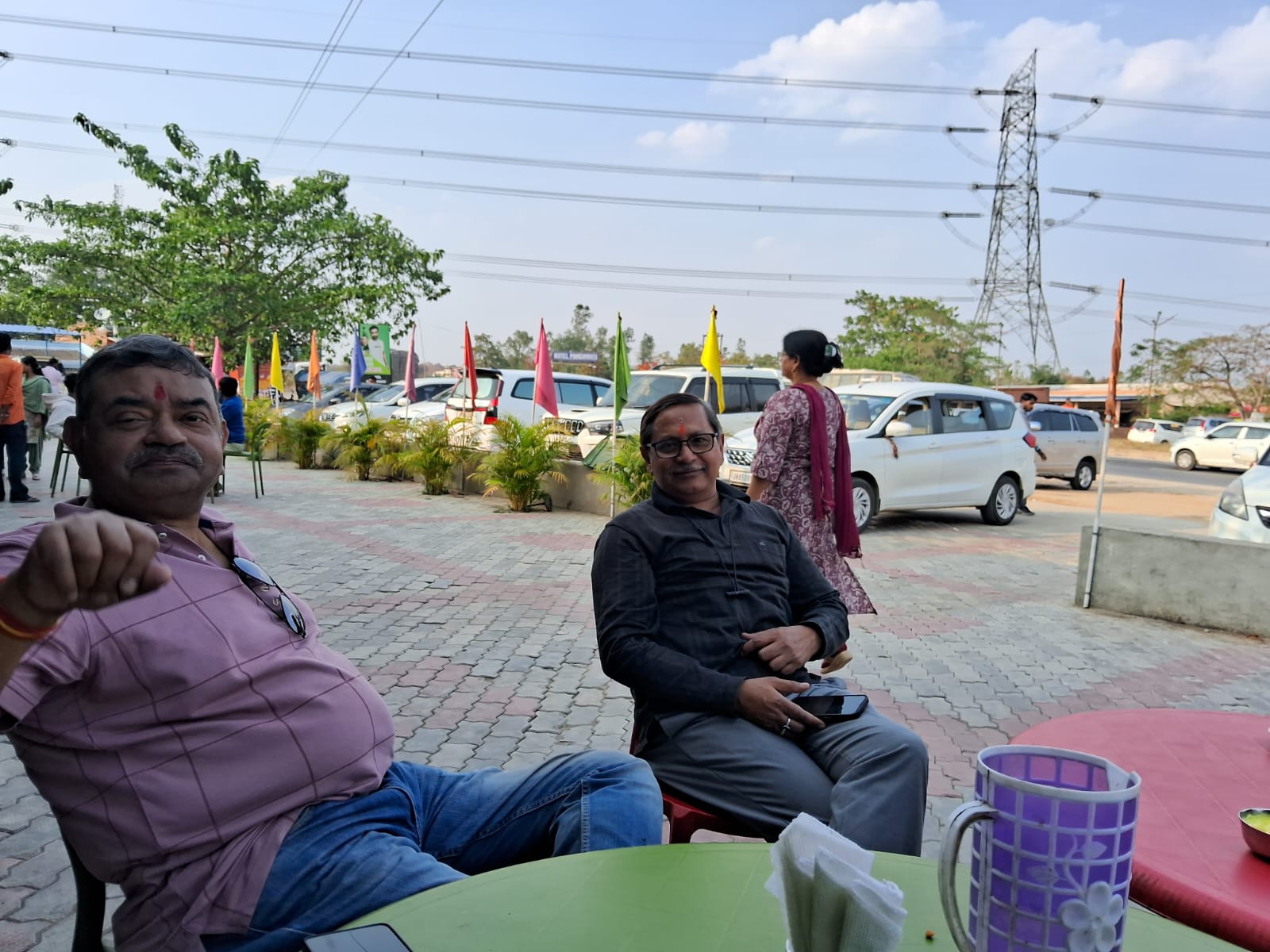
An hour or perhaps more on the Agra-Lucknow Expressway, we found the exit to NH19 towards Kanpur. We refilled the tank right after hitting the NH19 at a Reliance Petrol Station. We needed to use the restroom but it was too dirty for our senses. Moving further, we found a Dhaba with a sizeable number of vehicles stopping and decided to take the break. We ordered for stuffed parathas with curd and took out the Luchi-Aloor Torkari prepared by Sudipta, better-half of Tapas. I forgot to mention that she was travelling with us as well becoming the fifth gang-member.

Tapas continued to drive, he truly loves driving long distance especially on the hilly roads, but was enjoying the driving an automatic on the plains. After the tummy full eating, I felt a little lazy and dozed off while Tapas drove without any incident. The NH19, often passed through some townships and villages with volume of local traffic, slowing us down. We reached the Kanpur bypass around 1:30 pm and realised so many people like us are headed to the Mahakumbh bearing the flags and banners of Sanatan attached to their vehicle. It also started the congestions on the road and at places we were stalled for more than 30 minutes.

Around 4:30 pm, still miles away from Prayagraj, we felt hungry and stopped at the Muskan Palace, a Baratghar or Banquette Hall, converted to a restaurant for the Mahakumbh yatris on NH19. They were serving a variety of lentils with rice only, we ordered one of each, Chhole, Rajma, Arhar dal with rice. Deepika, even on her off day, makes each of them far tastier and filling and if she’s in a mood, the dishes become finger lickingly delicious!!

Tapas had driven quite a distance since morning, so I took over the wheels. The drive to Prayagraj was more or less smooth with few intermittent congestions and we reached the “Y” fork where the lefthand side road boldly announced “way to Sangam” and the righthand side road was heavily guarded by the UP Police, allowing fewer vehicles to go through. Indrajit, my friend has a contact named Sonu with whom we were in touch and he suggested we take the righthand side road. Further, he told us to tell the cops, if stopped, that we are headed towards the airport, I did that and was allowed through the barricaded road. Once on that road, we stopped as Sonu said that he is sending some kind of “pass” which turned out to be a train ticket to Nagpur, changing our narrative from airport to the railway station. Our next hurdle to enter the heart of the city came near the Nehru Park area which had been converted to a massive vehicle parking area. I was in the middle lane of the traffic and for a good purpose as the vehicles on the left were diverted to the parking and the right lane were asked to take a u-turn for some other parking. I was behind a Scorpio SUV that had a large sticker declaring “Bhadoria Family”, we had on our way seen a convoy of at least 15-20 cars/ SUV with same sticker and had thought them to be a marriage party. The Bhadoriya Family must be having some influence as it was allowed to go through the barricade, without looking at the cops, I quickly followed it crossing the barrier. Madhav was with me and did the trick. Thereafter, we had a free run through the city and came to a roundabout from where the Google Map asked us to take the second exit for our homestay, a mere 2 km away. The road was barricaded, the vehicles ahead of me were taking the u-turn and an ambulance waited patiently for the passage through the prohibited road. The cops were communicating through walkie-talkie on the loudspeaker. The control room advised the cops to open the gate for the ambulance and close down immediately. This was enough for the alert drivers to follow the ambulance in close proximity to pass through. Soon, we reached the location as advised by the homestay guy but could not see “Vinayak Homestay” board anywhere. Tapas and Pulak went to check and called up our contact. With his new direction we drove through a lane to reach the house, parking was in the open, leaving space enough for another car to pass. The facilities at the homestay was bare minimum, a bed with clean sheet and a blanket, no towels (thankfully, we all carried our own); at the time of booking, they showed us pictures of the room including bathroom which claimed existence of geysers, however out of the three rooms, only one had a geyser but non-functional. It was matter of one night stay, so we weren’t too hassled.

We quickly freshened up and changed into appropriate clothing for the holy dip at the Triveni Sangam. The homestay owner, showed us a quick getaway to the river banks, the maps showed 3.4 km or 15 minutes of walking. We were elated being so close to the destination. We reached the ghat and saw Ganga flowing in full glory to meet her sisters Yamuna & Saraswati, we followed her for another 3.5 km to the Triveni Sangam with at least a million more faithful.   

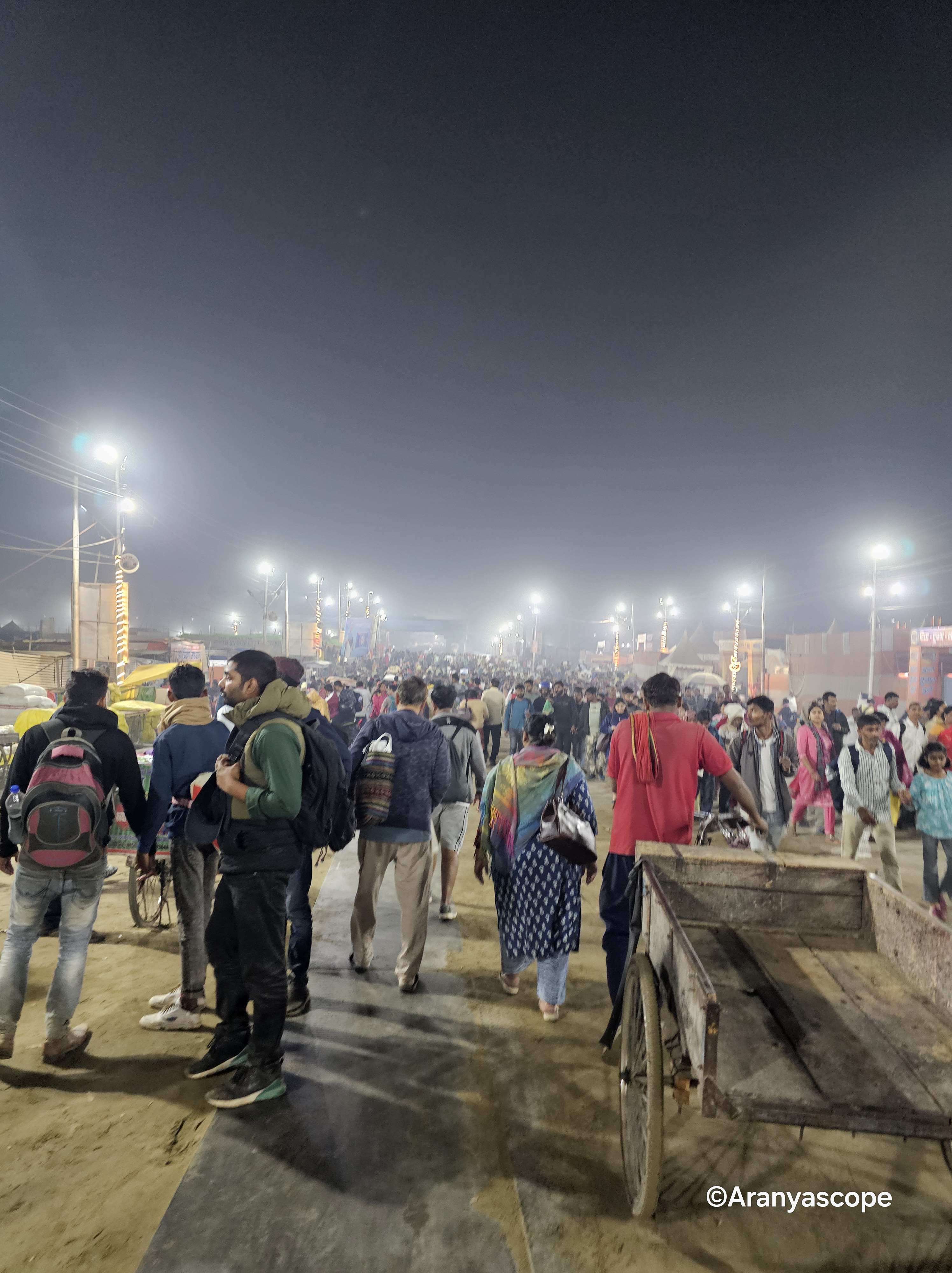
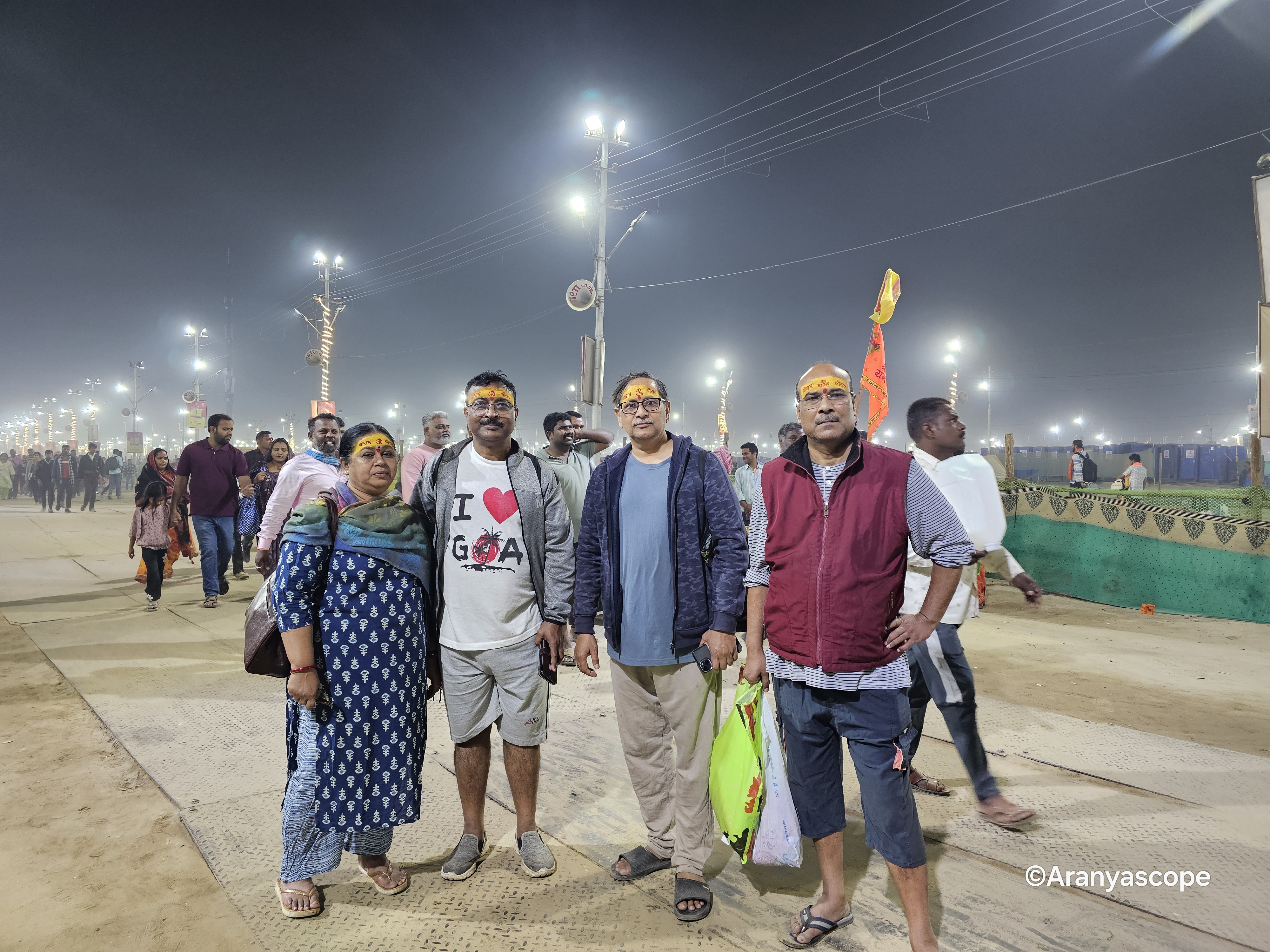
As we walked sedately towards the bathing ghats of Triveni Sangam, we came across humanity from all across the country speaking in variety of languages, some familiar, some alien. One thing was certain that the barrier of caste, creed and colour was non-existent at the Mahakumbh Mela, the assimilation of human race was complete.

We finally reached the bathing ghat, ready to take the dip in the holy water of the Sangam. Pulak, having taken the dip, few days back was ready for the repeat, Sudipta too was keen. Tapas, Gora and I had a look at the water and the people taking the dip in the confined bathing area, and stood back. I am no one to judge the belief and faith of the people but I could not convince myself to plunge into the pool of practically stagnated water; had the water been flowing freely like it was beyond the confines, I would have taken the dip. We bowed to the confluence of rivers and requested Pulak to splash the water on our head as a symbolic bath. Ironically, all the videos of the celebrities taking the holy dip shows free flowing rivers or perhaps the VVIP/VIP areas were differently curated than the one’s for the proletariat creating a class distinction, very contrary to the tenets or philosophy of the Mahakumbh, proving that money and power are more equal than faith.

We filled few bottles of the holy water for back home, the colour of the water was dark grey because of unwanted particles and muds; surprisingly, by morning, the water had become almost clear.

After more than 16000 steps or almost 12 km walking, we were hungry and looked for a decent place to have something. We found one in the market and ordered for Masala Dosa (only item available with minimal oil) and sat in the restaurant area. I am not commenting on the quality and taste of it but it did fill our hungry tummy.

We came back to the homestay, completely exhausted and crashed out.

DAY TWO (Wednesday, 19.02.2025)

We were all set for the second leg of our journey to Ranchi for the reunion with our dear friend Indrajit. We started from the homestay around 7 am and it took us an hour to negotiate through the city streets to reach the highway towards Varanasi.

We started around 7:30 am for the 525km journey to Ranchi expecting to cover it in 10.5 hours. We were grossly mistaken. It took us almost 1.5 hours to get out of the Prayagraj city. Once we hit the highway (NH19), the going was good, we could speed up to 110-115kmph on some stretches keeping our ETA at Ranchi at respectable time. While driving, we finished off the butter-jam sandwiches that we had for a situation where we get stranded without any amenities.

Around 11 am, we stopped at the Rajpoot Dhaba, more for using the restroom than eating. The place was chock-a-block with large number people stopping for breakfast, it took some 30 minutes to find a table for the 5 of us; we shared the large table with 5 other people, 4 ladies from Mangalore and their driver. They narrated the unprecedented rush in Varanasi, especially around the Kashi-Vishwanath temple, staying near the temple, they said that there wasn’t an inch space in the lane leading to the mandir. They were going to Prayagraj after visiting Kashi-Vishwanath. They had booked a tent at the Prayagraj, so I guess they had nice experience.
The scene at the entry points to Varanasi were no different from Prayagraj, all the entry points were completely shut, no vehicles were allowed inside the city. This resulted in haphazard parking of vehicles on the highway itself leaving very little space for other vehicles to pass. Tapas drove with admirable patience through the congestion. We hoped for smoother drive once we cross over to Bihar!!

The Bihar roads presented a different level of challenge. There’s ONLY ONE ROAD, NH19 that connects the Eastern part of the country to North, West and South and this is under renovation, widening, recarpeting and new flyovers for a smoother ride in the near future. But right now, there’s absolute chaos with narrow and unlaid service roads coupled with unruly traffic creating congestion every few kilometers. By the time we were crossing Aurangabad, the Sun was on its way down on the western horizon and soon it became dark with blazing headlights.

We drove on in complete darkness following the numerous diversions and negotiating the congestions till we left the NH19 for NH20 to Hazaribagh. The drive became easier and we were cruising through the Hazaribagh bypass towards Ranchi with new ETA of 11:05 pm. Nearer to Ranchi, the ghat section stirred up Topshe to drive at 100+ kmph; Sudipta and I told him to slow down as it was an unknown stretch for us, we were not sure what lay ahead. Upset at being curtailed, he felt offended and stopped communicating and driving at below 70kmph till we reached our destination.

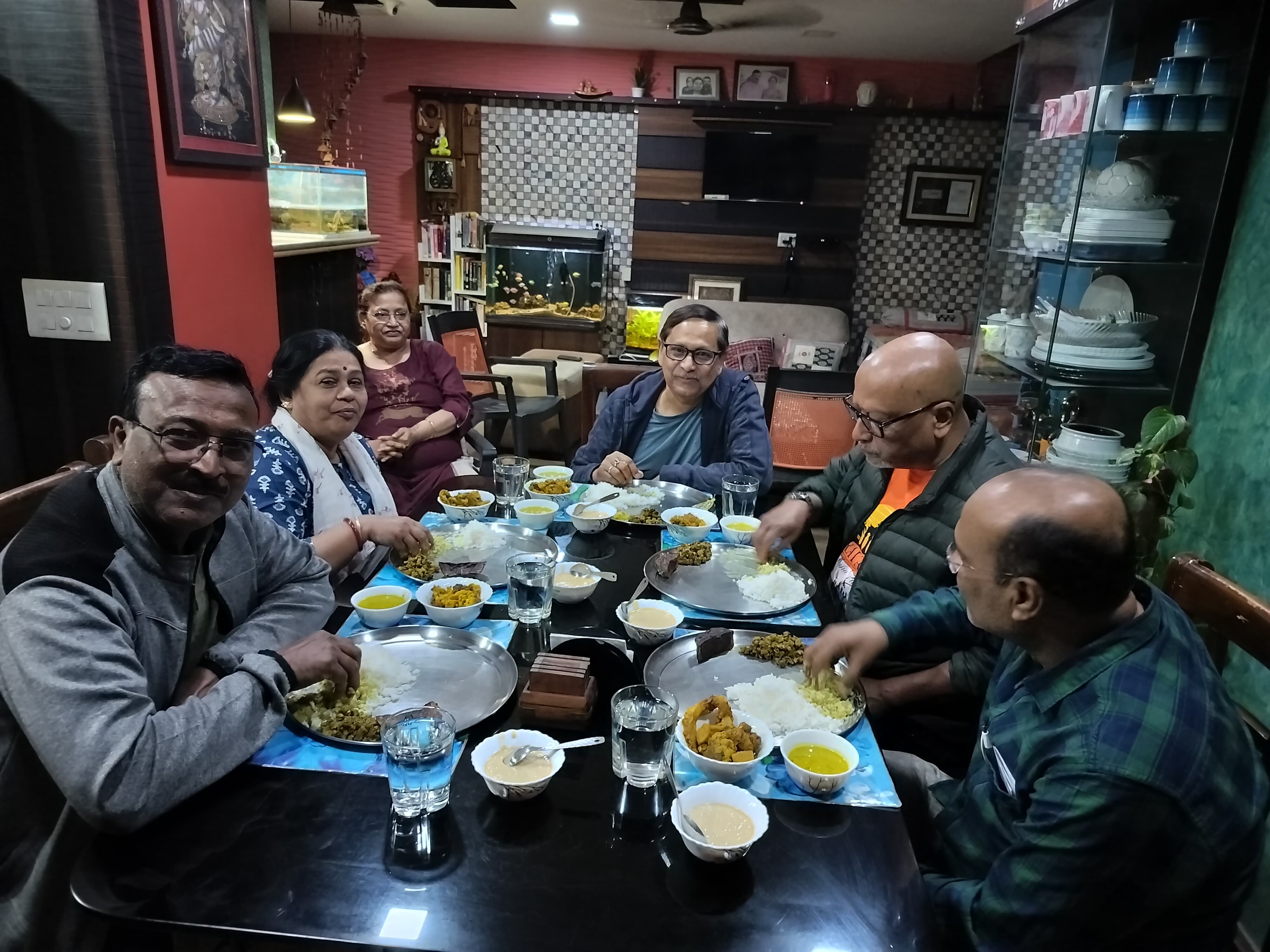
We had shared our live location with Indrajit, he came up to the main road to guide us to his housing complex, Global Lavanya. Jagrata, his wife had prepared an elaborate banquette of typical Bengali cuisine for us. Once upon a time I had shared my desire to have typical Bengali food (my household being cosmopolitan, it is always a fusion food) and my friend and Bouthan went miles to fulfil my desire. I am and shall forever remain indebted to them for the love and affection they showered on us.

Note: The second and final part the RANCHI REUNION to follow soon…

Begun Bhaja, Mochar Ghonto, Sona Muger Dal, Lau-Shukto, Katla Machh Aloo-Kopi Diye, Sada Bhaat and Nolen Gurer Kshir