On 1st January 2024, Deepika & I, on our way to Varanasi aka Banaras, came back just before boarding the Vande Bharat Express from New Delhi Railway Station owing to a family tragedy. Ever since we have been hoping to visit the Holy City and this time our friends and long-time travel partners, Basus’ showed interest with finalising not only the itinerary but booking the train and Sugam Darshan (of Vishwanath Ji) tickets. They also shortlisted the hotels which we booked immediately. Then we were all set for exploring Varanasi or Banaras. The 2B in B (Basu’s & Bhattacharya’s in Banaras)!!
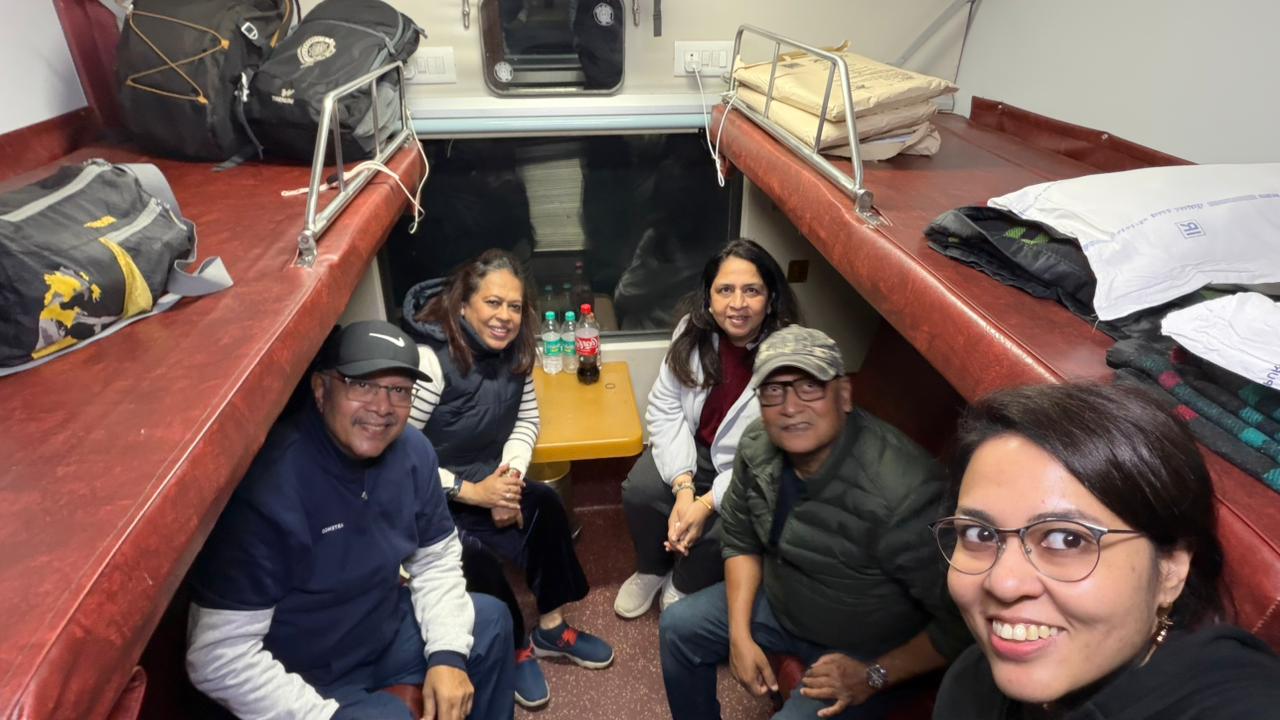
On 10th December night we embarked on the Shiv-Ganga Express from NDRS for Varanasi. The train left on time at 2005 hours with ETA Varanasi at 0600 hours. The AC first class was very nice and clean. Santanu had cautioned us that since there are no pantry car on the train, food will have to be carried with us which we did, only to find that the catering service was available right from snacks to dinner. We were five of us, so one berth was in a different cabin which I took up and slept peacefully. I was awake well before Deepika’s wake up call around 5:15 am. The train was ready to enter the station but was slowed down and finally reached the platform at 5:45 am, 15 minutes before time. The 15-days track record of the train revealed that it has been always on time or reached before time.
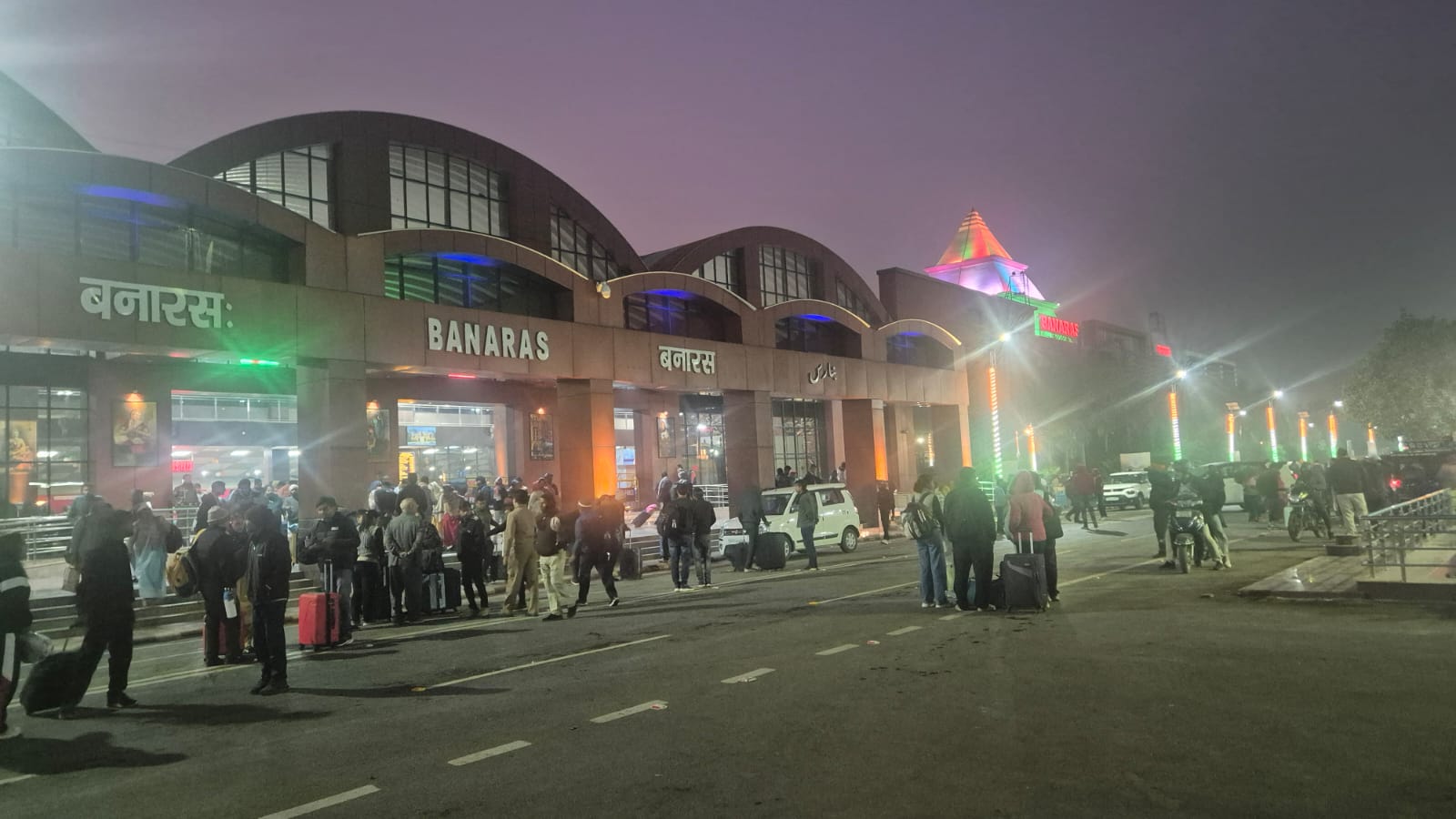
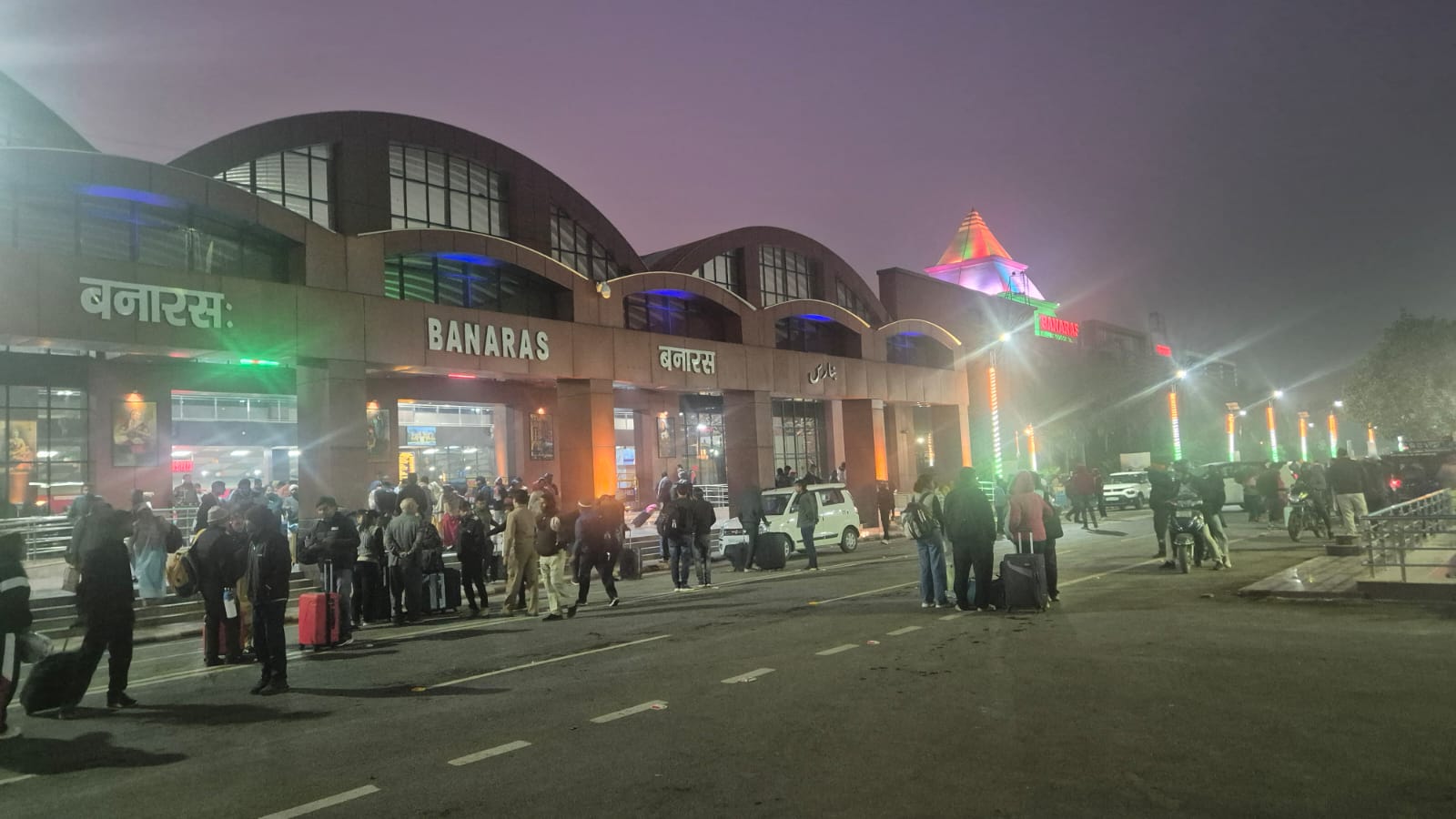
The driver of our pre-booked taxi was waiting for us outside the station. We were excited to have reached our coveted Holy city and took few pictures in front of the revamped Varanasi railway station. We decided to drop our luggage at the hotel but before that we stopped at a tea stall to quench our thirst with authentic Banarasi Masala Chai.
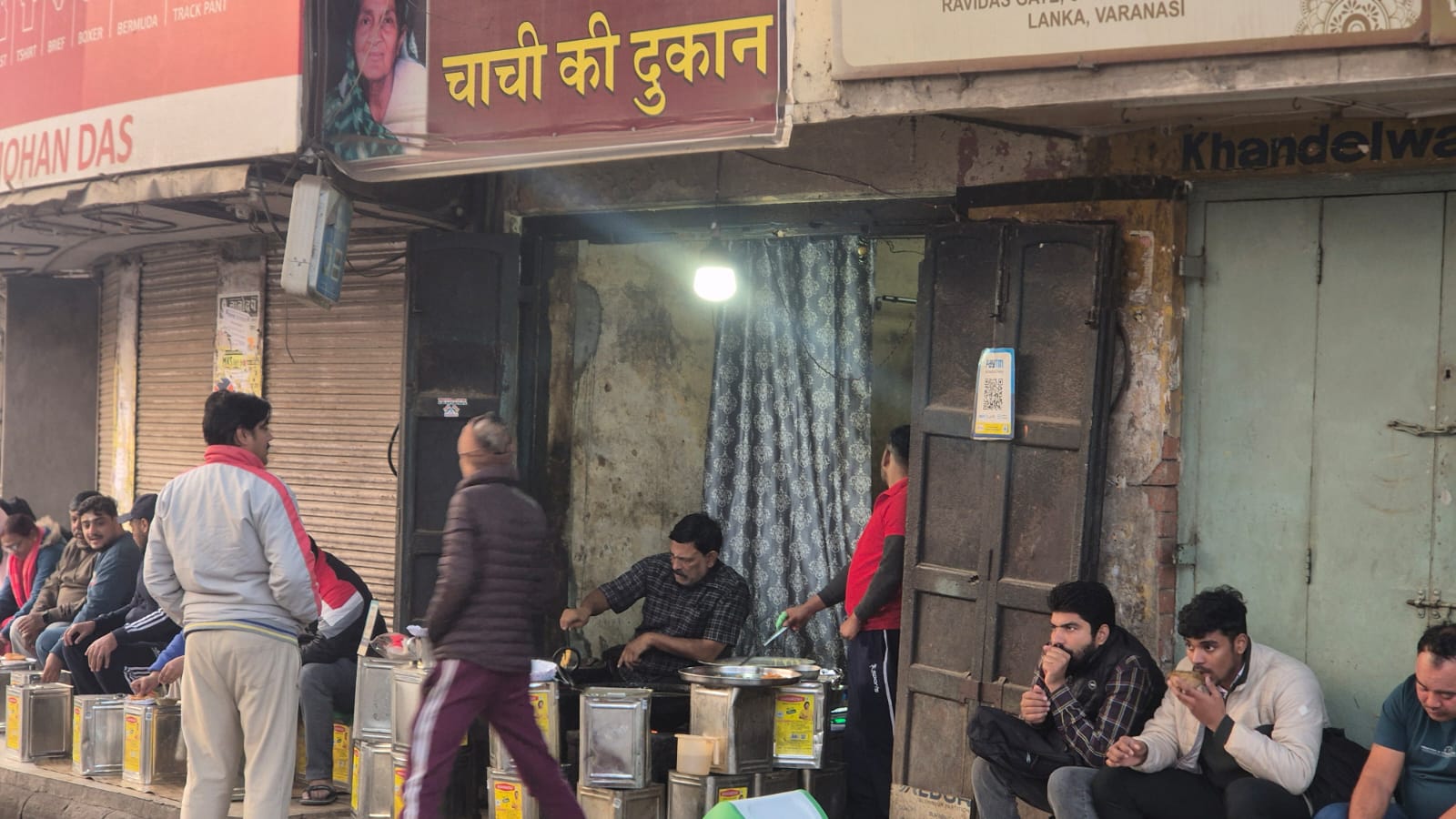
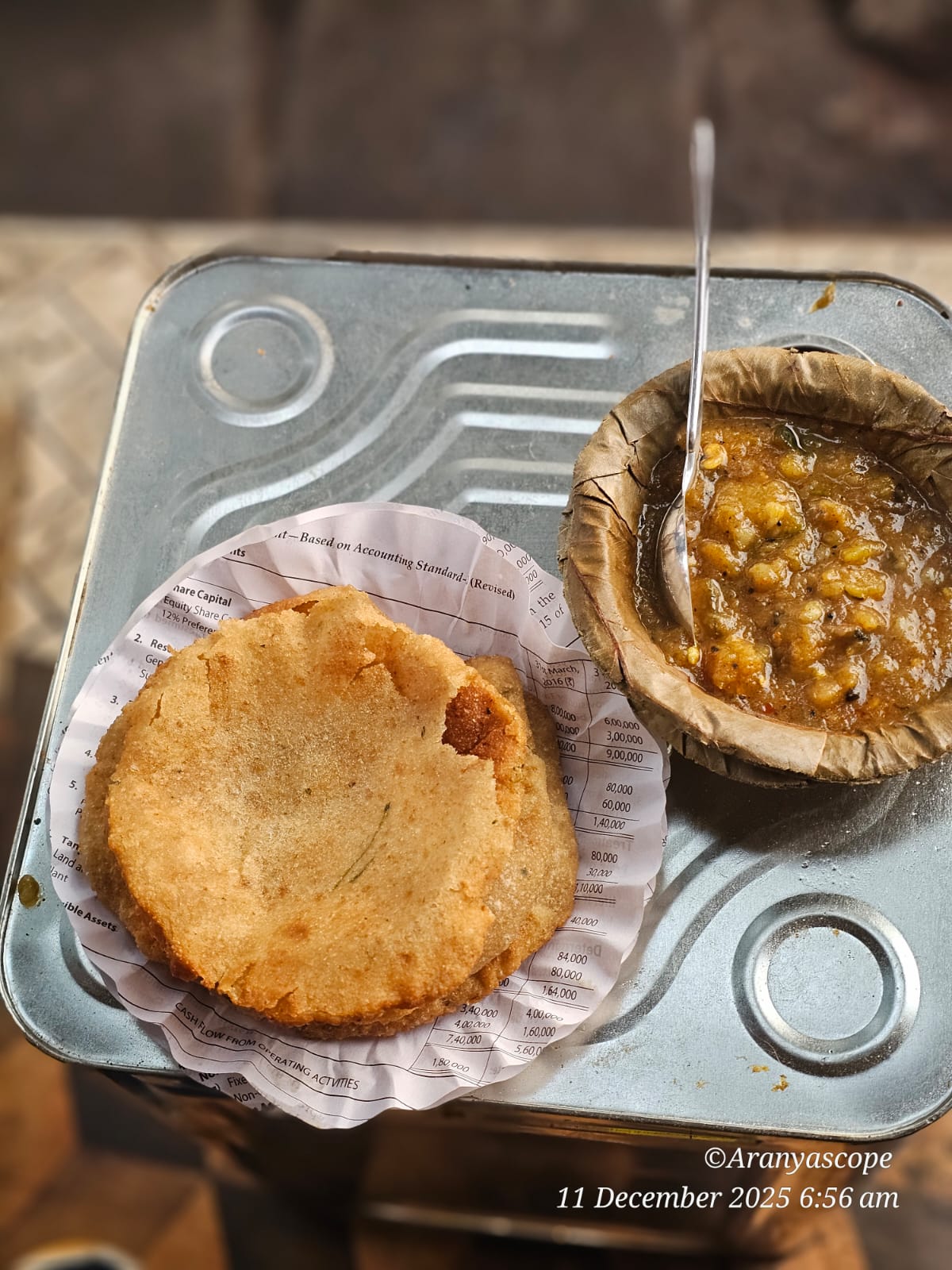
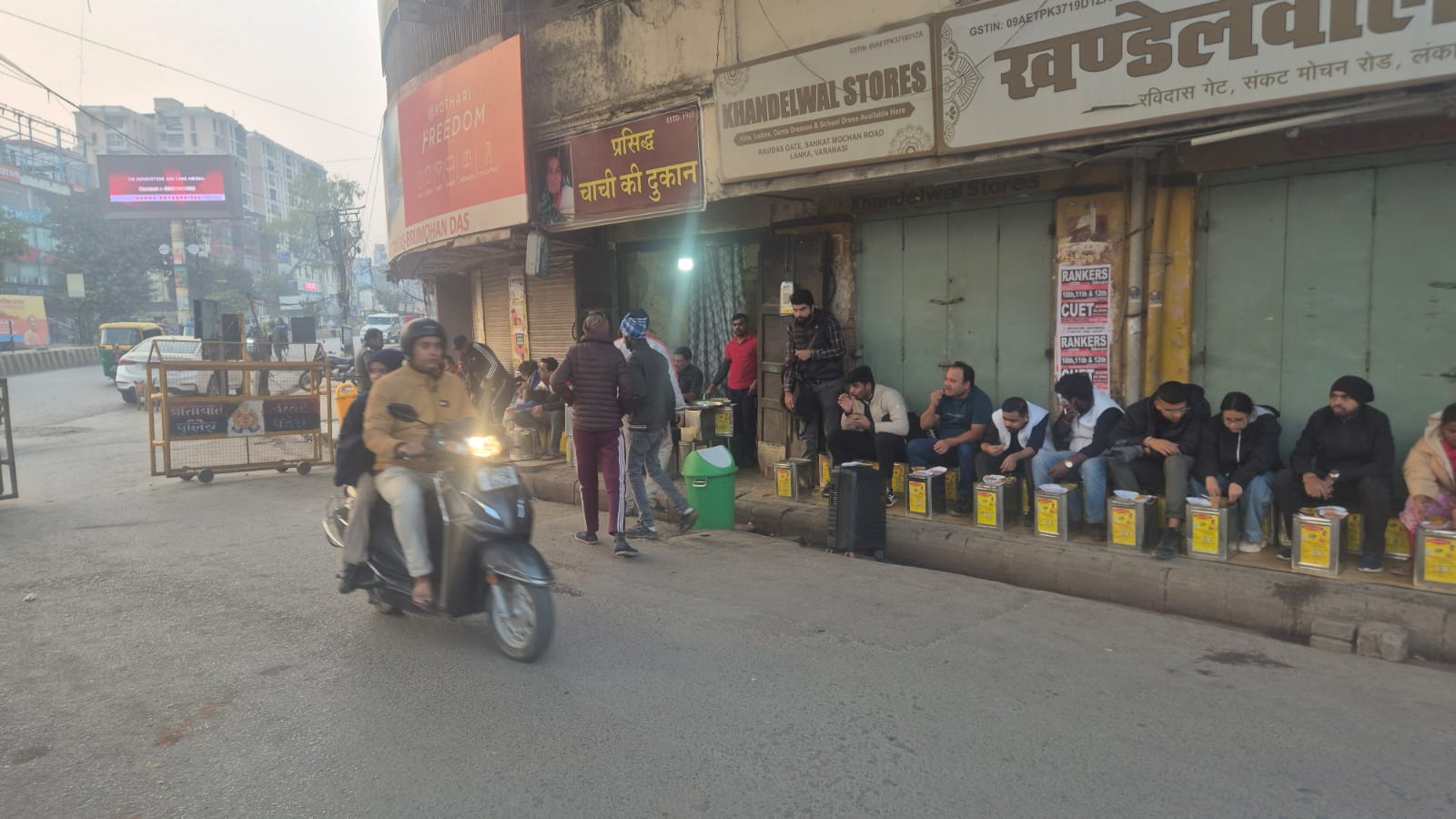
The driver, Rakesh showed us two iconic shops, Chachi ki Kachauri and Pahalwan Lassi, the latter had multiple outlets, all claiming to be the original. The uniqueness of Chachi ki Kachauri is the sitting arrangement, empty oil/ghee cannisters of 15kg are used as both seat as well as table, lined on the footpath next to the shop. A 30 rupees plate consisted of 4 kachauris with sabji and jalebi. The items were average in taste with the jalebi being a bit rancid, at least what we tasted.
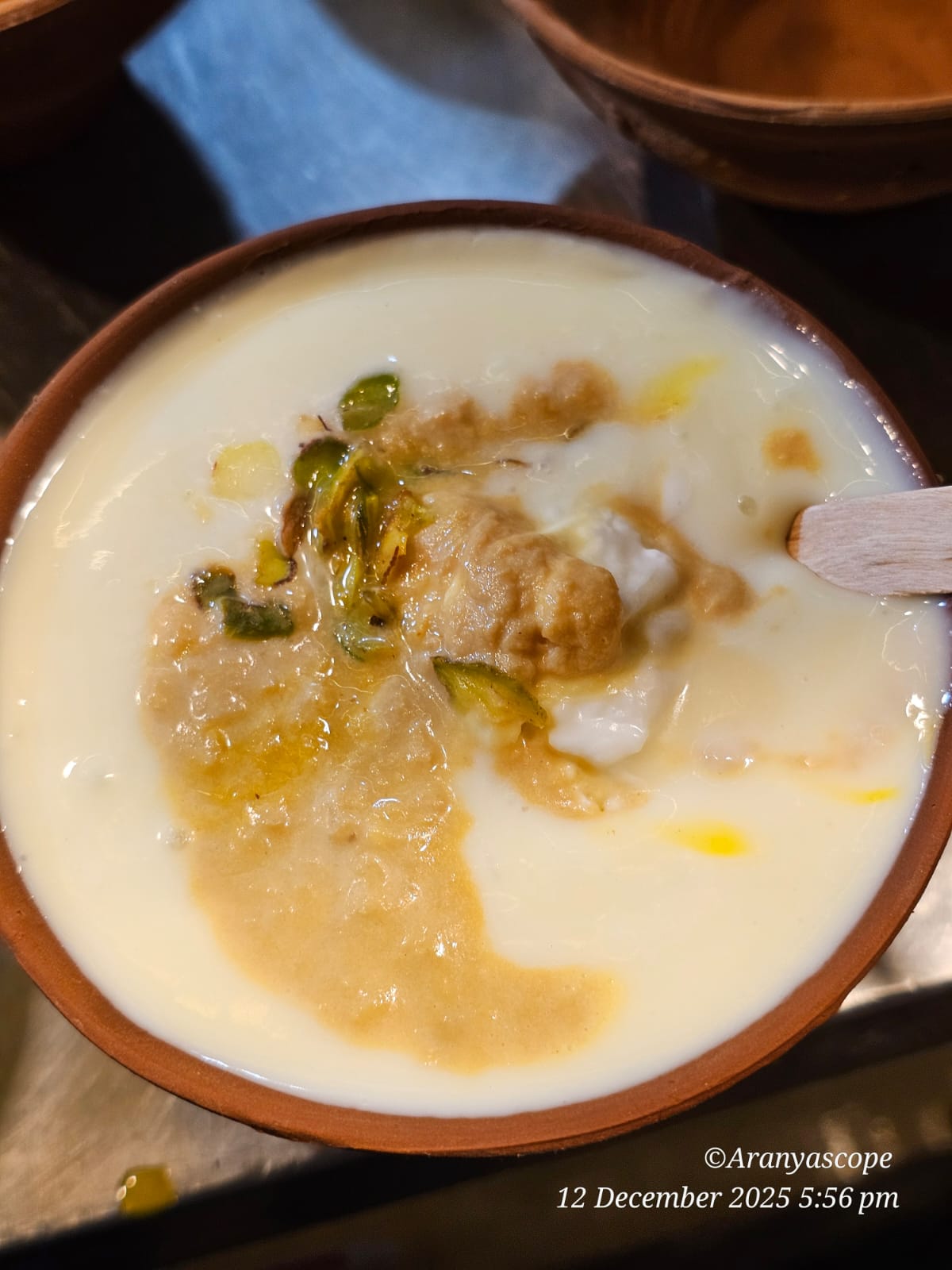
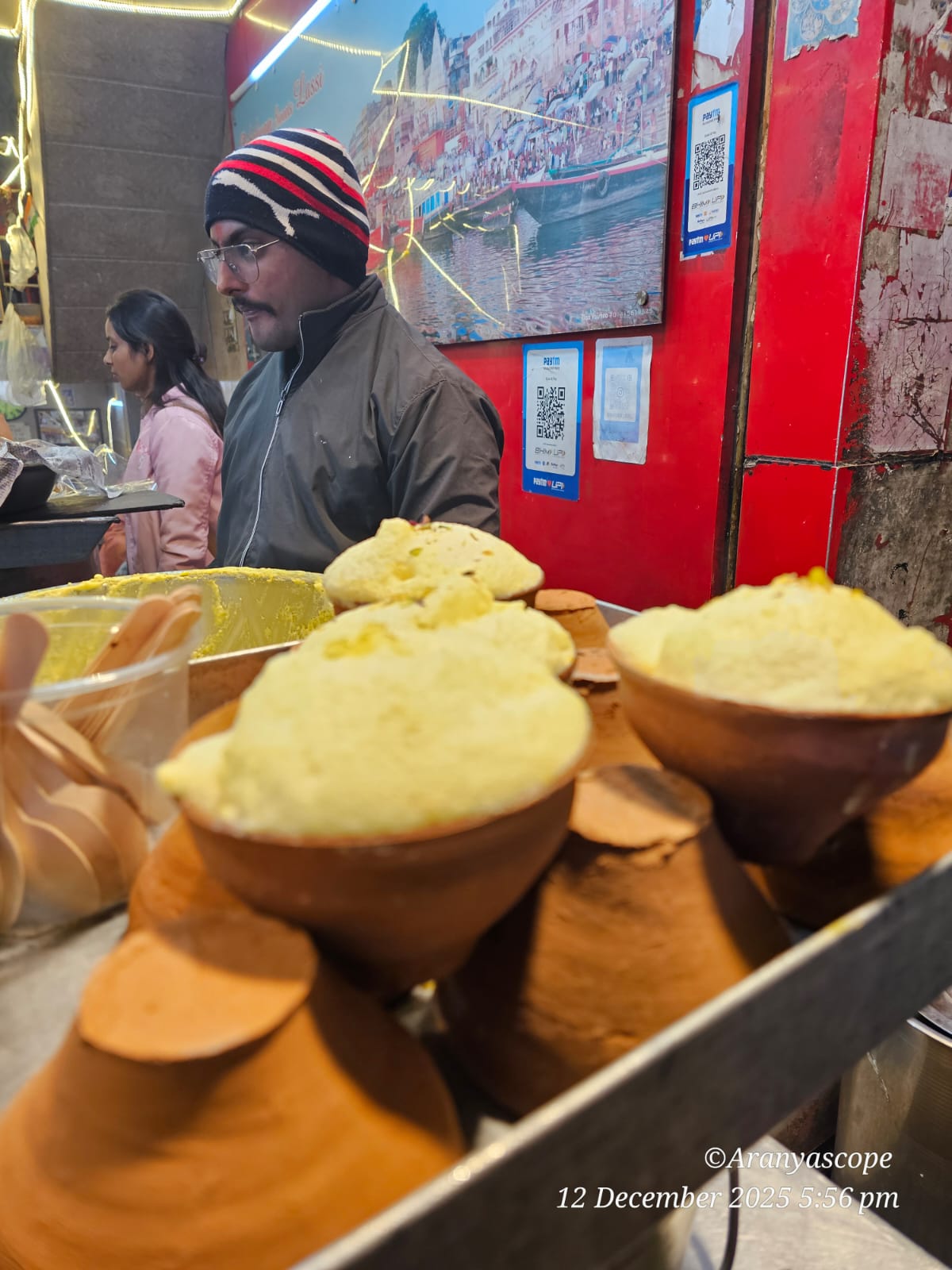
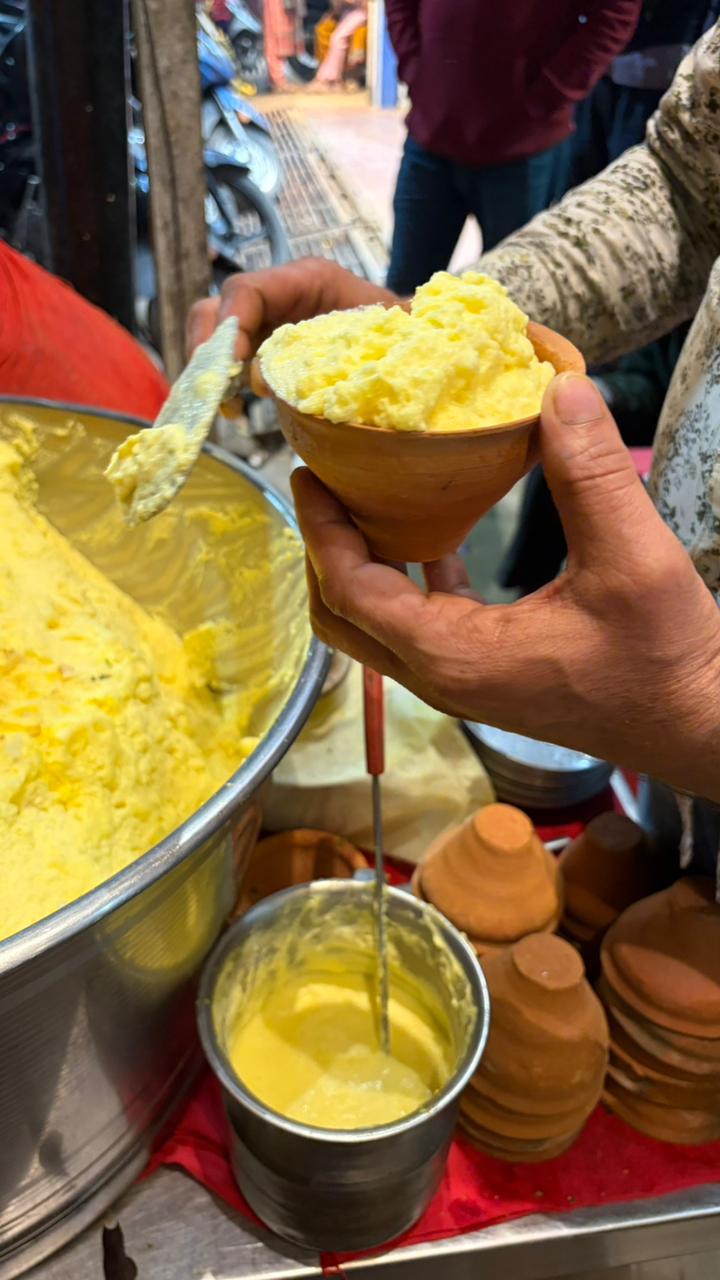
Thereafter, we decided to walk to the Assi Ghat following the direction given by the hotel guard. The shop of Pahalwan Lassi was opening up, Santanu and I decided to check what’s available. The shopkeeper said that the lassi will take some time to prepare but Malai-O is ready. We readily bought two portions and gobbled it up in quick time before others could reach us. Afterall, Malai-O was on top of our culinary pilgrimage!!
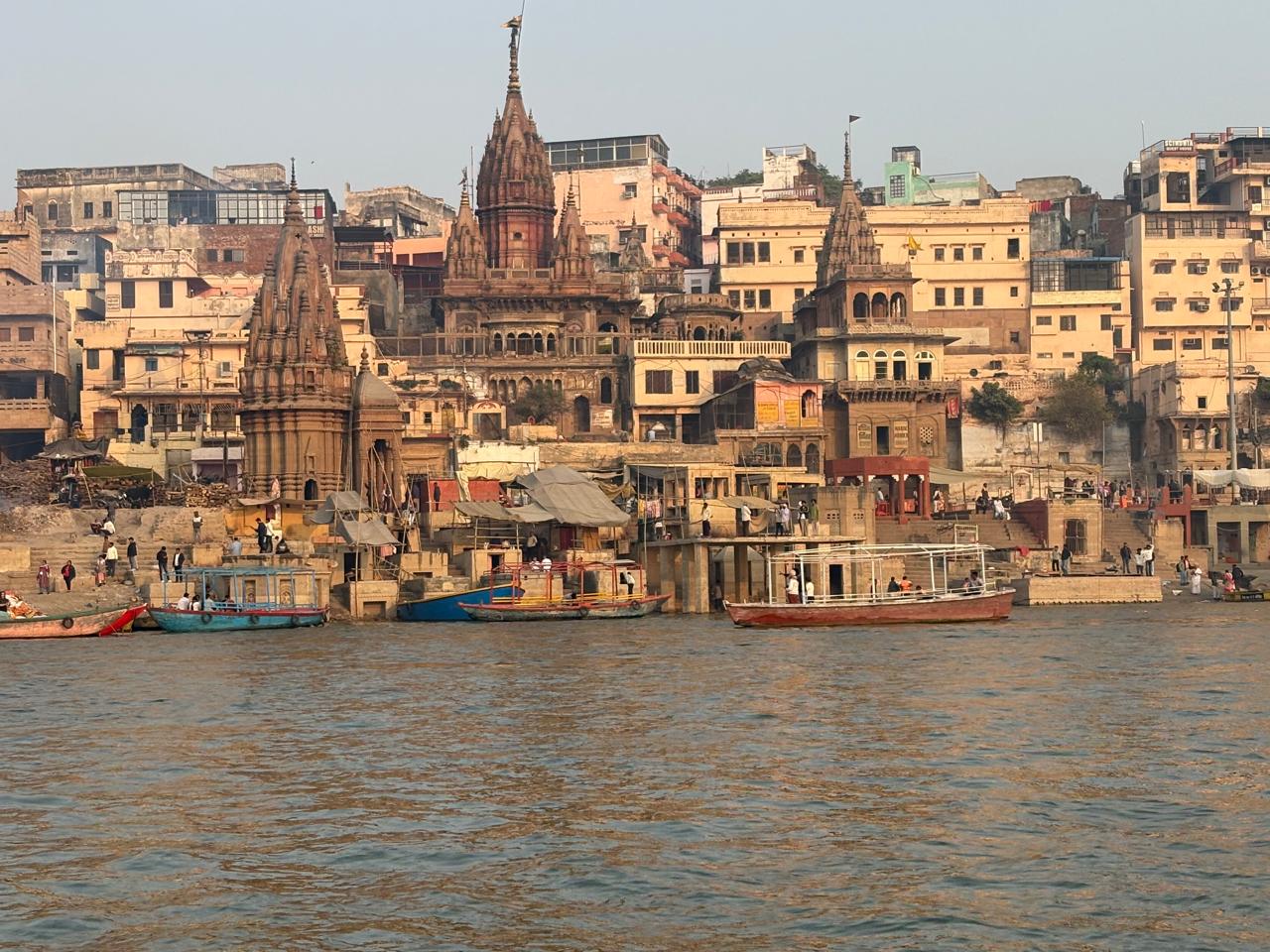
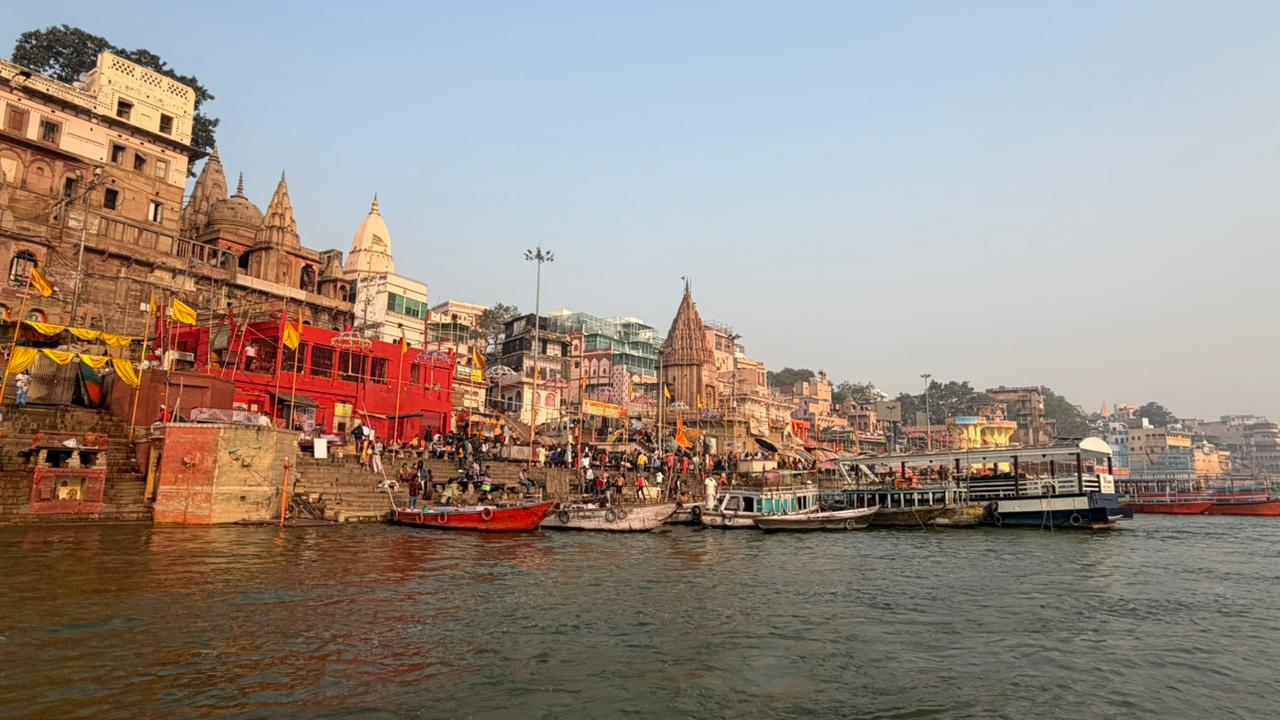
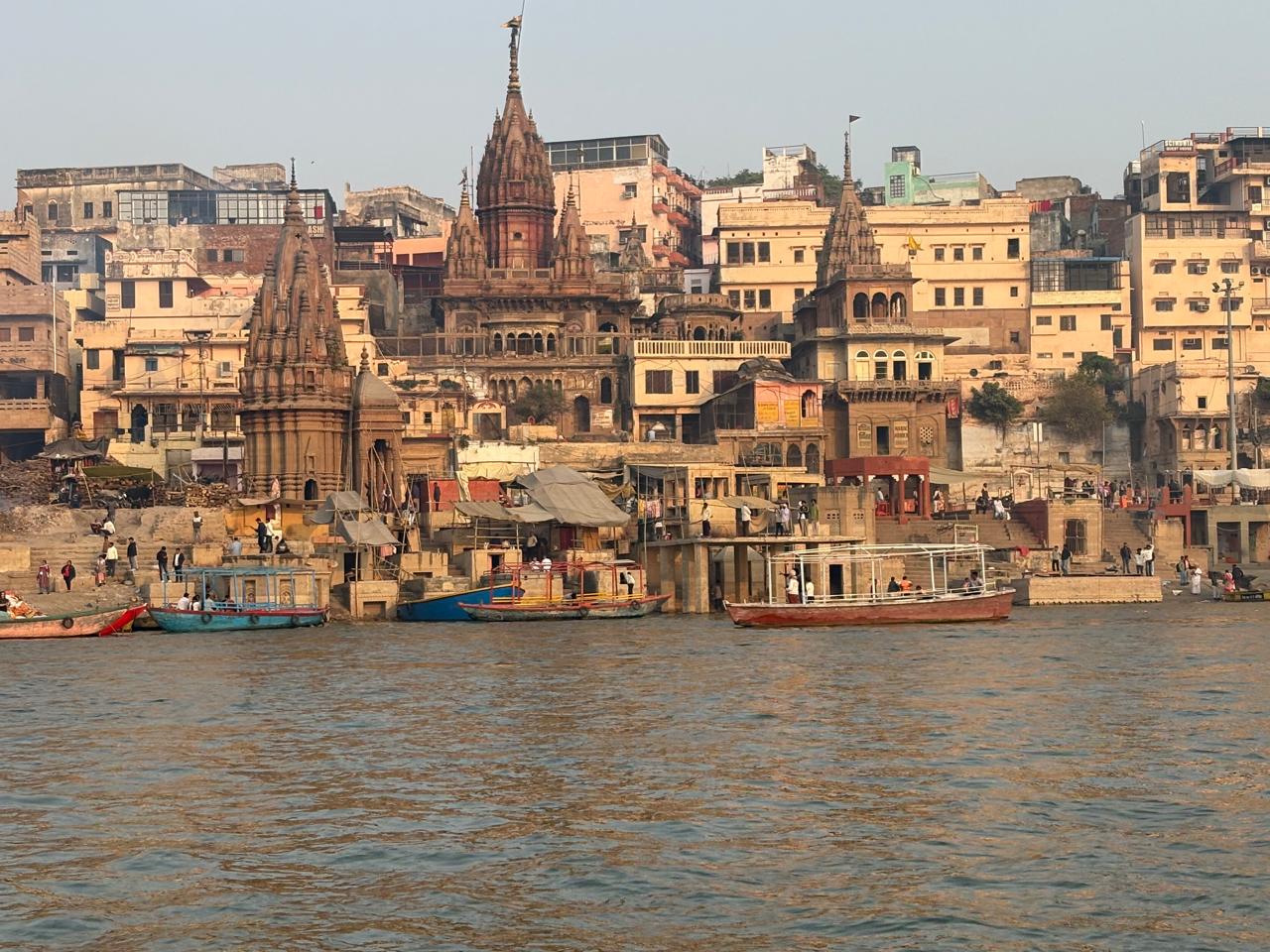
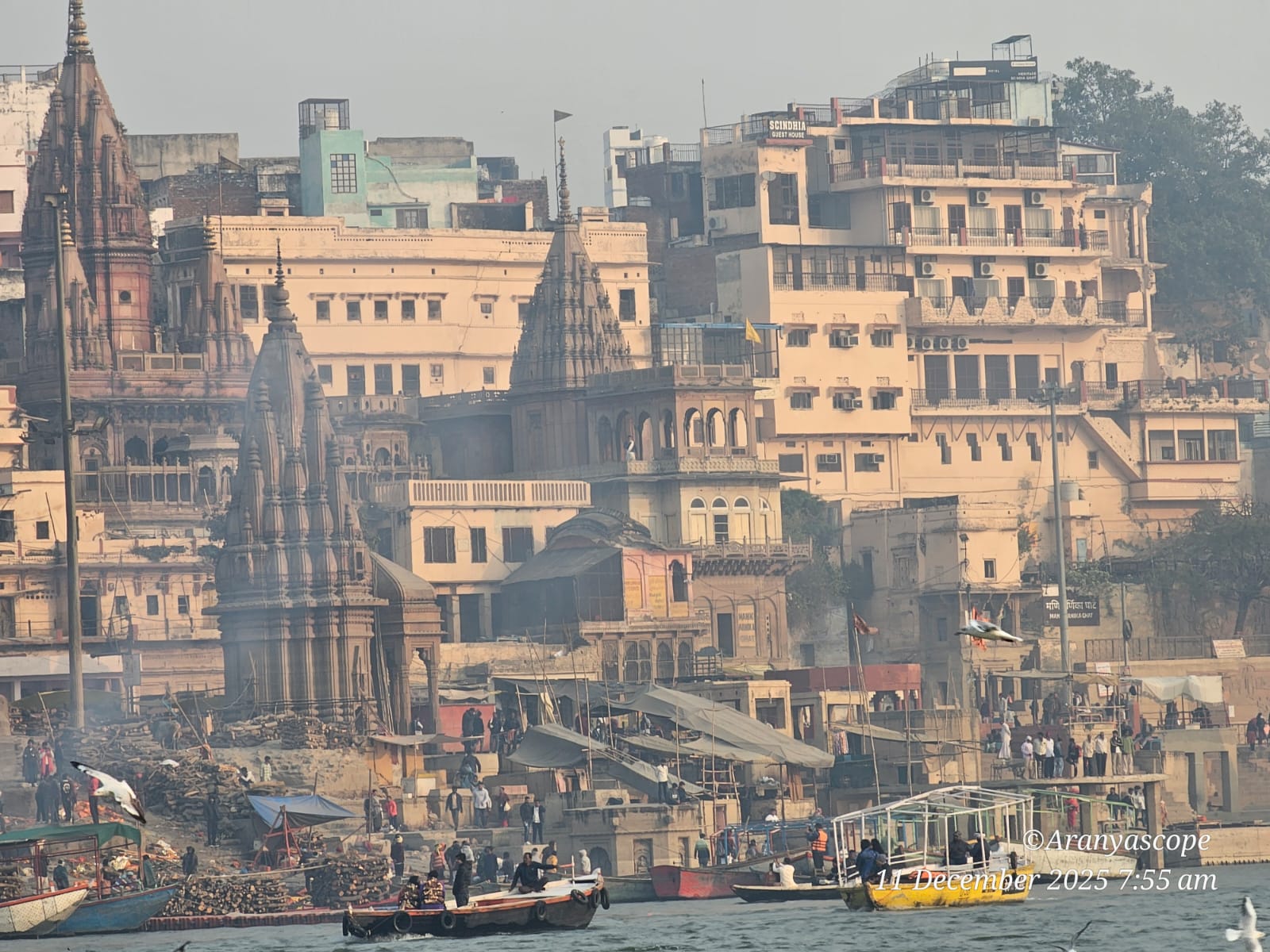
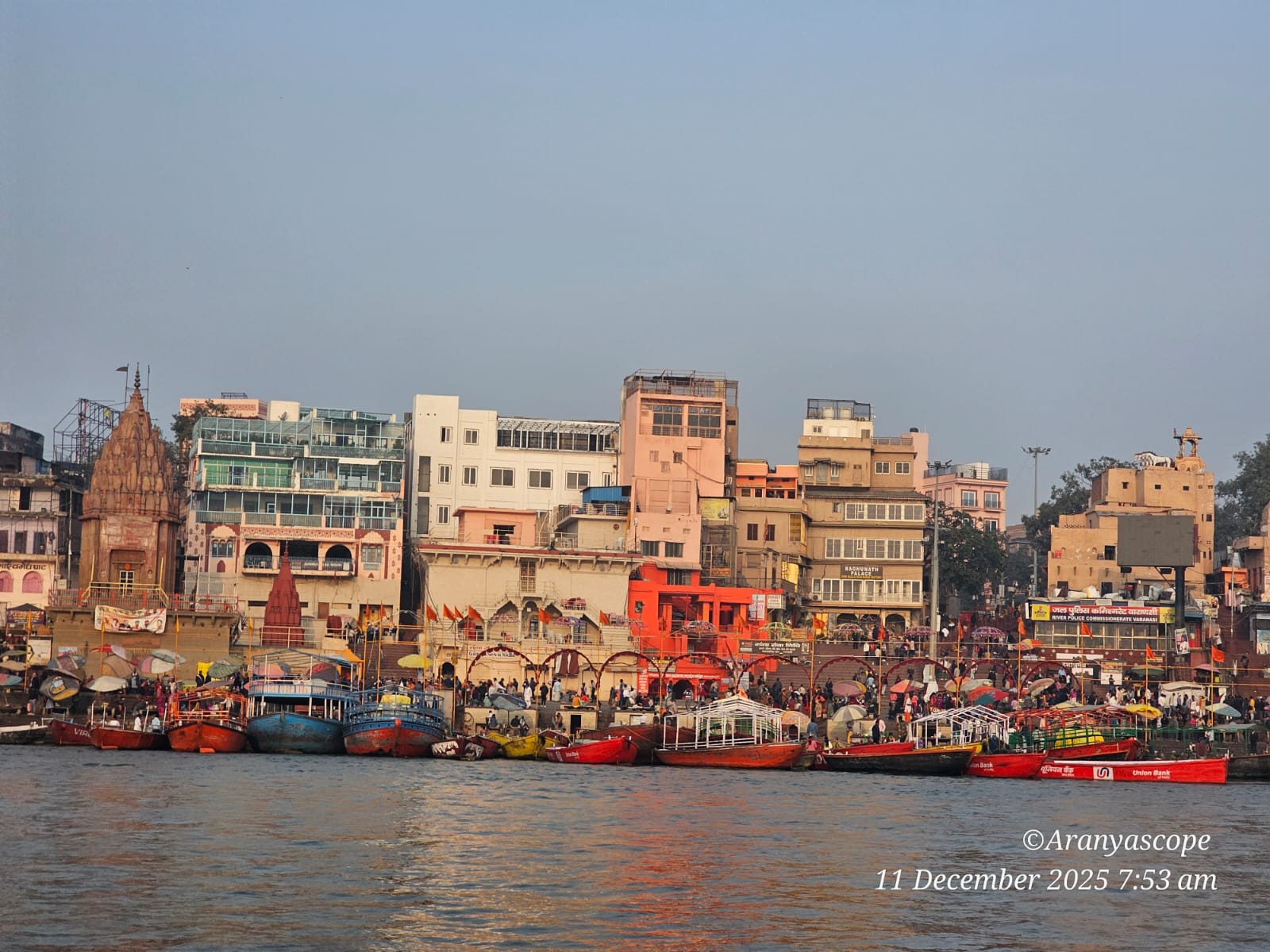
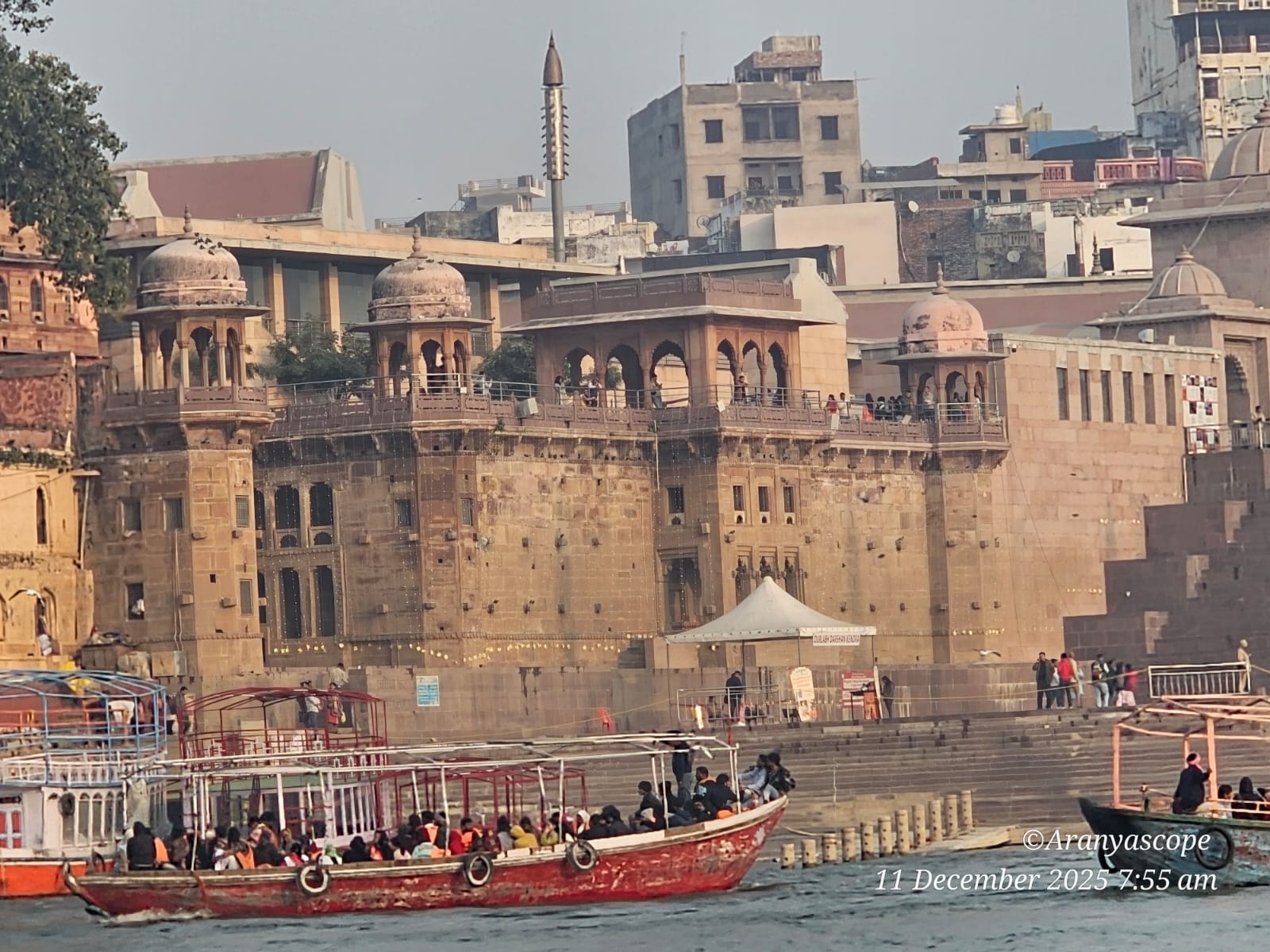
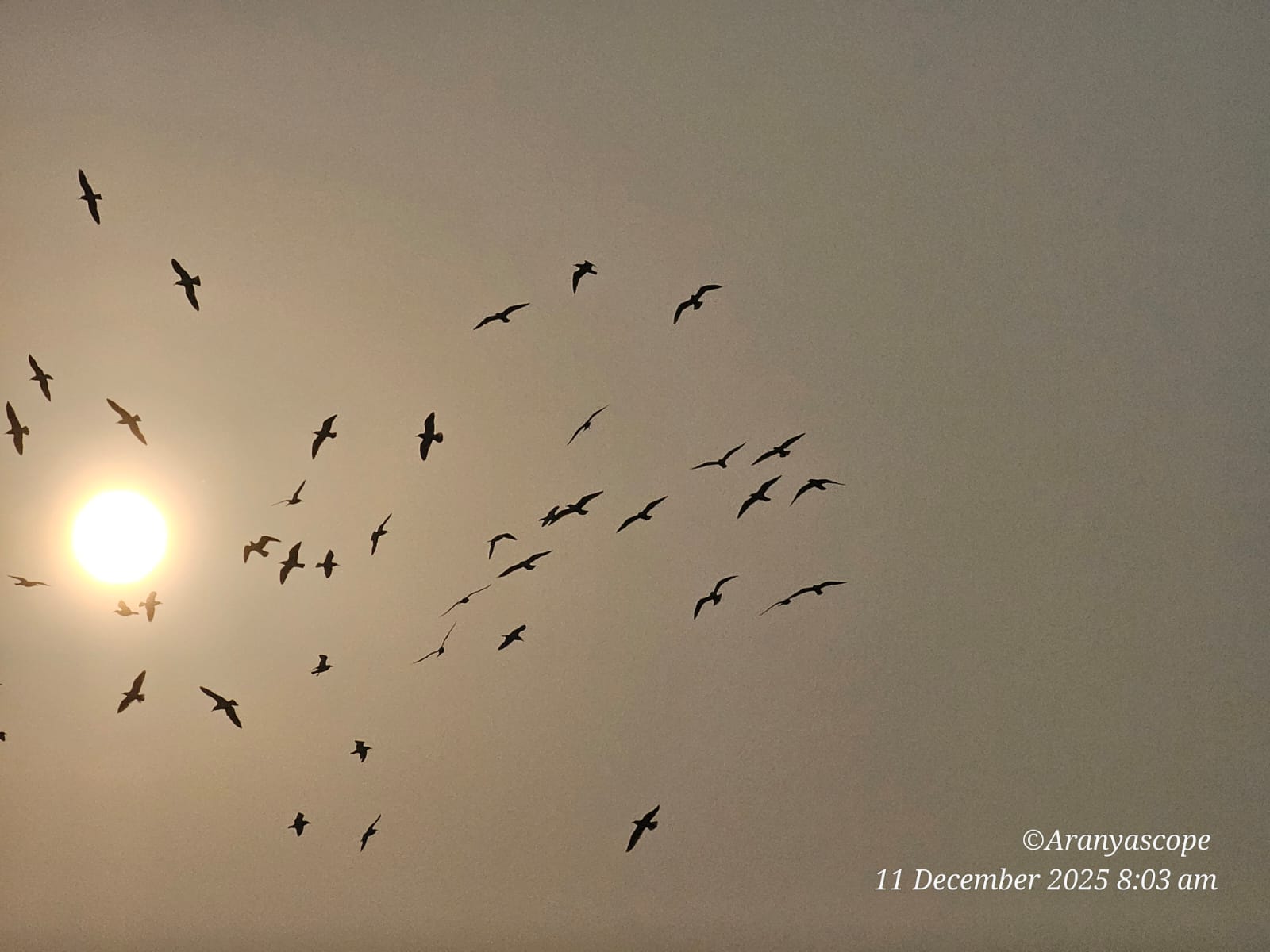
When we reached Assi Ghat, we found the place sparsely crowded with yoga class happening at the adjacent ashram. Soon, the boatmen started marketing their boats for a ride. Sangeeta and Deepika had been entrusted with all negotiations and they hired a boat for an early morning ride. The boat ride was leisurely covering some of the important ghats like, Tulsi Ghat, Ganga Mahal Ghat, Hanuman Ghat, Dasashwamedh Ghat, Manikarnika Ghat Chausatti Ghat, Munshi Ghat, Nepali Ghat, Raj Ghat. It was cloudy as well as foggy so our boat kept close to the banks for us to see them clearly. Some people in other boats were throwing bird-feed attracting flocks of seagulls prompting us to take a few pictures. We spent almost two hours on the boat ride and the banks of Ganga before returning to the hotel only to find the rooms still not ready. We were directed to the third floor waiting room where we spent another hour eating Prayagraj Guava and playing cards (29).
By 1 pm we got our rooms and the first thing we did was to take bath and wear fresh clothes. Sangeeta ordered simple daal-chawal and aloo-gobi sabji for a late lunch. The daal was very tasty as was the sabji but later when we ordered the same dishes, it was average, maybe we were so hungry that our taste-buds were simply happy to get the taste.
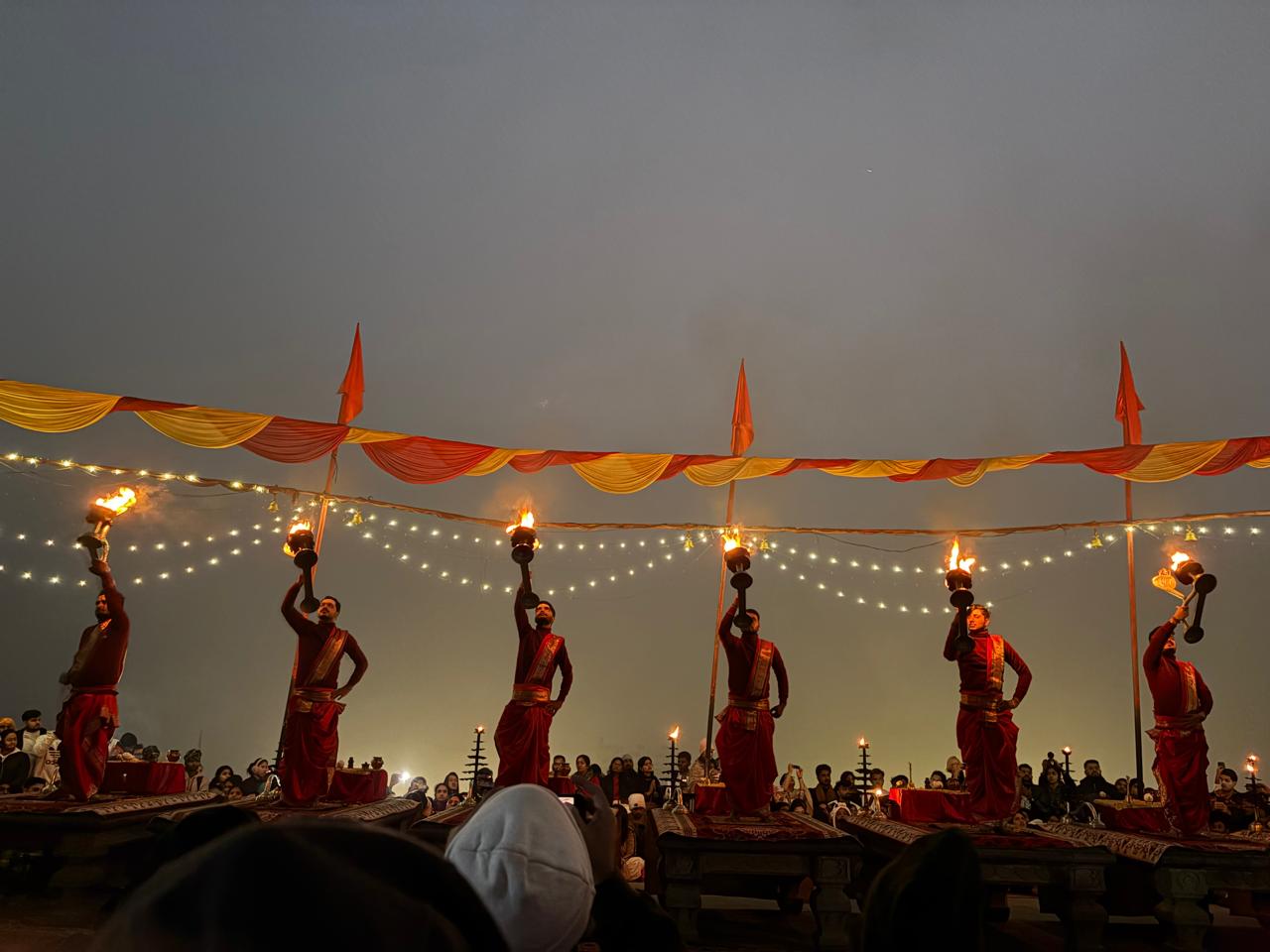
We left for Assi Ghat around 4:30 to meet up with our boatman for the evening ride upto Namo Ghat and to watch the evening Ganga Arati at Dasashwamedh Ghat. The latter was a disaster, mainly due to our desire for the boat ride to Namo Ghat which was the farthest consuming precious time. When we reached Dasashwamedh Ghat, the place was jam-packed with boats of different size and shapes. Our boatman did his best by shoving other boats to take ours as close as possible. Still we were far off to get a real view of the spectacle of the evening arati.
We were given the first dose of commercialization of religion/ rituals here at the Dasashwamedh Ghat. At the end of the Ganga Arati, one of the apprentice pandit carried the ‘pradeep’ to the devotees/ audience placed on a big plate or thaali to take the blessings. We realised the blessing is directly proportional to the donation placed on the plate. When he came to us, Sangeeta searched her purse and could find only a hundred-rupee currency which she was compelled to place on the thaali, at the same time Deepika placed a twenty-rupee currency on the thaali. The young apprentice pandit put a ‘tika’ on the forehead of Sangeeta, seeing that Deepika expectantly asked for the ‘tika’. She was rudely rebuked by the man saying, “aap sleeper class ka ticket le ke first class mein safar karna chahate ho?” meaning, “you have paid for the second class whereas you want the luxury of first class.” This type of hypocrisy in the name of ritual is rampant across all the religious places (mandirs) in Varanasi. And the people wonder why the youngsters avoid such places.
We headed back to Assi Ghat and found it crowded with people both local as well as tourists. There was a pizzeria at the ghat where we thought we will have our dinner but the place did not have space even to stand. We came out and contemplated having our dinner at the hotel itself. Shinjini suggested, we try out the famed Banarasi Chaat. The closest one was at the Gaudulia, the famous Dina Chaat Bhandar and their signature chaat is Tamatar Chaat. The shop is located on a street which is not very wide and with parked vehicles on either side of the road, only one lane on either side is available for commuting. There were a sizeable number of customers waiting for their chaat which spilled on the road creating complete chaos. Looking at such chaos, Santanu wanted to leave immediately but was persuaded to stay put. I am sure, he mumbled a muted ‘thank you’ when he tasted the variety of chaat. Personally, I liked the aloo-tikki and the golgappas which were very different from what we get in Delhi.
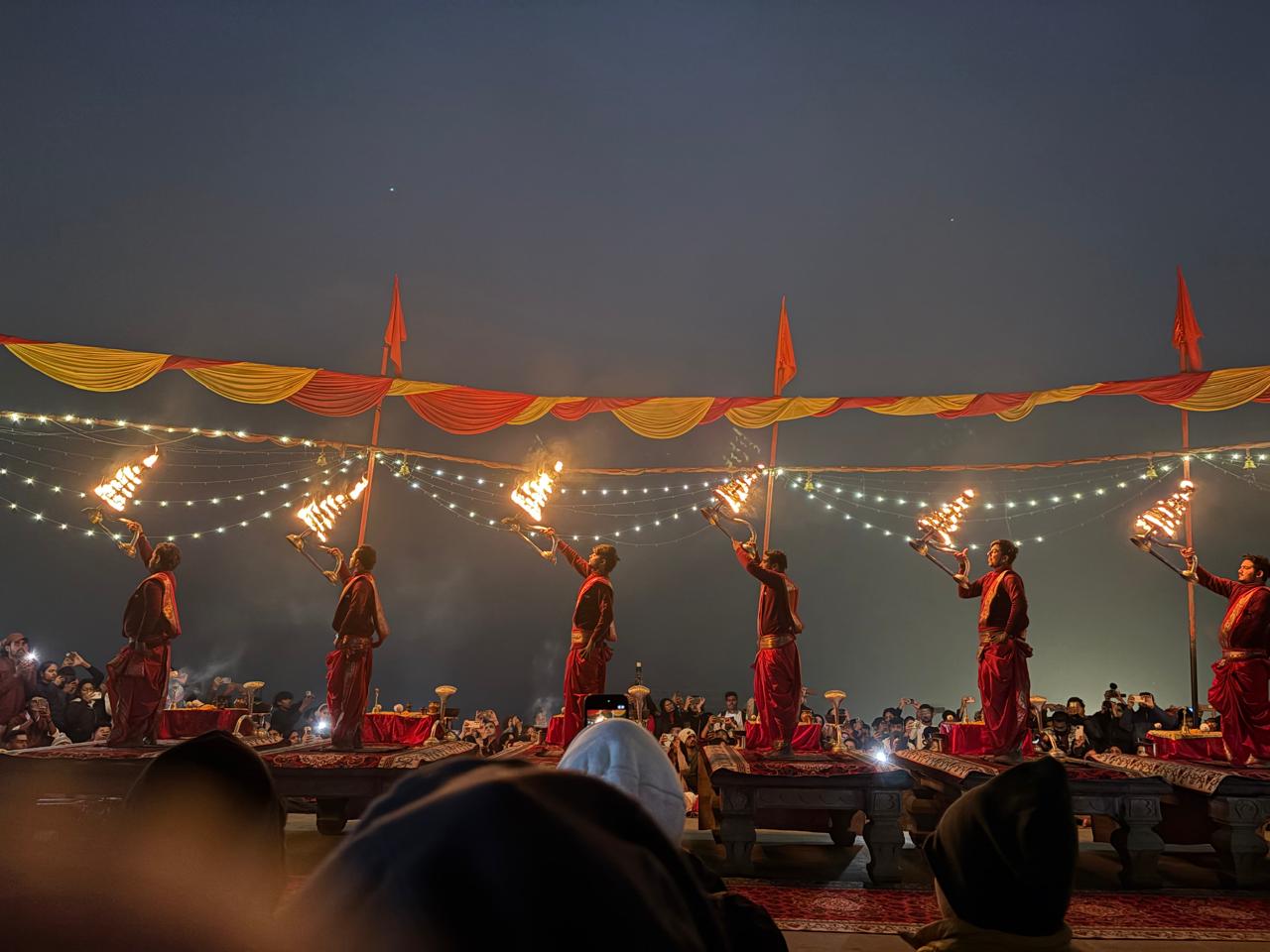
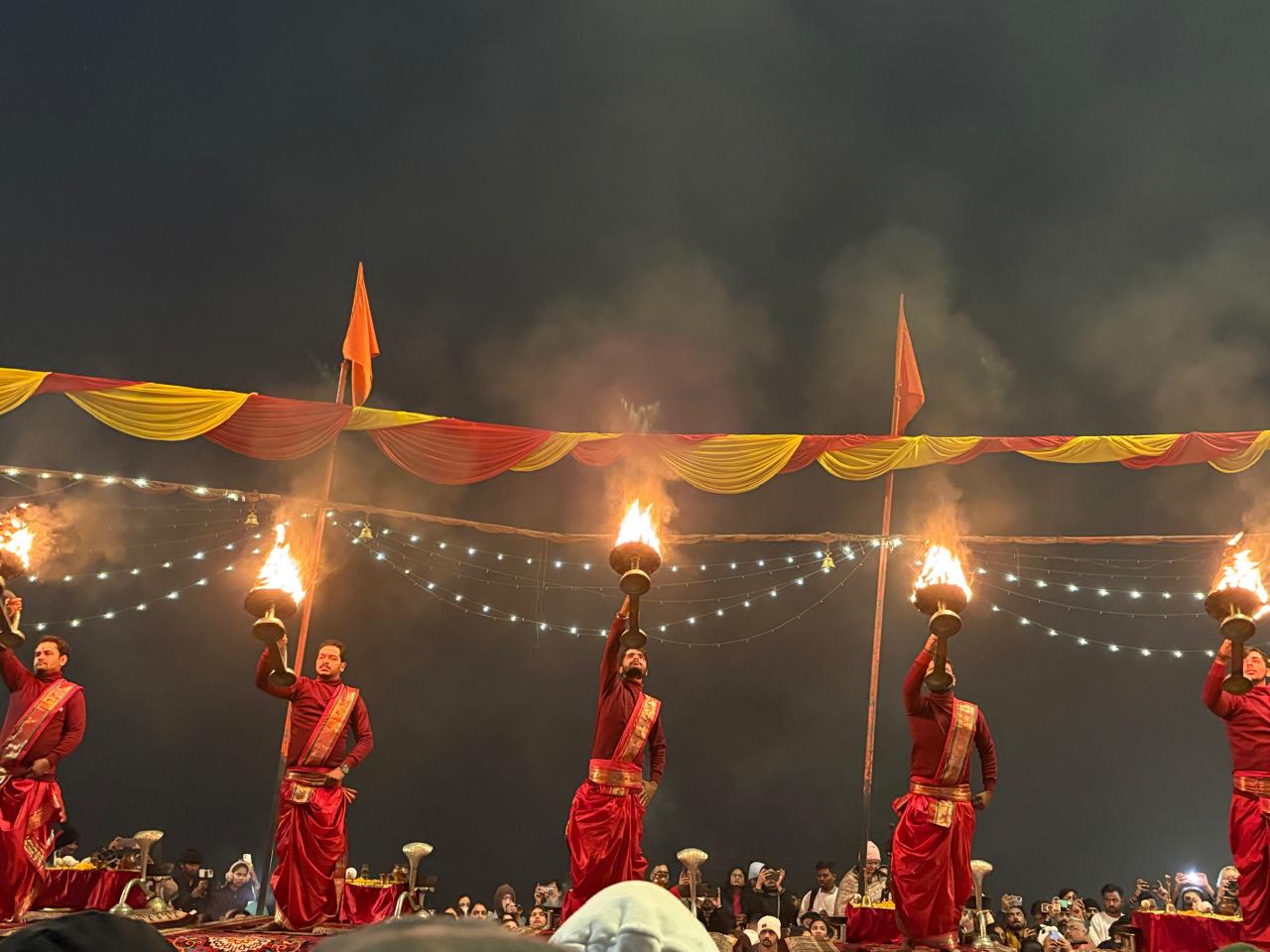
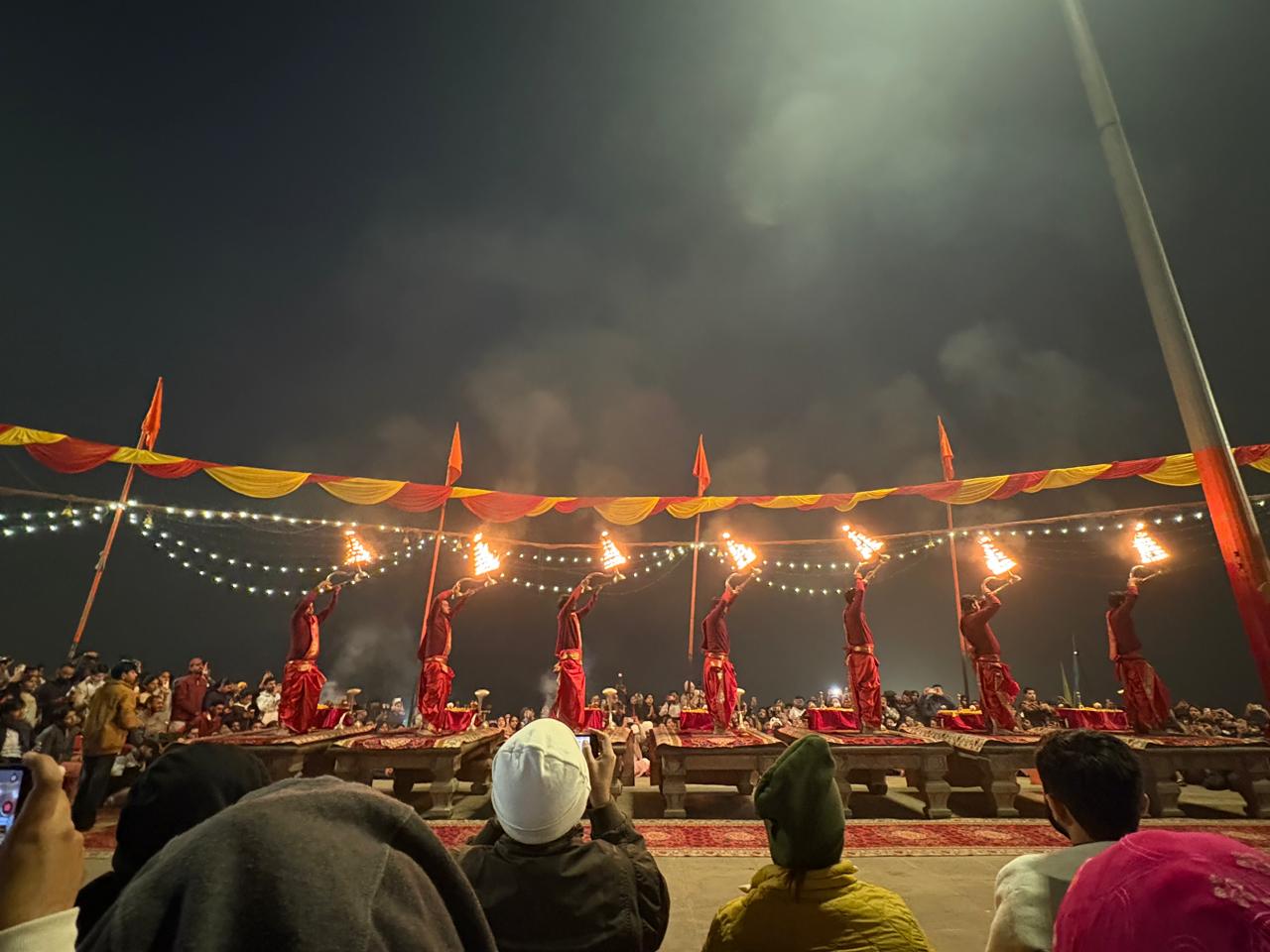
Deepika and Santanu were brave enough to wake-up at 4 am and go to the Assi Ghat to witness the Morning Ganga Arati. I needed my 6 hours of sleep. We skipped breakfast to reach Kashi Vishwanath temple by 9 am at the gate no.4 for the Sugam Darshan for which we had purchased the ticket on-line. Though, we had a soft-copy of the ticket on our phones, Santanu insisted on a hard-copy (paper) and I realised the importance when we had to deposit our phones, purse (after taking out the money because otherwise how will we pay the ‘dakshina’), belt and smart-watch. The physical ticket needed to be endorsed/stamped at a location 100 metres from the entry gate. The person supposed to endorse wanted us to take the services of a designated pandit or ‘Panda’ which we refused. He tried hard to push us to ‘hire’ a panda by sending us to another person deliberately delaying process. Santanu lost his cool and gave him a sound verbal thrashing.
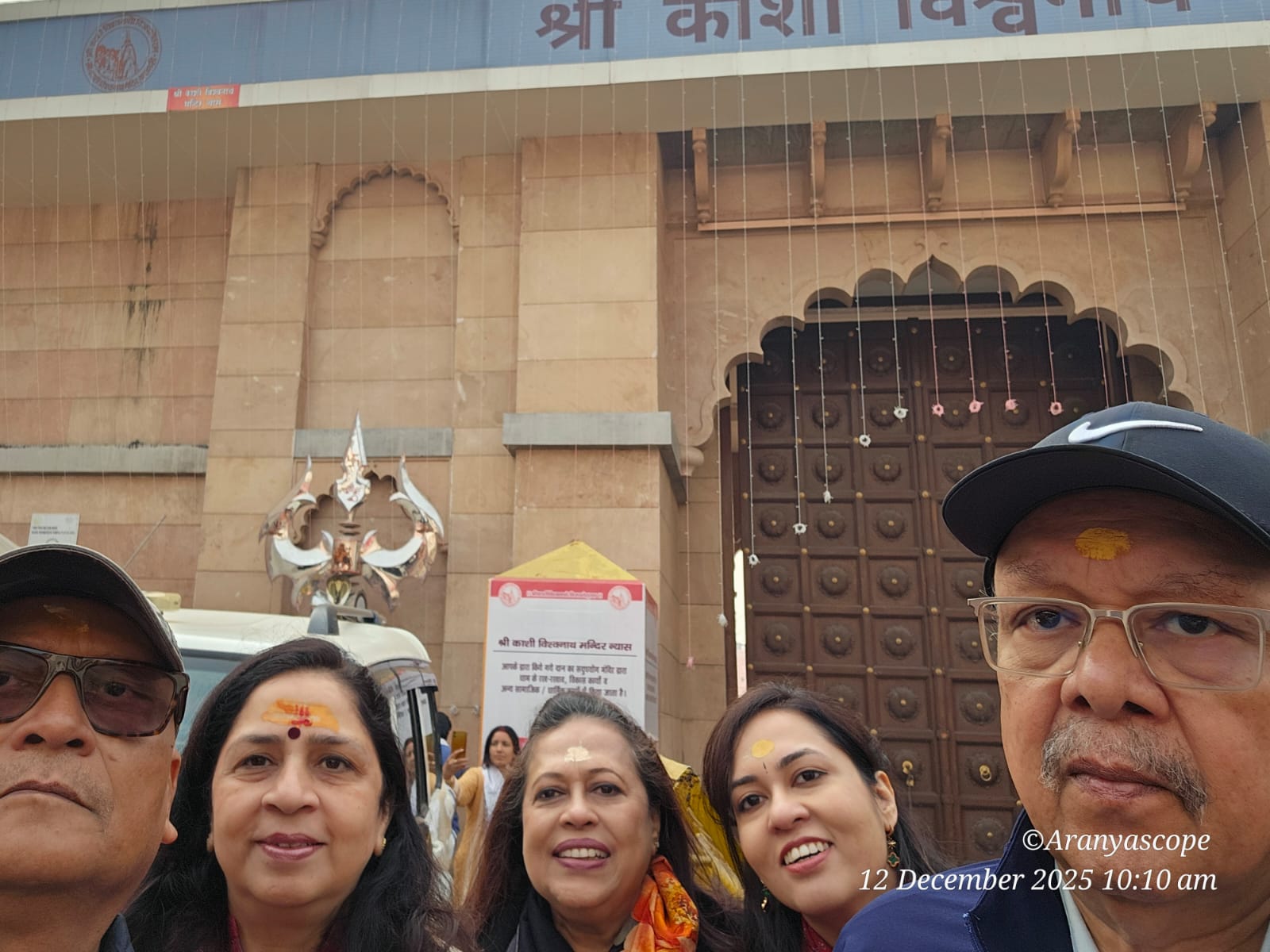
I do not know if the famous “Baba Vishwanth Gali” still exists in its old glory or not because the temple premises has been expanded hugely with the original temple in the middle of it. I had been to the old temple going through the gali negotiating the bulls or ‘Nandi’ of Lord Vishwanth many years ago and had the darshan of lifetime participating in “Doodhabhishek of the Lord” (milk bath). The blessings were free then. Deepika having learnt her lesson at the boat, offered a 500-rupee currency to the Mahant at the temple and received a garland as blessings. Considering the huge number of devotees visiting the temple every day, these Mahants must be earning few lakhs every month, tax-free.
A Panda had assigned himself to our group and guided us to the Gyanvapi temple within the main perimeter or parisar of the temple narrating us the story. According to the legend, the original Shivalinga was thrown in the well of the temple to save it from destruction by the army of Aurangzeb.
When the Kashi Vishwanath Mandir Parisar was created, many structures were demolished or cut-off, one such casualty is the Manikarnika Ghat, the cremation ghat believed to take the soul of the departed straight to heaven, was quite big as I remembered but now had shrunk considerably. Many terminally ill patients would come here in their last days waiting to depart and cremated hoping their soul to reach the heaven.
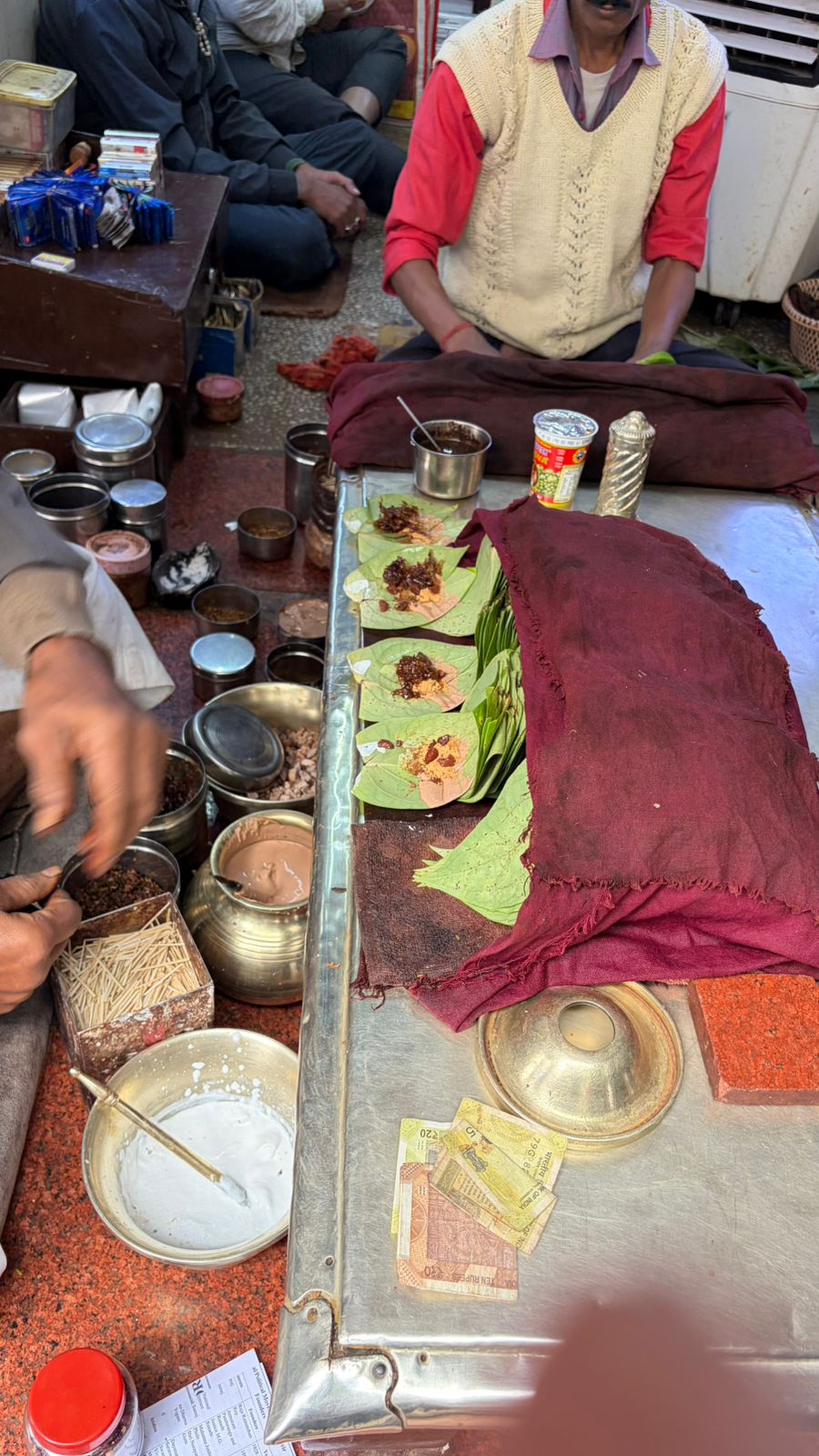
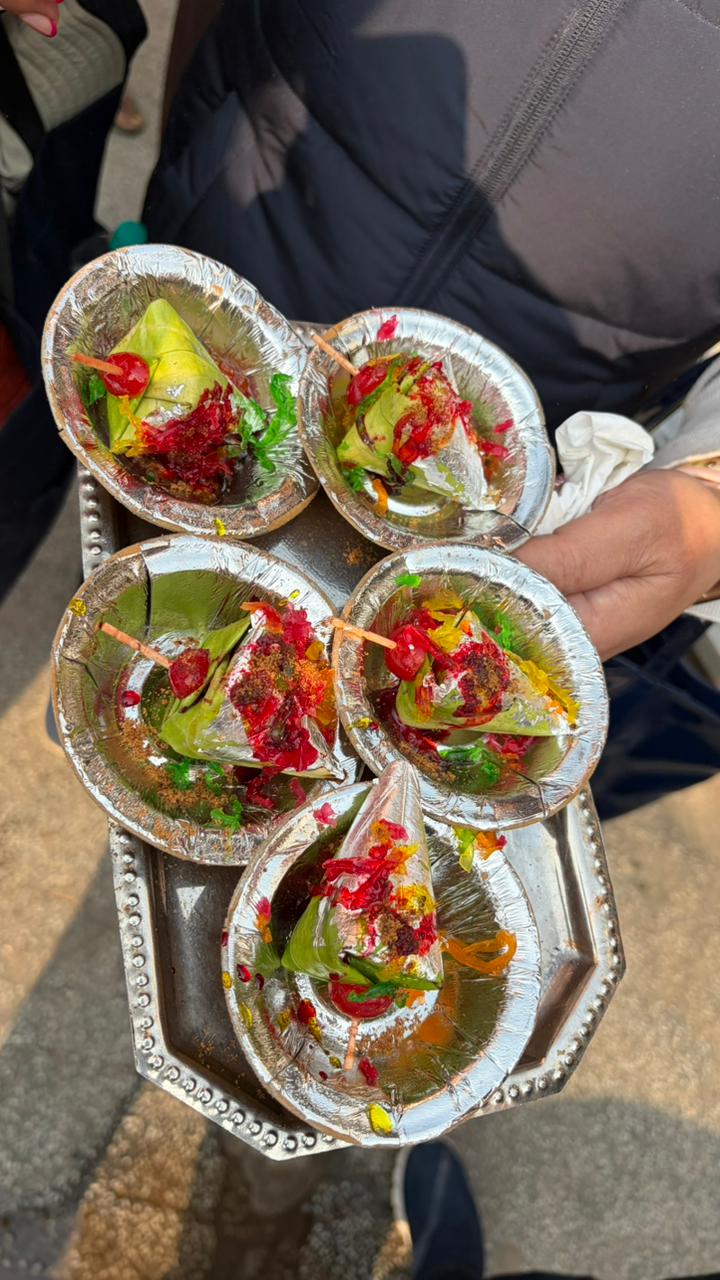
By the time we came out, breakfast time was over, we headed back to our hotel but decided to try out some restaurants nearby. After deliberating between an unknown brand of Banarasi Biriyani restaurant and the much known/ visited Sagar Ratna, we settled for the latter and had a hearty lunch which turned out to be the most expensive one as well. There was a Paan shop below the restaurant from where we had the flavourful Banarasi Paan, besides picking up few packs of Paan Masala.
In the evening, the girls wanted to explore the market for Banarasi sarees, Santanu and I had to go along feeling thoroughly bored. While they were busy stock-taking of the shop, Santanu and I explored the street from one end to the other which had nothing except garment shops. We came back and played few rounds of TwentyNine before going to the dining hall for dinner. We all were feeling tired and decided to call it a day. Santanu and Deepika wanted to visit Assi Ghat once more and Shinjini too showed interest in joining them. I knew it would be very difficult for Deepika to go for it twice in succession but did not discourage her. Next day, only father-daughter duo went to watch the morning arati at the Assi Ghat while we slept till late.
As we finished our breakfast, Sangeeta got a call from Rakesh our taxi driver confirming that he’s at the hotel gate. Our plan was to visit Sarnath, Buddhist religious site where Gautam Buddha gave his first sermons to his 5 disciples and Ramnagar Fort, the 18th century sandstone structure built by Maharaja Balwant Singh, the Kashi Naresh (King).
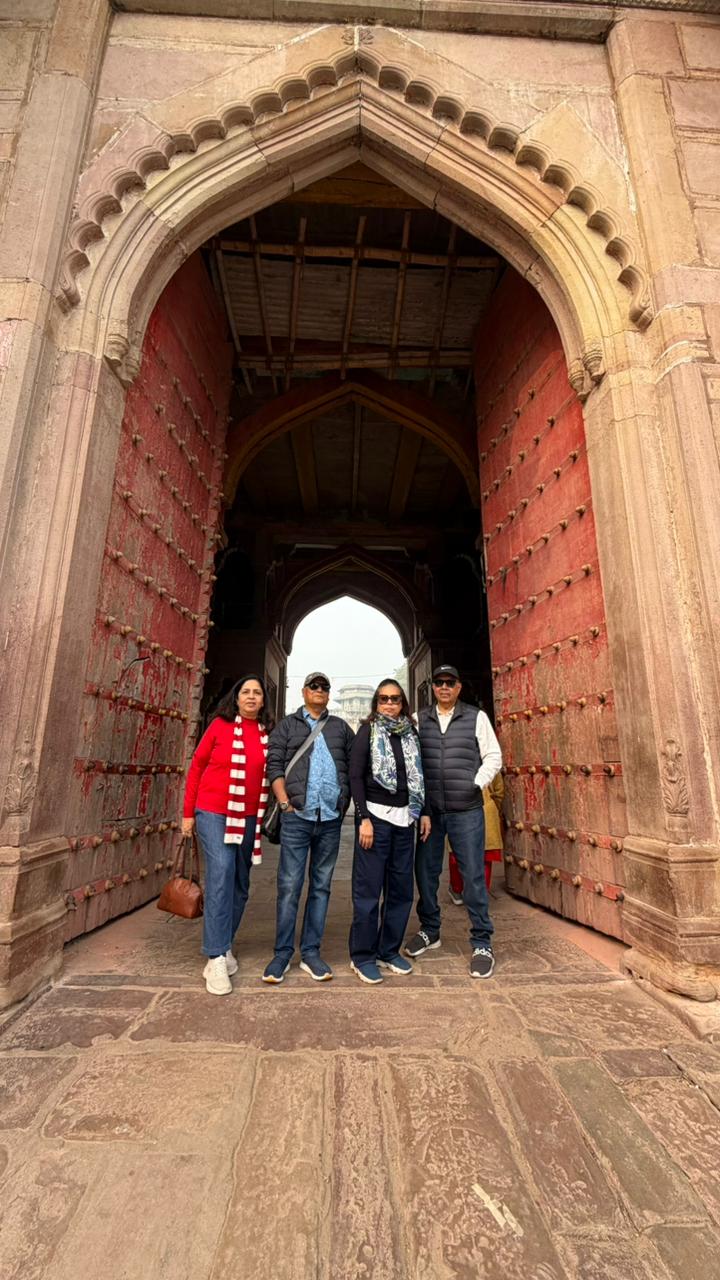
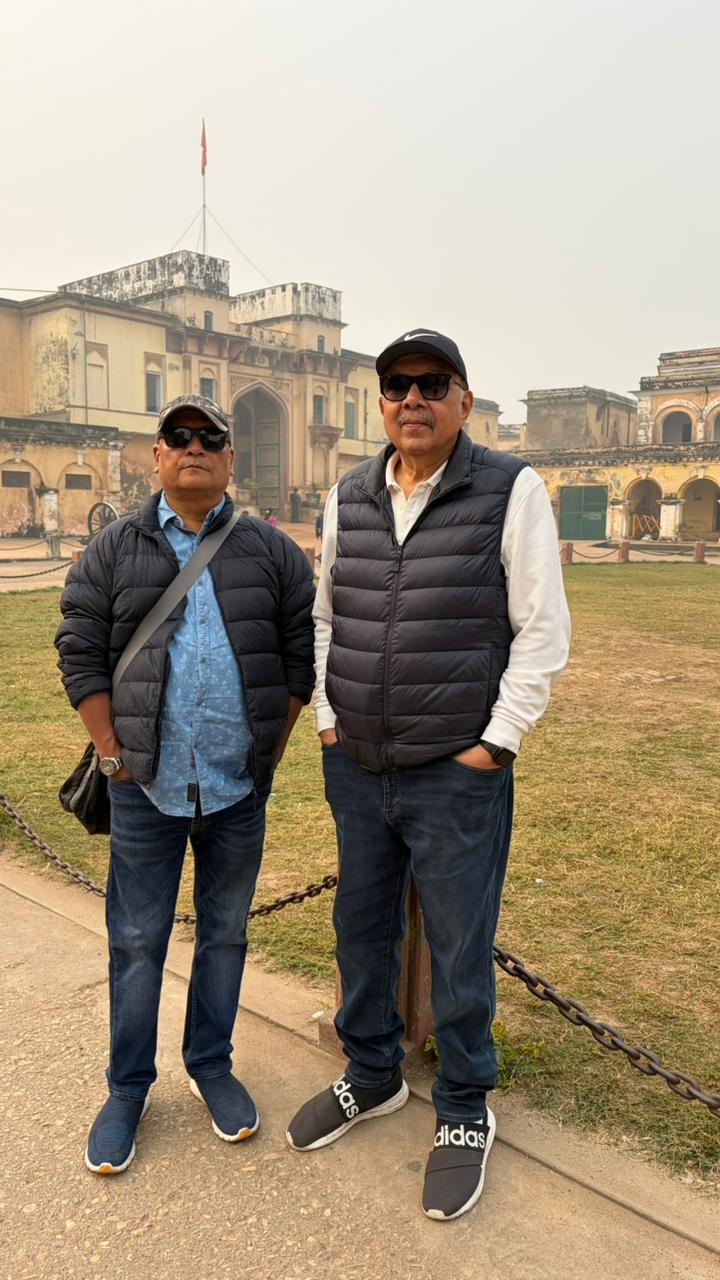
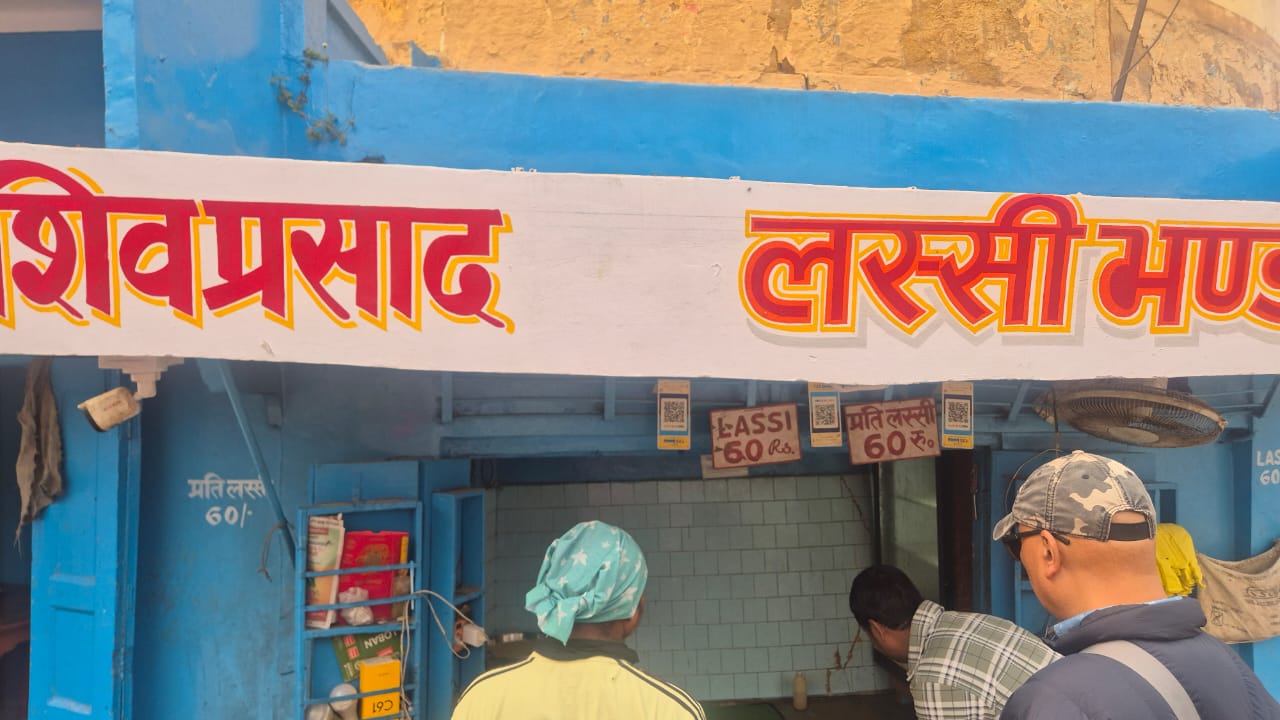
Our first destination was the Ramnagar Fort where we reached around 9:40 am and had to wait for 20-minutes as the fort gates opens only at 10 am. We bought the tickets for the museum not realising that it was the only thing that was to be experienced. Although, it is called a fort but the structure was far from being a fort and more of a palace with garages for the buggy, palanquin and cars in later period. The museum showcased the furniture, clothes and armoury of the bygone era. The most troubling part is the bad upkeep of the place, there were visible layers of dust on the artefacts, the lawns are not tended regularly as a result there are wild growths. No guides to explain the exhibits. And the Ganga River flowing below the fort is at her dirtiest. The authorities need to ramp up the place urgently and ensure proper maintenance. Salarjung Museum in Hyderabad can be their benchmark. The most memorable part our visit is the lassi we had from the 70 years old Shiv Prasad Lassi Bhandar. The thick Rabri Malai Lassi served in a Kulhad (earthen glass) was the authentic, flavourful and a must have when you visit the Kashi King’s Palace.
Rakesh suggested that we take a tour of the Banaras Hindu University (BHU) as by the time we return from Rajgir, the roads will be too crowded. The campus of BHU is huge with individual buildings and residents for both the teacher and scholars of different streams of knowledge. There is a Birla Temple in the campus attracting devotees. Interestingly, the deity in this Birla temple is different from all other Birla temple, the presiding deity here is Mahadev as opposed to the Vishnu and his consort in other Birla temples across the country viz. Delhi, Kolkata.
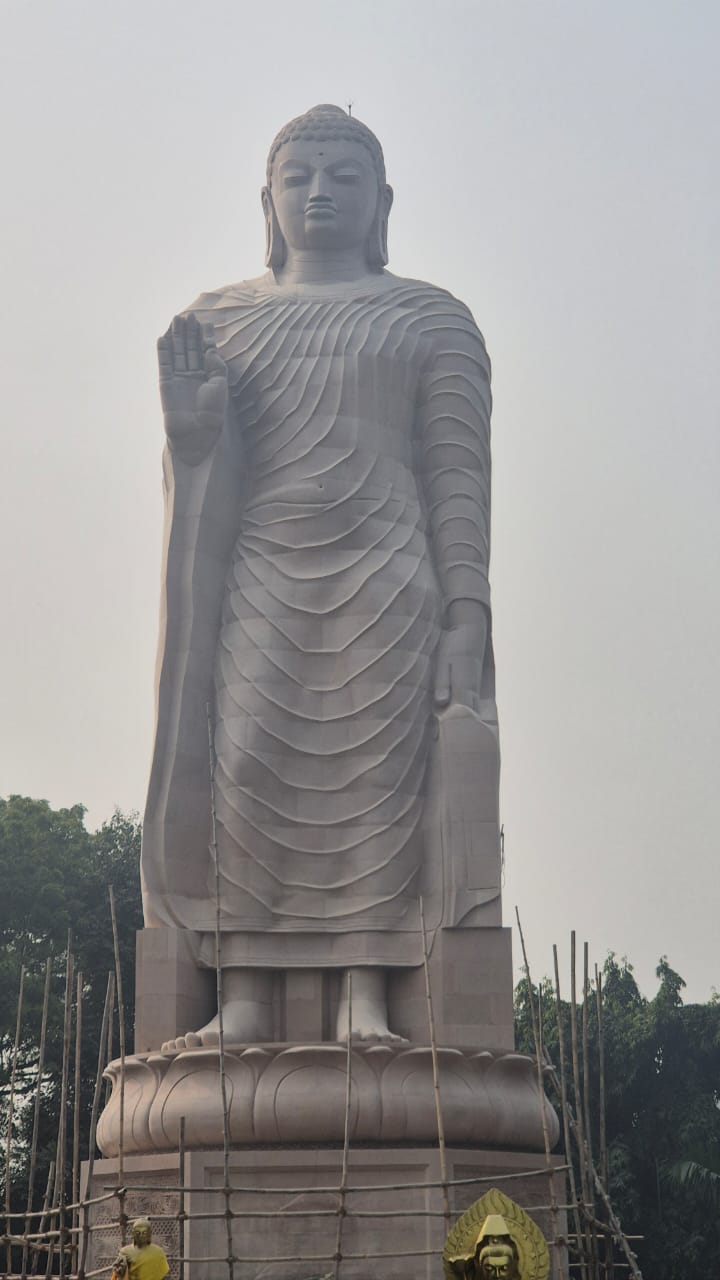
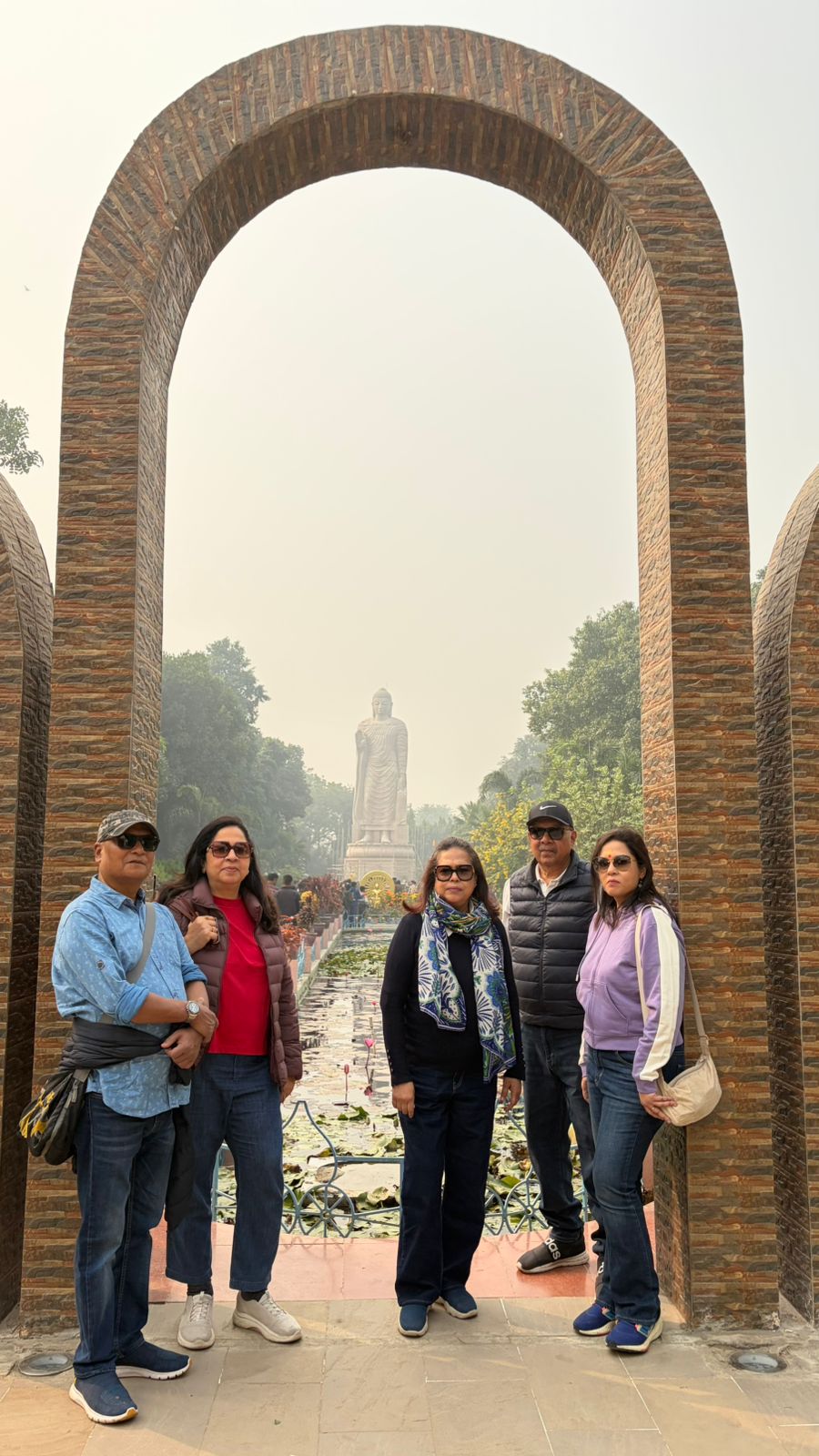
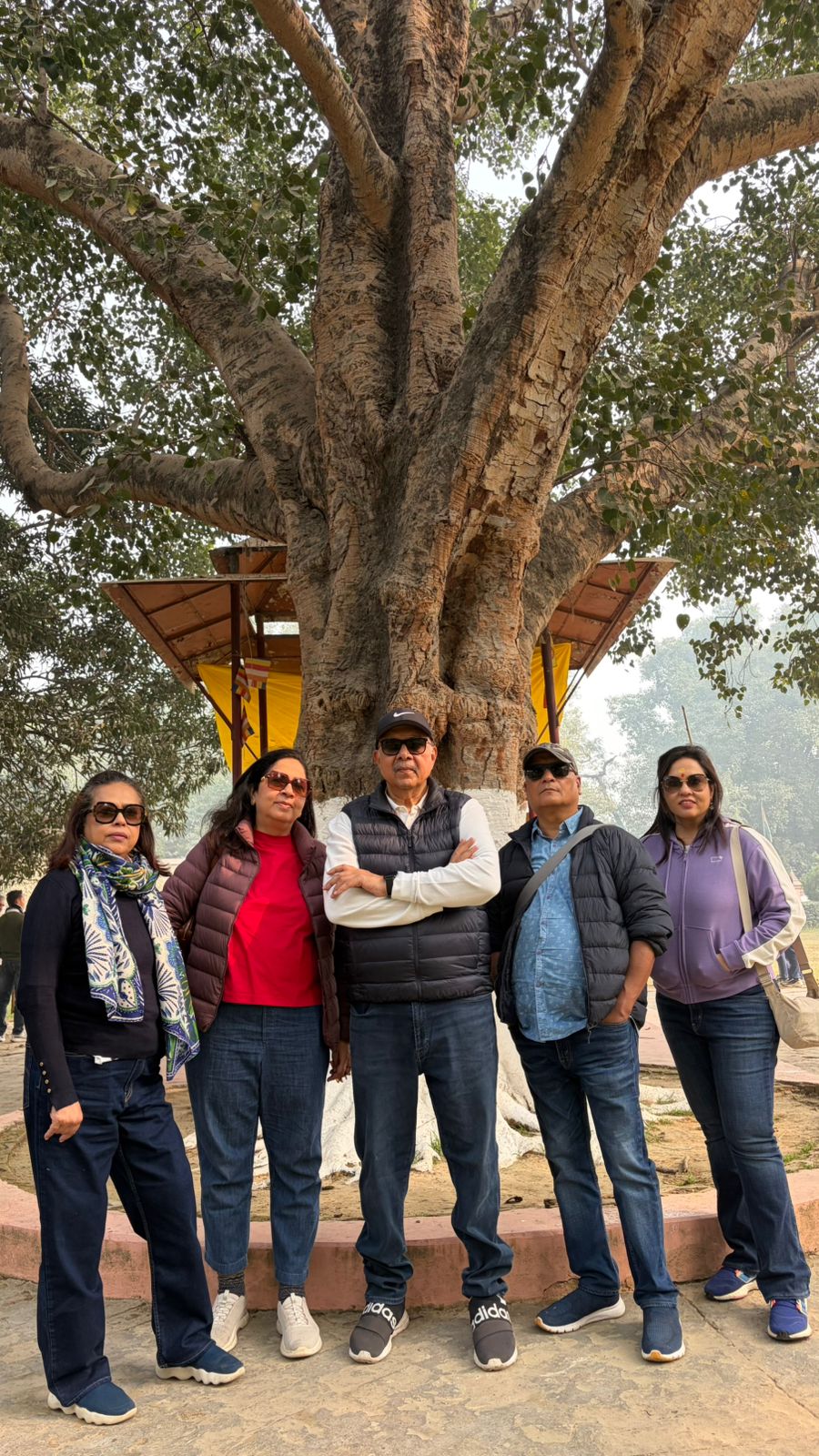
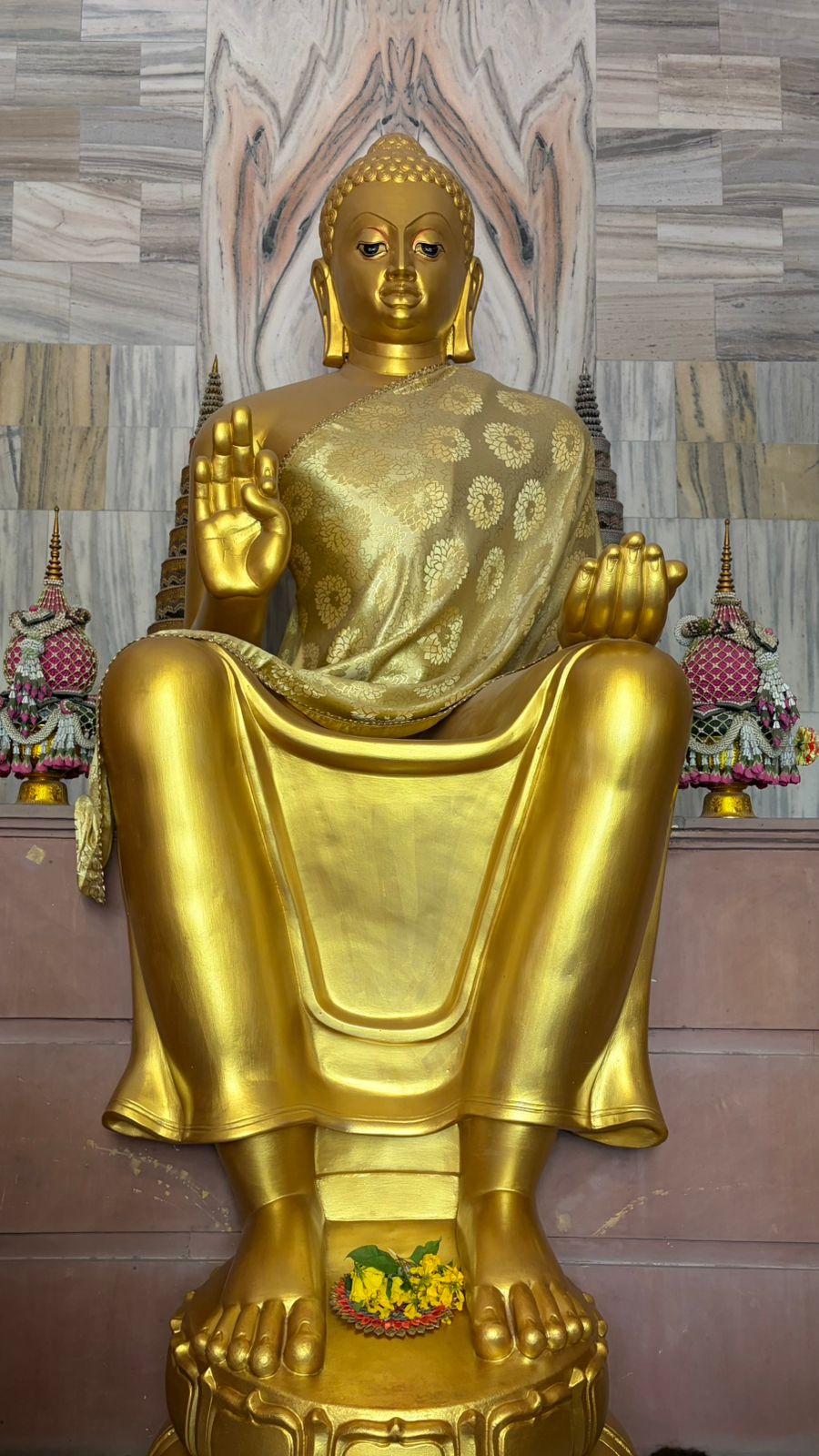
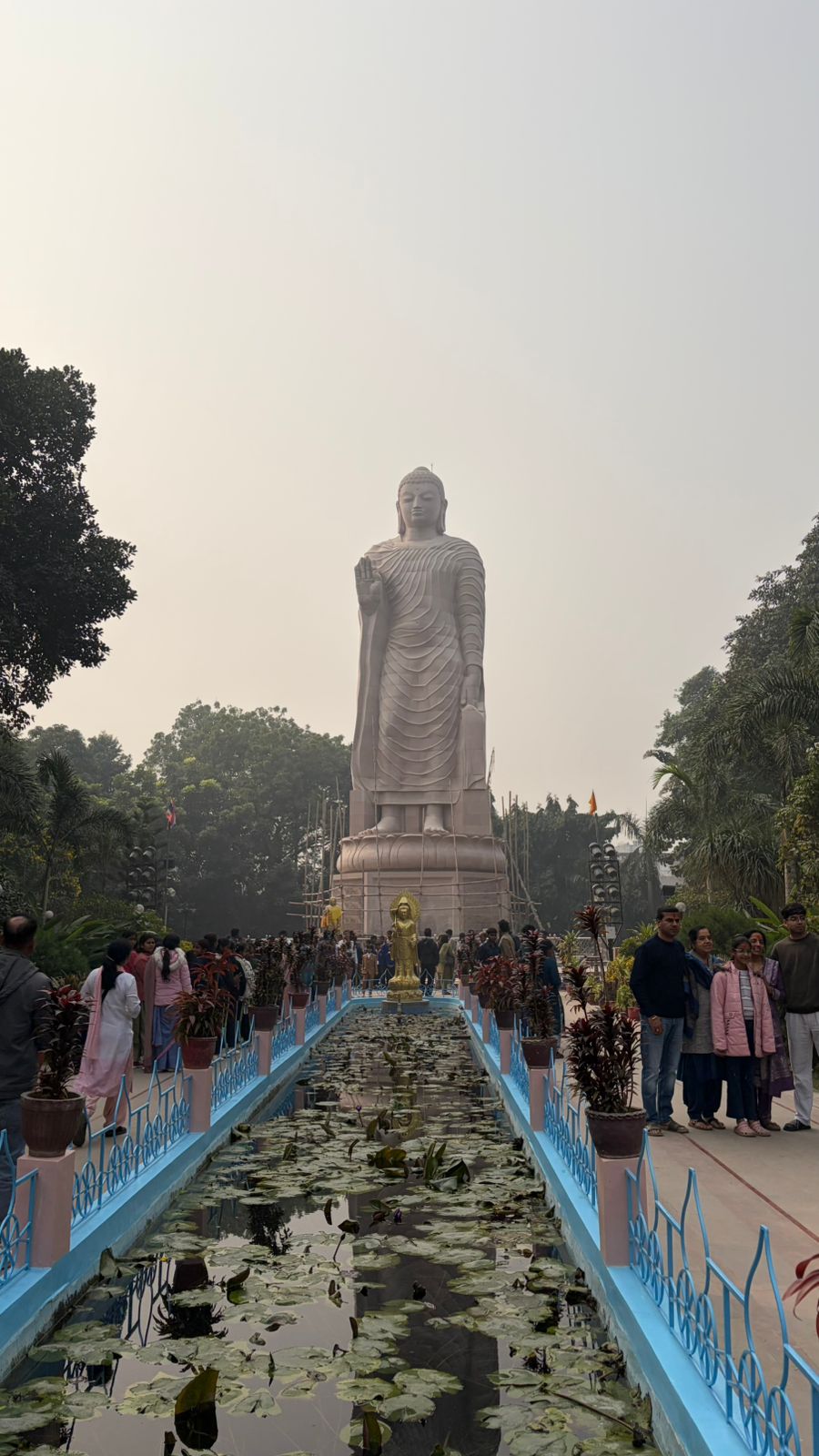
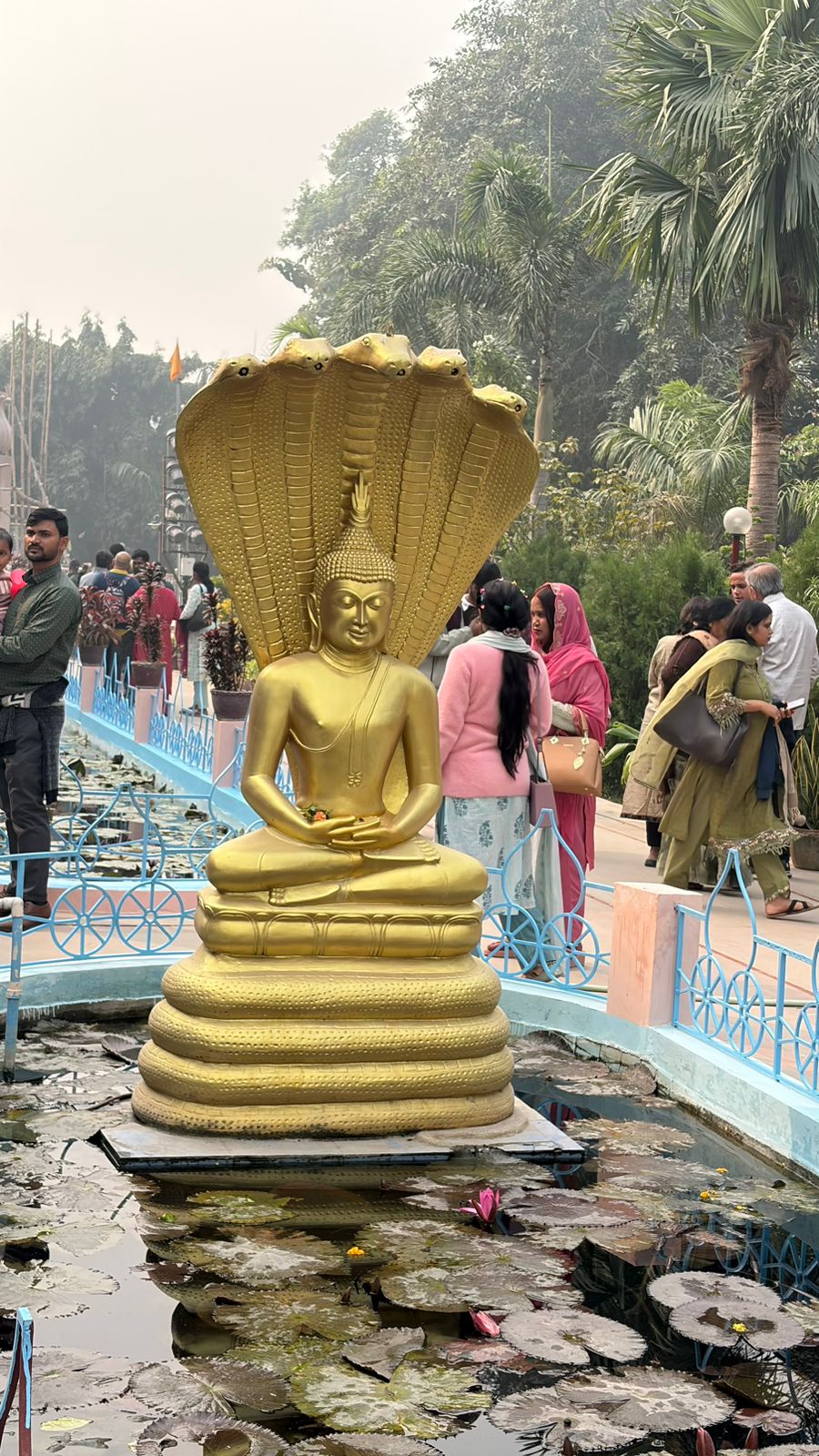
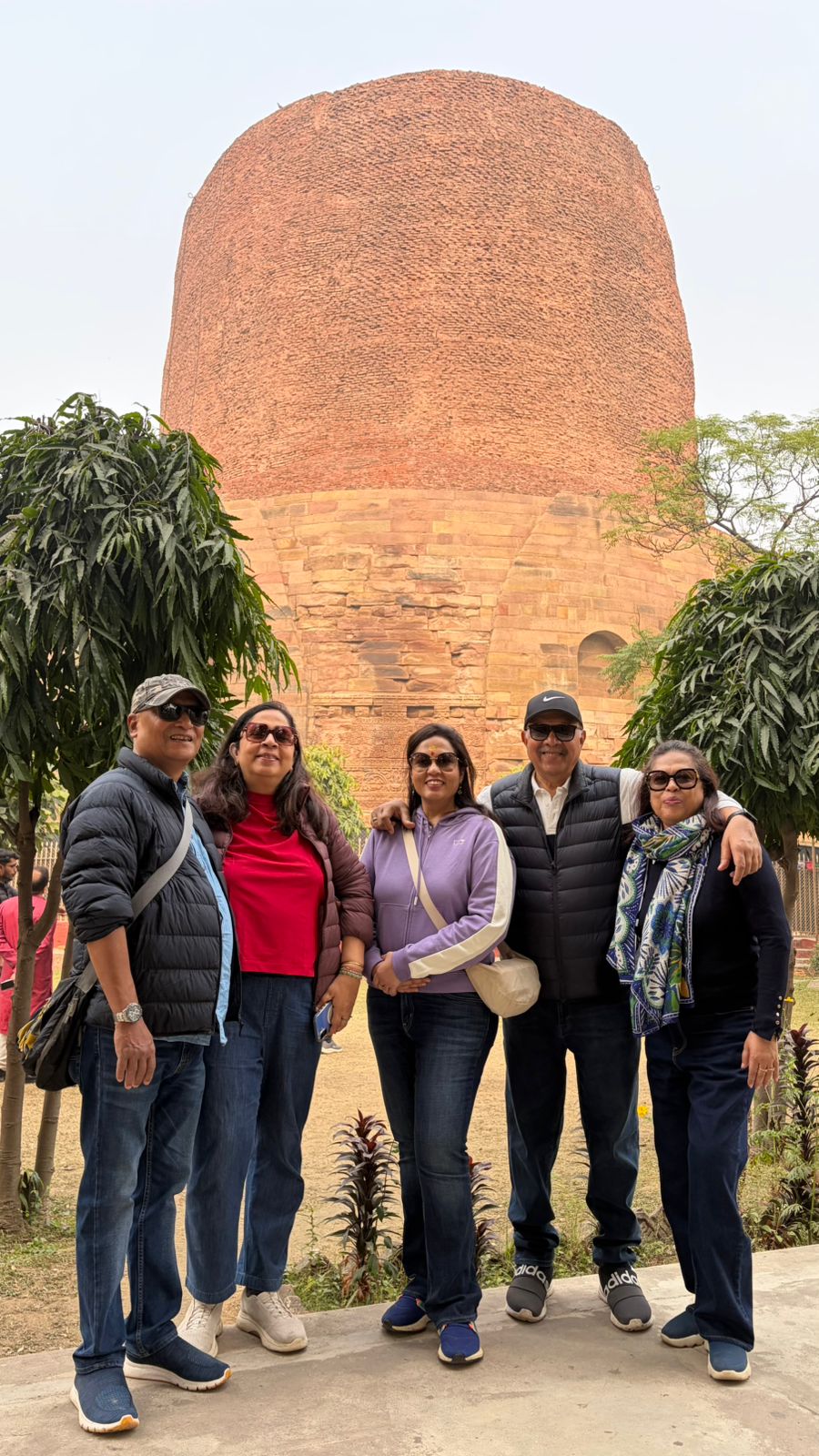
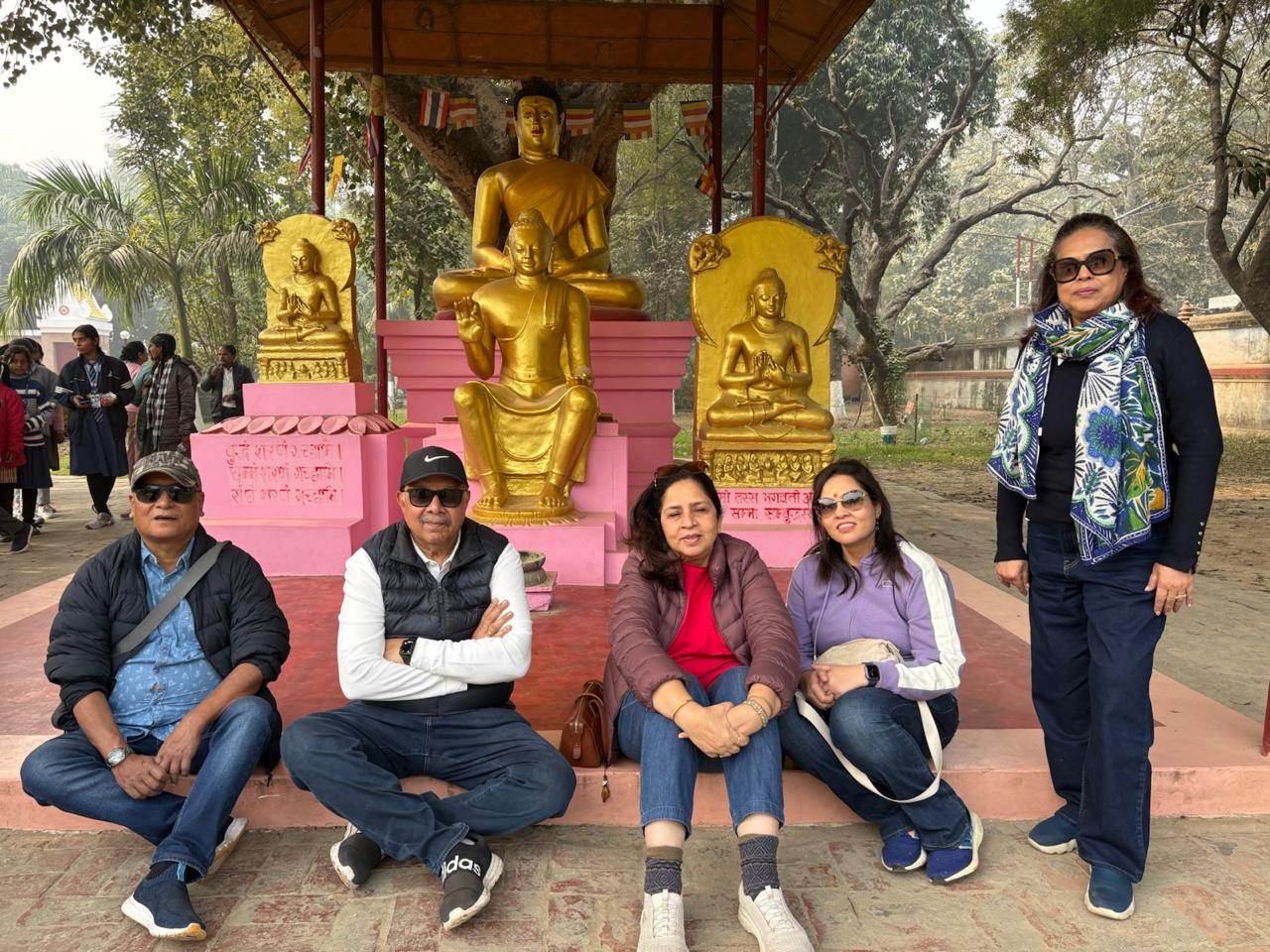
We took the service of a guide to explain us various sites at the Sarnath. We realised the importance of a guide while touring the historical sites in Madhya Pradesh. Surely, lot of times, the guides are not deeply aware of the history of the place but they do try to entertain you with local legends of the site. The guide’s service is “technically free” as per the govt order but they are open to receiving any amount that the tourist offers them. Anyways, our guide took us to the Buddha temple premises and showed us the “Bodhi tree” believed to be the place where Gautam Buddha gave his first sermon to his first five disciples. At the cost of being politically incorrect, I have sincere doubts that the Bodhi tree is 2500+ years old!!! We saw the temple constructed and maintained by the funding of Thai government. Then saw the tall statue of Gautam Buddha (80ft 9inches indicating the lifeline of Buddha including time spent in the womb of his mother), surrounded by a waterbody full of lotus and other flowers. The garden boasted of the replica of the Ashoka Stambh and Dharma Chakra. The Buddha statue is sculpted in line with the now destroyed statues at Bamiyan, Afghanistan. We found the size of the statue and the surroundings impressive but the sculpting is very amateurish missing finesse of the smaller one inside the temple.
The guide took us to the archaeological site from where the artifacts were excavated and now housed inside the museum but there was a huge line-up student from various schools around Varanasi who have come on discovery trip. The guide then suggested and took us to a village of craftsmen supposedly creating the famous Banarasi silk sarees and dress materials. It was a big disappointment as it turned out to be a regular shop in a village where they have a show-piece handloom only. We quickly came out and proceeded to the museum picking up few artifacts from the stalls on our way. The museum had mostly remnants of the sculptures and few utensils of the bygone era. Some of the monoliths were awe inspiring. Deepika and I have seen such artefacts and more on site at Ajanta, Ellora, Bhimbetka in the recent past and every time we felt proud of our rich heritage.
When we started for Varanasi, it was past our normal lunch time and all of us were hungry, the most popular eating places on our list were in Goudulia which was quite far from our location. Rakesh, our driver suggested we look for places in the Cantt. area which will fall on our way. Sangeeta wanted to go to the Taj property but the rest of us restrained her and found a decent eating place called Tandoor Villa right opposite the Taj property. I haven’t had my eggs for three days and when I saw they have egg-curry, I couldn’t resist, except Deepika, who opted for a vegetarian dish, all others echoed their choice for the egg-curry with rice. It was a very satisfying lunch especially as the service was prompt and the serving guys were most cordial. We left some space in the tummy for the Giani’s ice-cream and the Banarasi Paan available right next to the restaurant. We explored the street and found a shop selling Punjabi papad and pickles besides other nick-nacks and bought a few items.
On our way back, Deepika, Sangeeta and Shinjini went to a Saree shop called Taj Express close to our hotel while Santanu and I came back to rest for a while. However, in just about 15-minutes, Santanu came and suggested something that was too tempting to ignore. We came out of the hotel and headed towards the BHU. The original Pahalwal Lassi shop was close-by where we stopped to have Malai-O, the creamy, extremely light dessert only available during the winter months. Then we couldn’t resist the Malai Rabri Lassi, I am at loss of words to describe thick, rich flavourful drink that instantly uplifts your mood and energises. Next, we had the Banarasi Paan from the shop below the Sagar Ratna and bought few packs of Paan Masala as well. We walked the length of the street, almost to the gate of BHU and came back. Just as we were to go in, I found a small shop that was selling Champaran Meat. I have heard about the dish, a rich, aromatic mutton curry cooked in earthen pots. Since we were on a culinary pilgrimage, we decided to try it out. We ordered a pot of mutton curry with rice and a sabji for Deepika and told them that we will pick up after an hour or so. Our hotel was vegetarian only and we did not want to offend their sensibilities and asked him to pack it discreetly.
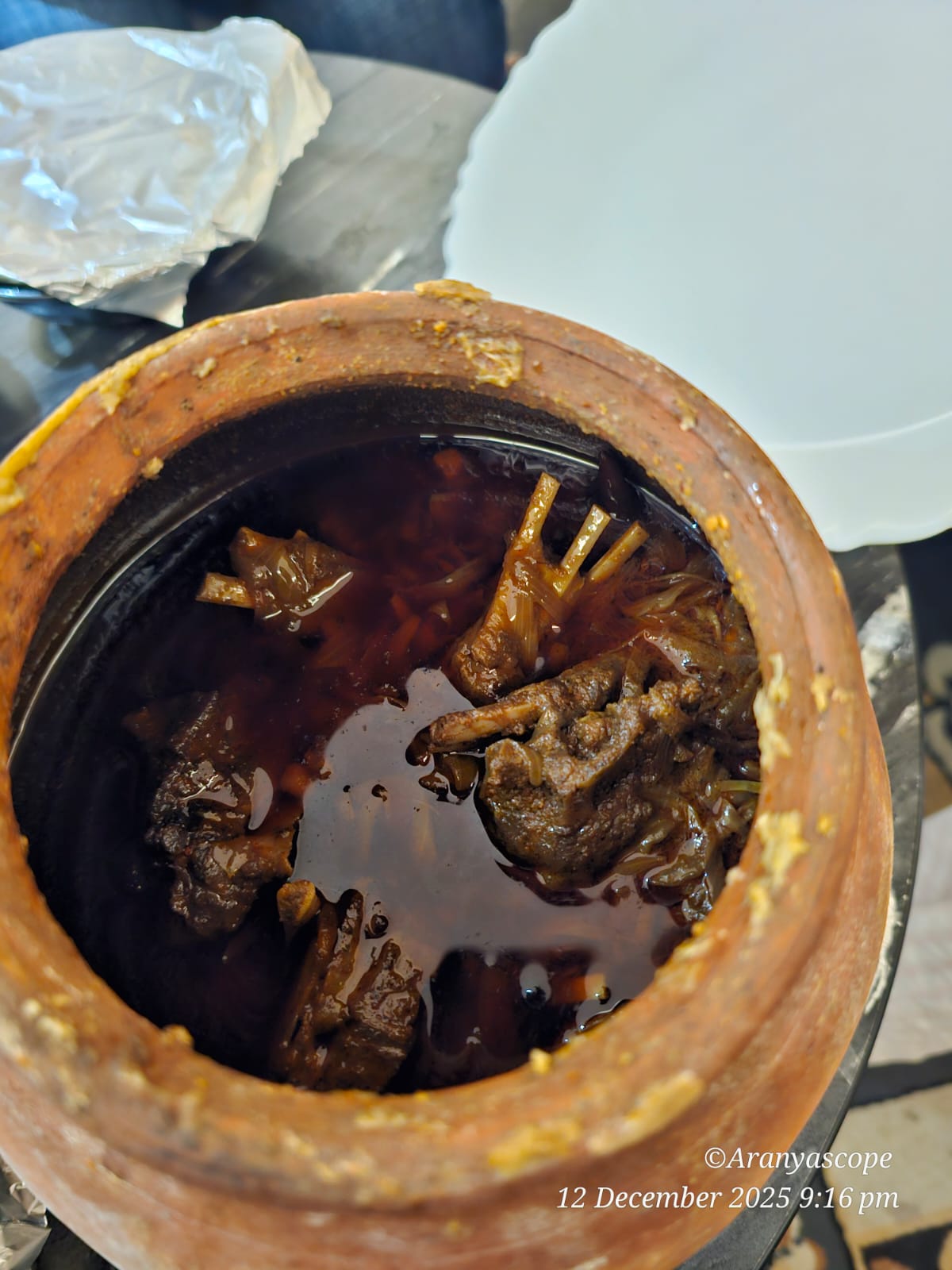
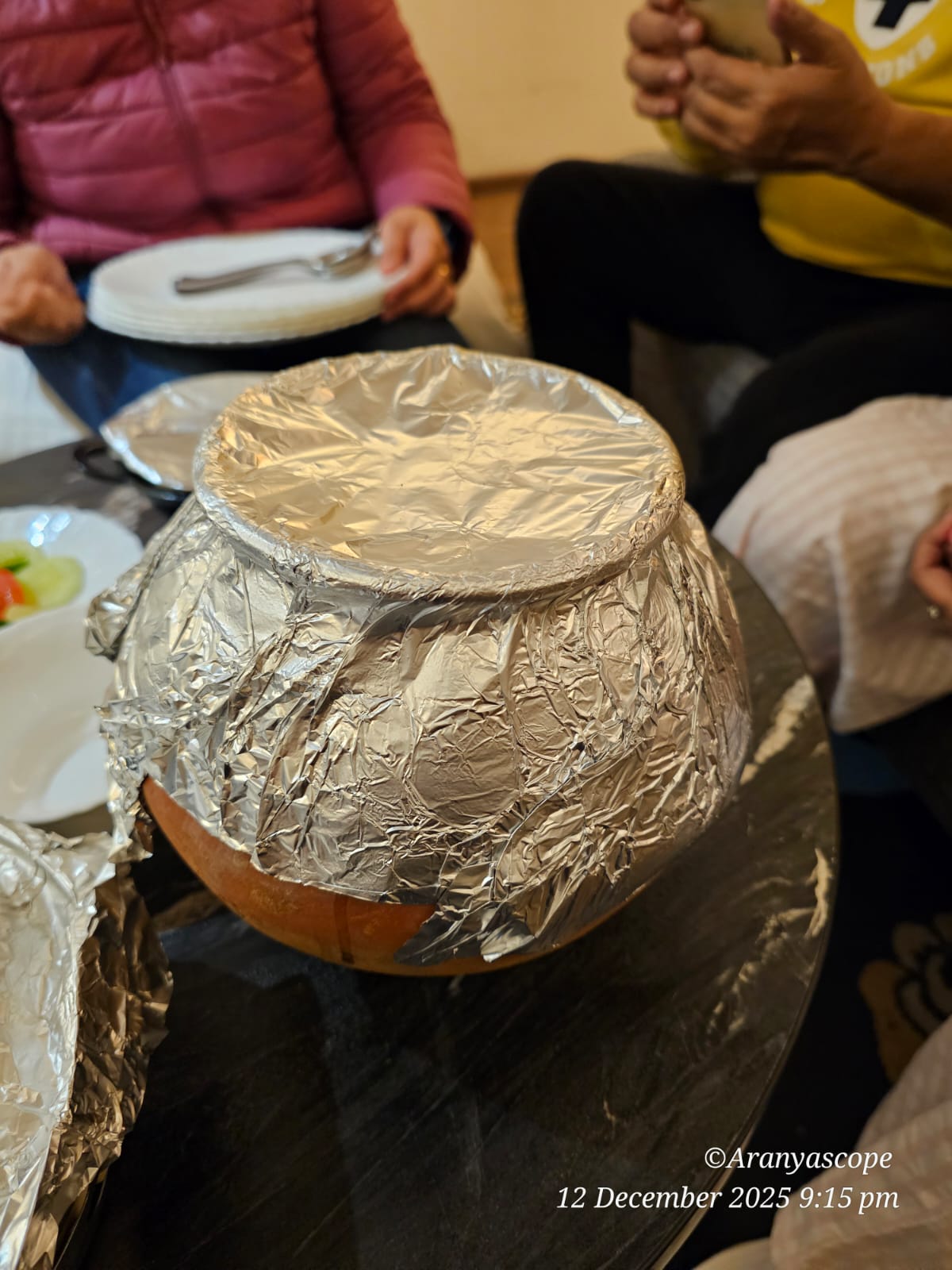
Traditionally, Champaran Meat is a rustic, slow-cooked mutton curry from Bihar, known for its smoky flavour, cooked in a sealed clay-pot with mustard oil, lots of onion, garlic and whole spices till the mutton is tender and juicy with its own juice. The curry is semi-dry and often taken with plain boiled rice or tandoori roti. We had it with both. The curry reminded me of the Chettinad Chicken I had in Chennai. There were fire and smoke and water oozing out from ear, nose, mouth and eyes and the tantalising, delightful taste prodded us to have more of it till the last piece. Later, Santanu and I collected the bones in the pot and dropped it at a garbage dump, ensuring the sanctity of Coco Casa.
In the morning, after breakfast, we got ready and packed our bags, ready for check-out and informed the front desk that we going out for short while and shall check-out by 12 noon as discussed and agreed when we checked-in. One of the front desk guy named Vimlesh Rawat started acting smart, telling us to vacate the room then only or latest by 11 am. So, I casually asked him, “Or else?” He was about to tell me the hotel policy, when Sangeeta pointed to him that his own Manager had agreed to the 12-noon check-out. I found this man to be unfit for hospitality industries, not because of this incident but he had been rude even when we were checking-in and never once greeted any of the resident guests.
We walked out of the hotel and headed towards the Durga Mandir, supposed to be within 500-600 metres from the hotel, turned out to be approx. a kilometre. The day being Sunday, there was rush of devotees, I decided to stay out and did Santanu. It took about 25-minutes to complete the darshan and once Deepika, Sangeeta and Shinjini came out, we headed for the Sankat Mochan Hanuman Mandir. Initially, we thought it to be close-by but it turned out to be quite far from the Durga Mandir. It seemed, lots of people have ‘sankat’ or problems in their life because the place was really crowded and unmanageable. Deepika & Shinjini went for the darshan while we waited outside.
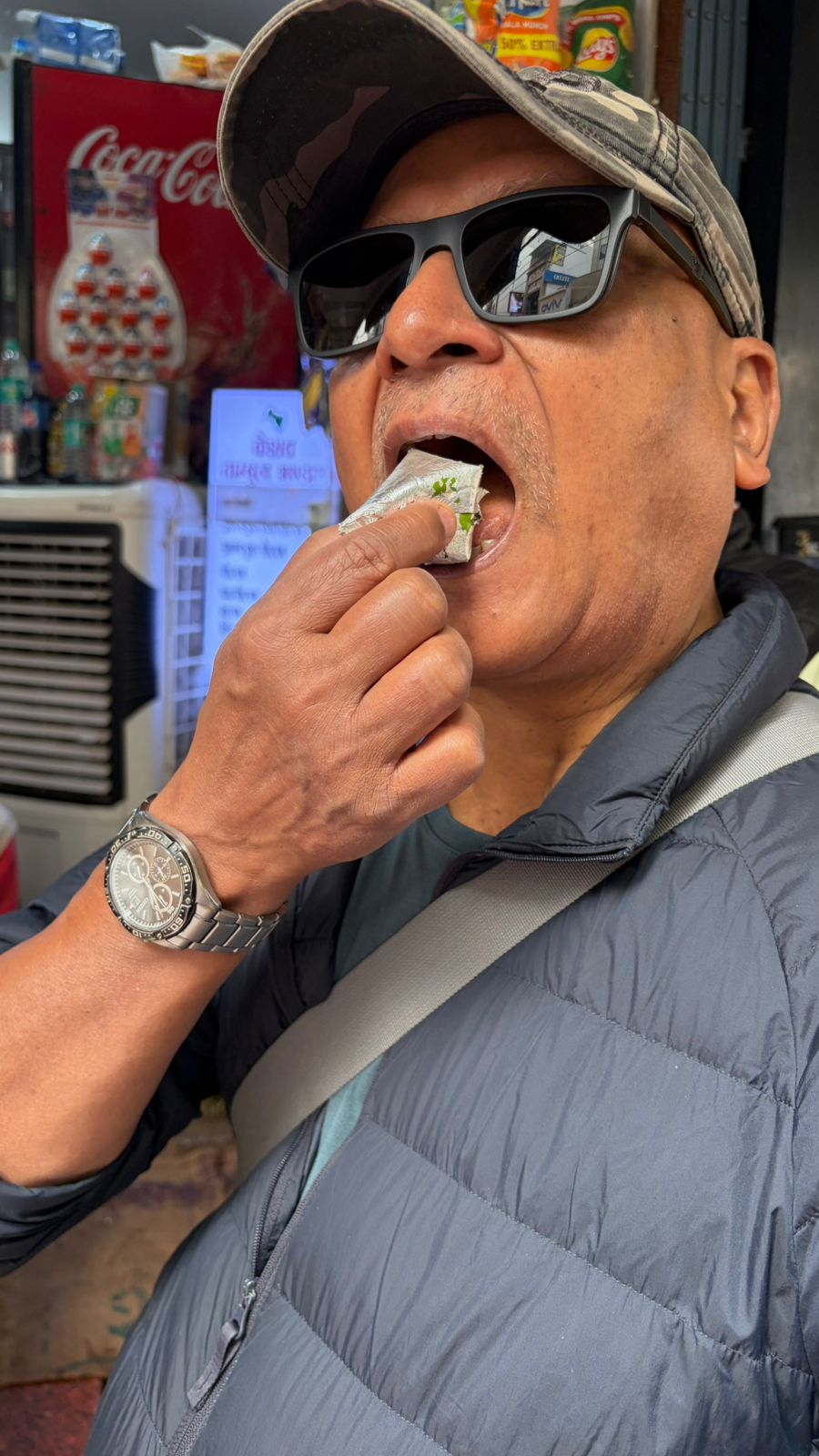
We came back in the hotel before 12-noon and checked-out as our cab had come. Santanu announced that our train, the celebrated Vande Bharat Express is running late from Delhi and now is scheduled to depart from Varanasi an hour late around 4 pm. We had one extra hour but nowhere to go as Rakesh, our driver told us that he has another assignment from 2-pm and therefore can’t take us anywhere else. We stopped at a paan shop from where our revered PM had once had a paan. I asked for the same kind of paan that he had and it was really good, melt-in-the-mouth kind. We packed up few paan for post-dinner munching.
We were dropped off at the station around 1:45 pm and didn’t know how to pass the time but Shinjini found out an Executive Lounge where our entry became free courtesy the ICICI Bank credit cards. We had free vegetarian lunch and hot tea/coffee. The permit was for two hours and we easily passed the time playing TwentyNine. The train from Delhi finally entered the platform around 3:30 (1.5 hours late), the usual time for cleaning the train after one-leg of journey is 90-minutes but the staff entrusted with job did it in 60-minutes and the train was ready for departure around 4:30 pm. We estimated that if nothing untoward happens, we should reach Delhi around 12:30 am, it was not be… the Vande Bharat Express has a top speed of 130 kmph and it rarely reached anywhere near it, keeping the speed in the vicinity of 60-70kmph most of the time. However, on the brighter side, the seats with ample leg space in the Executive Coach, the food and the service, more than compensated the delay. We finally reached New Delhi Railway Station at 1:55 am. The station at that hour looked quite different, devoid of normal hullaballoo of the day time, the quietness and the low lights made it eerie. We came out looking for a pre-paid cab but none was available, finally Deepika negotiated with private cab driver and we took it to reach home around 2:40 am. We slept around 3 am, about the time, Basu’s reached their Gurugram home.
 Aranyascope